

If I had to make a list of the 100 people who most contributed to my boyhood reading, imagination, and fantasy life, Ray Bradbury would probably be at the top, with Arthur C. Clarke and Issac Asimov a bit lower. Ridley Scott would be in there, too, as would a couple of women, including Ursula K. Leguin and D. C. Fontana. But somewhere in the top five would be Gene Roddenberry. Roddenberry was, of course, the creative genius behind the original Star Trek, which began the most successful entertainment franchise in history. Note that I did not qualify this by calling it the most successful science fiction entertainment franchise; Star Trek’s influence goes far beyond that. With Star Trek, Roddenberry changed the character of his culture at the time. And after reading Lance Parkin’s biographical work, The Impossible Has Happened: The Life and Work of Gene Roddenberry, I was even more convinced of this assessment.
Roddenberry was a World War II bomber pilot who later worked as a cop in the L.A.P.D. His post-war America was one of anti-communist paranoia, racism, social upheaval, and nuclear nihilism. And yet he was somehow able to transcend his own history, becoming a liberal and forward thinking writer. He also had a fertile imagination and a tremendous work ethic. It was largely due to his tireless dedication to the writing process (he churned out screenplays with the regularity of a sausage maker) that he was able to break into the burgeoning TV industry, finally becoming a producer of entertaining, mildly liberal, but in no way revolutionary shows like The Lieutenant starring Gary Lockwood (later of 2001: A Space Odyssey fame).
It was in 1966 that Roddenberry found his place in history. He conceived of a U.S. Navy-ship-in-space TV series called Star Trek, in which a dashingly virile captain leads a multiethnic crew of stalwart men and mini-skirt-clad women on an adventure through the galaxy.
As all nerds are aware, Star Trek was a failure on its initial run. But in the years after its cancellation, when the show went on to enjoy a zombie-style afterlife in syndication, something very strange began to happen: it became a hit, growing in popularity with each passing year. This phenomenon was unprecedented in the history of the TV industry, and it was one that Roddenberry himself became aware of as he began a second career giving paid appearances at fan conventions.
But it touched a hitherto unknown cultural nerve, activating what would one day become the dominant culture of the United States. I’m talking about Nerd Culture, of course, which now drives everything from entertainment (think: Marvel) to politics (Bernie, Ron Paul) and even sports (ESPN, with its endless data dumps of stats and highlights). As Parkins writes,
Roddenberry was enthusiastic and invested when he made the original Star Trek, but it was “just a TV show.” Later he saw for himself that it had empowered its fans, made them better people. Many of the teenagers he met at the early conventions became highly accomplished people—artists, scientists, doctors, inventors, politicians, activists. All of them credited Star Trek.
One of the more interesting aspects of Parkin’s book is the way he addresses the 800-pound-gorilla in the room when it comes to Gene Roddenberry: the man was a bit of a sleaze. To call him a serial adulterer would understate the matter. He once conducted simultaneous affairs with Majel Barrett, who would eventually become Roddenbury’s wife #2, and Nichelle Nicols, the beautiful young actress who played Uhuru. (As Nicols later said, she broke off the affair because she didn’t want to be “the other other woman.”)
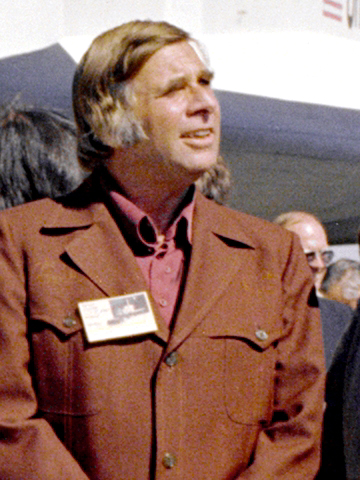
And yet, as Parkins recounts, Roddenberry was never accused of sexual harassment, either in his own lifetime nor posthumously. In fact, Grace Lee Whitney, the actress who played Yeoman Rand, later stated that, while she was coerced into sex by an NBC executive during Star Trek’s initial run, Roddenberry never tried anything with her. Roddenberry’s sexual rapacity is also more easily forgiven when considered in the context of his time. Also, we have the legacy of the man himself, who created one of the most liberal, progressive, and optimistic TV shows in history.
According to Parkins,
…any fair account of Gene Roddenberry’s life has to embrace his role in establishing [Star Trek’s] iconic status. It is generally easy to be cynical about the world, and Roddenberry made cynicism about himself very easy. He wrote memos about Ferengi sex positions, popped a lot of pills and flopped around a paddling pool covered in baby oil with his secretary trying to simulate sex in zero gravity. Roddenberry also created something that has had a genuine, measurable inspirational effect on generations of people who strive to make the future a better place. As Majel Barrett put it, “I’m looking forward to a Gene Roddenberry world, a better, kinder, more gentle world. I don’t think he believed that’s the way it was going to be either, but suddenly we have enough people who are trying desperately to live in a world like that. And sooner or later maybe we’ll all evolve into that.”
It’s a good book. Check it out if you get a chance.

 Ash Clifton, Writer