Anyone who is all interested in mystery fiction might avail themselves of this long (three chapters!) sample of the audiobook version of Twice the Trouble. It’s free on Youtube from Google Play. Check it out…!
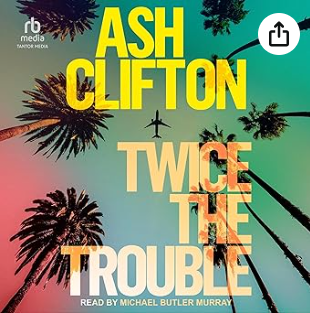

Anyone who is all interested in mystery fiction might avail themselves of this long (three chapters!) sample of the audiobook version of Twice the Trouble. It’s free on Youtube from Google Play. Check it out…!
Not surprisingly, my first exposure to Peter Murphy was from a movie. It was his face and music that are used in the first frames of Tony Scott’s great and underrated horror masterpiece, The Hunger. At the time, Murphy was of course the lead singer for the archetypal goth band Bauhaus, and it is their archetypal song “Bella Legosi’s Dead” that is featured in the opening. Ever since I saw that movie and heard that music, that voice, I was hooked on Peter Murphy.
This was in the early 1980s and, needless to say, goth music wasn’t getting much air-play on the pop-rock radio stations that I and my high school friends all listened to. Still, there was something afoot. Some of my cooler, English-nerd friends started wearing T-shirts with the Bauhaus logo on them.
As I soon learned, goth was, almost literally, an underground movement. Goth clubs starting appearing in basement-bars and old, converted warehouses. The one in Gainesville was called The Vatican, and it’s still of a legend with people my age.
I am by no means an expert on goth music, but one thing I do know is that it is not depressing. Rather, goth’s appeal comes from a paradoxical combination of melancholy realism and romantic defiance. Both of these impulses are wonderfully evoked in Murphy’s most successful solo work, “Cuts You Up”. It’s still my favorite of Murphy’s songs.
Rock on…
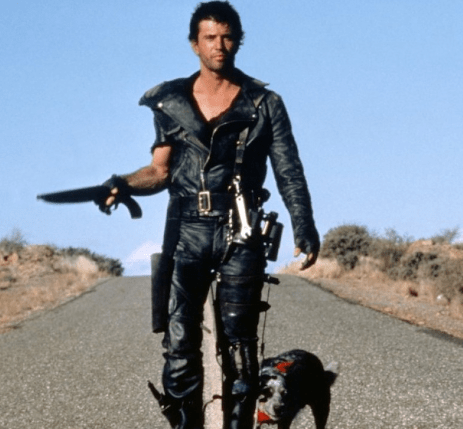
In one of those strange, synchronicity moments that sometimes happen, I recently stumbled upon an article in Collider about how the classic John Carpenter film Escape from New York is getting a new 4K release from Shout Factory. This was a heart-warming bit of information, for me, since the film has been one of my favorites since I saw it in the theaters in 1982. It’s nice to think that new generations of film lovers might be given a chance to appreciate its many charms.
The news was also timely, for me, because I had been contemplating writing a post about the things I love most about movies like Escape from New York. That is, B-Movie Action Flicks. As anyone who reads this blog or my old one will realize, I am somewhat obsessed with B-Movie Action Flicks, especially from their golden age back in the 1970s-80s. Part of my obsession is mere nostalgia, of course. I spent many a late Saturday watching such movies on HBO with my equally nerdy, reprobate friends, and they (the films and the friends) helped me get through the agonies of growing up. But the other part of my obsession has to do with the nature of B-Movie Action Flicks. Why are they so much fun?
Continue reading “Ten Things I Love About B-Movie Action Flicks”The 1990s had so many great, iconic bands–Nirvana, SoundGarden, Pearl Jam, Stone Temple Pilots, and on and on–that it’s easy to forget that there were lot of other, damn good bands around that were scrambling for attention. Third Eye Blind was such a band. They broke through a few years after the grunge wave had subsided, and their pop-inflected, rap-inflected brand of rock almost seems like a response to grunge. A reaction. A means of cleansing the sonic palatte.
I didn’t really listen to much Third Eye Blind at the time (the late 1990s and early 2000s), but thanks to the magic of Pandora and its sublime algorithms, I’ve been getting them in my play list quite a bit. And that’s a good thing. I was shocked to realize how much I liked them, then and now.
Unfortunately, they only had two big records–Third Eye Blind and Blue–before fissures between lead vocalist Stephan Jenkins and lead guitarist Kevin Cadogan caused them to partially split up. Even so, the band has a great legacy. This is my favorite of their songs.
Rock on…
For those of you who might be in the Atlanta area on October 7, please stop by the Flat Shoals library for my book talk. The event is at 6:00 p.m., and I’ll be reading from my mystery novel, Twice the Trouble.

Back in the late 1990s, every guy I knew under the age of thirty had a copy of The Prodigy‘s Fat of the Land album. This was the case even though there was nothing particularly new about the record itself; Big Beat had been around for years, and some of the songs on the album itself had come out on previous albums. Nevertheless, each song is more than the sum of its parts. Each one comes together into a delierously wicked electro-dance mash-up that remains unrivaled.
Back in the day, my favorite song off the album was the problematically entitled “Smack My Bitch Up”. (As far as I’m concerned, the title is camp, if not actual satire in the Spinal Tap mode.) But these days, my favorite The Prodigy song is probably this little gem, “Firestarter”.
Rock on…
Let’s face it, 99% of the people alive today who knew anything at all about James Earl Jones knew about him from Star Wars. He was, after all, the voice of Darth Vader, the most commanding villain in all cinema.
My first memory of Jones, however, was from the early 1970s, when I was a little kid. I was watching a made-for-TV movie about the Barney and Betty Hill UFO incident. Jones played Barney, and the scene where he recalls, under hipnosis, his encounter with a UFO struck me, even a kid, as unbelievably powerful and even scary. (If you can find this movie on Youtube, you should check it out.)
It’s important for us all to remember how truly great an actor Jones was. He wasn’t just a voice–he was a master of the entire art. One of my lit. professors in college recalled seeing Jones as Othello on Broadway in a now-legendary production with Christopher Plummer as Iago, and how absolutely mesmerizing Jones was.
In keeping with that memory, I am posting a brief, command performance that Jones did of a scene from Othello about ten years ago.
Godspeed, Mr. Jones….!!!

Ursula K. Le Guin was one of our finest science fiction writers, and The Left Hand of Darkness is probably her best book. Not only did it anticipate by half-a-century the seismic cultural shifts that are currently roiling Western society regarding issues of gender-identity and sexual orientation, it’s also just a damned good sci-fi story.
Set in the far future, it takes place on Gethen, a wintery planet with a post-industrial civilization. Genly Ai is an Earth-man who is sent to Gethen on a diplomatic mission, hoping to convince the locals to join the Ekumen (basically, Le Guin’s version of the United Federation of Planets). Genly’s efforts are frustrated by long-standing, internecine conflicts between the Gethenians themselves, and also by his own difficulty in relating to the local people. People on Gethen are, it seems, are androgenous—serially androgenous, actually, existing as one sex for a part of the month and as females for the other. (As Le Guin beautifully describes, they subtly change their outer physiognomy, depending on which gender they are currently occupying, appearing to be “men” some of the time and “women” at others.)
Even now, it’s a pretty far-out concept, but it was totally mind-blowing in 1969 when the novel came out. Trust me, though—it’s a very exciting book. Genly soon finds himself caught between warring nations and is arrested as a potential spy. He is rescued by Estraven, the former prime minister of one of the countries, who helps Genly escape. They set off on a life-and-death adventure, sledding across the frozen wilderness of Gethen and trying to get to safety. In the process, Genly is forced to come to terms with his own deep-rooted conceptions of sexuality, while Estraven faces the prospect of Gethen being just one small planet in a vast, strange galaxy.
Le Guin is often described as a literary science fiction writer, and it’s true. Her prose and descriptive eye were top-notch, and she was able to weave Big Ideas (Feminism, Taoism, etc.) into her fiction without it feeling like a Humanities 101 lecture. The edition I read had this great cover by veteran illustrator Alex Ebel, which might seem a bit cheesy today but was striking and evocative at the time. I love the way it captures one of the major visual motifs of the novel, that of linked-opposites (light and dark, male and female, good and evil, progressive and reactionary). It’s a great, surreal representation of a great novel.

Back in the dot.com boom of the 1990s, I was lucky enough to work for an IT company based in New York City. I was a remote worker, writing software eight hours a day in my spare bedroom in Gainesville, Florida. It was a win-win situation. I got to work from home, and my bosses got a good developer for country-boy wages (and I was still in the same time zone).
Occasionally they would fly me to the city for a meeting and I would spend my evenings wandering the streets of Manhattan, which is surely the most beautiful and bewitching cities of the earth. My favorite spot is the Met. Like a lot of introverts, I love museums, and the Met is the greatest of them all. I mean, how many museums have their own Egyptian Temple? Indoors?
Once I spent an entire weekend roaming its halls, barely scratching the surface of its vast collections. I tend to gravitate toward the Modern period from the early- and mid-twentieth century. From guys like Matisse and Picasso all the way to Hopper and O’Keefe.
From a historical perspective, my interest stopped after that. I never much got the whole Post-Modern thing—Abstract Expressionism and all that. It seemed too theoretical. A joke that high-brow art critics had played on the rest of us, as Tom Wolfe wrote so wittily in The Painted Word.
Continue reading “Brief Encounters with Infinity”Back in the 1980s, The Psychedelic Furs were one of those bands that were so good, everybody had a roommate who loved them. I was that roommate. Rock on…
 Ash Clifton, Writer