
R.I.P. Frank Gehry

I find it interesting that the two most famous architects in American history—famous, that is, among ordinary people who don’t subscribe to Architectural Digest—were both named Frank. They were, of course, Frank Lloyd Wright and Frank Gehry. Both men created buildings that captured the popular imagination like few others. And both were mavericks whose vision of what architecture could do often offended the mavens of the status quo (not to mention the bean-counters who worked for the rich people who funded their projects).

Both men also shared a sense of play and in their work—Gehry to a much greater degree, sometimes designing homes and offices and other buildings that veered into pure fantasy. He often brainstormed new projects with strips of paper and cardboard, envisioning light, fluid, soaring structures that, one could argue, would not have been possible to actually build in an age before computer-assisted design was available. 

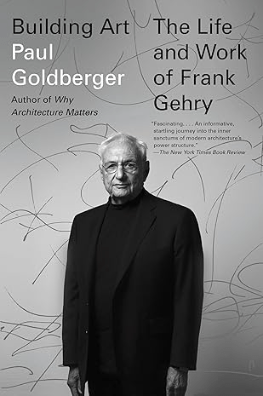
This emphasis on play and the power of imagination was evident in all his work, even in huge, civic projects like his Walt Disney Concert Hall in Los Angeles. As Paul Goldberger relates in his fine biography, Building Art: The Life and Work of Frank Gehry, Gehry took an almost impish pleasure in fooling around with his own designs. When he was in the early stages of mocking-up his plans for another auditorium in Asia, he shocked and amazed his colleagues by adjusting the position for the auditorium every night or so. As one friend put it, 

…[H]e became a monster. He started moving stuff around.… We were doing a project in Korea that never got built [the museum for Samsung] but every time I went on a trip and came back he had moved the auditorium. He was impeccable. He had incredible reasons for it. He’s really brilliant. He doesn’t sleep at night and he comes back the next morning and moves the auditorium.”

As Goldberger explains…

Moving the auditorium, in Frank’s view, was a form of what he liked to call “play,” and it was largely instinctive. “A serious CEO, you would imagine, does not think of creative spirit as play. And yet it is,” he said. “Creativity, the way I characterize it, is that you’re searching for something. You have a goal. You’re not sure where it’s going. So when I meet with my people and start thinking and making models and stuff, it is like play.” 

As the title of Goldberger’s book relates, Gehry saw himself almost as more an artist than an architect. At times, he refused to believe that one needed, necessarily, to make a distinction between the two. Early in his career, Gehry befriended and hung-out with great modern artists in Southern California, and they reciprocated his admiration. Perhaps this is the reason that Gehry’s greatest buildings resemble art more than perhaps other architect.
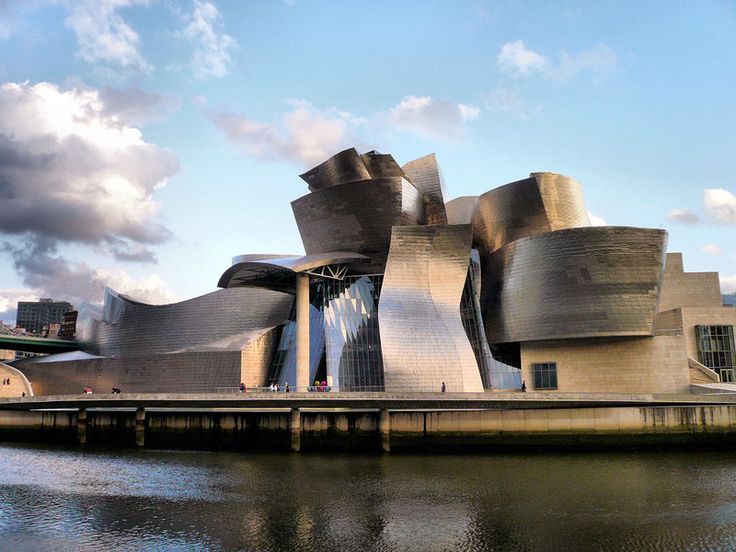
Guggenheim Museum, Bilbao

His most famous is, of course, the Guggenheim Museum in Bilbao, Spain. When the museum finally opened in 1987, a flood of tourists came from all over the world to see it, prompting some of the artists whose work was displayed inside the museum to feel that they were playing second fiddle to the building itself. This grumbling grew into a modest backlash among the artistic community, focused not so much on Gehry himself as on the fawning admiration of journalists and other architects who often lauded Gehry as an “artist.” As Gehry’s own collaborator and friend, the sculptor Richard Serra, said, 

I don’t believe Frank is an artist. I don’t believe Rem Koolhaas is an artist. Sure, there are comparable overlaps in the language between sculpture and architecture, between painting and architecture. There are overlaps between all kinds of human activities. But there are also differences that have gone on for centuries.”

Whether he was being lauded or criticized, Gehry himself never seemed concerned. In fact, when compared to that other great architect named Frank, Gehry usually seemed downright humble, if not pathologically shy. Goldberger writes:

Even though Gehry was ridden with angst throughout his life, his manner came off as relaxed, low-key, and amiable, and his steely determination, far from being obvious like Wright’s, was hidden behind an easygoing exterior, a kind of “aw shucks” air that Gehry’s old friend the artist Peter Alexander called “his gentle, humble ways.” Wright was never mistaken for being modest; Gehry often was.

Gehry was so shy, in fact, that I feel he could have been much more famous than he was if he gotten himself out there, gone on TV more and granted more interviews and written some puff-pieces for various magazines and web sites. The fact that he did not is, I suppose, the most telling fact about the man’s character. Namely, that he was a genius who was determined to create the most original and uplifting works as he could…and, then, to let those works speak for themselves.

Godspeed, Mr. Gehrey….
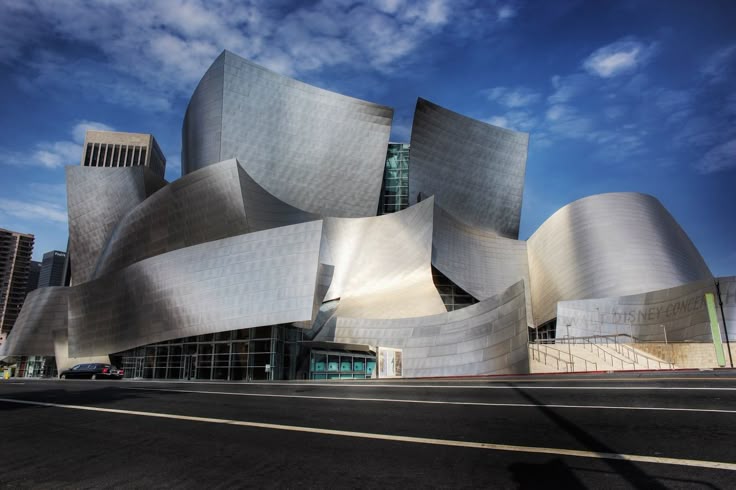
Walt Disney Concert Hall, Los Angeles

What I’m Reading: “The Future Was Now”

In the summer of 1982, I was a very unhappy boy. Being a nerd in an upper-class high school full of preppies and jocks, I didn’t fit in very well. I hated most of my classes. I had a few good, close friends (including some jocks), but that was it. As one would expect, I spent a lot of time in my room reading sci-fi novels and typing short stories on the typewriter my mother had bought me. 

The only thing that kept me sane was movies. Fortunately, 1982 turned out to be the most incredible time in cinematic history to be a nerd. A string of classics came out that summer including Blade Runner, The Thing, The Road Warrior (a.k.a. Max Max II), Star Trek II: The Wrath of Khan, Poltergeist, Tron, Conan the Barbarian, and (the 800-pound gorilla) E.T. Even at the time, I was cognizant that this bumper crop of cool films, all coming out within a few weeks of each other, was a very unusual, almost magical development. I spent many hours on the bus with my friends going to and from the local cineplex, where we watched many of these films over and over. 

For forty years, I labored under the delusion that this rapid series of classics was just a lucky coincidence. But while reading Chris Nashawaty’s fine nonfiction book, The Future Was Now: Madmen, Mavericks, and the Epic Sci-Fi Summer of 1982, I learned otherwise. A good historian will reveal that any event, no matter how seemingly incredible or unlikely, actually emerges logically from previous events. That is, the seeds were planted years or even decades before. And in 1982, main seed was a little film called Star Wars. As Nashawaty explains:

There’s an unwritten rule for reporters and trendwatchers who cover Hollywood that if you want to know why a movie—or a particular group of movies—was made, all you need to do is look back and see what was a hit at the box office five years earlier since that’s the typical gestation period for studio executives to spot a trend, develop and green-light an imitator, push it into production, and usher it into theaters. And the summer of 1982 would prove no exception, coming exactly five years after Star Wars. What seemed underreported, however, was how this new wave of sci-fi titles had been conceived and carried out. It is a wave that we’re still feeling the aftereffects of, for better and worse, today.

Continue reading “What I’m Reading: “The Future Was Now””

Books on Art: “The Slip”

I had an event to attend in New York City last week, but I couldn’t afford the hotel when the event was actually being held. So, I got a room for my wife and me a few blocks north, on 7th Avenue and 53rs Street. Venturing out for coffee the next morning, I was thrilled to see a sculpture directly across the street, a giant rendering of the word HOPE in red and green letters. 

The sculpture is, of course, by pop-artist Robert Indiana, and is a version of his famous LOVE print from 1964. With its simple, Didone letters and bright, primary colors, it’s one of the most instantly recognizable images in art history. Later, Indiana transformed the image into a sculpture which was installed in Central Park for decades. Later still, he made parallel sculptures using other words, like the HOPE version I saw (and photographed, below).

For me, seeing that particular sculpture, in that particular spot, literally right outside my randomly chosen hotel, seemed like a profound instance of synchronicity. This is because I had been reading Prudence Peiffer’s excellent non-fiction book The Slip: The New York City Street That Changed American Art Forever, which illuminates the history of Coenties Slip (pronounced koh-ENT-tees), a semi-abandoned industrial area of lower Manhattan that had once been a small pier jutting into the East River. The slip was filled-in during the early 19th Century and became a locus for sail-making, one of the most skilled and highest-paying trade jobs of the era. Sail-making requires a lot of open warehouse space, and in the early 1960s, those same warehouses (long since abandoned) became cheap studio space for struggling artists and actors, and it is these brave figures that Peiffer’s book illuminates. Chief among them were Robert Indiana, James Rosenquist, Agnes Martin, Elsworth Kelly, and Lenore Tawney.

Continue reading “Books on Art: “The Slip””

What I’m Reading: “Rod: The Autobiography”

Rod_ TheAutobiography2

One of the many things I learned from Rod Stewart’s memoir, Rod: The Autobiography, is that the technical process of recording a studio album is very strange.  For instance, the lead singer usually records his vocal track in a soundproofed room, by himself, wearing headphones so that he can listen to the band’s instrumental track.

It seems a very sterile and artificial process–not at all what one pictures when imagining a rock singer at work.  And so I was impressed to learn that Stewart has always rejected this technique, insisting on recording all tracks directly with his band:

When we were recording, I liked to be in the sound room with the band, walking around with a microphone  in hand, so that I could look them in the eye, interact with them, perform with them, basically.  I think it slightly startled the engineer, who was more used to having the singer isolated behind screens, or in an entirely separate vocal booth.  I remember hearing how Frank Sinatra had once been parked by an engineer behind a screen in a recording studio and he had made them take it down.  In order to sing, he needed to feel the sound of the orchestra hit him in the chest.  I guess this was my own version of that.

It’s interesting that Stewart draws a comparison between himself and Sinatra.  As I learned from James Kaplan’s fine bio of Sinatra, the great crooner himself exerted tremendous effort when preparing for one his recordings.  He was known to read the song lyrics aloud to himself, almost like prose.  He felt he had to discover the emotional truth of the lyric before he could sing it, and if that truth was not forthcoming, he would nix the song.

Continue reading “What I’m Reading: “Rod: The Autobiography””

Books on Art: “de Kooning – An American Master”

deKooning

On those rare occasions when I choose to read a big, fat, thick-as-a-brick book about a famous person, I usually pick one about a politician. David McCullough’s Truman is a great example. I tend to gravitate toward books about political figures because, in the course of reading about their lives, you also get a free history lesson. That is, the story of Harry Truman is also the story of World War II, the atomic bomb, Korea, the founding of Israel, and the Berlin Wall.

Biographies of artists are more problematic, for me.  I just finished reading de Kooning: An American Master, by Mark Stevens and Annalyn Swan. It chronicles the long life of the great painter—a life barely contained within the span of the Twentieth Century—in which de Kooning lived to be the celebrated, Grand Old Man of modern American art. He became, in fact, the only American artist whose figure and reputation approached those of Picasso.

Continue reading “Books on Art: “de Kooning – An American Master””