

For some reason, I read a lot of science fiction during the holidays. Maybe this is because I loved science fiction as a kid, and I had more time to read it during the Christmas break. At any rate, this year I decided to post a list of great literary science fiction novels.
I’m not qualified to give a meaningful explanation of the difference between popular and literary fiction. My old professor, Jonathan Penner has already done that in his fine essay “Literary Fiction Versus Popular Fiction” (which I cannot find on the Internets, alas). But suffice to say that popular fiction is defined by a formula. As Penner states, “Every work of literary fiction seeks to be like none other; every work of genre fiction seeks to be like many others. Genre fiction works for effects on which the reader knows he or she may rely. Literary fiction always tries to see the world freshly.”
The novels I list below certainly fall into the category of popular fiction. They all make use of the common tropes of science fiction stories: space travel, robots, aliens, and the end-of-the-world. So why do I call them literary? Because each one of them, while remaining on a generic level, is centered around a vivid and successfully realized characters. Also, each is written with a emphatic artfulness and grace.
So here’s the list:
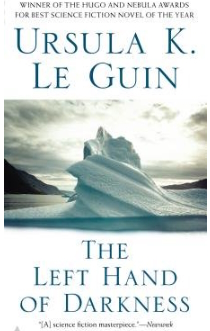
The Left Hand of Darkness Strangely enough, I first got interested in Ursula K. Le Guin’s classic novel when I read a review of it by John Updike. It’s about a human envoy who is sent to a distant alien planet called Gethen. Gethen is remarkable not only for its isolation, but also because the locals, although descended from homo sapiens thousands of years of previously, are all hermaphrodites. Specifically, they function as men for certain part of their lives, and as women for the other. It sounds a bit hokey now (the plot was even ripped-off on an episode of Star Trek), but it’s a fine little novel, with some genuinely compelling drama. (It actually develops into a kind of wilderness adventure story when the main character gets entangled in the political intrigue of the Gethen government.)
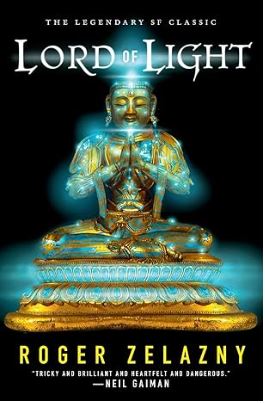
Lord of Light Roger Zelazny was a hell of a good writer who is best known for his Chronicles of Amber series of fantasy novels. But my favorite is Lord of Light, which is the first novel I ever read that seems, at first, to be one genre (religious fantasy), but then reveals itself—convincingly—to be another (science fiction). Zelazny sets the story on an unnamed, earth-like planet where the gods of the Hindu pantheon (Brahma, Vishnu, Shiva, etc.) are real and very much alive. These dieties use their Godly powers to rule over a pre-literate culture of peasants (controlling them in ways that are often less-than-divine).
The story centers on Sam—who closely resembles Gautama Buddha but with a Marlowesque twist—who is trying to unseat the vain and profligate Gods from their position of power. Sam, we soon learn, is one of the original crew members of a starship called The Star of India, which crash-landed on the planet eons previously. Apparently, Sam and the other surviving officers used their technology to set themselves up as “gods” to rule over the other castaways, and eventually came to believe their own propaganda. It’s a far-out idea, which Zelazny delivers in a surprisingly subtle, vivid novel that is part epic, part spoof.
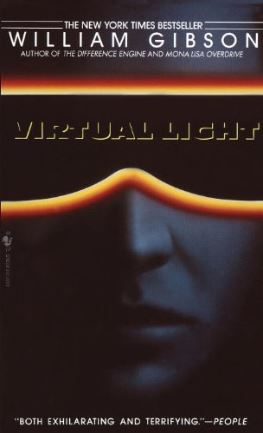
Virtual Light I think William Gibson is one of the best writers of his generation, literary or otherwise. He invented the term cyberpunk, and its attending genre, of which Virtual Light is my favorite example. It’s about a young bike messenger, Chevette, who spends her day cycling through the teeming, corporate-ruled streets of a future San Francisco. In a plot twist that is almost Dickensian in its lyricism, Chevette accidentally comes into possession of a very unusual pair of computerized sunglasses, which a villainous corporate hit-man is very anxious to get back. Gibson is a genius at mixing high-tech plots with low-tech heroes, and Chevette soon has to take refuge in an underground, DIY society based on the remnants of the Oakland Bay Bridge.
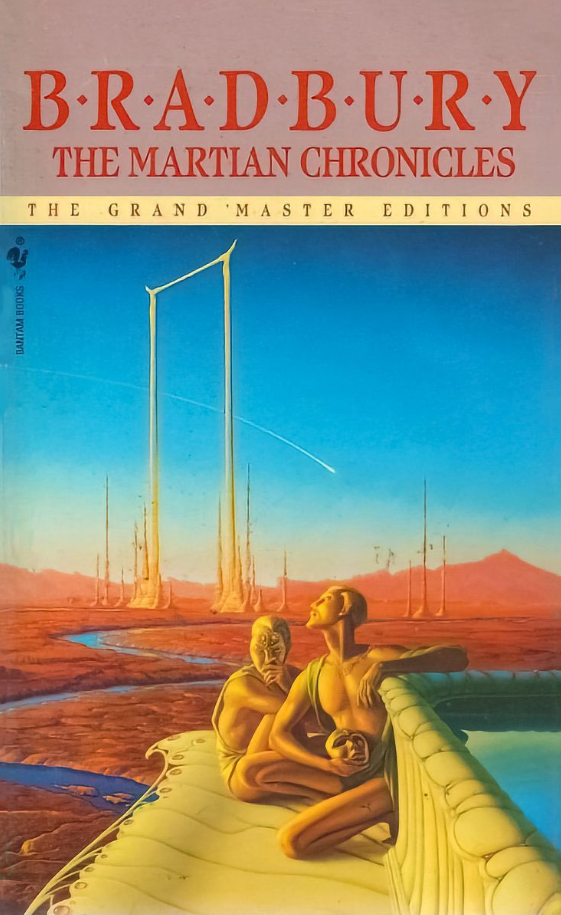
The Martian Chronicles Okay, it’s a stretch to put this one on the list, not because it isn’t literary, but because it really isn’t science fiction. It’s actually a collection of interlocking fables, all of which are based on Mars during the early phases of its colonization. Unfortunately, the planet is already occupied by an ancient race of Martians. If you substitute Illinois for Mars and the Sioux for the Martians, you get an idea of the feel of this novel, which Bradbury himself said was inspired by Sherwood Anderson’s classic collection, Winesburg, Ohio. Many of the stories are genuinely beautiful and haunting.
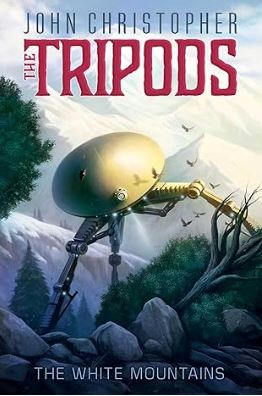
The Tripods If you didn’t read Samuel Youd’s trilogy when you were a kid, you should do so now, especially if you have a kid of your own. Earth has been conquered by aliens, and what remains of humanity exists in a servile, pre-industrial society. Young Will and his cousin Fritz escape their village and go on a quest for the fabled “White Mountains” where a human resistance is forming.
A Clockwork Orange The movie has outshone the book for most of my lifetime. But the book is actually better, written in the inimitable voice of Alex, a fourteen-year-old sociopath who is just trying to have a good time in an Orwellian England of the near future.

God Emperor of Dune The original Dune is a really cool adventure story. I always thought of it as Lawrence of Arabia in the 30th Century. But I think Herbert’s fourth novel in the series, God Emperor of Dune, is the best, from both a narrative and stylistic point-of-view. It focuses on just a couple of characters (as opposed to dozens) and it presents Leto Atreides (son of Paul) as genuinely sympathetic character.
Nova Samuel R. Delany could never decide whether he was a physicist or a mythologist or an literary fiction writer. Why limit yourself? Nova, the story of a mad space-captain seeking to fly through the center of an exploding star, is Delany’s tightest and most interesting novel.
Childhood’s End I hesitate to put this one on the list. I loved it as a kid, as I loved all of Arthur C. Clarke’s books. As a writer, he was very, very limited. But in Childhood’s End, he really outdid himself. It’s the first novel I ever read that broached the concept of a technological Singularity.
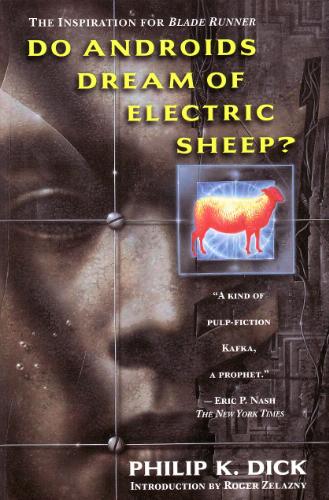
Do Androids Dream of Electric Sheep I can’t help but think that, in some alternate universe much like those he described in his novels, Phillip K. Dick is alive and well and living as a respected and beloved literary fiction writer. In this universe, however, he wrote mesmerizing, almost hallucinogenic sci-fi novels about good and evil, the definition of “reality”, and what it means to human. His best book, Do Androids Dream of Electric Sheep, is a haunting classic.
Author’s Note: This post first appeared some years ago on my old blog, Bakhtin’s Cigarettes.




 Ash Clifton, Writer