Friday Night Rock-Out: “How to Save a Life”

I’ve been reading a fine biography of the great country singer Johnny Cash, and in its pages I learned that Elvis Presley (who befriended Cash when they were both starting out, both men having been discovered by the legendary Sam Phillips) could play the piano. Not as well, obviously, as Phillips’s other phenom, Jerry Lee Lewis, but well enough for Cash, Lewis, and Carl Perkins to sing a few songs together while Presley was tickling the ivories. (That impromptu harmony session was recorded by a quick-witted studio technician and has since become known as The Million Dollar Quartet.)

 As I learned about this, I was struck by the notion that most people don’t realize the outsized role that the piano, as an instrument, has played in the history of Rock and Roll. When people think of rock music, the probably think of guitars first, and then (maybe) drums. Somewhere along the line, keyboards some into, but probably the electronic kind. (Think of great synth work by The Cars or Steve Winwood or Gary Numan.) But the piano? The piano?

Yes, the piano. I would argue that it has been almost as influential as the electric guitar in the development of rock. Starting with Jerry Lee Lewis, the story goes to Elton John and Billy Joel, to Christine McVie and even Freddy Mercury. 

The 21st Century has, of course, seen a resurgence of the great piano-players in rock. Foremost among this has been Chris Martin of Coldplay. But for my money, The Fray is, in its best moments, just as good a band as Coldplay. Take this little, mournful, piano-driven gem, which is one of my favorite songs of the last twenty years.

Rock on…

What I’m Reading: “The Future Was Now”

In the summer of 1982, I was a very unhappy boy. Being a nerd in an upper-class high school full of preppies and jocks, I didn’t fit in very well. I hated most of my classes. I had a few good, close friends (including some jocks), but that was it. As one would expect, I spent a lot of time in my room reading sci-fi novels and typing short stories on the typewriter my mother had bought me. 

The only thing that kept me sane was movies. Fortunately, 1982 turned out to be the most incredible time in cinematic history to be a nerd. A string of classics came out that summer including Blade Runner, The Thing, The Road Warrior (a.k.a. Max Max II), Star Trek II: The Wrath of Khan, Poltergeist, Tron, Conan the Barbarian, and (the 800-pound gorilla) E.T. Even at the time, I was cognizant that this bumper crop of cool films, all coming out within a few weeks of each other, was a very unusual, almost magical development. I spent many hours on the bus with my friends going to and from the local cineplex, where we watched many of these films over and over. 

For forty years, I labored under the delusion that this rapid series of classics was just a lucky coincidence. But while reading Chris Nashawaty’s fine nonfiction book, The Future Was Now: Madmen, Mavericks, and the Epic Sci-Fi Summer of 1982, I learned otherwise. A good historian will reveal that any event, no matter how seemingly incredible or unlikely, actually emerges logically from previous events. That is, the seeds were planted years or even decades before. And in 1982, main seed was a little film called Star Wars. As Nashawaty explains:

There’s an unwritten rule for reporters and trendwatchers who cover Hollywood that if you want to know why a movie—or a particular group of movies—was made, all you need to do is look back and see what was a hit at the box office five years earlier since that’s the typical gestation period for studio executives to spot a trend, develop and green-light an imitator, push it into production, and usher it into theaters. And the summer of 1982 would prove no exception, coming exactly five years after Star Wars. What seemed underreported, however, was how this new wave of sci-fi titles had been conceived and carried out. It is a wave that we’re still feeling the aftereffects of, for better and worse, today.

Continue reading “What I’m Reading: “The Future Was Now””

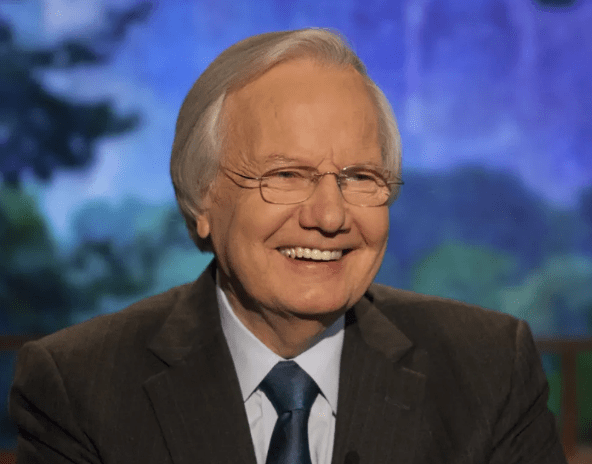
R.I.P. Bill Moyers

If you were a nerdy poor kid growing up in the 1970s and ’80s, you probably watched a lot of public television. Starting with kid shows like Sesame Street and the Electric Company, you graduated in your teens to science shows like Nova and edgy entertainment shows like Monty Python and surreal action series like The Prisoner, which PBS stations played late at night. 

As for myself, I also watched a lot of PBS news, especially The MacNeil/Lehrer NewsHour. And Bill Moyers. Lots of Bill moyers. If MacNeil and Lehrerwere the Kings of PBS news, then Bill Moyer was the high-ranking courtier. Moyers, who passed away last week, specialized in thoughtful and intelligent interviews with brilliant people of various stripes. As a would-be teenage intellectual, I really loved and appreciated these shows, and they introduced me to a lot of very smart artists, politicians, and writers. Chief among these was the iconic scholar of world mythology Joseph Campbell. Moyers’s now-famous interviews with Campbell, conducted at George Lucas’s Skywalker ranch (Lucas was inspired by Campbell’s writing when he penned the Star Wars saga), were probably the pinnacle of both men’s careers. 

I’ve been a fan of Campbell ever since, and also of Moyers. A one-time Baptist preacher, Moyers was a gentle, kind-spirited man who never descended into sentimentality or fatuous optimism. He was, rather, a first-rate journalist. And God knows there are very few of those these days. 

Moyers has been the subject of many on-line tributes in the past few days, including this one by the excellent historian Jonathan Alter.

Godspeed, Mr. Moyers….

What I’m Reading: “Rebbe”

I’ve read a lot of biographies in my time. Some of my favorites have been about great monarchs (Catherine the Great by Robert Massie), presidents (Truman by David McCoullough), scientists (Oppenheimer by Kai Bird), architects (Frank Lloyd Wright by Meryl Secrest). Now, I can finally add religious leaders to my list. Or at least one religious leader, the Rebbe Menachem Mendel Schneerson

It’s taken me this long, I think, because while I am fascinated by the study of various religions, I am not very interested in the life-story of most religious leaders. This is, in part, a consequence of the vexed historicity of such figures. Usually, they lived in the distant past, shrouded in veils of myth, with the actual, living person being lost to time. But this is not the case with Rebbe Schneerson. After all, he was not only a very recent figure, having passed away in 1994, but he spent most of his life right here in the United States—Brooklyn, in fact, that modern locus of Hasidic Judaism, and especially the Chabad-Lubavitch dynasty, which Schneerson led since 1951, succeeding his father-in-law. 

As Joseph Telushkin recounts in his excellent book, Rebbe: The Life and Teachings of Menachem M. Schneerson, the Most Influential Rabbi in Modern History, Schneerson was essentially appointed to the position by general acclimation, bypassing the previous Rebbe’s son who had been the heir apparent. Community leaders and other rabbis in the movement were simply awed by Schneerson’s considerable intellect—he spoke half-a-dozen languages, had an Engineering degree, and was considered a “genius” in Talmudic study from the age of seventeen—and pressured him to take the job. 

Which, thankfully, he did. I never thought I would ever read a book about an orthodox Jewish rabbi and, at the end, think to myself: “Wow, he seems like a really cool guy.” After all, I’m used to being utterly repulsed by most “leaders” in my own religious sphere, Christianity, with the exception of the current Pope and his immediate predecessor. But the more I read about Schneerson, the more impressed I was, not only by his general wisdom in matters of religion and morality, but also in his endless, practical concern for the well-being of ordinary (often poor) people, both Jews and Gentiles. 

One example Telushkin provides involves Shirley Chisholm, the first black woman elected to Congress. Racist creeps in the House refused to appoint her to any high-level committees and instead stuck her on the Agriculture Committee, which, considering Chisholm represented a section of New York, seemed absurd to most observers. Yet, the snub also presented an opportunity that she, herself, never suspected. As Telushkin writes:

She soon received a phone call from the office of one of her constituents. “The Lubavitcher Rebbe would like to meet with you.” Representative Chisholm came to 770. The Rebbe said, “I know you’re very upset.” Chisholm acknowledged both being upset and feeling insulted. “What should I do?” The Rebbe said: “What a blessing God has given you. This country has so much surplus food and there are so many hungry people and you can use this gift that God’s given you to feed hungry people. Find a creative way to do it.”

And she did, creating one of the first federal food-aid programs in the history of the United States, in which surplus food was bought by the government from American farmers and distributed to poor people, thus helping the recipients, the farmers, and pretty much everyone else.

On a more personal level, Schneerson always emphasized the importance of kindness and compassion over religious stricture. In one of his drashas (sermons), he famously told the story of how his predecessor, the Alter-Rebbe, once stopped in the middle of his Sabbath observations to attend to a young woman who had just given birth and who had been left alone by her family so that they could attend synagogue. Telushkin writes:

That day, the Alter Rebbe, having somehow learned that the new mother was alone, was suddenly overwhelmed with the certainty that the woman required someone to attend to her needs immediately; it might well be a matter of life and death. And since no one else was taking care of her, he concluded that he should be the one to do so.

This story apparently shocked his followers in way that most modern, secular people like myself cannot really appreciate. The idea that a rabbi might 1.) forsake the Sabbath observations in order to 2.) do menial work on the Sabbath like chopping wood and 3.) do so for an ordinary woman was radical in the extreme.  

Such was Schneerson’s boundless respect and love for ordinary people that he was always concerned about inadvertently embarrassing or insulting anyone, especially those who were most vulnerable. Decades before the so-called woke movement (a bad name for a very noble cause), Schneerson refused to use the word “handicapped” in reference to battle-maimed Israeli soldiers. Telushkin writes:

Referring to the fact that such people are designated in Israel as nechei Tzahal, “handicapped of the Israel Defense Forces,” the Rebbe addressed the men as follows: “If a person has been deprived of a limb or a faculty, this itself indicates that G-d has also given him special powers to overcome the limitations this entails, and to surpass [in other areas] the achievements of ordinary people. You are not disabled or handicapped, but special and unique as you possess potentials that the rest of us do not. I therefore suggest”—the Rebbe then interspersed with a smile—“of course it is none of my business, but Jews are famous for voicing opinions on matters that do not concern them—that you should no longer be referred to as ‘disabled veterans’ but as ‘exceptional veterans’ [metzuyanim], which more aptly describes what is unique about you.

In addition to being a genuinely good and wise person, Schneerson also seemed to have what can only be described as superpowers. He worked eighteen hours a day, six-days-a-week, for most of his life. Being busy with his primary duties during the day, he met with people seeking advice in the evenings, often as late one or two o’clock in the morning. Some of the people seeking advice including future and former Prime Ministers of Isreal such as Menachem Begin, as well as many other powerful and influential figures. But, more of than not, they were comprised of ordinary men and women in his congregation. I was especially impressed with Telushkin’s story of a young woman, Chana Scharfstein, who often came to his office seeking academic as well as personal (dating) advice:

The Rebbe clearly knew his agenda for this meeting, and the conversation quickly turned in a personal direction. At a certain point, he asked Sharfstein if she felt ready to get married. Sharfstein told him that she had begun dating—in Chasidic circles, young men and women date only for the purpose of marriage—and the Rebbe asked her about a specific young man. She recalls being taken aback and thinking to herself, That’s interesting that he should ask about somebody that I had met. Sharfstein told the Rebbe that she had met the young man he mentioned, that he was clearly a fine person, but not for her. The Rebbe said all right, and then mentioned another name, and again it was someone to whom Sharfstein had been introduced. Here, too, the young man was very nice but not for her. Then the Rebbe mentioned a third name, and a fourth, “and I became really uncomfortable then. How did the Rebbe choose all the names of young men (bachurim) that I had met? I was just absolutely overwhelmed that he should mention people that I had actually met.” Only later did she learn that prior to going out with a girl, each bachur in Chabad would write to the Rebbe to inquire if the girl seemed suitable for him, and so the Rebbe, who obviously had responded in each case that Chana Zuber was suitable, had a very precise idea of all the people with whom she had gone out. But even taking all this into account, Sharfstein still remained staggered at the Rebbe’s recall. After all, he “was [already] a world leader at this time, and to keep track of each person and who had been dating whom, it’s really mind-boggling.”

As this story relates, Schneerson’s remarkable memory and formidable intelligence were often sources of awe among those in congregation. Another example involves a young student, Irving Block, who came to discuss philosophy with the Rebbe:

At the time, Block, who was studying for an MA in philosophy, was immersed in the study of the great Greek thinkers, Plato in particular. And that’s the direction in which the Rebbe led the discussion. Only Block didn’t realize at first to whom the Rebbe was referring, because it was a man named Platon about whom the Rebbe started talking. It finally struck him that Platon is how the name of the Greek philosopher is written in Greek, though in English his name is always pronounced as Plato. It’s not that the n is silent in English; it isn’t written at all. This was Block’s first surprise of the day. The man seated in front of him, dressed in the garb of a Rebbe, obviously knew about Plato, or Platon, from the original Greek and pronounced his name as it was supposed to be pronounced.

Block was not only amazed by the Rebbe’s deep understanding of the “Platon’s” philosophy but by his utter rejection of it. (Plato believed that the nuclear family was an evil institution and should be abolished, an idea that was in direct contradiction to all humanist values, including those of Judaism.)

In recounting such stories as these, Telushkin’s book is really more of an appreciation or tribute than an in-depth biography. And yet he manages to relate the primary facts of Schneerson’s remarkable life with grace. Born in Imperial Russia, Schneerson moved with his family to the US in the spring of 1941. Thereafter, he served as Rebbe for over 50 years, finally passing away in a time when the world was much changed. 

One might say that he was born in the time of Tsars and passed away in the time of the internet. And, in all that time, one thing remained constant: his steadfast commitment to the practical well-being of all the people, rich and poor, high and low, in his community and around the world. Truly a person worth reading about. Check it out…

Why I Am Obsessed with UFOs

Phoenix_Lights

Recently I was watching an episode on one of my favorite YouTube channels, Answers with Joe. The episode was about UFOs, which made it was automatically a winner for me. Specifically, it focused on a few UFO videos that even a smart skeptic like Joe finds compelling. I enjoyed the episode so much, in fact, that I wanted to respond to it, and especially the last part, in which Joe enumerates some very rational arguments against the idea that UFOs are aliens. This is the so-called Extraterrestrial Hypothesis—the school of thought that believes UFOs are real and explicable as alien spacecraft.

(For the rest of this post, I’m going to use UFOs and the Extraterrestrial Hypothesis interchangeably. And, yeah—I believe UFOs are alien craft.)

Obviously, I have some deep feelings about the subject, although I’m not sure why, exactly. I can’t claim any special knowledge about UFOs. But like millions of other Americans, I have seen a UFO. It happened one night on the Mississippi Gulf Coast, when my son and I were having dinner at a little joint on shore. We were sitting outside, and somewhere the course of the meal we saw a strange light in the sky. It shone a powerful beam of light in our direction, then disappeared, then reappeared again. This went on for nearly an hour.

And, of course, it was totally silent.

Continue reading “Why I Am Obsessed with UFOs”

Books on Art: “The Slip”

I had an event to attend in New York City last week, but I couldn’t afford the hotel when the event was actually being held. So, I got a room for my wife and me a few blocks north, on 7th Avenue and 53rs Street. Venturing out for coffee the next morning, I was thrilled to see a sculpture directly across the street, a giant rendering of the word HOPE in red and green letters. 

The sculpture is, of course, by pop-artist Robert Indiana, and is a version of his famous LOVE print from 1964. With its simple, Didone letters and bright, primary colors, it’s one of the most instantly recognizable images in art history. Later, Indiana transformed the image into a sculpture which was installed in Central Park for decades. Later still, he made parallel sculptures using other words, like the HOPE version I saw (and photographed, below).

For me, seeing that particular sculpture, in that particular spot, literally right outside my randomly chosen hotel, seemed like a profound instance of synchronicity. This is because I had been reading Prudence Peiffer’s excellent non-fiction book The Slip: The New York City Street That Changed American Art Forever, which illuminates the history of Coenties Slip (pronounced koh-ENT-tees), a semi-abandoned industrial area of lower Manhattan that had once been a small pier jutting into the East River. The slip was filled-in during the early 19th Century and became a locus for sail-making, one of the most skilled and highest-paying trade jobs of the era. Sail-making requires a lot of open warehouse space, and in the early 1960s, those same warehouses (long since abandoned) became cheap studio space for struggling artists and actors, and it is these brave figures that Peiffer’s book illuminates. Chief among them were Robert Indiana, James Rosenquist, Agnes Martin, Elsworth Kelly, and Lenore Tawney.

Continue reading “Books on Art: “The Slip””

My Latest Obsession: Vaporwave

I have a confession to make: I dream about shopping malls. Specifically, one shopping mall, the Oaks Mall here in Gainesville.

The “Collapsed Time” Effect of Vaporwave

After my parents’ divorce, I saw my mother mostly on the weekends, and one of our routine activities was to go to the mall. We would have lunch, see a movie, and wander around. Later, when I got into my teens, I spent a lot more time at the mall with my friends. We hit all the usual spots—the arcade, both bookstores (Waldenbooks and B. Dalton’s), the record store, Spencer’s Gifts, the toy store. And we did anything else we felt like. 

Trappings of the 1980s, along with “Broken Sun” motif

We weren’t alone, of course. After the collapse of downtown America, the mall was the last remaining public square. In suburban America, particularly, it was also the only fun thing to do on a Saturday afternoon. Or a Saturday night, for that matter. When I entered high school and started going on dates, we often went to a movie at the mall. One of my most vivid memories is of how strange and eerie the mall felt after the movie let out at 11:00 or so, and we would walk through the empty, dark hall with all the shops closed and metal gates drawn down. It was one of my first experiences of liminal space, and it sticks with me even today.

In fact, it haunts my dreams. Literally. For when I dream of the Oaks Mall now, I often find myself lost among its corridors near closing time, the wings still busy with shoppers but with the crowd starting to thin out, little by little. Stranger still, my dream-mall is huge—the size of Manhattan Island, practically. A gigantic labyrinth of brand-name stores, all of which are in the early stages of shutting down for the night. (My subconscious, I think, is warning me that the mall is shutting down forever.) These dreams often end in a sense of panic as I realize I am on the wrong side of the mall from my friends, or my car, or whatever, and I will never be able to reach them/it in time before…what? Closing? It’s not clear, but whatever it is, it’s kind of scary.

Despite the disquieting nature of these dreams—or perhaps because of it—I find myself endlessly fascinated by what has come to be known as the Vaporwave aesthetic. Vaporwave is primarily a visual genre, marked by artistic images of 1980s culture. That is, computer graphics, shopping malls, the Miami skyline (ala Miami Vice), fast food restaurants, music videos, video stores, and old-style video games.

And neon. Lots and lots of neon.

Empty Mall / Liminal Space Vibe Typical of Vaporwave

The overriding effect is that of a hyper-real fantasy that feels like a time-portal back to the 1980s. I love these images because they somehow evoke the memory of that long ago time, at least for me. More accurately, they evoke the feeling I wanted to have at the time but could never quite capture. The feeling of an endless, prosperous, fun, high-tech future.

I think that this is the real power of nostalgia. A wise man once defined nostalgia as a fondness for a Time that never existed. I don’t think that’s quite right. Nostalgia is a fondness not for a lost time but for a lost hope—the hope one felt and in a familiar place and a long-ago time. A hope that, though never realized, still lingers in the heart. 

That sense of lost opportunity is, I think, reflected in the very name of the genre itself, vaporwave, which is very similar to vaporware, a term coined in the 1980s to mean great-looking software that was promised by advertisers and corporations but which never actually materialized. It simply evaporated.

The same thing happened to our collective dreams back in the 1980s. My friends and I all hoped that we could look forward to a glorious future, one better than that of our parents’ and teachers’ generation. A future that would be made bright by the many technological revolutions (the digital revolution, especially) that were impacting every aspect of our culture: movies, TV, music, art, games, fashion, and even books. The haunting images of vaporwave reflect that lost dream—rather than the sterile reality—of the 1980s and ’90s.

Many vaporwave images seem to have a psychedelic “collapsed time” feel to them, as did many of the music videos and computer-generated short films of that era. The hippie generation had the psychedelic flower as their symbol. We had the computer-generated sun—the so-called “broken sun”—which seems to have been pulled directly from of a film poster or a television commercial from 1982. 

As attracted as I am to vaporwave, I am equally drawn to its parallel music genre, synthwave. Like vaporwave, synthwave is characterized by the early computer-era vibe, as symbolized in synthesized music. Not actual synthesized music from the 1980s, of course, but rather music that sounds a lot like it, yet is somehow drained of all melodrama and false tension that characterized synth-music back then. Synthwave has a kind of purity to it. A simple beauty that surpasses the actual music of that time.

In other words, synthwave is to actual 1980s music what Andy Warhol was to actual advertisements of the 1950s. His silk screen images of Campbell’s soup cans looked almost exactly like actual soup cans, but larger, stylized, more vivid. They made the world really see Campbell’s soup cans—the sublime nature of everything, even a mass-produced soup can—for the first time. Warhol’s genius lay in his ability to show us the beauty and promise of something that was once central and even commonplace in our lives, even as it mocked (lovingly) that very same thing.

That’s what vaporwave does, too. Through the alchemy of art, it somehow humanizes the relentless, corporate-controlled media barrage of the 1980s. For me, and millions of others like me, it is literally the stuff that dreams are made of.

Or were made of, that is. Back in the day.

Lo-Poly, Computer-Generated Background with Broken Sun
Blatent Consumerism of the 1980s, both celebrated and mocked

What I’m Reading: “Tinseltown”

tinseltown

Ever since I was a kid I’ve had a deep love for classic murder mysteries like The Maltese Falcon and The Big Sleep. Combine this with my obsession with history and biography—especially Hollywood biography—and you get something like William J. Mann’s Tinseltown: Murder, Morphine, and Madness at the Dawn of Hollywood, the true story of one of the most notorious crimes in American history.

Centered on the still-unsolved killing of director William Desmond Taylor in 1922, Mann’s book comes as close to a “nonfiction novel” as I’ve seen since Truman Capote first coined the term.  Being lit geek, I know that 1922 happens to be the year in which The Maltese Falcon is set, and Mann’s story might well have been lifted from one of Hammet’s books, filled as it with hoods, con-men, cops, junkies, sugar daddies and blackmailers.

And beautiful women, of course. Beautiful, deadly women.

The Los Angeles police implicated three women in Taylor’s murder, all actresses of some renown: Mabel Norman, a one-time star whose addiction to cocaine and booze nearly ended her career; Mary Mile Minters, a vapid teenage starlet whose romantic delusions were exceeded only by her considerable box office appeal; and Margaret “Gibby” Gibson, a former Vitagraph player (and occasional prostitute) determined to make herself into a producer.

Continue reading “What I’m Reading: “Tinseltown””

What I’m Reading: “A Guest of the Reich”

GuestofTheReich

Ever since Donald Trump was first elected in 2016, people have been talking about the “two Americas.” Namely, the working class, poorly educated, white, xenophobic America that voted for Trump and the middle- and upper-class, highly educated, “elitist,” multi-cultural America that voted for Hillary Clinton (and, later, Kamala Harris).

This perception of two Americas—and, indeed, of a “cold” Civil War that is currently being waged between them—is warranted and realistic. America is more polarized than it has been since the 1860s, and there is a very real possibility of the country tearing itself apart (not militarily, I think, but politically, in the same way the USSR erased itself in 1990).

However, I’m not sure we are in a battle between two Americas, per se, as in one between two worldviews. In one worldview, America is under threat of racial dilution, socialist revolution, and religious transgression, all of which will create an evil, perverse America, which its adherents would rather be dead than live in. In the other world view, America is under threat of nascent Fascism, corporatism, kleptocracy, and the climate apocalypse that will inevitably result from all these things.

As usual, the Germans have a much better word for this: Weltanschauung, a term that encapsulates the philosophical and cognitive underpinnings that define a social group or generation (or both). As an English major in the 1980s, I was obliged to read Eustace M. Tillyard’s classic The Elizabethan World Picture, which explores the conscious and subconscious belief system of Britons in the time of Shakespeare. More recently, I read Robert O’Niell’s memoir The Operator, which recounts his years as a Navy Seal fighting in Iraq and Afghanistan. In this book, he describes the weltanschauung of the Afghani locals whom he encountered, some of whom—quite literally—believed in dragons.

Continue reading “What I’m Reading: “A Guest of the Reich””

Middlemarch Video (Part 2 of 2)!!!

Well, it took us a while, but my great friend Margaret Luongo and I finally finished George Eliot’s Middlemarch! (Hey, give us a break–it’s almost 900 freakin pages long!)

Here is our discussion of the second half and heart-stopping conclusion of the book for our Read a Classic Novel…Together channel. And, guess what! We both agree that it’s a truly great book (and probably should have been LONGER!).

Enjoy!