
What I’m Reading: “I am Spartacus”

I_Am_Spartacus

(Author’s Note: this post originally appeared on my old blog, Bakhtin’s Cigarettes.) I don’t want to jinx the man, but the fact that Kirk Douglas still lives is an unmitigated source of joy for me. If you believe, as I do, that movie stars become movie stars because of some internal life-force, whose aura is palpable even when projected onto a silver screen, then Kirk Douglas seems like the best proof of this theory.

At 101, Douglas is a living bridge to Hollywood’s second Golden Age—the 1940s to late 1950s. A bone fide movie start by 1949, Douglas was, along with other mavericks like Burt Lancaster, one of the first major actors to become a power-player in his own right. In an era when the Hollywood studio system traded actors like cattle, he formed his own studio and made his own films. He fostered young writers and directors—most notably, a brilliant, aloof young filmmaker named Stanley Kubrick.

Continue reading “What I’m Reading: “I am Spartacus””
Just How Freakin Big is the (Whole) Freakin Universe, for Freak’s Sake?

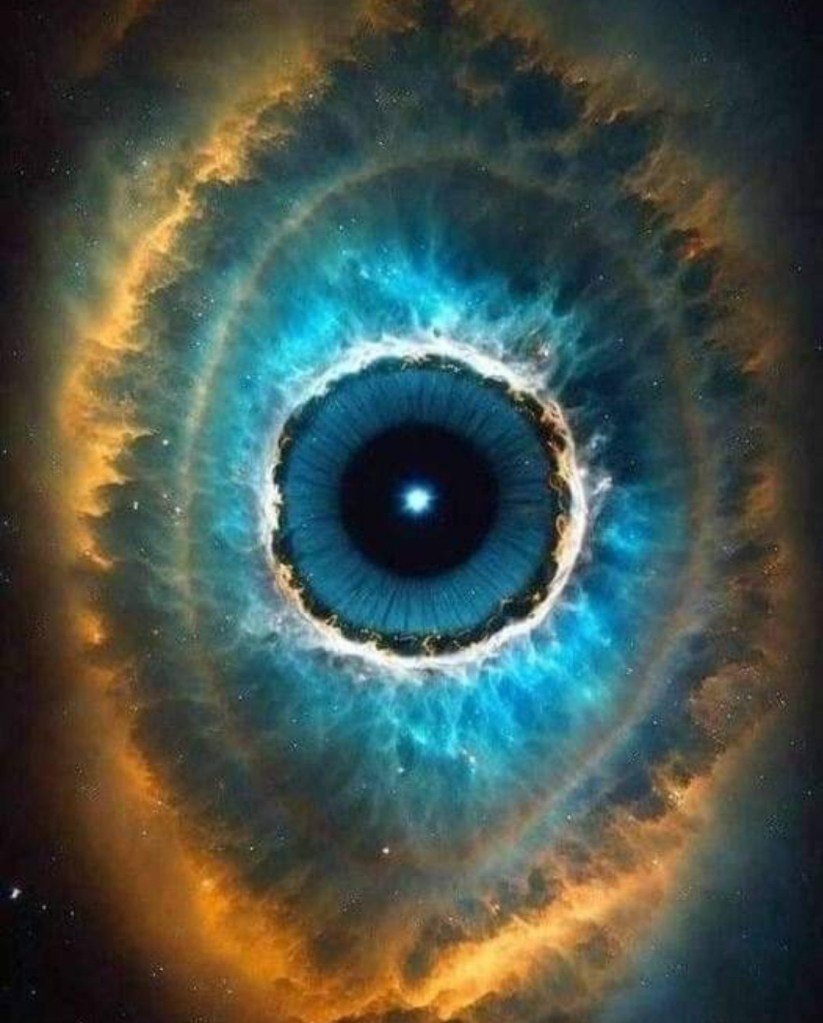
The Helix Nebula

One of the coolest classes I took at U.F. was Intro To Astronomy, taught by a funny old German guy named Heinrich Eichorn who, I later learned, was Chair of the Astronomy Department. (Yes, this was back in those quaint old days when top-notch professors had to actually, you know, teach class. And not just to grad students!) While Professor Eichorn’s lectures tended to meander a bit, he had a genuine enthusiasm for the subject that students, myself included, could sense and respond to. I remember one particular class when, in one of his usual, off-topic asides, he said, “We know the universe is not infinite. If it were, then every point in the sky above us would always be as bright as a star.”

For me, this was one of those mind-blowing moments when one is exposed to the wisdom of the ages. In this case, it was that of another German astronomer, Johannes Kepler, who in 1610 realized that if the universe really were infinitely large, and infinitely old, then every line-of-sight direction one looks at in the sky should eventually hit a star. Thus, the entire sky should be as bright as (and, worse still, as hot as) the surface of a star. Nevermind the fact that most of these stars would be very, very far away. Their light would still have an infinite amount of time to reach us, and there would be an infinite number of them shining down on us. 

We should all be broiling alive right about now.

Continue reading “Just How Freakin Big is the (Whole) Freakin Universe, for Freak’s Sake?”