The Coolest Discovery You’ve Never Heard Of

I recently learned that this year’s Nobel Prize in Physics went to a team of scientists who conducted experiments on quantum tunneling. Their experiments were conducted in the 1980s, which is typical of how the Nobel committees work—it takes around thirty years for a scientific consensus to build that a body of work was truly worthy of a Nobel Prize. 

I was interested in this news because, like most sci-fi nerds, I have an unflagging fascination with quantum mechanics. Heck, I even have a passing understanding of the fundamentals. (No, not just from Star Trek; I’ve read a few actual books! With facts, and stuff!)  A few years ago, I even tried to write a non-fiction book about Bell’s Theorem, which is a famous consent in Quantum Mechanics, albeit one that  you’ve probably never heard of (unless you’re a physicist or a science teacher or a sci-fi nerd). 

John Stewart Bell (copyright CERN)

To be frank, I had never heard of it either, until I read about it in a science book and then ventured to the Wikipedia page, where I learned that the theorem was written by an Anglo-Irish physicist named John Stewart Bell in the 1960s, and it hit the scientific community like a hurricane. Later, in 1975, another physicist Henry Stapp called it “the most profound discovery of science.

When I read this quote, I thought, “Whoa, dude! If it’s really the most ‘profound discovery of science’,” I should probably learn something about it.” 

And I did. Sort of.

Obviously, I will never really understand the underlying math, or even the root concepts that the math represents (which is one reason I abandoned the aforementioned book project). But the theorem itself is pretty easy to understand….

Continue reading “The Coolest Discovery You’ve Never Heard Of”

What We Talk About When We Talk About “Theme”

As I was working on a recent post about the great sci-fi and fantasy movies of 1982, I re-read the Wikipedia page on one of those films, Conan the Barbarian. It’s a great movie (despite the fact that it’s really just a raunchy, gory, over-the-top B-movie with an A-movie budget), and I loved it when it came out, as did millions of others. It was, in fact, a culturally significant film, in its own way, and the Wiki page reflects this. A lot of passionate, obviously smart people have contributed to the page over the years. (Wikipedia is, imho, the single greatest triumph of the internet, but that’s a subject for another post.) 

As such, the page inevitably includes a rather insightful section called “Themes,” in which people have enumerated the topics that the film explores—or at least seems concerned with. These include “The Riddle of Steel,” “Death,” “Wagnerian Opera,” “Individualism,” and “Sex.”

I’m sorry, but “Sex” is not a theme of this movie nor any other. Neither, for that matter, is “Death.” It’s a topic, surely, perhaps even a motif. (Note that I’m using the word “motif” in its strictest, compositional sense, as it is referenced in musicology.) But it’s not a theme.

Yeah, I know. I’m being a bit of an English-major-snob on this one. A word-Nazi. But bear with me, please. If you’re a person who really tries to appreciate literature, either on the page or on film, then the distinction between theme and motif is important. It’s even more important if you’re a fiction writer who struggles to create books that have some meaning and not mere entertainment that is purely disposable. Not that there is anything wrong with fiction that is mere entertainment—entertainment is great—but let’s not kid ourselves that it’s the pinnacle that people should aim for.

The film’s Wiki page comes much closer to the idea of a real theme when it discusses “The Riddle of Steel” (although it completely mischaracterizes and misinterprets the real matter at hand). As anyone who has seen the movie knows, The Riddle of Steel is a connundrum—not so much a riddle as a philosophical question—that Conan believes god will ask him when he dies. The question goes something like this: “Which is stronger? The sword, or the hand that wields it?” Or, put another way, “Technology? Or willpower?” “Brute force, or the power of conviction?”

It’s actually a pretty deep question, especially when one considers the fact that film’s original script writer, Oliver Stone (who later went on to direct a few films, too) is a veteran of the Vietnam War, which surely represented one of the greatest struggles of all time between technology, on the American side, versus sheer determination and courage on the North Vietnamese side. (Please don’t write to me and tell me that determination and courage were displayed on both sides of that tragic war. I realize this, and I am over-simplifying the conflict for the sake of argument.)

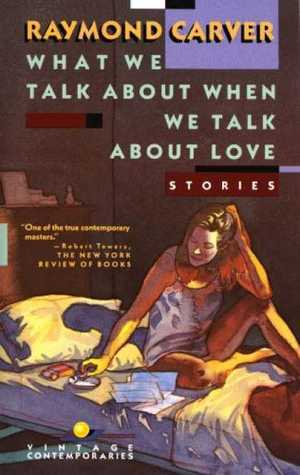
This posing of a philosophical and moral question, which the hero of the film (and, thus, the viewer) struggles to answer is, to my mind, the real definition of a theme. Perhaps the supreme example of this is Raymond Carver’s classic short story, “What We Talk About When We Talk About Love,” in which three couples—all in late middle-age, all jaded—discuss the definition of “love” over hard-drinks. It’s a great story, not just because it captures the individual voice and attitude of each character, but also because all of the characters seem to be genuinely struggling with something—a matter of real import that, each one senses, will reveal something about their own lives. As one might expect, each character has their own story to tell about the subject, beginning with this one from a woman named Terri.

Terri said the man she lived with before she lived with Mel loved her so much he tried to kill her. Then Terry said, “He beat me up one night. He dragged me around the living room by my ankles. He kept saying, “I love you, I love you, you bitch.” He went on dragging me around the living room. My head kept knocking on things.” Terri looked around the table. “What do you do with love like that.”

She was a bone-thin woman with a pretty face, dark eyes, and brown hair that hung down her back. She like necklaces made of turquoise, and long pendant earrings.

“My god, don’t be silly. That’s not love and you know it,” Mel said. “I don’t know what you’d call it, but I sure know you wouldn’t call it love.”

The story continues around the table, with each character telling their own story about the general subject of “love.” In Carver’s supremely able hands, each of these stories is shocking, yet rings true. Completely, brutally true. Some of them are also funny as hell, in a gallows-humor sort of way. One of the greatest things about the story, though, is the way it never gives us a definitive answer to the question it asks. To the contrary, the story raises even more questions—deeper meta-questions that the characters, themselves, are unaware of but which we, as readers, are. Is there a single definition for love? Is that question even meaningful? Does love even exist, really, in the cosmic sense? Does it matter?

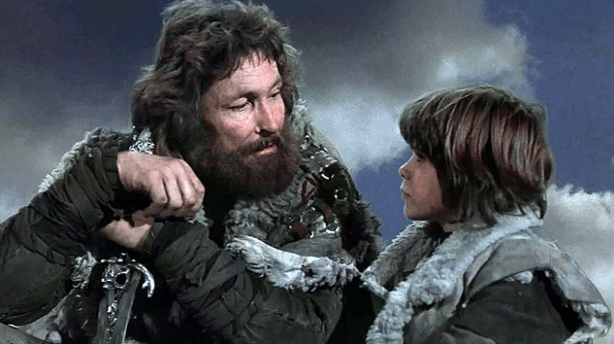
In the same way, Conan the Barbarian presents its hero with several possible answers to its central thematic question. The first is given by Conan’s father (played by the great character actor William Smith) in the opening scene, where he tells the young Conan that the one thing he can ever depend on. “Not men. Not women. Not beasts. This,” he says, gesturing to a sword he has just made. Of course, he is not talking about that particular sword, or even swords in general. He is, we sense, talking about all the intangible things for which the sword is a symbol—discipline, training, courage. The martial ideal. 

Later in the film, the villainous Thulsa Doom presents Conan with another answer. In that famous (and surprisingly shocking, even now) scene when he beckons one of his followers to literally jump off a cliff, he suggests that control over the human mind—through dogma, religion, and all the other tools of tyrants—is far more powerful than strength of arms, either literal or metaphorical.

So, which of these answers does Conan accept. Neither! In fact, his tale seems to suggest a third answer, one which is never articulated—never explicitly told—to either Conan or the viewer, but is rather born out by the action of the narrative. The answer, simply, is love. It’s Conan’s love for his murdered parents that sustains him through the ordeal of slavery and drives his desire for revenge. He loves his friend, Subotai, after rescuing him from death, and he comes to love Valeria even though she is, initially, a rival. Later, it’s Valeria’s love of Conan (along with some help from Subotai) that saves his life after they rescue him from the Tree of Woe. And it’s Conan’s grief over the death of Valeria that causes him to go on his final (foolhardy) confrontation with Thulsa Doom, where he uses his father’s broken sword (note the symbolism, there; steel really isn’t that strong, after all) to behead the man.

I think it is important to note that even in a “silly” genre movie like Conan the Barbarian—a friggin sword-and-sandal movie, for Pete’s sake—good writing can add a level of thematic resonance to any work of fiction. That is, it can turn a potentially crappy movie into a good movie, and a good movie into a great movie. It’s this complexity that separates the vast majority of films (and books, for that matter) from the few we remember years later—that tiny minority that we deem “classics” after the fact.

Another thing to consider is how Conan the Barbarian, like Carver’s short story, doesn’t fully answer its own thematic question. At least, not completely. The ending is ambiguous. Yes, Conan kills the bad guy, and (we are told) ends up a king himself, but he “sits on his throne with a troubled brow.” In others, the verdict is still out on what the real answer to The Riddle of Steel is, after all.This kind of ambiguity is, of course, a hallmark of all good fiction. We, as viewers and readers, don’t get a definitive answer—mainly because the kinds of questions that good fiction asks are, ultimately, unanswerable in any objective sense. They are always about choices. Priorities. Does honor matter more, or friendship? Revenge, or love?

R.I.P. Bill Moyers

If you were a nerdy poor kid growing up in the 1970s and ’80s, you probably watched a lot of public television. Starting with kid shows like Sesame Street and the Electric Company, you graduated in your teens to science shows like Nova and edgy entertainment shows like Monty Python and surreal action series like The Prisoner, which PBS stations played late at night. 

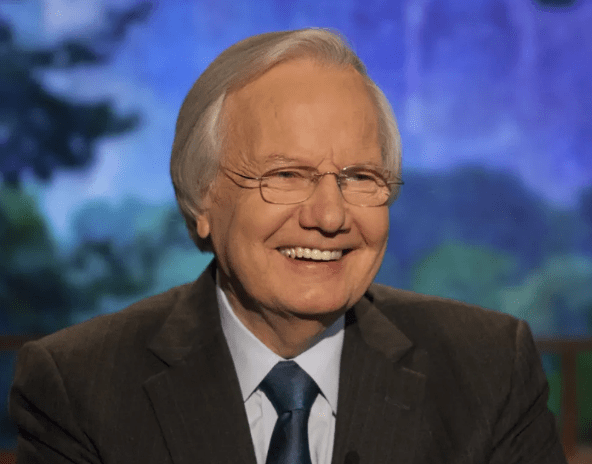
As for myself, I also watched a lot of PBS news, especially The MacNeil/Lehrer NewsHour. And Bill Moyers. Lots of Bill moyers. If MacNeil and Lehrerwere the Kings of PBS news, then Bill Moyer was the high-ranking courtier. Moyers, who passed away last week, specialized in thoughtful and intelligent interviews with brilliant people of various stripes. As a would-be teenage intellectual, I really loved and appreciated these shows, and they introduced me to a lot of very smart artists, politicians, and writers. Chief among these was the iconic scholar of world mythology Joseph Campbell. Moyers’s now-famous interviews with Campbell, conducted at George Lucas’s Skywalker ranch (Lucas was inspired by Campbell’s writing when he penned the Star Wars saga), were probably the pinnacle of both men’s careers. 

I’ve been a fan of Campbell ever since, and also of Moyers. A one-time Baptist preacher, Moyers was a gentle, kind-spirited man who never descended into sentimentality or fatuous optimism. He was, rather, a first-rate journalist. And God knows there are very few of those these days. 

Moyers has been the subject of many on-line tributes in the past few days, including this one by the excellent historian Jonathan Alter.

Godspeed, Mr. Moyers….

What I’m Reading: “Rebbe”

I’ve read a lot of biographies in my time. Some of my favorites have been about great monarchs (Catherine the Great by Robert Massie), presidents (Truman by David McCoullough), scientists (Oppenheimer by Kai Bird), architects (Frank Lloyd Wright by Meryl Secrest). Now, I can finally add religious leaders to my list. Or at least one religious leader, the Rebbe Menachem Mendel Schneerson

It’s taken me this long, I think, because while I am fascinated by the study of various religions, I am not very interested in the life-story of most religious leaders. This is, in part, a consequence of the vexed historicity of such figures. Usually, they lived in the distant past, shrouded in veils of myth, with the actual, living person being lost to time. But this is not the case with Rebbe Schneerson. After all, he was not only a very recent figure, having passed away in 1994, but he spent most of his life right here in the United States—Brooklyn, in fact, that modern locus of Hasidic Judaism, and especially the Chabad-Lubavitch dynasty, which Schneerson led since 1951, succeeding his father-in-law. 

As Joseph Telushkin recounts in his excellent book, Rebbe: The Life and Teachings of Menachem M. Schneerson, the Most Influential Rabbi in Modern History, Schneerson was essentially appointed to the position by general acclimation, bypassing the previous Rebbe’s son who had been the heir apparent. Community leaders and other rabbis in the movement were simply awed by Schneerson’s considerable intellect—he spoke half-a-dozen languages, had an Engineering degree, and was considered a “genius” in Talmudic study from the age of seventeen—and pressured him to take the job. 

Which, thankfully, he did. I never thought I would ever read a book about an orthodox Jewish rabbi and, at the end, think to myself: “Wow, he seems like a really cool guy.” After all, I’m used to being utterly repulsed by most “leaders” in my own religious sphere, Christianity, with the exception of the current Pope and his immediate predecessor. But the more I read about Schneerson, the more impressed I was, not only by his general wisdom in matters of religion and morality, but also in his endless, practical concern for the well-being of ordinary (often poor) people, both Jews and Gentiles. 

One example Telushkin provides involves Shirley Chisholm, the first black woman elected to Congress. Racist creeps in the House refused to appoint her to any high-level committees and instead stuck her on the Agriculture Committee, which, considering Chisholm represented a section of New York, seemed absurd to most observers. Yet, the snub also presented an opportunity that she, herself, never suspected. As Telushkin writes:

She soon received a phone call from the office of one of her constituents. “The Lubavitcher Rebbe would like to meet with you.” Representative Chisholm came to 770. The Rebbe said, “I know you’re very upset.” Chisholm acknowledged both being upset and feeling insulted. “What should I do?” The Rebbe said: “What a blessing God has given you. This country has so much surplus food and there are so many hungry people and you can use this gift that God’s given you to feed hungry people. Find a creative way to do it.”

And she did, creating one of the first federal food-aid programs in the history of the United States, in which surplus food was bought by the government from American farmers and distributed to poor people, thus helping the recipients, the farmers, and pretty much everyone else.

On a more personal level, Schneerson always emphasized the importance of kindness and compassion over religious stricture. In one of his drashas (sermons), he famously told the story of how his predecessor, the Alter-Rebbe, once stopped in the middle of his Sabbath observations to attend to a young woman who had just given birth and who had been left alone by her family so that they could attend synagogue. Telushkin writes:

That day, the Alter Rebbe, having somehow learned that the new mother was alone, was suddenly overwhelmed with the certainty that the woman required someone to attend to her needs immediately; it might well be a matter of life and death. And since no one else was taking care of her, he concluded that he should be the one to do so.

This story apparently shocked his followers in way that most modern, secular people like myself cannot really appreciate. The idea that a rabbi might 1.) forsake the Sabbath observations in order to 2.) do menial work on the Sabbath like chopping wood and 3.) do so for an ordinary woman was radical in the extreme.  

Such was Schneerson’s boundless respect and love for ordinary people that he was always concerned about inadvertently embarrassing or insulting anyone, especially those who were most vulnerable. Decades before the so-called woke movement (a bad name for a very noble cause), Schneerson refused to use the word “handicapped” in reference to battle-maimed Israeli soldiers. Telushkin writes:

Referring to the fact that such people are designated in Israel as nechei Tzahal, “handicapped of the Israel Defense Forces,” the Rebbe addressed the men as follows: “If a person has been deprived of a limb or a faculty, this itself indicates that G-d has also given him special powers to overcome the limitations this entails, and to surpass [in other areas] the achievements of ordinary people. You are not disabled or handicapped, but special and unique as you possess potentials that the rest of us do not. I therefore suggest”—the Rebbe then interspersed with a smile—“of course it is none of my business, but Jews are famous for voicing opinions on matters that do not concern them—that you should no longer be referred to as ‘disabled veterans’ but as ‘exceptional veterans’ [metzuyanim], which more aptly describes what is unique about you.

In addition to being a genuinely good and wise person, Schneerson also seemed to have what can only be described as superpowers. He worked eighteen hours a day, six-days-a-week, for most of his life. Being busy with his primary duties during the day, he met with people seeking advice in the evenings, often as late one or two o’clock in the morning. Some of the people seeking advice including future and former Prime Ministers of Isreal such as Menachem Begin, as well as many other powerful and influential figures. But, more of than not, they were comprised of ordinary men and women in his congregation. I was especially impressed with Telushkin’s story of a young woman, Chana Scharfstein, who often came to his office seeking academic as well as personal (dating) advice:

The Rebbe clearly knew his agenda for this meeting, and the conversation quickly turned in a personal direction. At a certain point, he asked Sharfstein if she felt ready to get married. Sharfstein told him that she had begun dating—in Chasidic circles, young men and women date only for the purpose of marriage—and the Rebbe asked her about a specific young man. She recalls being taken aback and thinking to herself, That’s interesting that he should ask about somebody that I had met. Sharfstein told the Rebbe that she had met the young man he mentioned, that he was clearly a fine person, but not for her. The Rebbe said all right, and then mentioned another name, and again it was someone to whom Sharfstein had been introduced. Here, too, the young man was very nice but not for her. Then the Rebbe mentioned a third name, and a fourth, “and I became really uncomfortable then. How did the Rebbe choose all the names of young men (bachurim) that I had met? I was just absolutely overwhelmed that he should mention people that I had actually met.” Only later did she learn that prior to going out with a girl, each bachur in Chabad would write to the Rebbe to inquire if the girl seemed suitable for him, and so the Rebbe, who obviously had responded in each case that Chana Zuber was suitable, had a very precise idea of all the people with whom she had gone out. But even taking all this into account, Sharfstein still remained staggered at the Rebbe’s recall. After all, he “was [already] a world leader at this time, and to keep track of each person and who had been dating whom, it’s really mind-boggling.”

As this story relates, Schneerson’s remarkable memory and formidable intelligence were often sources of awe among those in congregation. Another example involves a young student, Irving Block, who came to discuss philosophy with the Rebbe:

At the time, Block, who was studying for an MA in philosophy, was immersed in the study of the great Greek thinkers, Plato in particular. And that’s the direction in which the Rebbe led the discussion. Only Block didn’t realize at first to whom the Rebbe was referring, because it was a man named Platon about whom the Rebbe started talking. It finally struck him that Platon is how the name of the Greek philosopher is written in Greek, though in English his name is always pronounced as Plato. It’s not that the n is silent in English; it isn’t written at all. This was Block’s first surprise of the day. The man seated in front of him, dressed in the garb of a Rebbe, obviously knew about Plato, or Platon, from the original Greek and pronounced his name as it was supposed to be pronounced.

Block was not only amazed by the Rebbe’s deep understanding of the “Platon’s” philosophy but by his utter rejection of it. (Plato believed that the nuclear family was an evil institution and should be abolished, an idea that was in direct contradiction to all humanist values, including those of Judaism.)

In recounting such stories as these, Telushkin’s book is really more of an appreciation or tribute than an in-depth biography. And yet he manages to relate the primary facts of Schneerson’s remarkable life with grace. Born in Imperial Russia, Schneerson moved with his family to the US in the spring of 1941. Thereafter, he served as Rebbe for over 50 years, finally passing away in a time when the world was much changed. 

One might say that he was born in the time of Tsars and passed away in the time of the internet. And, in all that time, one thing remained constant: his steadfast commitment to the practical well-being of all the people, rich and poor, high and low, in his community and around the world. Truly a person worth reading about. Check it out…

Synchronicity for Bookworms: Sherlock Holmes and George Eliot

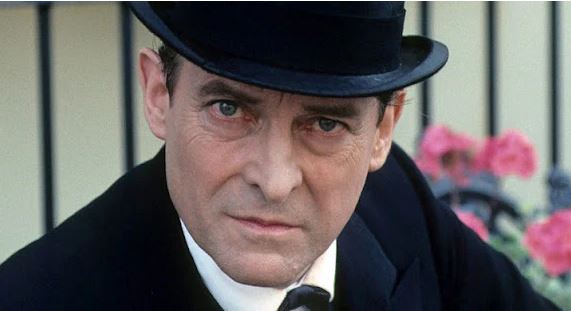
Jeremy Brett as Sherlock Holmes

It’s time for another entry in my ongoing series Synchronicity for Bookworms. In this episode, I will describe the incredibly tenuous and yet undeniable connection I found between the great stage and film actor Jeremy Brett and George Eliot’s classic Victorian novel Middlemarch

As you might recall, I recently did a blog post on Arthur Conan Doyle’s classic mystery novel, The Hound of the Baskervilles. In that post, I mentioned that my favorite actor to ever play the role of Sherlock Holmes was Jeremy Brett. While I was writing the post, I browsed various Internet pages pertaining to Brett. Brett was primarily a brilliant and prolific stage actor, appearing in everything from Shakespearean Tragedy (check out his performance as Macbeth on YouTube) to comic theater. 

Rex Harrison

On one page, I found a photo of Brett standing in front of a billboard advertising a play in which he was appearing. As I looked closer at the image, I saw that Rex Harrison was also in the play. (As I later discovered, the production was a revival of Frederick Lonsdale’s “Aren’t We All?” that ran on Broadway in 1985.) This revelation made me smile because I am also a fan of Rex Harrison, ever since I read a biography of him a decade ago.

Naturally, I immediately went to the Wikipedia page for Rex Harrison and browsed through his biography. This included his great filmography. One of the more famous films he starred in was Blithe Spirit, a supernatural comedy based on a play by Noël Coward. I clicked on the link to the Wikipedia page for Blythe Spirit (the play) and discovered that Coward took the title from a poem by the great British romantic poet Percy Bysshe Shelley

Naturally, I then clicked on the link to Shelly’s Wikipedia page and browse through his biography. Reaching the bottom of the page, I saw to my amazement that George Eliott had based the character of Will Ladislaw from her great novel Middlemarch on Shelley. 

Percy Bysshe Shelley

And there you have it, a cosmic filament connecting two of my recent topics—Sherlock Holmes and George Eliot. When my eyes settled on this last reference to Middlemarch, a little spark of amazement ran down my spine. That’s the sensation one gets when stumbling upon the sublime, hiding in the common-place.

Note that this was not some Six Degrees of Seven Bacon thing. That is, I was not looking for any connection. In fact, Middlemarch wasn’t on my mind at all when I started Googling Jeremy Brett. And yet, there the connection was.

I don’t know if it means anything or not. But it made my day.

What Is It Like to be The Terminator?

I can’t believe it’s been 41 years since James Cameron’s The Terminator came out. I first saw it in the movie theater and like everyone else I was completely stunned by its energy and creativity. It might well be the best B-movie action film ever made. (Its sequel, T2, is an A-movie action flick that still feels like a B-movie, in a good way.) Cameron’s spin on what is essentially the ancient hunter-vs.-the-hunted plot—mashed up with about a dozen sci-fi tropes and a heaping serving of the Frankenstein/Dr. Faust myth—results in an almost perfect piece of entertainment. There is not a dull moment or lame moment in it. Every scene either surprises, shocks, or tickles the viewer.

The sequel, T2, is even better, mainly because it’s a coming-of-age film. Rather, it’s a becoming-human film. We watch as the Terminator observes human beings, learns from them, and begins to emulate their best qualities. It’s an archetypal story, and I (almost) tire of watching it. And, in the process of watching the film so many times over the years, I’ve repeatedly asked myself: What is it like to be the Terminator?

Continue reading “What Is It Like to be The Terminator?”

Just How Freakin Big is the (Whole) Freakin Universe, for Freak’s Sake?

The Helix Nebula

One of the coolest classes I took at U.F. was Intro To Astronomy, taught by a funny old German guy named Heinrich Eichorn who, I later learned, was Chair of the Astronomy Department. (Yes, this was back in those quaint old days when top-notch professors had to actually, you know, teach class. And not just to grad students!) While Professor Eichorn’s lectures tended to meander a bit, he had a genuine enthusiasm for the subject that students, myself included, could sense and respond to. I remember one particular class when, in one of his usual, off-topic asides, he said, “We know the universe is not infinite. If it were, then every point in the sky above us would always be as bright as a star.”

For me, this was one of those mind-blowing moments when one is exposed to the wisdom of the ages. In this case, it was that of another German astronomer, Johannes Kepler, who in 1610 realized that if the universe really were infinitely large, and infinitely old, then every line-of-sight direction one looks at in the sky should eventually hit a star. Thus, the entire sky should be as bright as (and, worse still, as hot as) the surface of a star. Nevermind the fact that most of these stars would be very, very far away. Their light would still have an infinite amount of time to reach us, and there would be an infinite number of them shining down on us. 

We should all be broiling alive right about now.

Continue reading “Just How Freakin Big is the (Whole) Freakin Universe, for Freak’s Sake?”

Brief Encounters with Infinity

Autumn Rhythm (Number 30)
Jackson Pollock, Autumn Rhythm (Number 30)

Back in the dot.com boom of the 1990s, I was lucky enough to work for an IT company based in New York City. I was a remote worker, writing software eight hours a day in my spare bedroom in Gainesville, Florida. It was a win-win situation. I got to work from home, and my bosses got a good developer for country-boy wages (and I was still in the same time zone).

Occasionally they would fly me to the city for a meeting and I would spend my evenings wandering the streets of Manhattan, which is surely the most beautiful and bewitching cities of the earth. My favorite spot is the Met. Like a lot of introverts, I love museums, and the Met is the greatest of them all. I mean, how many museums have their own Egyptian Temple?  Indoors?

Once I spent an entire weekend roaming its halls, barely scratching the surface of its vast collections. I tend to gravitate toward the Modern period from the early- and mid-twentieth century. From guys like Matisse and Picasso all the way to Hopper and O’Keefe.

From a historical perspective, my interest stopped after that.  I never much got the whole Post-Modern thing—Abstract Expressionism and all that.  It seemed too theoretical. A joke that high-brow art critics had played on the rest of us, as Tom Wolfe wrote so wittily in The Painted Word.

Continue reading “Brief Encounters with Infinity”

David Bentley Hart Cheat-Sheet

My Favorite DBH Video

I love David Bentley Hart. He’s not only a great writer and philosopher, he’s a wonderful speaker and explainer of big, complicated ideas (actually, the biggest and most complicated ideas imaginable). He also has a scathing wit and a talent for skewering stupid ideas masquerading as wisdom. 

I’ve read a lot of Hart’s work, and watched many of his interviews on Youtube (there are a ton of them). My favorite is posted above, and I encourage everyone to check it out. However, if you’re new to DBH’s work, you might find yourself frantically looking up a lot of terms that frequently come up. (I still do.) So, in order to ease the transition, here is a handy cheat-list of some of the more important ones:

Ontology – The philosophical study of being itself, especially in the questions of why is there something rather than nothing and does God exist.

Dualism – The idea that human beings are composed of two fundamental, separate things: mind and matter. This concept is most closely associated with René Descartes (i.e., Cartesian Dualism) and his famous statement, “cogito, ergo sum” (“I think, therefore I am”). Dualism is usually contracted with monism, the notion that all aspects of human life are reducible to one fundamental thing (typically, the physical laws of nature). 

Materialism (a.k.a. Reductionism, Physicalism) – The notion that all aspects of human life, including consciousness, can ultimately be explained by scientific laws. That is, the fundamental forces of nature (gravity, electromagnetism, the strong force), genetics, Darwinian evolution, etc.

Apophatic – The idea that, because God (if He exists) is ineffable and beyond human comprension, we can only talk about Him in terms of what He is not rather than in terms of what He is (i.e., Cataphatic theology). For example, we can say that God is neither male nor female (despite the fact that most people use a male pronoun). But we can’t really say what His nature is.  

Contingent – The concept of contingency refers to the fact everything in the physical universe exists as a result of something that came before it (including, ultimately, the Big Bang). THis becomes important in the so-called Ontological Arguments for the existence of God.

Thomist – The adjective used to describe ideas that derive from those of St. Thomas of Aquinas. (It’s pronounced TOME-ist.)

Qualia – Qualia is a fancy word used by philosophers–especially those concerned with the so-called Hard Problem of Consciousness–to describe feelings. That is, what it’s like to be conscious and experience things as a living being, and how is this possible. 

Panpsychism – the ancient idea that all things–even those things we usually call inanimate–might have some kind of consciousness. 

Apokatastasis – A Greek work referring to the restoration of all creation to a divine state. In some Christian philosophical schools of thought, it also refers to the eventual salvation of all souls (even those in hell, including the Devil). Hart has written extensively on this subject in his book That All Shall Be Saved.