My Latest Obsession: Vaporwave

I have a confession to make: I dream about shopping malls. Specifically, one shopping mall, the Oaks Mall here in Gainesville.

The “Collapsed Time” Effect of Vaporwave

After my parents’ divorce, I saw my mother mostly on the weekends, and one of our routine activities was to go to the mall. We would have lunch, see a movie, and wander around. Later, when I got into my teens, I spent a lot more time at the mall with my friends. We hit all the usual spots—the arcade, both bookstores (Waldenbooks and B. Dalton’s), the record store, Spencer’s Gifts, the toy store. And we did anything else we felt like. 
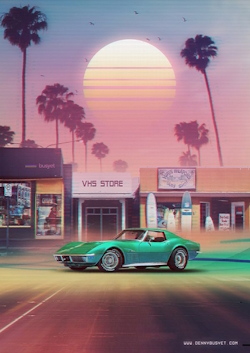
Trappings of the 1980s, along with “Broken Sun” motif

We weren’t alone, of course. After the collapse of downtown America, the mall was the last remaining public square. In suburban America, particularly, it was also the only fun thing to do on a Saturday afternoon. Or a Saturday night, for that matter. When I entered high school and started going on dates, we often went to a movie at the mall. One of my most vivid memories is of how strange and eerie the mall felt after the movie let out at 11:00 or so, and we would walk through the empty, dark hall with all the shops closed and metal gates drawn down. It was one of my first experiences of liminal space, and it sticks with me even today.

In fact, it haunts my dreams. Literally. For when I dream of the Oaks Mall now, I often find myself lost among its corridors near closing time, the wings still busy with shoppers but with the crowd starting to thin out, little by little. Stranger still, my dream-mall is huge—the size of Manhattan Island, practically. A gigantic labyrinth of brand-name stores, all of which are in the early stages of shutting down for the night. (My subconscious, I think, is warning me that the mall is shutting down forever.) These dreams often end in a sense of panic as I realize I am on the wrong side of the mall from my friends, or my car, or whatever, and I will never be able to reach them/it in time before…what? Closing? It’s not clear, but whatever it is, it’s kind of scary.

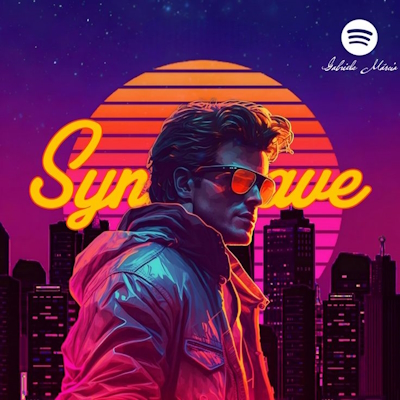
Despite the disquieting nature of these dreams—or perhaps because of it—I find myself endlessly fascinated by what has come to be known as the Vaporwave aesthetic. Vaporwave is primarily a visual genre, marked by artistic images of 1980s culture. That is, computer graphics, shopping malls, the Miami skyline (ala Miami Vice), fast food restaurants, music videos, video stores, and old-style video games.

And neon. Lots and lots of neon.

Empty Mall / Liminal Space Vibe Typical of Vaporwave

The overriding effect is that of a hyper-real fantasy that feels like a time-portal back to the 1980s. I love these images because they somehow evoke the memory of that long ago time, at least for me. More accurately, they evoke the feeling I wanted to have at the time but could never quite capture. The feeling of an endless, prosperous, fun, high-tech future.

I think that this is the real power of nostalgia. A wise man once defined nostalgia as a fondness for a Time that never existed. I don’t think that’s quite right. Nostalgia is a fondness not for a lost time but for a lost hope—the hope one felt and in a familiar place and a long-ago time. A hope that, though never realized, still lingers in the heart. 

That sense of lost opportunity is, I think, reflected in the very name of the genre itself, vaporwave, which is very similar to vaporware, a term coined in the 1980s to mean great-looking software that was promised by advertisers and corporations but which never actually materialized. It simply evaporated.

The same thing happened to our collective dreams back in the 1980s. My friends and I all hoped that we could look forward to a glorious future, one better than that of our parents’ and teachers’ generation. A future that would be made bright by the many technological revolutions (the digital revolution, especially) that were impacting every aspect of our culture: movies, TV, music, art, games, fashion, and even books. The haunting images of vaporwave reflect that lost dream—rather than the sterile reality—of the 1980s and ’90s.

Many vaporwave images seem to have a psychedelic “collapsed time” feel to them, as did many of the music videos and computer-generated short films of that era. The hippie generation had the psychedelic flower as their symbol. We had the computer-generated sun—the so-called “broken sun”—which seems to have been pulled directly from of a film poster or a television commercial from 1982. 

As attracted as I am to vaporwave, I am equally drawn to its parallel music genre, synthwave. Like vaporwave, synthwave is characterized by the early computer-era vibe, as symbolized in synthesized music. Not actual synthesized music from the 1980s, of course, but rather music that sounds a lot like it, yet is somehow drained of all melodrama and false tension that characterized synth-music back then. Synthwave has a kind of purity to it. A simple beauty that surpasses the actual music of that time.
In other words, synthwave is to actual 1980s music what Andy Warhol was to actual advertisements of the 1950s. His silk screen images of Campbell’s soup cans looked almost exactly like actual soup cans, but larger, stylized, more vivid. They made the world really see Campbell’s soup cans—the sublime nature of everything, even a mass-produced soup can—for the first time. Warhol’s genius lay in his ability to show us the beauty and promise of something that was once central and even commonplace in our lives, even as it mocked (lovingly) that very same thing.

That’s what vaporwave does, too. Through the alchemy of art, it somehow humanizes the relentless, corporate-controlled media barrage of the 1980s. For me, and millions of others like me, it is literally the stuff that dreams are made of.

Or were made of, that is. Back in the day.

Lo-Poly, Computer-Generated Background with Broken Sun
Blatent Consumerism of the 1980s, both celebrated and mocked

Random Dose of Optimism: Real-Life “Tasty Wheat”

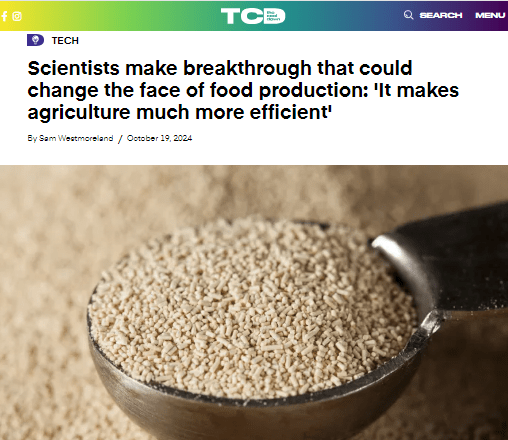
Article in The Cool Down

Remember that scene from The Matrix in which the crew of the rebel hovercraft the Nebuchadnezzar sits down to a meal of some artificial, lab-concocted glop? Apoc describes it as being “like a bowl of snot,” while Mouse say it actually reminds him of one of his favorite foods as a child, the fictional Tasty Wheat.

Dozer explains that the glop is said to be created by a single-celled organism and has all the nutrients required to support human life. In real life—and especially on our rapidly warming planet, where droughts are becoming more common and every inch of arable land will soon be needed to grow basic crops—such glop would actually be a very cool thing. It might, in fact, be the difference millions of people suffering famine and those same millions having decent, long lives. Never mind the taste, this glop would be a Godsend.

Well, this week some nerds at the University of Tübingen in Germany announced that they have essentially created some version of the magical glop. The single-celled organism turns out to be a bacterium called Thermoanaerobacter kivui, and the glop created contains both B9 and more protein per volume than beef. And all it needs to grow is C02 (the primary offender in the climate crisis), hydrogen, and some heat. Pretty cool!

I’ve always been fascinated by the idea of creating artificial food. This is probably because I’ve read too many science fiction novels, where such technology is often presented as dystopian (I’m looking at you, Soylent Green) as well as utopian (see the replicators on Star Trek). Being a natural, rational optimist, I tend to believe that artificial food will be a great boon to society. In particular, artificial protein would be a wonderful thing because it would free up so much land that is currently used by livestock (the most inefficient form of food production, not to mention the cruelest in its most common form).

Don’t get me wrong—I like meat. I cook with meat. And I think free-range livestock raised with traditional, holistic practices might actually be a crucial element in the fight against climate change. But if there were a good, renewable alternative to real meat that sucks up C02 in the process, I’m all in. It could, in fact, save the world as we know it.

Hopefully, they will figure out the taste problem.

AI Heaven, AI Hell

When I was an English major at the University of Florida, one of the best classes I took was a Survey of Science Fiction Literature course. It covered a lot of famous American and British SF, some of which I had already read as a teenager and some of which were new to me.

Looking back on it now, it occurs to me that two of the writers we read in the class were not only totally different from each other, they also presented two completely opposite visions of what we now call artificial intelligence. These writers were Isaac Asimov and Harlan Ellison.

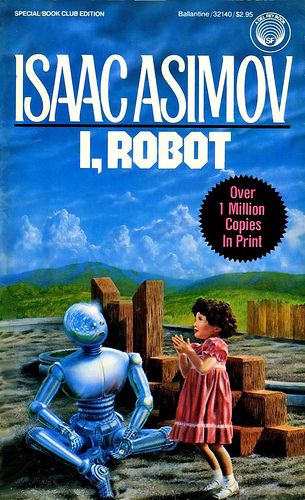
For Asimov, we read his early, seminal work, I, Robot. This is the short story collection that included his first formulation of the Three Laws of Robotics, which have been alluded to (i.e, ripped off) in countless other science fiction stories, including Star Trek. The book came out before the term AI became common parlance. Yet, in Asimov’s imagined future, the world is rife with robots that are essentially AIs with mechanical bodies. All of them have positronic brains (yeah, Star Trek ripped off this conceit, too) with the Three Laws hard-wired in. The result is that all robots function as humanity’s tireless, benevolent servants. (Some would say, slaves.) 

Actually, they are much more than that. They can think, reason, and make choices. In fact, they have to make choices. The moral dilemmas created by the Three Laws as the robots interact with chaotic (and often evil) human beings is the source of drama in most of the stories. 

Despite the mystery and drama of the stories, though, Asimov’s vision is a very optimistic, almost Buck-Rogers-esque idea of the future—not quite a utopia but close to it. There is no poverty, no hunger, no war. It’s only upon close reading of the stories in I, Robot that the exact nature of the master/servant relationship between humans and robots appears fraught—probably more so than Asimov consciously intended. This is especially true in a few of the stories, where it’s revealed that future governments are secretly run by the highest order of HAL 9000 style robots, whose plans might be beyond human comprehension. 

Later in the Science Fiction class, we read Harlan Ellison’s short story “I Have No Mouth and I Must Scream,” which is quite possibly the darkest and most disturbing short story I have ever read, sci-fi or otherwise. And, of course, it involves an AI.

The story is mostly set underground, about one hundred years after a nuclear war wiped out all of humanity except for five people. The war was started by a mutinous Pentagon computer (yeah, just like Skynet) called AM that becomes self-aware and decides it hates human beings more than anything. After killing everyone on the planet, it preserves the five people as its playthings, running them through an endless number of elaborate, sadistic games. Unfortunately for them, AM has somehow obtained God-like technological power over physics, able to shape and project matter wherever it wishes, and also to keep the humans alive and immortal in their banged-up, miserable state. So, in effect, the protagonists spend an eternity in a kind of Holodeck-like hellscape, trying to figure out how to either escape or kill themselves.

Yeah, it’s heavy. 

This enormous gulf between Asimov’s and Ellison’s visions of the future—an AI paradise versus an almost literal AI hell—is, in part, symptomatic of various generational and cultural shifts between the two men. I, Robot was published in 1950, on the tail-end of the Golden Age of Science Fiction, the time when the prosperity of America in the post-war years seemed destined to go on forever, fueled by newer and greater technological innovations (AI among them). In contrast, Ellison’s short story was published in 1967, at the height of a counter-cultural revolution that extended into science fiction literature —the New Wave that introduced some of my favorite sci-fi writers of all time, such as Samuel R. Delany, Ursula K. Le Guin, Roger Zelazny, and Ellison himself. 

Thus, the difference between Asimov and Ellison’s work is essentially the difference between the lingering triumph of World War II and the horrors of VietNam. Between the optimism of the Atomic Age and the nihilism of the Cold War. In some ways, it’s also the difference between fantasy and realism, and between genre fiction and literary fiction. As dark as Ellison’s short story is, it’s also a much better work of fiction than Asimov’s. More convincing, too, alas. Told from the point-of-view of AM’s youngest victim, Ted, the story is filled with vivid, sharp writing and devastating passages, like this one:

Nimdok (which was the name the machine had forced him to use, because AM amused itself with strange sounds) was hallucinating that there were canned goods in the ice caverns. Gorrister and I were very dubious. “It’s another shuck,” I told them. “Like the goddam frozen elephant AM sold us. Benny almost went out of his mind over that one. We’ll hike all that way and it’ll be putrified or some damn thing. I say forget it. Stay here, it’ll have to come up with something pretty soon or we’ll die.”

Benny shrugged. Three days it had been since we’d last eaten. Worms. Thick, ropey.

You don’t have to be a literary critic to see that Asimov and Ellison are worlds apart, not just on the subject of Artificial Intelligence but on literally everything. Asimov was a scientist, a rationalist, and his optimistic views on the future of humanity were deeply rooted in the legacy of the Enlightenment. Ellison is more of a Gothic Romantic, full of existential angst and cosmic horror. His story is essentially an updated version of Mary Shelley’s Frankenstein, with the supercomputer in the role of the monster, determined to torment its creator.  

Of course, the Frankenstein story is, itself, a reworking of an even older one—the Faustian myth. According to German legend, Faust is an intellectual who sells his soul to the devil in exchange for knowledge, and ends up going to hell. If the story seems familiar, it’s probably because the legend has been the psychological basis for countless tales of perverted science for centuries. Scientists, the story goes, want to attain the power of God, and thus end up being destroyed by their own hubris (often in the form of some infernal creation like Frankenstein’s monster or, more recently, SkyNet). 

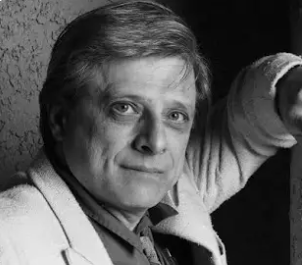
Isaac Asimov

Perhaps the biggest irony here (at least for me, personally) is that while I have great admiration for Ellison’s story, and I believe it is a much greater artistic work that anything ever penned by Asimov, Asimov’s vision is probably more accurate of what we can actually expect from the AI revolution. For all the hype about AIs destroying art and music and literature and taking away our jobs, I think AI will be a net positive for humanity. Perhaps a big net positive. It’s already making contributions in the fields of materials science, medicine, and even fusion energy. Yeah, it’s probably going to take away some people’s jobs, but those were probably crap jobs anyway. (If you train an AI to do it as well as a human, it’s probably not worth doing.) 

As for the whole AM/Skynet thing, I don’t worry about it because I don’t believe computers will ever become conscious. In fact, the very idea of a machine becoming conscious seems like a category error, the kind of conceit that will seem laughable a hundred years from now as those old drawings of “men of the future” with feathered wings strapped to their arms. 

Harlan Ellison

This doesn’t mean, of course, that we won’t, someday, create an artificial life form that might replace us. But it won’t be a computer. It will be…something else. 

But that’s a subject for another post.

Today I Learned a Word: “Googie”

FloridaShoppingCenter

I was born in the 1960s, which means I am among the first generation to grow up with color TV. This also means I am also among the first Americans who are able to see their past in color. Or, at least, the urban landscape of our past. Maybe that’s why I love old TV shows like The Rockford Files—shows with a lot of exterior shots of working class cities and suburbs from back then. Once in a while, Rockford will race through Los Angeles and there, flashing by in the background, a McDonald’s from 1976 will appear. Or maybe a Woolworth’s or a Wash King.  (Yes, I do realize that most people have never heard of Woolworth’s or Wash King.)

These were the places I would visit with my parents when I was a kid, and it’s kind of neat to see them again, if only on a TV screen. Seeing them today, forty years later, I am often struck by how different the architecture was back then, especially the fast-food joints and coffee shops, many of which were getting on even when Rockford was in his prime. These vintage buildings from the 50s and 60s often had weird, playful curves and tilted walls, all of it stitched together at crazy angles. I remember one restaurant in particular that my mom used to take me to every weekend. It had plastic booths nestled under a rocket-red awning with trippy lights hanging down. It looked like something straight out of The Jetsons.

Continue reading “Today I Learned a Word: “Googie””

“I’m Probably Wrong About Everything” Podcast Interview

Many thanks to Gerry Fialka for interviewing me on his great podcast. I have no idea why he thought of me, but I’m glad he did. It was fun.

Yes, my lighting sucks. I’m working on it. Check it out anyway, pls…

Time for an A.I. Sanity Check

Ever since the first publicly available AI SaaS offerings (that’s Software-as-a-Service for all you non-geeks) like ChatGTP hit the market, the media ecosystem has been in love with the subject of AI as a major disruptive force. Disruptive, that is, in the creative industries hitherto regarded as safe from any kind of automation: illustration, film-making, acting, and writing. Story after story has run about how AI-generated art, screenplays, journalistic articles, etc. might soon replace the work of human content creators. 

Within this maelstrom, a smaller, subset of articles has begun circulating related to whether AI will ever achieve consciousness. (Some experts believe it already has.) And, within this subset, there is a sub-subset devoted to what I call AI alarmism. That is, the idea that AI, if left to its own devices, might soon overthrow—and perhaps even exterminate—humanity itself, ala the “evil AI” tropes of the Terminator films, the Matrix films, the Tron films, et cetera, et cetera.

Such visions of an AI apocalypse are not new. Hal, the murderous supercomputer in Stanley Kubrick’s 2001: A Space Odyssey, is perhaps the most famous example of an AI gone bad. And a cool but largely forgotten movie from the 1970s called Colossus: The Forbin Project lays out exactly how a psychotic AI (in this case, one entrusted with the care and maintenance of the American nuclear arsenal, just like SkyNet) could take over the world by force. 

Continue reading “Time for an A.I. Sanity Check”

Random Dose of Optimism

In his amazingly good sci-fi novel, The Peripheral, William Gibson describes a environmental cataclysm called The Jackpot. The name is perfect, in that it evokes not a single-cause catastrophe but rather a horrific alignment (like the diamonds on a slot machine) of multiple ones. Global heating. Drought. Pollution. Pandemics. Poverty. Et cetera.

But, as is ruefully noted by the protagonists of Gibson’s novel, The Jackpot hit at almost the same time as a technological revolution (actually several revolutions) that might have avoided it. Geoengineering. Nanotechnology. Artificial Intelligence. Fusion power. Genetic engineering.

All of these fields are exploding, right now, in the early 21st Century. That’s why I’m guarded optimistic about humanity’s chances of surviving the next fifty years. (Note that I said “surviving”; it’s going to be incredibly challenging, and will involve great suffering and sacrifice.) Many environmentalists scoff at this kind of optimism. There is no technological silver bullet, they warn, that will get us off the hook.

And, of course, they’re right. There is no big silver bullet. But there might be a lot of small silver bullets that, if aimed precisely (have I tortured this metaphor long enough?) might at least blunt the looming crisis. 

After all, we’ve been here before. In the mid-20th Century, scientists were warning that current agriculture techniques would not be sufficient to feed the booming post-war population of Earth. A global famine was almost inevitable. But it didn’t happen. Why? Well, in a word, we innovated our way out of it. Improved science resulted in the so-called Green Revolution, which allowed farmers to feed millions more people on the same amount of arable land (which they continue to do to this day).

So, I like to collect articles about possible new “revolutions” that might help us survive, and even thrive, in this century. Here is an article for The Guardian about how scientists are manipulating natural enzymes to break down plastic into basic nutrients (i.e., food). Yes, plastic into food. Will it pan out? Will it be scalable? I don’t know. But it gives me hope. 

Check it out…

https://www.theguardian.com/environment/2023/sep/28/plastic-eating-bacteria-enzyme-recycling-waste

Random Dose of Optimism

(Yes, We Should Blast Moon Dust into Outer Space to Cool the Earth)

Recently I was enjoying a long-distance phone chat with an old friend of mine, and the conversation turned, as it inevitably does, to the weather. She lives in Ohio, I live in Florida, and yet our answers to our respective inquiries about “How’s the weather where you are” were identical: Hot AF.

Fortunately, scientists like David Keith have been telling us for years that we are not helpless in the battle against climate change. If worse comes to worst, for a few billion dollars we could deploy specialized aircraft to release particles of sulfur (or some more exotic material) into the upper atmosphere, thus reflecting enough sunlight back into space to cool the planet very quickly. Of course, as professor David warns, we have a poor grasp of what possible, global side-effects such a radical course of action might have (although one one wonders if these side-effects could be any worse than a Canada-sized wildfire or a continent-wide heat-wave in India). It is precisely because of these unknown side-effects, he explains, that we need to start thinking about the problem now, with a clear head. 

Along these lines, one of the strangest—and yet most encouraging—options to the “solar dimming” set of possible mitigation strategies is the idea that we might blast moondust into outer space. Yeah. For real. This dust, if aimed properly, would linger in one of the Lagrange points between the earth and the sun and, for a time, reduce solar radiation falling on the earth’s surface. The effect would be short-lived due to solar wind blowing the dust away into interplanetary space, but this is a good thing in that the technique would thus be throttleable. We could blast as much as or little dust as needed to cool the planet without plunging it inadvertently into a new ice age. (Have you seen that movie SnowPiercer?) Also, unlike the sulfur-in-the-sky option, the lunar dust wouldn’t contribute to air pollution or acid rain here on earth. 

Obviously, the notion that we might somehow shoot lunar dust into space on a routine, industrial scale seems like science fiction. But is it? The space agencies of many nations such as the U.S., China, and Japan have planned future missions to the moon. One can imagine a gradual infrastructure of settlements, supplies, and equipment gathering on the moon over time, much as one formed in the American West in the 19th Century. One could presumably build some kind of mass-driver or rail-gun that could shoot the dust into space, and power it with solar energy. (Extra power could be stored during the two-week long lunar “day” to keep the gun shooting during the “night”). 

How much would such a setup cost? Billions? Trillions? On the other hand, how much would it cost to rescue two-hundred million people from Europe if the Atlantic thermohaline circulation is disrupted, as some scientists predict it will? Or to build sea-walls around New York and Miami and San Diego and every other major coastal city? Or to feed South America if the crops there dry up during the next heat wave?

It’s time to think outside-the-box, people. 

If worse comes to worst, we shouldn’t rule out going back to the moon. And building a huge cannon there. Or anything else we have to do to cool off the planet. 

Here is the original article on SingularityHub where I learned about this idea:

Random Dose of Optimism

It’s hot as hell in Gainesville, as one would expect of Florida in July. But I mean, it’s really, really hot as hell.

All over the country, people are feeling the effects of the climate change. Even the most hard-core deniers (some of which are people in my own extended family, whom I love) are starting to sense the truth about what we’re facing as a civilization.

Unlike many, however, I think we can innovate our way out of the mess before it’s too late. But we need a World War II level mobilization of effort and resources to tackle it. In keeping with that idea, here is a cool video explaining one of the best weapons we have in the battle against global warming: carbon capture. No, it’s not a silver bullet, but it is part of the solution.

Anyway, enjoy…

Morning Positivity Boost

Even though I live in Florida, I am guardedly optimistic about our chances of surviving (I almost typed weathering–HA!) the global warming crisis. New green technologies are being created everyday, and the ones we’ve already got have to the potential to completely transform the world.

Here is a recent, positive article from one my favorite websites, Inhabitat.com.