Novice writers sometimes ask about the difference between “literary” fiction and “commercial” fiction, and so-called learned people often answer something like this: “Commercial fiction is about plot; literary fiction is about character.”
But what any real student of literary fiction knows is that all novels—all good novels, at least—have a plot. That is, they have a story with a beginning, a middle, and an end, and some element of that story compels the protagonist (and, thus, the reader) through each phase. A short story without a plot isn’t a short story; it’s a poem. And a novel without a plot is a very long poem, the only real difference being a lack of fixed line-breaks.
No, what people really mean when they talk about literary fiction being “plotless” is that the plot, while discernable, is usually internal in nature. This lies in direct opposition to popular novels. Plots of popular novels are often extrinsic, with threats and goals that are externalized and easy to understand. Plots of literary fiction are intrinsic, private to the hidden thoughts, fears, and desires of the main character. Or, put another way, literary fiction often makes use of a plot that revolves around a symbol—something crucial to the hero for reasons that even they might not understand.
Horror and suspense novels have the most obvious and extrinsic plots: Escape the Monster; Kill the Monster; Get the Girl (or Boy); Live to Tell About It. The degree to which the writer of such fiction can make the internal life of the hero relevant to this plot might define the quality of the work, its “literary merit,” but it is by no mean an essential aspect of the genre itself.
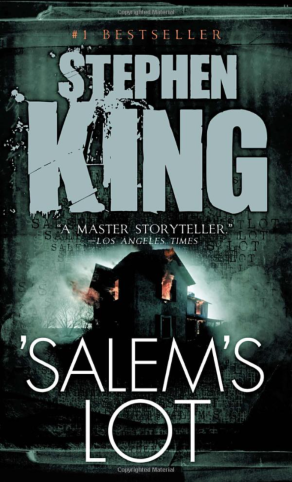
Great horror novelists like Stephen King can blur the line between genre and literary fiction almost to undetectability, as in King’s most famous and widely admired novel, The Shining. While ostensibly a ghost story, King elevates his novel by rendering the psychological make-up of his main character, Jack, in vivid and poignant detail. Early in the book, the reader learns that Jack is a failed writer and recovering alcoholic—conditions that combine to make him uniquely susceptible to the seductions of evil emanating from the villainous hotel. But only later do we learn that Jack is also an adult victim of child abuse, a “key” to his psychic make-up that makes the second half of the novel all the more tragic.
In this way, King confirms what Flannery O’Connor said about fiction: “A story always involves, in a dramatic way, the mystery of personality.” She also said that every novel is, in a sense, a whodunnit, if only the psychological sense. The whodunnit of The Shining is Jack’s abusive, alcoholic father.
Of course, the best literary fiction writers can blur the line, too, from the opposite direction. I’ve written before of my love of Robert Stone’s Dog Soldiers, which won the National Book Award in 1973. The story of two world-weary young men who conspire to smuggle a kilo of pure heroin from Viet Nam back to the States, the novel could easily be mistaken for a crime thriller. It’s only the way Stone is able to make the heroin a symbol for both of the men, especially the tragic main character, Ray Hicks, that allows him to wind a deeply affecting literary novel around the spine of that frantic and violent tale.
I’ve been thinking about all this plot business recently, even since I read a very fine novel called Saint Jack by Paul Theroux. Most people classify Theroux as a travel writer—his book The Great Railway Bizarre is often cited as a masterpiece of travel literature—but I know him primarily as a fiction writer, one of the best of the past fifty years. I had admired his books Kowloon Tong and Hotel Honolulu, but for some reason I never read Saint Jack, one of his earlier novels, despite my having been intrigued by it since I was in high school, when I saw Peter Bogdanovich’s wry and mysterious movie adaption starring Ben Gazarra. Part of my failure to actually read the book probably had to do with its relative obscurity; I could never find a copy even in my favorite used book stores. But one of the great boons of the digital era is that the back-catalogues of countless writers are now available, and Saint Jack somehow popped up in my Kindle recommendations for a whopping two bucks! Woo-hoo!
And, man, was that two bucks well spent! Saint Jack presents the reader with one of the most colorful and endearing low-life characters in the history of literature. American ex-pat Jack Flowers is a part-time shipping supplier and full-time pimp working the streets of Singapore. Middle-aged and mildly alcoholic, Jack’s seedy character is redeemed, somewhat, by the kindness with which he treats his affable young prostitutes (his “girls”) and also the hypocritical men (the “fellers”) who seek their services. At least, Jack hopes he is redeemed, fancying himself as a man of importance, a protector to the feckless, lustful, and greedy souls haunting the streets of the city. Cooling his heels in a hotel lobby as he waits for a girl to finish her session with a “feller,” Jack often indulges in…
[t]hat momentary daydream which flits into every reflective man’s mind and makes him say his name with a tide, Sir or President or His Highness—everyone does it sometimes: the clerk wants a kingship, it’s only natural—this dubbing was a feature of my every waking moment. I wasn’t kidding; even the most rational soul has at least one moment of pleasurable reflection when he hears a small voice addressing him as Your Radiance. I had a litany which began Sir Jack, President Flowers, King John, and so forth. And why stop at king? Saint Jack! It was my yearning, though success is nasty and spoils you, the successful say, and only failures listen, who know nastiness without the winch of money. If the rich were correct, I reasoned, what choice had they made? Really, was disappointment virtue and comfort vice and poverty like the medicine that was good because it stung? The President of the United States, in a sense the king of the world, said he had the loneliest job on earth; where did that leave a feller like me?
Unhappy and adrift, Jack’s only ambition is to somehow strike it rich, though he has no plan for doing so. He once dreamed of opening the classiest whore-house in Singapore, a goal that, we learn, was briefly realized in previous years (with tragic consequences). At the point of the novel’s opening, he seems to have stagnated, both financially and spiritually. Then, a stranger enters his life. Leigh, a British accountant hired by Jack’s boss, is of roughly the same age and disposition as Jack, but his life has taken an opposite path. Completely conventional and straightlaced, Leigh nonetheless takes a liking to Jack, even as he finds himself slightly horrified by the details of the man’s street-wise existence. Jack, for his part, sees Leigh as a kindred spirit, a decent “feller,” albeit one who would never hire one of his “girls”. More importantly, Jack is disturbed by Leigh’s disapproval of him, although he struggles to understand why.
Of course, the reader knows why: Leigh is a symbol. He’s a mirror in which Jack sees himself—or, rather, some better version of himself that might have been. In Leigh, all of Jack’s moral failings are revealed.
In this way, his appearance serves as the instigating action of the novel, the beginnings of the plot in which Jack will be forced to explore his own life history. A more generic kind of novel might have proceeded with a burgeoning friendship between the two men, Jack and Leigh, in which the former would find enrichment and even escape from his louche existence. But in Theroux’s capable hands, the story takes an unexpected turn when, barely one-third into the novel, Leigh dies suddenly from a heart attack while drinking in Jack’s favorite “club,” surrounded by boozy British ex-Pats (whom Jack loathes even as he craves their approval).
I previously alluded to O’Connor’s theory that every good novel is a kind of whodunnit, and Saint Jack is a wonderful case in point. It falls to Jack to call Leigh’s wife and tell her of the man’s passing, and also to arrange the funeral, which Theroux renders as predictably absurd and yet surprisingly moving. At this point, the story becomes a huge, Mobius-loop of a flashback in which we learn much about Jack’s past, including the reason he finds himself in Singapore (he’s a fugitive fleeing drug charges in the States) as well as his brief and glorious stint as a whore-house proprietor. Jack pours all his artistic and self-aggrandizing impulses into this joint, an opulent mini-resort which he grandly bestows with the name Dunroamin—a moniker which vaguely evokes an English estate as well as being a homophone for Jack’s yearning for permanence, a true home. (He’s “done roamin’”; get it?). He also pours in all his money, and for a time Dunroamin is successful. But its very success contains the seeds of Dunroamin’s destruction, as it soon attracts the ire of the local Triads, whose henchmen kidnap Jack and tattoo his arms with Chinese curses. Upon his release, Jack finds Dunroamin burned to the ground, his hopes for a better future having gone up with it.
As it turns out, Jack’s days as a house-pimp are not entirely over. He gets a visit from an old acquaintance named Schuck, a CIA spook who once ran a government-subsidized “hotel” with Jack providing R&R to battle-crazed Vietnam soldiers. If the operation of this hotel represented an even deeper moral failing for Jack than his previous ones, Schuck soon tempts Jack all the way into the abyss, hiring him to film a troublesome American general trysting with a prostitute. Whether or not Jack will go through with the plan is the climax of the novel (and one which I will not reveal here).
Saint Jack is a classic novel by one of our most underrated literary writers. Check it out…
Author’s Note: this post first ran on my old blog, Bahktin’s Cigarettes.








 Ash Clifton, Writer