
Classic Sci-Fi Book Cover

The only time I ever got in trouble with my parents over a book was when I was thirteen. The book was Nova by Samuel R. Delany, and was reading while nested in the back of the family car on a long trip. My stepmom read the back-jacket copy, which made the book sound a lot racier than it really was, and freaked out. However, she was (and is) a great reader herself, and she and my dad knew better than to try to keep me from reading the book. (You can’t keep kids from reading what they want, not even back then, in the pre-Internet days.) 

So, yeah, I read the book, and I loved it. And not for the prurient reasons my parents might have expected. Rather, Nova is classic Delany—literary science fiction that somehow feels gritty and realistic despite being set in a far future environment. I had never read Delany before, and I was blown away by his ability to write a “hard” sci-fi novel, full of fresh ideas and plausible technologies, that also kept my interest as a work of fiction. That is, it’s about believable characters with believable agendas and distinct personalities. It felt more like Stephen Crane than Isaac Asimov.

I probably picked up the book because I was drawn to the great cover art, one of a fine series of Delany works that Ballantine published in the 1970s. Its cover, which is still my favorite of any Delany novel, was done by fan-artist-turned-pro Eddie Jones. It might seem dated, but for me it still captures the surreal, distant-future vibe that Delany managed to bring to his best books. 

I still have it on my bookshelf, lo these many years later…   
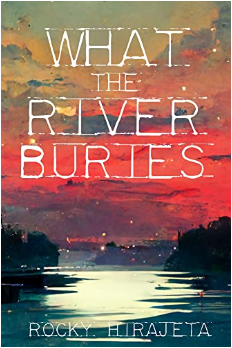
What I’m Reading: What the River Buries

What the River Buries by Rocky Hirajeta


My rating: 5 of 5 stars


Two mysteries lie at the heart of Rocky Hirajeta’s fine novel. The first regards the identity of a killer, whom the protagonist, high school senior Natalie, witnesses disposing of a body in the river. But there is a deeper one, too, concerning the emotional and spiritual rut in which Natalie finds herself stuck after the death of her father. Not only is Hirajeta’s book beautifully written, it also captures the sense of desperation and longing that many YA novels miss.


View all my reviews

What I’m Reading

If I had to make a list of the 100 people who most contributed to my boyhood reading, imagination, and fantasy life, Ray Bradbury would probably be at the top, with Arthur C. Clarke and Issac Asimov a bit lower. Ridley Scott would be in there, too, as would a couple of women, including Ursula K. Leguin and D. C. Fontana. But somewhere in the top five would be Gene Roddenberry. Roddenberry was, of course, the creative genius behind the original Star Trek, which began the most successful entertainment franchise in history. Note that I did not qualify this by calling it the most successful science fiction entertainment franchise; Star Trek’s influence goes far beyond that. With Star Trek, Roddenberry changed the character of his culture at the time. And after reading Lance Parkin’s biographical work, The Impossible Has Happened: The Life and Work of Gene Roddenberry, I was even more convinced of this assessment. 

Roddenberry was a World War II bomber pilot who later worked as a cop in the L.A.P.D. His post-war America was one of anti-communist paranoia, racism, social upheaval, and nuclear nihilism. And yet he was somehow able to transcend his own history, becoming a liberal and forward thinking writer. He also had a fertile imagination and a tremendous work ethic. It was largely due to his tireless dedication to the writing process (he churned out screenplays with the regularity of a sausage maker) that he was able to break into the burgeoning TV industry, finally becoming a producer of entertaining, mildly liberal, but in no way revolutionary shows like The Lieutenant starring Gary Lockwood (later of 2001: A Space Odyssey fame). 

Continue reading “What I’m Reading”