
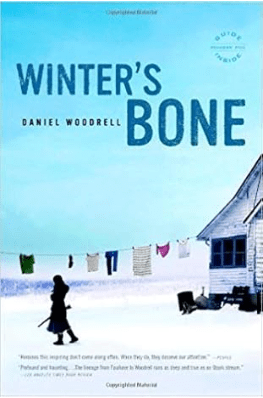
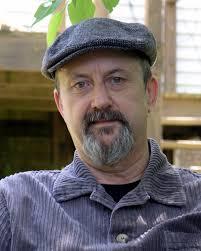
Recently I was chatting with a friend of mine, and at some point in the course of the conversation I told her about one of my favorite thriller novels of the last twenty years. It was Winter’s Bone by Daniel Woodrell, who sadly passed away in November. I described the plot to my friend, explaining how it’s about a 16-year-old girl, Ree Dolly, who lives in the Ozark mountains, raising her two little brothers. When her meth-dealing father goes missing, Ree faces the prospect of the bank foreclosing on the family mortgage, which would leave them all homeless (in addition to crushingly poor). To prevent this, Ree goes alone on a quest to find her father—or, at least, to find his body (she suspects he’s dead) so that she can get the money from his life insurance policy. This quest leads her into the mountain-shack domain of the local drug lord.
As I told all this to my friend, her expression became doubtful.
“Sounds dark,” she said.
I was taken aback, momentarily, and not just because my enthusiasm for Woodrell’s book failed to penetrate her skepticism. I was taken aback because I did not, in fact, have a good reply to her complaint. Yes, Winter’s Bone is a dark novel. Very dark. About as dark as you can get in a realistic, literary work. However, my enjoyment of the book is not dark. In fact, I remember the light-hearted, almost giddy thrill I felt while reading it—feverishly, tearing through it in a couple of days. It was the sensation that Vladimir Nabokov called a “kindling of the spine,” which one gets when reading a truly fine book.
What I found myself unable to communicate to my friend is the simple fact that I loved Winter’s Bone, even though its subject matter sounds like the stuff of an awful, depressing PBS documentary. How is this possible? Why do people like me sometimes read, and love, “dark” novels. More to the point, why do we read “heavy” novels in general—novels about tough subjects, adult circumstances, and big, real-life, consequential choices?
Why don’t we only read fun, predictable, pop-novels of the sort that dominate the best seller lists (not to mention the top 100 slots on GoodReads)?
I often think of something the late, great film critic Roger Ebert once said: “Happy movies don’t make you happy, and sad movies don’t make you sad. Good movies make you happy, and bad movies make you sad.”
Such a simple statement, and yet so profound! It applies equally well to novels. Good novels make you happy, and bad novels make you sad (or, at least, bored). Ultimately, though, Ebert’s aphorism is insufficient to answer my friend’s reaction. What does “good” mean in a movie, or a novel? For that matter, what does “happy” mean? Neither word seems easily definable, in this circumstance.
Happiness, in the grand sense, is not the sensation one gets from a book like Winter’s Bone. As thrilling and, yes, entertaining as it is, it does not induce true happiness. Rather, what it grants the reader is a sense of being transported—of movement, into the mind and world of the main character. That is, for each one- or two-hours session of reading the book, one becomes Ree Dolly. Take this opening paragraph:
Ree Dolly stood at break of day on her cold front steps and smelled coming flurries and saw meat. Meat hung from trees across the creek. The carcasses hung pale of flesh with a fatty gleam from low limbs of saplings in the side yards. Three halt haggard houses formed a kneeling rank on the far creekside and each had two or more skinned torsos dangling by rope from sagged limbs, venison left to the weather for two nights and three days so the early blossoming of decay might round the flavor, sweeten that meat to the bone.
What most people misunderstand about books like Winter’s Bone is that they are not merely well written. Yes, good writing is a necessary—but not sufficient—quality of a successful literary novel. What is also required, though, is this shift in psychic awareness. In the paragraph above, we feel Ree’s sense of life—her desperation, her determination to survive in the most severe physical circumstances. We, as readers, are right there with her, standing on the snow, freezing our butts off, wondering how we’re going to survive the winter.
In a later passage, we also get a sense of Ree’s love and compassion for her two little brothers:
Sonny and Harold were eighteen months apart in age. They nearly always went about shoulder to shoulder, running side by side and turning this way or veering that way at the same sudden instant, without a word, moving about in a spooky, instinctive tandem, like scampering quotation marks. Sonny, the older boy, was ten, seed from a brute, strong, hostile, and direct. His hair was the color of a fallen oak leaf, his fists made hard young knots, and he’d become a scrapper at school. Harold trailed Sonny and tried to do as he did, but lacked the same sort of punishing spirit and muscle and often came home in need of fixing, bruised or sprained or humiliated.
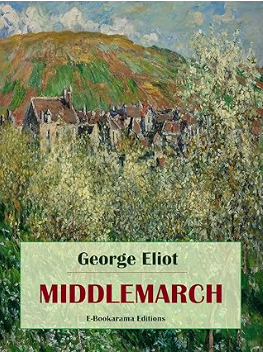
The great novelist Martin Amis once related Vladimir Nabokov’s belief that the reader should not identify with the character in a novel; rather, they should identify with the author. But I’ve never believed it. Yes, a good book does impart the wisdom of the author (this especially true in a masterpiece like George Eliot’s Middlemarch), as well as the benefit of their wit and depth of feeling. But that’s not the main reason people read novels. Rather, it is identification with the protagonist. And it’s not just that we identify with the main character; we must sympathize with them. We must participate in their struggle.
Even a rat-bastard character like Nabokov’s own Humbert Humbert—the most famous pedophile in literary history—could not keep our attention as readers if we did not, on some level, see ourselves in him. We must like him, if only a little. Feel sorry for him, even. Yes, he commits dreadful acts, but he does so, we sense, in a mistaken pursuit of happiness (that, what he believes is happiness, as he equates it to his sexual possession for Delores Haze). He is, in other words, a very wicked man but not a truly evil one.
Ree Dolly, of course, is neither wicked nor evil. She is, in fact, a completely valiant and admirable character. But that’s not the point. The relative morality or immorality of the main character is almost irrelevant. The only real requirement of a successful novel is that, through the art and skill and sympathy of the author, we are able to pierce the membrane of our own egos and enter that of the character. And, in doing so, we inevitably reflect upon our own, personal, real-life struggles. To paraphrase something I once heard Harry Crews say, it is a psychological truism that, in thinking about and judging a character in a novel, we inevitably come to think about and judge ourselves.
Right about now, you might be thinking of the Ancient Greek concept of carthasis, which refers to that paradoxical feeling of renewal one gets after watching a great, tragic play like Oedipus Rex or Othello. It is the sense of having participated in the plight of the tragic hero and come out the other side, as if reborn. And this idea certainly applies to literary novels. But what I am talking about is even deeper, more elemental, than catharsis. Rather, it has something to do with what Joseph Campbell described as “the rapture of being alive.” The rapture can, and in some ways must, transcend what we normally think of as decency or even morality. It goes deeper. It gets as who—and what—we really are, as beings that exist on both a physical and a spiritual plane.
So, I guess the title of this essay is a trick question. I don’t know why we read heavy, challenging novels. I don’t know why we enjoy them, and even need them. And I doubt anyone else really knows, either.
I just know that we do.


 Ash Clifton, Writer