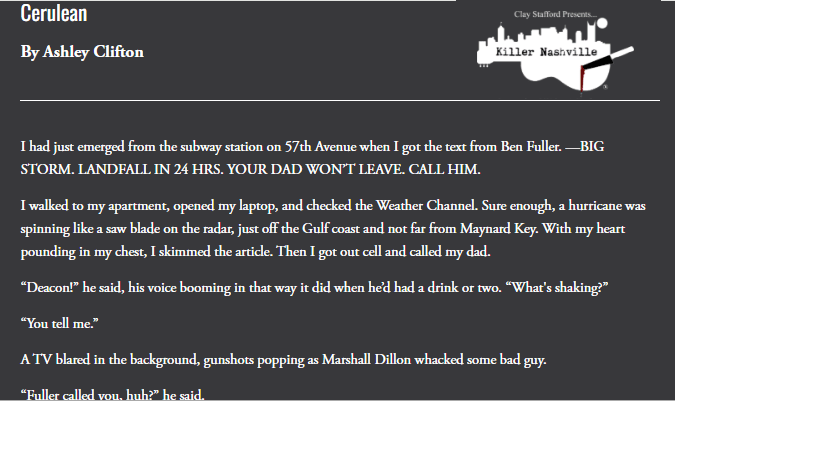
The audiobook for MYOPIC DUPLICITY is out today. The brilliant actor Jenn Lee did the voice narration for my short story. Please check it out here on Audible!!!
And, once again, many thanks to Jeff Circle and Leonardo Audio.

The audiobook for MYOPIC DUPLICITY is out today. The brilliant actor Jenn Lee did the voice narration for my short story. Please check it out here on Audible!!!
And, once again, many thanks to Jeff Circle and Leonardo Audio.


The great film critic Roger Ebert once noted that the people we think of as heroes are those we looked up to when we were kids. As adults, we might admire a particularly talented athlete or actor or musician, but they won’t really be “heroes” to us; they’ll just be really cool (but life-sized) people.
I think that my middle-aged affection for Harlan Ellison might be a slight exception to this adage, however. I was a fan of his when I was growing up (he became famous in the 1970s with his revolutionary, sci-fi short-stories like “I Have No Mouth, and I Must Scream”), but he wasn’t exactly a “hero” of mine. Then, in the 1990s, Ellison began to appear on TV as a talk-show celebrity, especially on the sci-fi channel, where he essentially co-hosted a show called Sci-Fi Buzz, where he was often very funny and always insightful. Also, to my amazement, one of his stories, “The Man Who Rowed Christopher Columbus Ashore,” was included in 1993’s Best American Short Stories collection. I saw an Ellison interview around that time, in which related that the series’ editor called him to give him the good news. At the end of their brief conversation, she asked him if had written any other short stories—an unintentional slight that Ellison said felt like “a dagger to the heart.”
But this was typical of Ellison’s relationship to the literary world, and to Hollywood. He couldn’t get no respect. Part of this life-long diss was, surely, his own fault. He was famously abrasive and out-spoken, and hated to have his work messed with. When he wrote the screenplay for the what is generally considered the best episode of the original Star Trek series, “City on the Edge of Forever,” he hated Gene Roddenbury’s changes so much that he tried to have his name taken off the credits. (Fortunately, he failed.) In fact, he was so contentious about such matters that he had a special pseudonym, Cordwainer Smith, that he would use when he felt his work had been to mangled by studio executives that he no longer wanted his real name associated with it.
Paradoxically, the more interviews I watched of Ellison in the 1990s and beyond, the more I liked him. He had a razor wit, and he did not suffer fools easily. He could also be mean as hell when he felt attacked. But these were all characteristics I had seen before in some exceptional people I have met over the years, including my great teacher, the writer Harry Crews. I never met Ellison, but I suspect that we would have gotten along just fine.
Indeed, I came to admire even Elllison’s famously pugilistic nature. He was quick to sue anyone who he felt had stolen his ideas. Most famously, he sued Orion Pictures over 1984’s The Terminator, alleging that director/writer James Cameron had cribbed the concept from a script Ellison wrote for The Outer Limits. Orion settled the suit out of court. (Cameron later called Ellison a “blood-sucking ghoul,” which I still find hilarious.)
Clearly, Ellison knew how to defend himself and his ideas, and to get what he felt was owed to him. Much of this toughness, I imagine, came from Ellison’s early life, growing up as an diminutive Jewish kid in Ohio. Like a lot of smart, little guys, Ellison learned how to punch back, and punch hard.
After I wrote a blog post about Ellison and Isaac Asimov last year, I found myself thinking about Ellison more and more. So much so, in fact, that a couple of weeks ago I decided to write something about him, although what form that would take.
Then, in one of those moments of synchronicity that happen to writers when they immerse themselves in a subject, I stumbled upon a fact regarding Ellison that I had never read before, and it came from a totally unrelated source.
I was looking at some classic sci-fi book covers when I spotted one for Fritz Leiber’s The Big Time. I hadn’t thought of Leiber in decades (he was a favorite of a friend of mine in middle school), so out of pure curiosity I checked out his Wikipedia page. There, I was saddened to learn that Leiber spent the last few years of his life in poverty. As with so many writers, alcohol had taken its toll, and Leiber ended up living in a cheap motel. Apparently, Ellison came to visit him one day and was appalled by the state of his affairs, with Leiber not even able to afford a writing table. Rather, he was composing his latest work on a “manual typewriter propped up over the sink.”

Okay, maybe this wasn’t a good example of full-blown, Jungian synchronicity. I guess it wasn’t that unlikely that I should stumble upon a Ellison anecdote while reading about Leiber. They were both great science fiction writers, after all, and it make sense that they might have known each other. In fact, as I learned, Ellison included some of Leiber’s short stories in the Dangerous Vision anthologies that he (Ellison) edited for decades. Still, I didn’t know of any connection between the men. They were of different generations and circumstances, linked only by their genre and talent.
Unfortunately, the Wikipedia article does not cite the source of this (if anyone knows, please tell me), nor does it say what action, if any, Ellison took to improve Leiber’s circumstances. But I like to think that he did something to help. After all, he was a pugnacious, smart-ass little guy who looked after himself and other little guys. I miss him.
Here is a good interview that Ellison gave to the BBC in the 1970s.
For those of you who enjoyed my recent post about the movie Manhunter, the L.A. Times just ran this really nice article about him. Apparently, a film festival is celebrating two of his movies: Manhunter (of course) and To Live and Die in L.A.
Enjoy…

Bryan Ferry turned 80 today. I bet he still has more style in his little finger than most rock stars have in their whole leg.
This is his best song, imho.
Rock on…
As usual, it took us a while, but Margaret and I finally posted our second (and final) book talk episode on Ursula K. Le Guin’s classic sci-fi novel The Dispossessed. I will probably be doing another post on my final thoughts about the book soon. In the meantime, please check out the videos (Part I is here) and give them a like.
David Bowie was a musical genius. And perhaps the only bad thing about being a musical genius is the possibility that someday another genius might come along and do a cover of one your songs that’s better than the original. That’s what Kurt Cobain did, I think, with this cover, recorded in 1993 on MTV. And he was only twenty-six at the time.
Oh, well. Here, for your entertainment (and, I hope, solace) is a song written by one genius and sung by another, with some really great musicians playing along.
Rock on…

The great scholar Joseph Campbell once explained that every time we go into a cinema and see a movie star—Tom Cruise, for example—up on the screen, some part of our brains is aware that the real person, the actor Tom Cruise, is alive somewhere else in that same, exact moment. This ability to exist in two places at once, Campbell said, is an aspect of a God, a living divinity.
Our subconscious perception of actors as gods is one reason we are always surprised by the death of a movie star, especially one who has been around since we, ourselves, were kids. How could they ever die? They seem to occupy a higher plane of reality, immortal, always youthful if not actually young.
Robert Redford was surely one of the greatest movie stars of my youth, and he starred in two of my favorite films of all time, All the President’s Men and Three Days of the Condor, both of which I have written about on this blog. What made him interesting was that weird dichotomy of blond, athletic, all-American good-looks combined with a reserved, wary intelligence. (On my list of Hollywood Archetypes, he fits squarely in the “Dark Prince” slot.) He was a very smart man, who did a lot of amazing things both on-screen and off-. Among the most notable of these was his founding of the Sundance Film Festival, which has come to rival Cannes as the preferred venue for indie-film directors to premiere their movies.
The fact that Redford would create an alternative festival for “the little guys” in the film industry was typical. He was, in some ways, the most counter-cultural movie star of the last fifty years—even more so than Easy Rider himself, Peter Fonda—in that he made movies about men fighting some vast, evil establishment. Often, this was the military-industrial complex in either its actual (All the President’s Men) or its fantasy (Three Days of the Condor) form. In his later years, when Redford could no longer play the lead, he took on the role of the villain who represents this evil empire, as in Captain America: The Winter Soldier.
As a kid, I always found something soothing about Robert Redford, even in movies filled with threats and violence. I suspect that, in my mind, he represented the best spirit of my parents’ generation (he was roughly the same age as my father). That is, the young adults of the 1960s and 70s. Post-hippie, but very hip. World-weary, but not broken. Brave, but not foolhardy. Idealistic, but not naïve.
And, above all, ready to fight the system.
Godspeed, Mr. Redford…

Harry Harrison’s Deathworld trilogy kept me sane during one long-ago summer when I was bored and lonely. As I recall, my father gave it to me, having bought it in an airport bookshop after a long trip. (Yes, he was a good dad.)
Harrison is most famous for his Stainless Steel Rat series, but I liked these books better. As in all of Harrison’s work, the Deathworld stories center around a trickster anti-hero—in this case, Jason dinAlt, a smart, conniving rogue who is also telepathic. (He uses his E.S.P. to cheat at cards and thus travels from casino-to-casino, and planet-to-planet, having adventures but never a real job.)
Looking back on it, I would bet that this cover by illustrator David Egge, depicting dinAlt in futuristic battle gear, had a lot to do with further popularizing the military science fiction sub-genre, of which Robert Heinlein’s Starship Troopers is the best-known example. (Current examples are too numerous to name.) In fact, the Deathworld books are not military sci-fi. The characters dress like soldiers because they live on a very dangerous planet named Pyrrus (as in pyrrhic; get it?) where every living thing from plants to animals is lethal to humans. Indeed, the entire ecosystem of Pyrrus seems determined to kill all the human colonists, for reasons that dinAlt will try to discover using his telepathic powers as well as his finely honed survival skills.
The Deathworld books are just fun, well-plotted, fast-paced adventure stories, reminiscent of science fiction’s Golden Age—albeit with a bit more wit attached to them than the average sci-fi fair. Moreover, Harrison should be lauded for the series’ strong ecological message (well hidden, at first, but definitely in there), which was usual at the time, especially in “guy’s” books.
Check them out…
I’ve been reading a fine biography of the great country singer Johnny Cash, and in its pages I learned that Elvis Presley (who befriended Cash when they were both starting out, both men having been discovered by the legendary Sam Phillips) could play the piano. Not as well, obviously, as Phillips’s other phenom, Jerry Lee Lewis, but well enough for Cash, Lewis, and Carl Perkins to sing a few songs together while Presley was tickling the ivories. (That impromptu harmony session was recorded by a quick-witted studio technician and has since become known as The Million Dollar Quartet.)
As I learned about this, I was struck by the notion that most people don’t realize the outsized role that the piano, as an instrument, has played in the history of Rock and Roll. When people think of rock music, the probably think of guitars first, and then (maybe) drums. Somewhere along the line, keyboards some into, but probably the electronic kind. (Think of great synth work by The Cars or Steve Winwood or Gary Numan.) But the piano? The piano?
Yes, the piano. I would argue that it has been almost as influential as the electric guitar in the development of rock. Starting with Jerry Lee Lewis, the story goes to Elton John and Billy Joel, to Christine McVie and even Freddy Mercury.
The 21st Century has, of course, seen a resurgence of the great piano-players in rock. Foremost among this has been Chris Martin of Coldplay. But for my money, The Fray is, in its best moments, just as good a band as Coldplay. Take this little, mournful, piano-driven gem, which is one of my favorite songs of the last twenty years.
Rock on…

In the summer of 1982, I was a very unhappy boy. Being a nerd in an upper-class high school full of preppies and jocks, I didn’t fit in very well. I hated most of my classes. I had a few good, close friends (including some jocks), but that was it. As one would expect, I spent a lot of time in my room reading sci-fi novels and typing short stories on the typewriter my mother had bought me.
The only thing that kept me sane was movies. Fortunately, 1982 turned out to be the most incredible time in cinematic history to be a nerd. A string of classics came out that summer including Blade Runner, The Thing, The Road Warrior (a.k.a. Max Max II), Star Trek II: The Wrath of Khan, Poltergeist, Tron, Conan the Barbarian, and (the 800-pound gorilla) E.T. Even at the time, I was cognizant that this bumper crop of cool films, all coming out within a few weeks of each other, was a very unusual, almost magical development. I spent many hours on the bus with my friends going to and from the local cineplex, where we watched many of these films over and over.
For forty years, I labored under the delusion that this rapid series of classics was just a lucky coincidence. But while reading Chris Nashawaty’s fine nonfiction book, The Future Was Now: Madmen, Mavericks, and the Epic Sci-Fi Summer of 1982, I learned otherwise. A good historian will reveal that any event, no matter how seemingly incredible or unlikely, actually emerges logically from previous events. That is, the seeds were planted years or even decades before. And in 1982, main seed was a little film called Star Wars. As Nashawaty explains:
Continue reading “What I’m Reading: “The Future Was Now””There’s an unwritten rule for reporters and trendwatchers who cover Hollywood that if you want to know why a movie—or a particular group of movies—was made, all you need to do is look back and see what was a hit at the box office five years earlier since that’s the typical gestation period for studio executives to spot a trend, develop and green-light an imitator, push it into production, and usher it into theaters. And the summer of 1982 would prove no exception, coming exactly five years after Star Wars. What seemed underreported, however, was how this new wave of sci-fi titles had been conceived and carried out. It is a wave that we’re still feeling the aftereffects of, for better and worse, today.