The Anti-Heroes of American Cinema: A Tribute

Author’s Note: I don’t know if it’s true, but I’ve read that someone is going to remake John’s Carpenter’s class B-Movie action flick Escape from New York. I’m of two minds about this news. On the one hand, I find it repulsive that someone wants to make a new version of already perfect, classic film that hasn’t gone anywhere. (It’s streaming on Amazon Prime right now for cripe’s sake.) On the other hand, I realize that cinema is a popular medium, and young people today deserve a chance to see the tale told anew. (Young actors deserve a shot at it, too.)

At any rate, the news got me thinking about old Snake Plissken, who is one of the greatest anti-heroes in the history of Hollywood. So, I thought I would repost this short essay, which original appeared on my old blog, Bakhtin’s Cigarettes. Enjoy…!

When I was writing my last post about George Lucas’s digital fiddling with the iconic character of Han Solo, I started think about about the role of the anti-hero in American film.  Why is it that so many of our cinematic “heroes” are anything but?

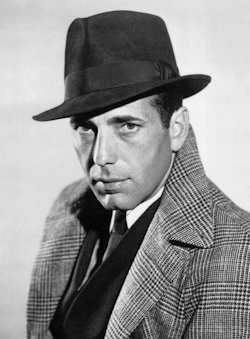
An anti-hero is usually defined as a protagonist who exhibits non-heroic traits, such as selfishness and amorality.  Han Solo surely qualifies as a classic American anti-hero in that he firmly avows his own self-interest, only to later commit himself to a cause larger than himself.  But when I think of an anti-hero, I usually think of Humphrey Bogart.  Bogart’s Rick Blaine is perhaps the pinnacle of the American anti-hero, embodying as he does the core of American isolationism in the face of the Second World War.  “I stick my neck out for no one,” Blaine says to his friend, the even more corrupt Captain Renault.  Blaine seems to epitomize those very American qualities of pragmatism and an apolitical business sense (he runs the the most profitable bar in Casablanca, after all).  But of course, he comes around, in the end, finding himself inextricably bound to humanity in the form of Ingrid Bergman’s Ilsa.

rick

Blaine might be the ultimate American anti-hero, but he is by no means the first.   If you ask me, the American anti-hero has deep roots in the wild west, with our cultural fixation on cowboys, gunfighters, and the men who tamed them.  Wyatt Earp might well be our first, best anti-hero, the saloon keeper, gambler, and occasional pimp who became the most famous lawman in history.  America is a nation, after all, of exiles, people always seeking the frontier, and the values of the frontiersman are deeply intertwined with our own.

Ethan

It’s no accident that the greatest Western ever to come out of Hollywood is John Ford’s The Searchers—a movie in which the “hero”, Ethan Edwards, is a borderline psychopath.  Ethan (which means “strong” in Hebrew) exudes physical strength and a cold, practical wisdom.  (He takes time to rest his horses even when pursuing the Indians who killed his brother.)  Only Ethan has the strength to pursue the renegade Comanches and finally kill their leader, Scar, but Ethan comes perilously close to murdering his own niece in the process.  Even in our greatest myths, the dark side of the American anti-hero seems to lurk just beneath the surface.

stalag 17

William Holden played not one but two famous anti-heroes in World War II dramas.  Both were POWs:  the cold-hearted, viciously entrepreneurial Sefton in Stalag 17, and then the resourceful Commander Shears in Bridge Over the River Kwai.  Both films seem to acknowledge a kind of philosophical transition that took place in the post-war environment, a shift in values from the resolute, romantic heroism of the British Empire in favor of the more ambiguous, morally flexible version that Americans seemed to espouse.  (It was we, after all, who dropped the atomic bomb and thus finished the war that the Old World started.)

All through the 1960s and 1970s, this new, darker, and perhaps more realistic vision of heroism seemed to thrive in counter-cultural films like Easy RiderBilly Jack, and Cool Hand Luke.  Perhaps the greatest actor to inhabit the anti-heroic mold since Bogie was Jack Nicholson, who in 1974’s Chinatown played the world-weary Jake Gittes, a private detective who specializes in taking compromising photos of cheating spouses, and who confesses to his lover that, when he was a cop, he did “as little as possible.”  And yet Gittes is a bona fide American hero.  Despite his better judgment, he finds himself unable to condone the corruption and evil that surrounds him.

Perhaps the darkest version of the anti-hero can be found in Francis Coppola’s flawed 1979 masterpiece, Apocalypse Now.  Martin Sheen plays the American Army assassin Captain Willard, who is dispatched on a journey through Cambodia to find (and kill) the renegade Colonel Kurz.  The movie represents the intersection between our darkest war (Vietnam) and our darkest novel (Conrad’s Heart of Darkness), the result being a kind of cinematic descent into hell

Even the greatest anti-heroes of science fiction like Mad Max and Snake Plissken have their roots in the post-war characters of Holden and Bogart.  When Mad Max paces menacingly across the post-nuclear Outback, he seems like the reincarnation of Ethan Edwards, haunting our depopulated future even as John Wayne haunts our sun-scorched past.

Which brings me to my main point about the American anti-hero.  For all their faults, there is one quality that Han Solo and Rick Blaine never come up short on:  courage.  Characters like Sefton and Gittes may profess to be cowards, but they aren’t.  Not really.  As Americans, we like to believe that we have no Old World illusions of grandeur, but we also want to believe in our own basic decency and moral integrity (despite all evidence to the contrary).  Like Jake Gittes, the American anti-hero often fails—and sometimes fails miserably—but by the very act of attempting to do the right thing, he finds a kind of redemption.  Americans pride themselves on not being suckers, but in the end, we want to think we are good.

Otherwise, what was all the fighting about, anyway?

Gittes

Synchronicity for Bookworms: Koo Stark and George Lucas

Koo Stark

There is a great moment in David Lynch’s film Wild at Heart when Nicholas Cage’s character, Sailor, says to his girlfriend, Lula, “The way your head works is God’s own private mystery.” Sometimes, I feel the same thing could be said about me. About my brain, that is. 

A case in point: When Andrew Mountbatten-Windsor—yes, The-Andrew-formally-known-as-Prince—was arrested by British authorities last February, my mind went on a very strange tangent. He was arrested, it is believed, for crimes he might have committed while in the company of Jeffrey Epstein, who has become the most famous sexual predator and pimp in the history of the world. As soon as I heard the news of  Mountbatten-Windsor’s arrest, my mind went back to the early 1980s, when he was dubbed “Randy Andy” by the U.K. tabloid press for his playboy lifestyle and many affairs with attractive women. 

The name of one of these women leapt into my mind—that of Koo Stark, a beautiful actress from the 70s, with whom Mountbatten-Windsor had a long, heavily publicized romance. Stark contributed significantly to the “Randy Andy” mystique because she had (unwisely) appeared in a soft-core porn film called The Awakening of Emily, which I and millions of other teenaged boys watched (and re-watched) on late-night cable. 

I must confess that as soon as I remembered her name—Koo Stark!—I was instantly transported back to that long ago time. What a great name it is, too, and even more so back then. Perfect for a hot young actress in swinging London! Yeah, baby! KOO STARK! “Koo,” as in the sound a dove makes right before it achieves orgasm; “Stark” as in stark naked! STARKERS! 

I must also confess, however, that after the thrill of remembering Ms. Stark’s name wore off, I didn’t give her, or Mountbatten-Windsor, a second thought. UNTIL, just one day later, I was reading a great book about the great American film directors of the 1970s entitled The Last Kings of Hollywood: Coppola, Lucas, Spielberg—and the Battle for the Soul of American Cinema by Paul Fischer. The book documents the history of all three men as they created their early, iconic films including The Godfather, Jaws, and (of course), Star Wars. My jaw dropped when I read this passage describing Geoge Lucas’s quest to find the perfect actress for the role of Princess Leia… 

George considered fourteen-year-old Terri Nunn, soon to be lead vocalist of the pop band Berlin, before whittling his list down to two nineteen-year-olds: Koo Stark and Fisher. They were strikingly similar: bright, funny, and gorgeous, both from show business families—Stark’s father, Wilbur, had produced film and television since the 1940s—and each with limited screen acting experience. Koo had appeared in one of her father’s smaller pictures and popped up, uncredited, as a bridesmaid in The Rocky Horror Picture Show. Carrie had stolen a couple of scenes earlier that year in Warren Beatty’s Shampoo.

I was thus flabbergasted to learn that Koo Stark, rather than becoming famous for one stupid Cinemax-After-Dark movie and for her relationship with Randy Andy, might have become PRINCESS FRIGGIN LEIA instead! Ye Gods! How the Wheel of Fortune doth turn!

Mr. Fischer’s book got me thinking that Ms. Stark probably had a much more interesting history and character than I suspected, so I immediately did a web search on her. Sure enough, her Wikipedia page confirmed that she has had a pretty amazing life. Besides having been in contention for the role of Leia, she appeared in several “real” movies from the 1970s, and she was the understudy for a role in the National Theater’s production of Who’s Afraid of Virginia Woolf? In the decades since, she became a successful and respected stage actress, as well as an accomplished professional photographer. Also, it turns out that she is American (I always thought she was English), and she is three years older than Mountbatten-Windsor, which suggests she might be one of the few beautiful women in England at the time whom he did not (obviously) exploit. 

Stark in the 1970s

I was even more amazed to learn that, in fact, she did ultimately land a small part in Star Wars, that of Camie Marstrap, a friend of Luke Skywalker’s. (Her scenes were, alas, cut from the final film.) 

And so, in true Synchronicity-for-Bookworms fashion, I discovered a tenuous karmic link between Jeffrey Epstein and Star Wars, conducted through the being of Ms. Koo Stark (and my own imagination, of course). 

Or maybe it’s not so tenuous. At the risk of seeming a bit precious, I would suggest that Koo Stark was a victim of the same exploitative, male-controlled world of acting and model that men like Epstein, Harvey Weinstein, and countless others have abused for a century. After all, if she had not appeared in that “erotic” film when she was a kid, she might have found more success in films later. Of course, I have no idea if her appearance in an exploitation film had any impact on Lucas’s decision not to cast her as Princess Leia (I doubt that it did). But I do know that the stigma followed for years.

Fortunately, she overcame it. She has successfully sued several newspapers for libel, including a 2022 case against The Daily Mail, which referred to her (unfairly) as a “soft-core porn actress.”

To which I say, good for her!

Stark on the set of “Star Wars”

Perfect Films: “Manhunter” (Repost)

Author’s Note: This morning, I read that the 2026 Oscars Ceremony, which was held last night, omitted the great character actor Tom Noonan from its In Memoriam segment. I can’t throw stones at the Oscars. When Noonan passed away a few weeks ago, I didn’t say anything about it, either, in part because I had just posted a tribute to the great Robert Duval, who died about the same time. Also, I simply didn’t know enough about Noonan to do a proper post. He only had a few notable film roles, but they were all doozies.

His best was as the serial killer Dollarhyde in Michael Mann’s Manhunter. I am reposting this essay about the film as a kind of (admittedly lame) tribute.

*** SPOILERS BELOW ***

As any old movie buff knows (and many younger ones, too), crime thrillers in 1980s almost constituted their own sub-genre. That is, they had their own special vibe. Slick. Stylish. Erotic. Typically, they boasted good-looking actors with great 80s hair, wearing garish 80s clothes and doing dangerous things. These were exotic and entertaining films, usually set in one of two environments: a dark city landscape (i.e. L.A.) or a gorgeous, sun-drenched beach (i.e. Miami). 

And then there was the soundtrack. Synth-heavy, but punctuated with propulsive rock songs from the era—usually something from Genesis or Phil Collins. Take 1984’s Against All Odds, for example, starring Jeff Bridges and Rachel Ward. Collins wrote and sang the theme song for that one, garnering him an Oscar nom. (And, yes, that movie was set against a dark L.A. landscape and a gorgeous beach.)

But my absolute favorite 1980s crime thriller, by far, is a movie almost no one remembers: Michael Mann’s 1986 serial killer flick Manhunter. I saw it when it first came out in 1986, and then saw it again, quickly, before it vanished from the cineplexes forever. In the forty years since, the film has gotten almost no respect, except from a few cinephiles like me. (Quinten Tarantino is a famous booster; he put Manhunter on his list of favorite 1980s films.) 

I’ve often wondered why Manhunter is so underappreciated. It probably has something to do with its lame title, which the studio forced Mann for reasons too stupid to discuss here. The original working title was, of course, Red Dragon, taken from the source novel by Thomas Harris. I often think that if the studio had stuck with that title, the film would have been a hit. Another reason is that the brilliant soundtrack, which mostly samples great songs from the era but includes great original music from The Reds, was soon deemed as “dated”. (It has actually come back into fashion thanks to the rise of the Synthwave aesthetic.) 

Continue reading “Perfect Films: “Manhunter” (Repost)”

R.I.P. Robert Duvall

CC – Gotfryd, Bernard, photographer

Yesterday I got a three-word text message from my son Connor: Kilgore is dead.

I knew, of course, exactly who he was referring to—Robert Duvall, the great actor who passed away yesterday at the age of 95. More specifically, Connor was calling out one of Duvall’s most memorable characters, that of Lt. Colonel Kilgore, the cheerfully psychopathic Army commander in Francis Ford Coppola’s Apocalypse Now

Everyone, it seems, has a favorite Duvall role. For many young dudes these days, it is Kilgore. For others, it’s the soft-spoken but iron-willed Tom Hagen in the Godfather films. For still others, it is the authoritarian Marine dad in The Great Santini, or the fearless Texas Ranger Augustus McCrae. No matter what kind of character he was playing, Duvall’s own, real-life character always shone through: smart, fierce, tough, and comfortable in his own skin. 

Being a mega-film-nerd, my definitive Duvall role was that of THX 1138, the titular character in George Lucas’s first film, which is still one of the most daring and visually stunning movies ever made. THX 1138 also marked one of the few films in which Duvall got to play the lead. Most of the time, he was cast in supporting roles, working in the background. Invariably, this allowed him—like Kilgore in his helicopter—to swoop in and steal the movie. 

Although he trained with many famous Method actors, he was not generally considered to be one himself. Yet, he could hang with the De Niros, Pacinos, and Hoffmans of the world with seemingly effortless ease. Indeed, as an actor, he could hang with anybody

For many (White) guys my age, Duvall represented the ideal American man. German/Irish but still cool. Macho but not toxic. Smart but not showy. 

And funny. Even in the midst of mass-slaughter, Kilgore is funny. So is Santini. So, in his own way, is THX 1138. One of my favorite, later roles that Duval played is that of the craggy old Marine who helps Tom Cruise in the 2012’s Jack Reacher. With just a few lines of dialogue, and a barely suppressed, ghoulish chuckle, he manages to deliver some of the funny moments in recent cinema. 

Godspeed, Mr. Duvall…!

Perfect Films: “Skyfall”

Fourteen years have passed since Skyfall, the twenty-third installment in the James Bond franchise, was released. The Daniel Craig era is now over, and the entire Bond series has just been dumped onto Netflix until a new actor is anointed and the series can undergo yet another reboot. 

Of course, I have no idea who Eon Productions will pick as the new Bond, but I do know that he will have very large shoes to fill. Craig, who was initially dismissed as a blond pretty-boy, came to inhabit the role in its best incarnation since Sean Connery’s. With his baleful stare and ruthlessly sculpted physique—a body that, by its very existence, suggested military fanaticism—Craig interpreted Bond as a high-tech samurai, patrolling the alleyways, caves, and tunnels of the criminal underworld. This was a new, modern Bond. He still drank, but didn’t smoke. And where previous Bonds were sexually rapacious, Craig’s version seemed almost indifferent to the beautiful, amoral women surrounding him. Indeed, in the Craig era, it was the women who initiated all the lovemaking. For Bond himself, sex almost seemed like an afterthought, a distraction from his real objective: revenge

I have written before about the revenge-fantasy as a seldom discussed—but hugely popular—Hollywood genre. And it seems very probable to me that the current explosion in the genre’s popularity, from the John Wick movies to Taken to Sisu and on and on, originally stems from Daniel Craig’s Bond. The best movies of the Craig era are, implicitly, revenge fantasies of a sort. From the very first film, Casino Royale, Craig’s austere expression and muted affect both imply some horrific past trauma, an experience of loss which transformed him into a fearless, disciplined operative. A killer looking for vengeance.

Of course, the central mystery of the Craig films, and a huge part of their appeal, lies in what, exactly, Bond is seeking vengeance for. And on whom? None of the films explores this mystery as deeply and effectively as Skyfall

In one early scene, Bond, still traumatized from having almost been killed on his last mission, is forced to undergo a psychological evaluation. The bearded shrink asks him to play a word-association game, to which Bond reluctantly submits. When the shrink gives him the word “Skyfall”—the first mention of the term in the film—Bond’s expression freezes into a rictus of rage, pain, and contempt. He angrily ends the interview and storms out.  

Not only is this scene a brilliant way to introduce the Skyfall term into the discourse of the film (“What could it be?” the viewer wonders), it also acts as a kind of clue to that deeper mystery to which I previously alluded. That is, the mystery of why Bond is so damned angry. We sense, immediately, that it has something to do with Skyfall (whatever that is), and that it involved some horrific trauma that Bond suffered in his past. Thus, it becomes the biggest clue in the psychological whodunnit of the movie, the mystery that we, as viewers, want to solve. 

When I re-watched that scene recently, it occurred to me that if someone were to play the word-association game with me and mention “Skyfall,” my response would be “blue.” For if one had to pick a single word—both a color, and an emotion—that best sums up the film for me, it would be that: blue. It is the dominant palette of the movie, as well as its defining mood. In the film’s opening frames, Bond emerges from the shadows until half of his face is illuminated by a slender shaft of light, the viewer’s attention is drawn immediately to Craig’s cold, cobalt-blue eyes. Similarly, the last act of the film takes place in the wintery, blue-grey wilderness of Scotland, which surrounds Bond’s ancestral home—the vaunted Skyfall—a land which seems bleached of color, if not life itself. 

Everything in between these opening and closing movements is equally cold and blue. The only real counterpoint is the yellow blaze of fire. Specifically, fire becomes an equal, opposite visual symbol in the film. In one scene, Bond stands at the bow of a rickshaw as he is rowed into the dark domain of a Macau casino, itself surrounded by hundreds of tiny, floating candles. Later, a different kind of fire—the flames of the burning Skyfall house—illuminate the cold, night-shrouded landscape in which Bond’s final confrontation with Silva, the villain, takes place. Such moments of stark, warm firelight only emphasize—accentuate—all the blue coldness that dominates the movie physical and psychological fabric. In the battle between fire and ice, the movie warns, ice eventually wins. 

The most famous and talked about moment of blue-ness in the film comes in the middle of the second act, during a scene that some action-film-loving bros find maddingly slow. Bond stalks his quarry—an assassin named Patrice—into a Shanghai office tower at night. He follows Patrice to a high-level, empty floor that is completely shrouded in darkness, except for the unearthly, swirling blue light pouring in from a digital ad sign. It’s a completely silent scene that evokes more cinematic antecedents than I can count. There’s a good deal of Blade Runner in it, as well as Point Blank, Klute, The Mechanic, and many others. Beyond all that, even, the glass walls inside the builder make the scene into a classic Hall of Mirrors trope, which has been used repeatedly throughout the history of cinema to represent a journey into the subconscious—the battle against the self. And it works perfectly here, for what is Patrice if not a mirror image of Bond? They are both cold, disciplined killers, separated from any meaningful, human connection. 

As the scene continues, Bond takes no action as Patrice prepares to assassinate a man in the building across the street. It’s only after Patrice does the deed that Bond takes action, jumping him and eventually knocking him out an open window. Fortunately, Bond finds a gambling chip that Patrice left behind, which allows Bond to impersonate him at a Macau casino. Thus, the twinning is complete.

The film’s arch-villain, Silva (brilliantly played by Javier Bardem), is also a twin. Another linked opposite. Silva, another 007 agent, was betrayed by MI6 in the same way Bond felt himself to be when he was shot by friendly fire in the film’s opening. And, like Bond, Silva has devoted his life to a single-minded purpose: revenge. The viewer doesn’t know who, exactly, Silva wants to inflict his revenge on, but we suspect it’s M, to whom Silva refers as “Mommy.” Talk about psychological baggage!

In this way, M (again, brilliantly played by Shakespearean actor Judy Dench), the steely-eyed matriarch of MI6, becomes the symbolic heart of the film, and the key to its structure. She represents a mother figure to both men, Bond and Silva. But whereas Silva wants to kill her, Bond decides to protect her. 

That’s one reason why the setting for the film’s climax—Bond’s home, Skyfall—works so well. Bond has “come home” both literally and psychologically, protecting the woman who represents a substitute for the mother (and, in some ways, the father, too) that he lost as a child. In the final shootout, Silva “comes home,” too, and inevitably finds himself alone with Bond and M in church. It’s a great scene that feels like an Oedipal love-triangle, or perhaps a re-staging of the Cain and Abel story, or some other classic, archetypal conflict. It’s a great ending to a great film.

In fact, if Skyfall is not the very best James Bond movie of them all, it’s way, way up there. Directed by auteur, literary film director Sam Mendes (whose first film, American Beauty, won him an Oscar), Skyfall is also, in the ways that I have discussed above, the deepest Bond movie. The heaviest. With all its angst, psychologic trauma, and absurdist violence—not to mention all the arctic blues—it almost feels like an existentialist art-film. If Kierkegaard were to make a Hollywood action movie, this would be it. 

No, really. I’m serious. The real difference between Bond and Silva (and Patrice) is that he struggles. He wrestles with the central theme of the movie—the question of how can a warrior be sure that the people he serves (M, in this case, and MI6 generally) are any better than the enemies he has been tasked to destroy? 

Bond feels betrayed by M, and by the entire system she represents. Over the course of the narrative, though, he slowly regains his faith. When M eventually confesses what she did to Silva (giving him up to the Chinese in exchange for six other agents), he accepts her justifications as moral (if incredibly troubling). He stops seeking vengeance on the world, and he decides to protect M, even at the cost of his own life.

On the other end of the spectrum, Silva is completely selfish in his pursuit of revenge. He has no self-awareness of his own culpability in the ordeal he suffered. (M sold him out, in part, because he was enriching himself using his talents.) Nor does he make any attempt to understand why M did what she did. In this way, he becomes a brilliant, terrifying villain who is, nonetheless, a completely hollow man. He has no real personality, other than a kind of sneering arrogance. There is nothing left of him except his hatred.

Good versus evil. Heroism vs selfishness. It’s all in there. That’s why Skyfall is a perfect film.

Blade Runner at…44?

Author’s Note: I just learned that Ridley Scott’s classic sci-fi film Blade Runner will be back in theaters this month (today, actually) in a limited release of the so-called “Final Cut” version. None of the participating theaters is near me, alas. So, instead of going, I thought I would re-post this tribute that I wrote some years ago. I hope you like it…

When Philip K. Dick was shown a rough cut of the classic movie Blade Runner a few months before his death in 1981, he was so amazed by the power of Ridley Scott’s vision that he said, “You would literally have to go five times to see it before you could assimilate the information that is fired at you.”

Dick might have been amused to know that I did go to see the movie five movies, when it was released in 1982—forty-four years ago. Ridley Scott might be amused, too, especially since I paid full price for every viewing, which means I am completely absolved of the dismal box office totals that the film accrued during that long-ago summer.

It’s hard to look back across so many years and try to remember what it was about the movie that captured my imagination so relentlessly. But I think it was simply this:  for the 117 minutes of the film’s running time, I was in that world.  I was completely immersed in that dark, crowded urban nightmare of some unknown future.

Yes, I said “unknown.”  The opening crawl says that the movie is set in Los Angeles of 2019, but it’s really set in Scott’s imagination—a dizzying collage of 1940s film noir mixed in with 1980s Ginza, Japan, with a  good dose of the Weimar Republic of 1930’s Germany thrown in for good measure. Oh, did I mention the Heavy Metal comic books?

Blade Runner was the first movie to actually pull-off this “collapsed time” effect, and it did so mainly thanks to Scott’s own obsessive genius for detail. It is perhaps the most dense visual landscape ever created on film.  Every time I saw it in the theater, I noticed different details, whole new layers that I had missed before. Like a dream, this movie really is bottomless.

It’s also just very, very smart.  1982 was a big year for science fiction moviesThe Wrath of Khan came out that year, as did E.T. and Tron. I liked those movies (especially Khaaan!!!), but even as a kid, I knew that they were full of crap.  Blade Runner, despite being a movie about androids and flying cars and implanted memories, felt like the most realistic film I had ever seen.

Ironically, it’s one of the most human as well.  It’s a love story, after all. (Actually, it’s two love stories, if you count Pris and Sebastian.) I found myself caring about all the characters in the film, replicant and otherwise.  And despite the fact that he has pretty much disowned the film, Harrison Ford is the glue that holds it all together. Without his low-key, soulful performance as Deckard, the movie might have drowned in one of Scott’s magnificent sets.  Ford keeps the movie centered.

Of course, when I watch the movie now, as a middle-aged man, I notice other great things about the movie. As a writer, I am struck by its tautness, its almost total mastery over film time and space.  Contemporary directors should study it, if only as a brilliant demonstration of how to improve a film by leaving crap out.  Think of all the scenes we don’t see:  the  replicants escaping from the off-world colony; Tyrell telling Deckard about Rachel’s memory implants; Baty killing Sebastian.   All of this happens off-screen, and as a result we are never taken out of that vivid, meticulously imagined cityscape, (which, by the end of the movie, feels as real to me as my own hometown).   

There is also no junk dialogue—no thinly-veiled backstory or explication.  Scott seems to realize that the viewer is smart, and he asks us to keep up without a lot of summary.  As a result, there is hardly a false note in the movie (one exception being the interview scene with Bryant, which clunks in one or two places, through no fault of the great character actor M. Emmet Walsh).

I also love how the script, penned by Hampton Fancher and David Peoples, delivers so many genuine surprises.  My favorite moment, in fact, is one that I have never seen discussed at length in any tribute or essay.  It’s the moment when Deckard drunk-dials Rachel on the video phone in Taffy’s bar.  This gesture of neediness and naked humanity is totally unexpected. It seems to have nothing to do with the overall plot of the film. And yet it’s totally believable.

Very seldom does a director allow his film to venture off the rails like this. But Scott often does, with brilliant effect. It’s this kind of realism that gives his movies a totally different vibe than almost any other major-league filmmaker.

Anyway, here is my statement of thanks to Scott, Fancher, Peoples, and (of course) P. K. Dick. It was a great summer. I’m glad the rest of the world finally caught on.

Why Do Movies Get Remakes, but Books Don’t?

TomJonesMovie1
Tom Jones, 1963

If you’re a liberal-arts nerd like me who thinks about culture all the time, you have probably pondered this question: why do people remake movies, but not books?

Yeah, I know. On the surface, this seems like a silly and even naive question. Movies, after all, are a popular medium. They belong primarily in the category of the performing arts, like theater and ballet and classical music. And, as we all understand, no one over ever gives the “final” performance of Hamlet or Don Giovanni or The Jupiter Symphony. Yes, there are certainly “classic” performances of all these works—some of them, made in the past century, have been recorded for the ages—but none is ever the last performance. Each generation must have its own Hamlet, Don Giovanni, etc.

Okay, so we’ve settled that question.

Or have we?

Continue reading “Why Do Movies Get Remakes, but Books Don’t?”

R.I.P. Diane Keaton

One indication of Diane Keaton’s greatness is the simple fact that two of the most iconic of the 1970s end with her face. That is, with her face literally filling their final frames, as she looks straight at the viewer. These films are, of course, The Godfather (1972) and Looking for Mr. Goodbar (1977). In the former, her character, Kay, gives a stricken expression as she watches her young husband, Michael Corleone, go over to the Dark Side of the Force to become, at last, the new godfather of his crime family. In the Looking for Mr. Goodbar, her character, Theresa, lies on the floor in her darkened apartment, dying. She has just been fatally stabbed by a psycho guy she picked up at a bar. The guy runs off, and the camera stays fixed on her face as she breathes her last breath, alone.

I’m not sure which ending is more disturbing. In both cases, her character dies a kind of death (spiritual, in The Godfather; literal in Looking for Mr. Goodbar). And this death is brought on, directly or indirectly, by a man’s act of evil. This might seem ironic, given the fact that Keaton, more than other female star, best embodied the spirit of the New Woman, especially the second-wave version that swept the culture in the 60s and 70s. In fact, it’s not ironic at all. In both films, she becomes a kind of casualty-of-war, defiant but ultimately destroyed by a male-centered (if not actually misogynistic) culture. 

No, I am not trying to define Keaton’s long, brilliant career through the single lens of feminism-vs-toxic-masculinity. But you can’t talk about Diane Keaton without considering how important a symbol she was for both boys and girls watching movies when I was growing up. From the moment she appeared on-screen at the titular character in Woody Allen’s masterpiece, Annie Hall, she captured the heart of a generation. Dressed in men’s clothing, she was beautiful, elegant, and breath-takingly feminine. With her goofy demeanor, mixed with her sharp-as-a-whip intellect, she was the gawky, A-student who all the smart, gawky, A-student girls in the audience could look up to (and who all the A-student guys secretly fell in love with.)

As with any movie star of any gender, it is impossible to separate Keaton’s appeal from her physiognomy. She was, of course, beautiful, but in a more muted, subtle way than someone like Jacqueline Bisset, Britt Ekland, Jill St. John, or any other of the “off-the-charts-sexy” actresses of her generation. (On my list of 15 Hollywood Archetypes, Keaton would sit firmly in the “Goddess Next Door” bucket.) To me, the most remarkable thing about Keaton was the way she always seemed to glow. She was literally luminous, in all her films, an attribute that a cynic might write-off as a testament to good genetics (i.e., good skin), or perhaps expert lighting.

Being a bit of mystical, woo-hoo type, I would call it the emanation of her sublime, inner being, filtering out into our mortal plane… 

She carried this luminous quality into old age. Alas, though she was 79, she left us too soon. 

Godspeed, Ms. Keaton!

R.I.P. Robert Redford

The great scholar Joseph Campbell once explained that every time we go into a cinema and see a movie star—Tom Cruise, for example—up on the screen, some part of our brains is aware that the real person, the actor Tom Cruise, is alive somewhere else in that same, exact moment. This ability to exist in two places at once, Campbell said, is an aspect of a God, a living divinity. 

Our subconscious perception of actors as gods is one reason we are always surprised by the death of a movie star, especially one who has been around since we, ourselves, were kids. How could they ever die? They seem to occupy a higher plane of reality, immortal, always youthful if not actually young. 

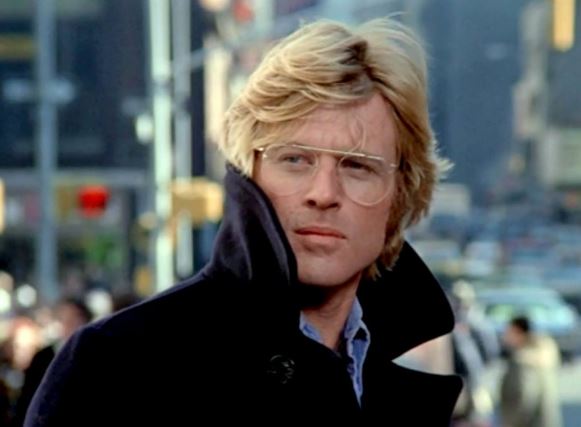
Robert Redford was surely one of the greatest movie stars of my youth, and he starred in two of my favorite films of all time, All the President’s Men and Three Days of the Condor, both of which I have written about on this blog. What made him interesting was that weird dichotomy of blond, athletic, all-American good-looks combined with a reserved, wary intelligence. (On my list of Hollywood Archetypes, he fits squarely in the “Dark Prince” slot.) He was a very smart man, who did a lot of amazing things both on-screen and off-. Among the most notable of these was his founding of the Sundance Film Festival, which has come to rival Cannes as the preferred venue for indie-film directors to premiere their movies. 

The fact that Redford would create an alternative festival for “the little guys” in the film industry was typical. He was, in some ways, the most counter-cultural movie star of the last fifty years—even more so than Easy Rider himself, Peter Fonda—in that he made movies about men fighting some vast, evil establishment. Often, this was the military-industrial complex in either its actual (All the President’s Men) or its fantasy (Three Days of the Condor) form. In his later years, when Redford could no longer play the lead, he took on the role of the villain who represents this evil empire, as in Captain America: The Winter Soldier.

As a kid, I always found something soothing about Robert Redford, even in movies filled with threats and violence. I suspect that, in my mind, he represented the best spirit of my parents’ generation (he was roughly the same age as my father). That is, the young adults of the 1960s and 70s. Post-hippie, but very hip. World-weary, but not broken. Brave, but not foolhardy. Idealistic, but not naïve. 

And, above all, ready to fight the system. 

Godspeed, Mr. Redford…

R.I.P. Terance Stamp

Stamp in “The Limey”

There is a scene in Steven Soderbergh’s 1999 noir thriller The Limey when the main character, Wilson, a career-criminal and generally scary guy, is questioning a woman in her house about a man named Valentine. Wilson (played with enormous power by Terance Stamp), is looking for the man who killed his daughter, and Valentine is his prime suspect. The woman, naively, offers to give Wilson Valentine’s phone number, at which point Wilson smiles wickedly and says, mostly to himself, “I’ve got his number.”

It’s a great, almost chilling moment. What we, the viewers, know (and the woman doesn’t) is that Wilson has already killed five men to get Valentine’s “number”, every sense of the term. And Stamp’s delivery of this line speaks volumes about Wilson’s character—his steely-eyed determination, his courage, and his constant, barely controlled rage. 

It’s a great moment in a great movie, which marked one of several come-backs in Stamp’s long career. His filmography is so great and varied that one must divide not in stages but in ages. First, there was Stamp the movie star, an epically handsome, Angry-Young-Man who got the lead in several fine, gritty films in the 1960s, including William Wyler’s The Collector and Ken Loach’s Poor Cow. But he never really clicked as a leading-man, either in England or in Hollywood, and his next big break didn’t come until 1980’s Superman II, in which he reprised his role as the evil General Zod (a.k.a. the chief of the three baddies whom Superman’s dad banishes to the Phantom Zone in Superman.) 

To this day, Stamp is best remembered for this one, silly role, Zod—at least, in America. But film nerds such as myself admired his work in many other small, supporting roles throughout the 80s. My favorite was his scene-stealing cameo in 1987 Wall Street, playing a redoubtable corporate raider who has reformed his ways and stands in opposition to the evil Gordon Gekko. 

Then, in the 1990’s, Stamp had his next, and greatest, comeback with his role as transexual woman in The Adventures of Priscilla, Queen of the Desert, which remains one of my favorite films of all time. Stamp was nominated for a BAFTA for that one, and he should have been nominated for an Oscar, too. But no matter. The role is a classic, and it re-introduced him to American audiences.

This led to Stamp’s last leading role in a major motion picture. This was, of course, The Limey, and it is perhaps his greatest performance, in part because he was able to leverage his own, real-life history as 1960s hipster in the role of Wilson, who was a master thief in 1960s England. Indeed, Soderbergh sampled black-and-white footage of Stamp from Ken Loach’s Poor Cow to use in flashbacks of Wilson’s earlier life—a daring artistic choice which, although done with permission from Loach himself, remains controversial to this day. However one might feel about this cinematic cribbing, though, Soderbergh made one hell of a good movie—a genuine classic—in which Stamp finally got a chance to shine in the lead, one last time. 

Terance Stamp passed away on Sunday, at the age of 87. Not bad, for such a hell-raiser. I’ll miss him.