What I’m Reading: “Scream with Me”

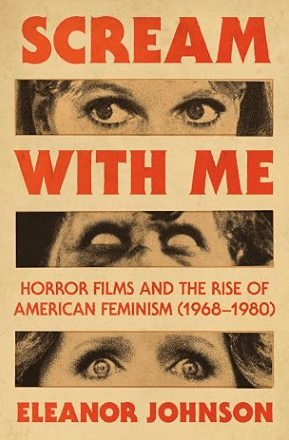
The idea that horror films might in any way be construed as “pro-feminist” seems counterintuitive to most people. It certainly did to me. After all, women are the preferred victims of horror films, especially the slasher genre in which entire sororities and girls-only sleep-overs are massacred wholesale, often in grisly—and blatantly sexual—methods.

But, as I recently learned, pro-feminist readings of classic horror films are a genuine thing, having a genuine moment. And I was completely convinced of their validity by Eleanor Johnson’s excellent book, Scream With Me: Horror Films and the Rise of American Feminism, 1968-1980. Early in the book, Johnson’s addresses the apparent absurdity of looking for feminist ideas in horror films, going so far as to quote Alfred Hitchcock’s famous formula for an effective thriller: “Torture the women.” Johnson does not minimize the misogyny of classic horror films. Indeed, she goes to great pains to explain that horror films—like any work of art—can often be self-contradictory, sexist on one visceral level but feminist on a deeper, almost subconscious one.

She writes:

[H]orror also has a deep and enduring relationship with American feminism. In fact, American feminism and American horror have been—for more than half a century—allies on issues of domestic abuse, reproductive control, and women’s restricted rights relative to men.

Horror films that focus on violence and persecution of women often do double-duty, serving as a means of getting otherwise conservative or traditionalist viewers to see the plight of women in the first place. More importantly, as Johnson’s title suggests, horror films subconsciously force the viewer to participate in the suffering of women, and thus empathize with their condition.

She writes,

What’s so important about the domestic horror films in this book is that they make viewers—whether or not the viewers are female—carry the fear and vulnerability embodied by the women in the films home with them. They center on a woman’s perspective, making audiences feel wracking physiological and psychological compassion for the women characters who are abused and terrorized. The films, although they showcase women’s suffering, do not simply fetishize that suffering, but rather humanize it, make it palpable, exportable to the viewers’ own minds and bodies. They invite viewers into the lived, embodied experiences of abused women; women barred from power, barred from speaking for themselves, barred from defending themselves; women who weren’t taken seriously by the people from whom they sought aid—doctors, police, lawyers, psychiatrists, husbands, coworkers. These movies took what was going on in American cultural, political, and legal history in the late 1960s and 1970s, and they made those things feelable. They made women’s suffering come alive to viewers who might not otherwise ever have stopped to think about what or how women suffered in the United States, behind closed doors, in the twentieth century. They made that suffering seem like an emergency. And then they made that suffering follow viewers all the way home and nest there.

Johnson goes on to explain her main thesis—namely, that horror films were instrumental in raising public awareness of women’s civil rights issues, and even in changing laws—by focusing on six classic horror films: Rosemary’s Baby, The Exorcist, The Stepford Wives, The Omen, Alien, and The Shining. She examines these films in chronological order, and so it is probably no accident that the oldest, 1968’s Rosemary’s Baby, is also the basis for her most compelling argument.

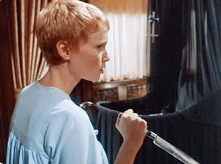
For those who haven’t seen it (i.e., anyone under 40), Rosemary’s Baby is the story of a young couple, Guy and Rosemary Woodhouse, who move into an old, spooky apartment building in Manhattan. They befriend their elderly neighbors, the Castevets, who (it later turns out) run a coven of witches. With the secret cooperation of Guy, the witches drug Rosemary, conjure up Satan, and watch as he rapes the poor woman.  Throughout the act, Rosemary is doped up but conscious, hallucinating that she is on a boat, rocking on a rough sea. At moments, though, she becomes lucid, and realizes that she is actually being raped by a huge, hairy creature. “This is no dream,” she yells, in the film’s most horrifying line. “This is really happening.”

The next morning, Guy tells her that he had sex with her while she was asleep. (The scratches on her body, he explains, are due to his “getting a little carried away”). Rosemary is unconvinced but, in true trad-wife fashion, doesn’t make a fuss. When she later becomes pregnant, the Castevets refer her to an old OB-GYN, Dr. Sapirstein, who puts her on a regimen of foul-tasting protein shakes and other noxious concoctions. As the pregnancy progresses, Rosemary finds herself in agonizing pain. Her women friends (whom Guy discourages her from seeing) beg her to find a new doctor, but, again, Rosemary doesn’t make a fuss.

Mia Farrow in “Rosemary’s Baby”

After she finally gives birth at home, the witches take the baby away. Guy tells her it died. But she can hear an infant crying from next door, and the neighbors insist on collecting Rosemary’s milk, which they convinced her to express into glass jars.

At some point, she finds a secret door into the Castevets apartments, only to find them, Dr. Sapirstein, and a bunch of other nattily-dressed devil-worshipers having a party. They are gathered around a cradle in which, of course, Rosemary’s baby lies. The baby himself is never shown. Rather, we only see her horrified reaction when she pulls back the veil and views the hell-spawn. “What’s wrong with his eyes?” she asks. “He has his father’s eyes,” Mr. Castevet replies.

I’ve probably seen Rosemary’s Baby half a dozen times, yet I never put it together that the film is almost a parable about the cruelty of anti-abortion laws. Not until I read Ms. Johnson’s book, that is. As she points out, Rosemary is probably cinema’s most extreme example of a woman forced to complete an unwanted (and very dangerous) pregnancy. One that is, in fact, the result of a rape (by the Devil, no less). As Johnson writes,

By New York State’s own abortion laws in 1968, Rosemary would not have been able to get an abortion on grounds of rape alone. Rape was not justification enough for abortion in 1968 in New York, nor was physical danger, nor psychological harm. Nor, indeed, was the prospect of having a baby born with deformities—which would seem likely when the child’s father is a claw-handed, leather-skinned, goat-eyed demon. The Satanic fetus, whose true range of deformities could only be known after the birth of the child, allegorizes the thousands of thalidomide pregnancies across the United States that women were forced to carry to term, anxiously waiting to see how compromised their babies would be by the drug the women had taken. Like them, Rosemary is going to be forced to carry to term a pregnancy of unknown viability. [Link added]

Of course, it isn’t just a lack of reproductive health rights that causes Rosemary’s ordeal. It’s her lack of freedom in general—financial, educational, and (above all) psychological—that traps her in a private hell. In some ways, her husband, Guy, comes off as even more evil than the Castavets in the way he gaslights and manipulates his wife. And it is this kind of domestic abuse—sometimes physical, always mental—on which Johnson primarily focuses for the rest of the book.

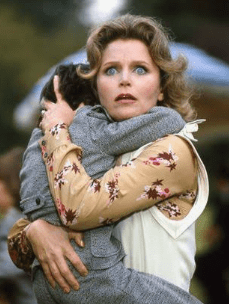
Lee Remick in “The Omen”

In The Omen, for instance, a wealthy man lies to his (much younger) wife, Kathy, when their baby dies at birth. At the urging of a local priest, he takes another baby whose mother has just died and passes him off to Kathy as her own. Naturally, the baby turns out to be the anti-Christ (once again), and the wife suffers mightily (once again), finally being killed by the little bastard and his evil minions. Unlike Guy Woodhouse, the husband in this story is not evil, nor self-serving. He genuinely thinks he’s being kind to his wife in doing the ole baby switch-a-roo, trying to spare her the heartbreak of losing a child. Of course, she has lost a child, and she deserves to know the truth. Moreover, she certainly does not deserve to be tricked into raising the spawn of hell. But her husband, in true patriarchal fashion, does what he sees fit. The result is the same.

I especially enjoyed Johnson’s examination of Stanley Kubrick’s The Shining, which she presents as an apotheosis of the domestic-abuse horror genre. I have always felt that Shelley Duvall’s fine, selfless performance as the tormented wife, Wendy, was the most underappreciated (and even mocked) aspect of the film. Indeed, she is the center of the movie, without which it would have no meaning.

Also, of all the films’ hapless heroines, Wendy’s plight is the most isolating and claustrophobic. As Johnson writes,

Rosemary can’t easily get away from the coven, but she can go see her doctors and, on occasion, her friends. Chris [in The Exorcist] is in thrall to the demon every bit as much as Regan is, but she still manages to go out to see doctors and priests. Joanna has quite a bit of freedom of movement, until the end of Stepford Wives; same with Kathy from The Omen. Ellen Ripley [in Alien] is every bit as imprisoned as Wendy Torrance, but her imprisonment feels incidental because she’s trapped on a floating domestic space, and everyone else is trapped right along with her. Wendy’s entrapment feels obvious, manifest, total, unbreachable. She’s trapped by the hotel; by [her husband] Jack; by the weather; by the distance to any other person or place, to any kind of shelter. The horror of The Shining isn’t ultimately the ghosts in the hotel. It’s Jack and his total imprisonment of Wendy. And, as viewers, we are trapped with her.

Shelley Duvall in “The Shining”

Indeed.

Scream with Me is a hell of a book. Check it out…!

What I’m Watching: Monstrum (Backrooms Episode)

I’ve written a lot about the liminal space aesthetic recently, and especially its importance in a brand of speculative fiction that I call Vortex. So, I was pleased to learn that it has a thriving following on Youtube. Specifically, The Backrooms channel.

I learned this from another Youtube channel that I really like, Monstrum. Here is the episode on The Backrooms. Check it out!

Perfect Films: “Blue Velvet”

Incredibly, forty years have passed since David Lynch’s masterpiece, Blue Velvet, was released to theaters. Actually, “released” isn’t quite the right word; it detonated, hitting the cultural consciousness with the force of an H-bomb. Although not a huge commercial hit compared to other films that came out that year (including such juggernauts as Top Gun, Crocodile Dundee, and Aliens), Blue Velvet quickly became the most talked about, joked about, and debated about movie in America, at least among the literati. 

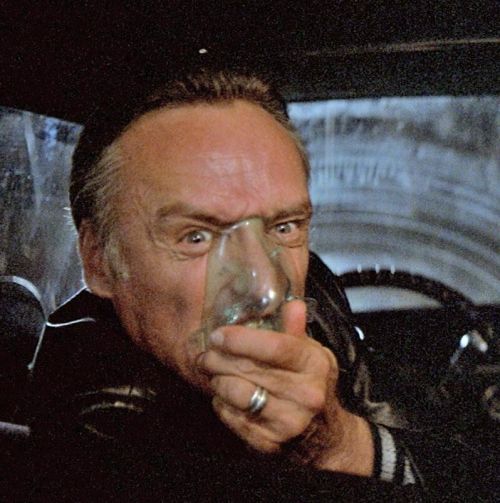
This was especially true of the English- and Film-major nerd set of which I was a member. I was, in fact, roughly the same age as Jeffrey Beaumont (Kyle MacLachlan), the film’s young protagonist, who comes home from college to Lumberton, N.C. He is visiting his hospitalized father (who suffers a stroke in the film’s famously surrealistic opening sequence), and soon finds himself wandering around town, adrift. One afternoon, he finds a severed human ear, which he takes to the local police department and hands over to a good-natured detective. “That’s an ear all right,” the man says, in one of many moments of 1950s camp dialog. Thus begins the dark mystery that propels this very, very dark film. 

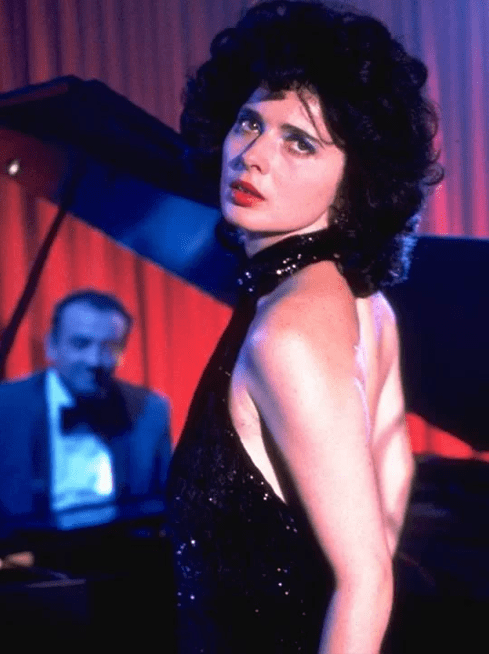
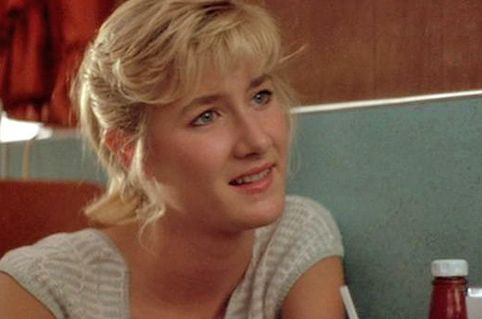
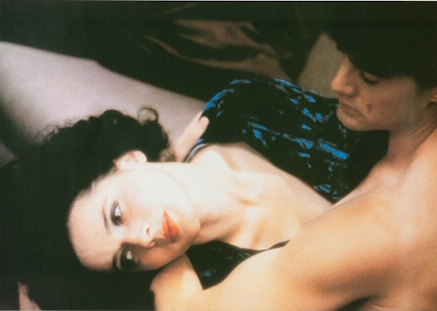
Again, “dark” isn’t quite the right word. For the movie is as concerned with light as much as darkness. Jeffrey soon finds himself drawn to two very different women—Sandy (Laura Dern), the blond-haired, sweet daughter of the detective; and Dorothy (Isabella Rossellini), the sultry femme fatale who might have something to do with the severed ear. He experiences a life-altering, mind-blowing moment with each of them, in turn. With Sandy, he glimpses a bit of transcendent, romantic bliss when they first dance together at a party, to the angelic voice of July Cruz on the soundtrack. With Dorothy, he witnesses her violation at the hands of a psychotic drug-lord, Frank, who has sexually enslaved her. 

That latter scene, which comes at the end of Act I, is one of the most powerful and perverse in the history of cinema. Even today, in our porn-saturated culture, many people find it shocking. And they should. It’s meant to shock. But it’s also meant to question. To ask the viewer: why is evil so seductive? Why is it so powerful?

Or, as Jeffrey asks Sandy, “Why are there men like Frank?” He might just as well have asked: Do all of us have a sadistic streak like Frank (and maybe Dorothy)? Do all of us have a masochistic streak like Dorothy (and maybe Frank)? 

For me, this questioning aspect is what separates art from pornography, even when the line is blurred, as it very much is in Blue Velvet. Val Kilmer, who was in consideration for the role of Jeffrey, dismissed the script as “pornography.” He might have been right about that script, but he was wrong about the final product. Blue Velvet is art. In fact, it’s high art. There is something sublime about it. Something that transcends ordinary definitions and categories. It seems to exist on a higher plane of existence. 

Looking back on the film, another aspect I find amazing about it is the sheer number of careers it launched—or, in many cases, rejuvenated. MacLachlan and Dern became movie stars almost overnight. (Yeah, MacLachlan had been in Dune, but the movie bombed). Rossellini went from being a model and cosmetics spokesperson to an acclaimed, A-list actress. Veteran actor Dean Stockwell made an instant comeback based on his one, over-the-top scene in the movie, vamping and lip-synching Roy Orbison’s “In Dreams” (which the film also re-popularized). And 1960s counter-culture hero Dennis Hopper—whose performance as Frank was so electrifying that he was nominated for Golden Globe—found his career jumpstarted. He went on to star in many films throughout the 1990s, and also to direct a couple. 

But the biggest winner of Blue Velvet was, of course, Lynch himself. He went from being that cool-but-weird art film director (who had somehow made both Dune and also Eraserhead) to a Bonafide cultural phenomenon. A phenomenon would reach its apex a few years later in 1990, when Lynch had both the hippest TV show on air (Twin Peaks) and the hippest movie in theaters (Wild at Heart).

Despite all those later successes (and a few failures, too; he was such a great artist that even his “failures” were pretty damned good), Lynch would never top Blue Velvet. Sure, he came close a few times, especially with his phantasmagoric Hollywood tale, Mulholland Drive in 2001, but he never quite equaled it. 

And that’s okay. Blue Velvet remains his masterpiece, not to mention one of my favorite films of all time.

What I’m Reading: “The Elementals”

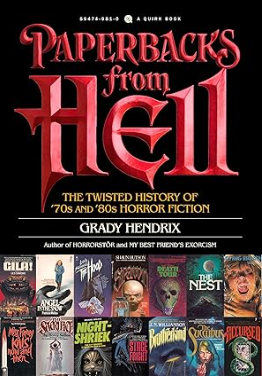
Last year, I wrote a post about a fine non-fiction book called Paperbacks from Hell: The Twisted History of ‘70s and ‘80s Horror Fiction. I enjoyed the book primarily for the way the author, Grady Hendrix, mixes his obvious love of old, pulpy horror novels with an enormous amount of mockery and snark. Basically, he makes fun of the trends that ran through horror fiction back in the day, as well their emphasis on over-the-top gore and hilariously silly plots. 

As I read the book, though, I noticed Hendrix mention one writer whom he does not mock: Michael McDowell. Rather, Hendrix uncharacteristically bestows a bit of praise on this particular novelist, which made me curious as to why I had never heard of the dude. 

As it turns out, most people haven’t heard of McDowell, even though he was a very respected paperback fiction writer (Stephen King called him one of the best) as well as a successful screenwriter (he wrote the screenplays for Beetlejuice and The Nightmare before Christmas, as well as a lot of TV shows). I, especially, should have heard of McDowell considering he was, like me, a Southern writer—from the Gulf Coast of Alabama, not far from where I spent my summers in Pass Christian, Mississippi. He was also a writer who tried to blend a literary sensibility with an appreciation of genre narrative, which is an achievement which I admire.

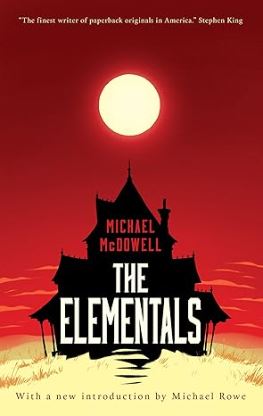
McDowell died in 1999, a latter casualty of the AIDS epidemic in America, just a few years before reliable HIV treatments came into common use. In the years since, his reputation seems to have grown, steadily if slowly, to the point where he is now considered a forgotten master. I was surprised to find an e-book edition of his most famous novel, The Elementals, on my local library’s Overdrive site, and I immediately checked it out and tore into it.

It’s definitely worth the read. Set in Alabama, it tells the story of a two wealthy, intermarried families: the Savages, with matriarch Marian and her adult son, Dauphin; and the McCrays, with matriarch Big Barbara and her adult children, Luker (who has a thirteen-year-old daughter, India) and Leigh (who is married to Dauphin Savage). At the start of the book, Marian has just died and the rest of the blended family is attending her funeral:

In the middle of a desolate Wednesday afternoon in the last sweltering days of May, a handful of mourners were gathered in the church dedicated to St. Jude Thaddeus in Mobile, Alabama. The air conditioning in the small sanctuary sometimes covered the noise of traffic at the intersection outside, but occasionally it did not, and the strident honking of an automobile horn would sound above the organ music like a mutilated stop. The space was dim, damply cool, and stank of refrigerated flowers. Two dozen enormous and very expensive arrangements had been set in converging lines behind the altar. A massive blanket of silver roses lay draped across the light-blue casket, and there were petals scattered over the white satin interior. In the coffin was the body of a woman no more than fifty-five. Her features were squarish and set; the lines that ran from the corners of her mouth to her jaw were deep-plowed. Marian Savage had not been overtaken happily.

Even for a funeral, it’s a very dreary and ominous affair. Yet it gets worse when, at one pre-arranged moment, Dauphin rises and stabs a ritual knife into his dead mother’s chest. Yeah, it’s that kind of book. The fact that McDowell can pull it off and still maintain a high-level of physical and emotional realism—not to mention vivid, sharp writing, as in the passage above—is a testament to his mastery. 

The book gets even weirder after the funeral, when the family retreats to their ancestral vacation spot, a tiny barrier island called Beldame, taking with them their Black maid, the long-suffering (and very smart) Odessa. We soon learn that there are three houses on Beldame, yet the family occupies only two of them, leaving the third abandoned. (You can probably guess the reason why, but it has something to do with the house’s intermittent habit of…well…eating people.) 

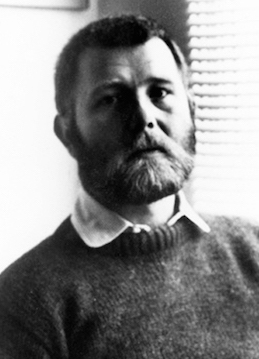
Michael McDowell

As the sand-dunes slowly encroach and bury it, the empty house attracts the curiosity of the young and intrepid India McCray, who ventures inside and sees something impossible yet real. And terrifying. 

Of course, The Elementals isn’t just a generic ghost story, nor a generic Southern Gothic novel. The characters are vividly drawn, sympathetic, and believable. Their conversation is fraught with age-old tensions and resentments, yet it’s often very funny in a Curb Your Enthusiasm kind of way. And the characters of India and Odessa are especially well-realized. Linked by their intelligence and, as McDowell implies, some kind of psychic power reminiscent of The Shining, each comes off as a kind of hero in their battle against the evil hiding (rather obviously) in House #3.

The Elementals is a literary horror novel, meaning that it bridges the gap between genre story-telling and development of realistic characters. The book really comes to life (forgive the pun) in the chapters about India as well as of the adult male characters, Luker and Dauphin, both of whom struggle—in true Southern fashion—with the dark legacy of the past and especially surround their own family. Self-indulgent, smothering matriarchs like the recently deceased Marian are, in particular, a source of psychological revulsion. Indeed, they are central to the main theme of the novel, which I will not spoil here.

There is also a good amount of subtle criticism about the racial divide that existed at the time (and now) in the deep south. Odessa, the Black maid, is the only character who does any real work in the book, busy doing the cooking and cleaning for the affluent Whites, just as she has done (we are told) for thirty years. And, of course, Odessa is not only smarter than most of the family members (except, perhaps, for India) she is the only one who knows what the hell is going on in House #3, using her power of second-sight as well as (it is implied) a familial knowledge of voodoo. 

Yes, as many reviewers on Reddit have observed, Odessa is an instance of the Magical Negro Trope, of the sort that genre writers, both Southern and not, have abused for a century. This trope is, of course, a literary stereotype, and like any stereotype it can be harmful if taken too far and left unexamined. But if Odessa is a Magical Negro, she is a very world-weary and snarky example, with both courage and brains. I simply loved her character. Sue me. 

In fact, I loved the whole book, which feels a bit like a mash-up of Tennessee Williams and Stephen King. Check it out. It deserves some attention. Better late than never.

What I’m Reading: “Paperbacks from Hell”

Having had exactly one book traditionally published, I am far from an expert on the world of publishing. Even so, I learned a lot more than I ever expected, and have since become fascinated by the industry as a whole. Also, I am currently working on a supernatural horror novel. So, it makes perfect sense that I would be drawn to Grady Hendrix’s excellent non-fiction book, Paperbacks from Hell, which examines (skewers?) pulp horror literature as it existed in the 1970s and 80s, both as a uber-genre and as an industry. 

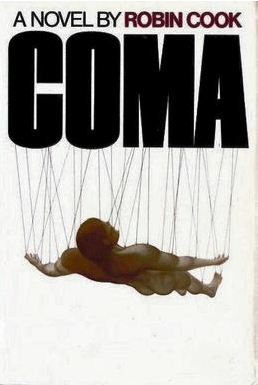
Let me say right up front that this is a very funny book. I found myself laughing out loud many, many times as Hendrix describes the trends and fads that overtook the genre. Take this passage where he introduces the wildly successful pop writer Robin Cook, whose 1977 book Coma is, in Hendrix’s words, the “source of the medical-thriller Nile.” As Hendrix goes on:

It all started with Robin Cook and his novels: Fever, Outbreak, Mutation, Shock, Seizure…terse nouns splashed across paperback racks. And just when you thought you had Cook pegged, he adds an adjective: Fatal Cure, Acceptable Risk, Mortal Fear, Harmful Intent. An ophthalmologist as well as an author, Cook has checked eyes and written best sellers with equal frequency. He’s best known for Coma (1977)…. Its heroine, Susan Wheeler, is one of those beautiful, brilliant medical students who’s constantly earning double takes from male colleagues or looking in the mirror and wondering if she’s a doctor or a woman—and why can’t she be both, dammit? On her first day as a trainee at Boston Memorial, she settles on “woman” and allows herself to flirt with an attractive patient on his way into a routine surgery. They make a date for coffee, but something goes wrong on the table and he goes into…a COMA!

Hendrix cleverly divides each chapter to a single, overarching trend in the pulp horror universe, with titles like HAIL, SATAN (novels of demonic possession and devil-sex), WEIRD SCIENCE (evil doctors and mad scientist-sex), INHUMANIOIDS (deformed monsters and mutant-sex), and so on. I was especially impressed by the way Hendrix explains each publishing fad as a symptom of a larger societal shift. For example, he explains how the white-flight phenomenon of the 1970s in which white middle- and upper-class families abandoned the big cities and moved to quaint, charming little towns in upstate New York or the mid-west or norther California or wherever, results in a surge of small-town horror novels like Harvest Home (wherein evil pagan matriarchs conduct human sacrifices to make the corn grow) and Effigies (wherein Satan is breeding grotesque monsters in the basement of the local church).

Another chapter entitled CREEPY KIDS, which deals with such diverse plot concepts as children who are fathered by Satan, children are who are really small adults pretending to be children, and children who, for whatever reason, just love to kill people. I particularly love this passage:

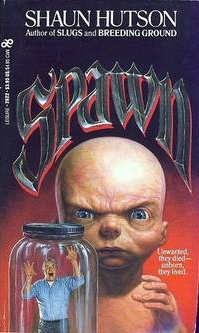
Some parents will feel helpless. “How can I possibly stop my child from murdering strangers with a hammer because she thinks they are demons from hell?” you might wail (Mama’s Little Girl). Fortunately there are some practical, commonsense steps you can take to lower the body count. Most important, try not to have sex with Satan. Fornicating with the incarnation of all evil usually produces children who are genetically predisposed to use their supernatural powers to cram their grandmothers into television sets, headfirst. “But how do I know if the man I’m dating is the devil?” I hear you ask. Here are some warning signs learned from Seed of Evil: Does he refuse to use contractions when he speaks? Does he deliver pickup lines like, “You live on the edge of darkness”? When nude, is his body the most beautiful male form you have ever seen, but possessed of a penis that’s either monstrously enormous, double-headed, has glowing yellow eyes, or all three? After intercourse, does he laugh malevolently, urinate on your mattress, and then disappear? If you spot any of these behaviors, chances are you went on a date with Satan. Or an alien.

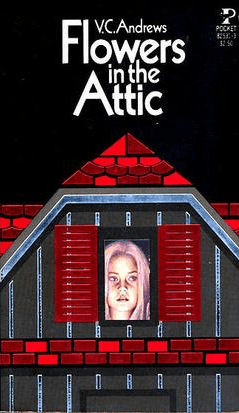
One the many things I learned from reading the book was how the entire publishing world (not just horror) was permanently changed in 1979 by an obscure tax-law case called The Thor Power Tool Co. v Commissioner. In this case, the U.S. Supreme Court ruled that manufacturers could not write-down poor-selling or slow-selling inventory and thus reduce their tax liability. The case was focused on unsold parts for power-tools, but the ruling equally applied to publishing houses, who had hitherto done the same kind of write-down on their slow-selling novels. As Hendrix explains: “Suddenly, the day of the mid-list novel was over. Paperbacks were given six weeks on the racks to find an audience, then it was off to the shredder.” And so, inevitably, came the frantic scramble to find those half-dozen or so “blockbuster” books each season, behind which publishers focused their resources. (A similar “blockbuster” effect ravaged Hollywood in the 1970s, in this case due to the success of summer films like Jaws and Star Wars.) Books got less pulpy and more sparkly, with foil covers and die-cast cutouts like those made famous by the V.C. Andrews novels (which continued to be published, zombie-like, long after Andrews’s death).

Whether you’re a writer or just a pulp-paperback fan, Paperbacks from Hell is a great read. Check it out…

Why Do Movies Get Remakes, but Books Don’t?

TomJonesMovie1
Tom Jones, 1963

If you’re a liberal-arts nerd like me who thinks about culture all the time, you have probably pondered this question: why do people remake movies, but not books?

Yeah, I know. On the surface, this seems like a silly and even naive question. Movies, after all, are a popular medium. They belong primarily in the category of the performing arts, like theater and ballet and classical music. And, as we all understand, no one over ever gives the “final” performance of Hamlet or Don Giovanni or The Jupiter Symphony. Yes, there are certainly “classic” performances of all these works—some of them, made in the past century, have been recorded for the ages—but none is ever the last performance. Each generation must have its own Hamlet, Don Giovanni, etc.

Okay, so we’ve settled that question.

Or have we?

Continue reading “Why Do Movies Get Remakes, but Books Don’t?”

Synchronicity for Bookworms: Harlan Ellison

Harlan Ellison in the 1970s

The great film critic Roger Ebert once noted that the people we think of as heroes are those we looked up to when we were kids. As adults, we might admire a particularly talented athlete or actor or musician, but they won’t really be “heroes” to us; they’ll just be really cool (but life-sized) people. 

I think that my middle-aged affection for Harlan Ellison might be a slight exception to this adage, however. I was a fan of his when I was growing up (he became famous in the 1970s with his revolutionary, sci-fi short-stories like “I Have No Mouth, and I Must Scream”), but he wasn’t exactly a “hero” of mine. Then, in the 1990s, Ellison began to appear on TV as a talk-show celebrity, especially on the sci-fi channel, where he essentially co-hosted a show called Sci-Fi Buzz, where he was often very funny and always insightful. Also, to my amazement, one of his stories, “The Man Who Rowed Christopher Columbus Ashore,” was included in 1993’s Best American Short Stories collection. I saw an Ellison interview around that time, in which related that the series’ editor called him to give him the good news. At the end of their brief conversation, she asked him if had written any other short stories—an unintentional slight that Ellison said felt like “a dagger to the heart.” 

But this was typical of Ellison’s relationship to the literary world, and to Hollywood. He couldn’t get no respect. Part of this life-long diss was, surely, his own fault. He was famously abrasive and out-spoken, and hated to have his work messed with. When he wrote the screenplay for the what is generally considered the best episode of the original Star Trek series, “City on the Edge of Forever,” he hated Gene Roddenbury’s changes so much that he tried to have his name taken off the credits. (Fortunately, he failed.) In fact, he was so contentious about such matters that he had a special pseudonym, Cordwainer Smith, that he would use when he felt his work had been to mangled by studio executives that he no longer wanted his real name associated with it.

Paradoxically, the more interviews I watched of Ellison in the 1990s and beyond, the more I liked him. He had a razor wit, and he did not suffer fools easily. He could also be mean as hell when he felt attacked. But these were all characteristics I had seen before in some exceptional people I have met over the years, including my great teacher, the writer Harry Crews. I never met Ellison, but I suspect that we would have gotten along just fine. 

Indeed, I came to admire even Elllison’s famously pugilistic nature. He was quick to sue anyone who he felt had stolen his ideas. Most famously, he sued Orion Pictures over 1984’s The Terminator, alleging that director/writer James Cameron had cribbed the concept from a script Ellison wrote for The Outer Limits. Orion settled the suit out of court. (Cameron later called Ellison a “blood-sucking ghoul,” which I still find hilarious.)

Clearly, Ellison knew how to defend himself and his ideas, and to get what he felt was owed to him. Much of this toughness, I imagine, came from Ellison’s early life, growing up as an diminutive Jewish kid in Ohio. Like a lot of smart, little guys, Ellison learned how to punch back, and punch hard. 

After I wrote a blog post about Ellison and Isaac Asimov last year, I found myself thinking about Ellison more and more. So much so, in fact, that a couple of weeks ago I decided to write something about him, although what form that would take. 

Then, in one of those moments of synchronicity that happen to writers when they immerse themselves in a subject, I stumbled upon a fact regarding Ellison that I had never read before, and it came from a totally unrelated source.

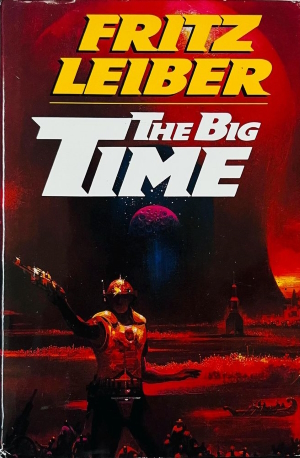
I was looking at some classic sci-fi book covers when I spotted one for Fritz Leiber’s The Big Time. I hadn’t thought of Leiber in decades (he was a favorite of a friend of mine in middle school), so out of pure curiosity I checked out his Wikipedia page. There, I was saddened to learn that Leiber spent the last few years of his life in poverty. As with so many writers, alcohol had taken its toll, and Leiber ended up living in a cheap motel. Apparently, Ellison came to visit him one day and was appalled by the state of his affairs, with Leiber not even able to afford a writing table. Rather, he was composing his latest work on a “manual typewriter propped up over the sink.” 

Fritz Leiber’s Sci-Fi Classic, “The Big Time”

Okay, maybe this wasn’t a good example of full-blown, Jungian synchronicity. I guess it wasn’t that unlikely that I should stumble upon a Ellison anecdote while reading about Leiber. They were both great science fiction writers, after all, and it make sense that they might have known each other. In fact, as I learned, Ellison included some of Leiber’s short stories in the Dangerous Vision anthologies that he (Ellison) edited for decades. Still, I didn’t know of any connection between the men. They were of different generations and circumstances, linked only by their genre and talent.

Unfortunately, the Wikipedia article does not cite the source of this (if anyone knows, please tell me), nor does it say what action, if any, Ellison took to improve Leiber’s circumstances. But I like to think that he did something to help. After all, he was a pugnacious, smart-ass little guy who looked after himself and other little guys. I miss him.

Here is a good interview that Ellison gave to the BBC in the 1970s.

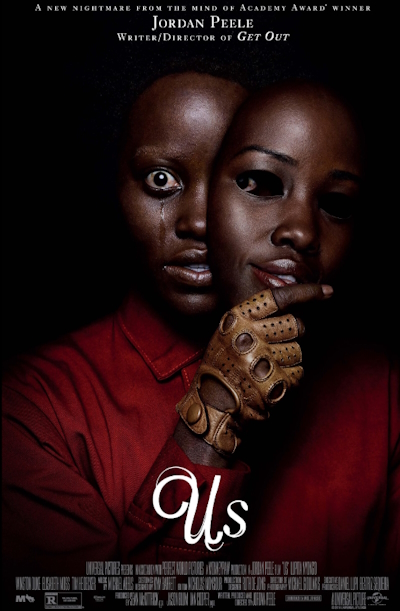
Perfect Films: “Us”

** SPOILERS BELOW **

The better part of a decade has passed since Jordan Peele’s landmark horror film Get Out was released, marking Peele’s transformation from famed comedy writer and sketch artist to one of the most important filmmakers of our time. Peele has since added two more films to his horror oeuvre—2019’s Us and 2022’s Nope

All three are great, but my favorite is Us. For me, it hits on the deepest and most disturbing level, and it has the richest palette in terms of effects. It’s also the hardest to figure out in terms of plot. With Nope and Get Out, the viewer has a vague sense of what’s going on, even early in the film (although the details turn out to be more shocking and terrifying than anyone suspected). But while watching Us, I was totally mystified. I knew it had something to do with evil twins—true doppelgängers in both the literal and the psychological sense—but I had no real idea of what the actual plot would turn out to reveal. And what a reveal it is!

But I’m getting ahead of myself. Part of Us’s appeal lies in its slow-burn first act. (This is true of Get Out and Nope, too, but Us takes it to the next level.) The movie starts with a flashback to 1986, when a little girl, Adelaide, breaks away from her bickering parents at a beach boardwalk and finds a strange funhouse. It’s a simple premise, yet so much disturbing stuff is going on in this segment that it’s almost impossible to describe. We have the tension between the parents, raising the specter of divorce (the thing most kids fear more than anything else except death). Then, we have the separation of the child from the parents (another primal fear). And, finally, we have the freakish funhouse, which, though apparently deserted, is still lit with eerie neon light.

Continue reading “Perfect Films: “Us””

“Dracula” Isn’t About What You Think It’s About

I’ve been seeing a lot of on-line ads for the new Nosferatu movie directed by Dave Eggers. It looks like a pretty good movie, although, judging by the trailers, it seems to be emphasizing the horror (e.g., slasher) elements of the classic Nosferatu/Dracula story over the erotic angle (which most film adaptations have veered toward).

Or does it? Looking at the poster, the hook line poster reads “Succumb to the Darkness.” It’s a seductive line, which doesn’t quite seem to go with the image portrayed—that of a beautiful young woman in a nightgown lying on her back with her mouth open, while a skeletal, monstrously taloned hand reaches for her face.

Erotic? Not really. Gross? Yeah, kinda. This thematic confusion between the film’s trailer and its poster reflects, I think, the difficulty in adapting the Dracula story to the screen. (Yes, I know that Nosferatu is not the same as Dracula, but close enough.) The difficulty is made worse in our present time, the 21st Century, when porn is only a few clicks away and the idea of truly transgressive sexual activity is more and more difficult to imagine.

Continue reading ““Dracula” Isn’t About What You Think It’s About”

Five Great Movies about the Press

I’ve been meaning to write a post listing some great movies about the press. Normally, I would make this a “top-10” list, but the fact is that I couldn’t think of that many, unless I resorted to some cheating (yes, Citizen Kane involves the muckraking journalism of the early 1900s, but you can’t really call it a movie about the press). So, here’s my list, from great to greatest…

ThePaper

The Paper

Ron Howard’s 1994 film The Paper focuses on one frantic day in the newsroom of a major metropolitan newspaper. The day begins with a high-profile murder, for which two young African-American men are arrested. Michael Keaton, Glenn Close, and Robert Duvall are the editors who are fighting to uncover the truth—before deadline. The Paper is a bit broad compared to the other entries on my list, but it’s still a fine movie with a great story.

Continue reading “Five Great Movies about the Press”