
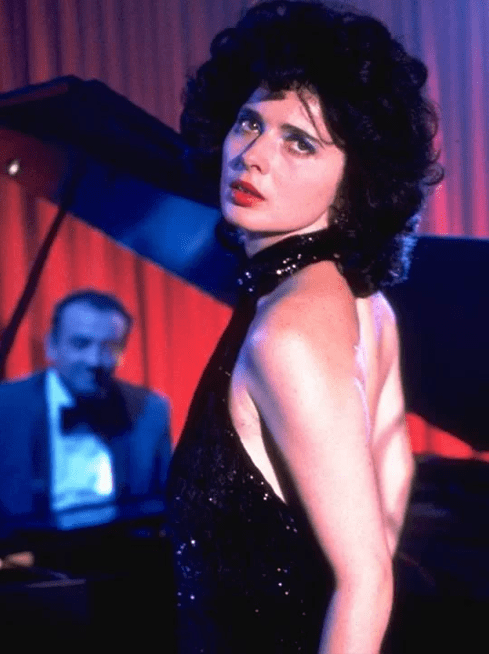
Incredibly, forty years have passed since David Lynch’s masterpiece, Blue Velvet, was released to theaters. Actually, “released” isn’t quite the right word; it detonated, hitting the cultural consciousness with the force of an H-bomb. Although not a huge commercial hit compared to other films that came out that year (including such juggernauts as Top Gun, Crocodile Dundee, and Aliens), Blue Velvet quickly became the most talked about, joked about, and debated about movie in America, at least among the literati.
This was especially true of the English- and Film-major nerd set of which I was a member. I was, in fact, roughly the same age as Jeffrey Beaumont (Kyle MacLachlan), the film’s young protagonist, who comes home from college to Lumberton, N.C. He is visiting his hospitalized father (who suffers a stroke in the film’s famously surrealistic opening sequence), and soon finds himself wandering around town, adrift. One afternoon, he finds a severed human ear, which he takes to the local police department and hands over to a good-natured detective. “That’s an ear all right,” the man says, in one of many moments of 1950s camp dialog. Thus begins the dark mystery that propels this very, very dark film.
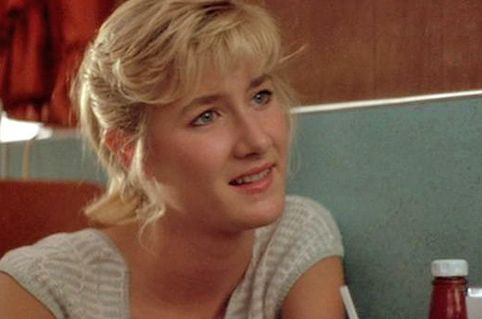
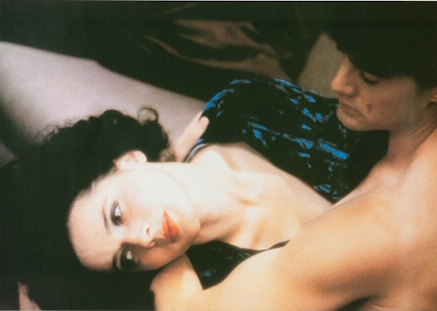
Again, “dark” isn’t quite the right word. For the movie is as concerned with light as much as darkness. Jeffrey soon finds himself drawn to two very different women—Sandy (Laura Dern), the blond-haired, sweet daughter of the detective; and Dorothy (Isabella Rossellini), the sultry femme fatale who might have something to do with the severed ear. He experiences a life-altering, mind-blowing moment with each of them, in turn. With Sandy, he glimpses a bit of transcendent, romantic bliss when they first dance together at a party, to the angelic voice of July Cruz on the soundtrack. With Dorothy, he witnesses her violation at the hands of a psychotic drug-lord, Frank, who has sexually enslaved her.
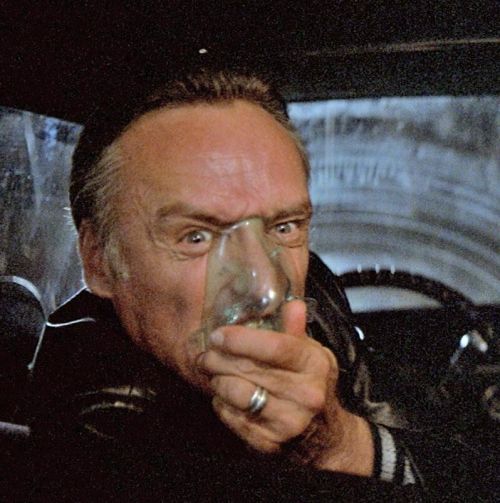
That latter scene, which comes at the end of Act I, is one of the most powerful and perverse in the history of cinema. Even today, in our porn-saturated culture, many people find it shocking. And they should. It’s meant to shock. But it’s also meant to question. To ask the viewer: why is evil so seductive? Why is it so powerful?
Or, as Jeffrey asks Sandy, “Why are there men like Frank?” He might just as well have asked: Do all of us have a sadistic streak like Frank (and maybe Dorothy)? Do all of us have a masochistic streak like Dorothy (and maybe Frank)?
For me, this questioning aspect is what separates art from pornography, even when the line is blurred, as it very much is in Blue Velvet. Val Kilmer, who was in consideration for the role of Jeffrey, dismissed the script as “pornography.” He might have been right about that script, but he was wrong about the final product. Blue Velvet is art. In fact, it’s high art. There is something sublime about it. Something that transcends ordinary definitions and categories. It seems to exist on a higher plane of existence.
Looking back on the film, another aspect I find amazing about it is the sheer number of careers it launched—or, in many cases, rejuvenated. MacLachlan and Dern became movie stars almost overnight. (Yeah, MacLachlan had been in Dune, but the movie bombed). Rossellini went from being a model and cosmetics spokesperson to an acclaimed, A-list actress. Veteran actor Dean Stockwell made an instant comeback based on his one, over-the-top scene in the movie, vamping and lip-synching Roy Orbison’s “In Dreams” (which the film also re-popularized). And 1960s counter-culture hero Dennis Hopper—whose performance as Frank was so electrifying that he was nominated for Golden Globe—found his career jumpstarted. He went on to star in many films throughout the 1990s, and also to direct a couple.
But the biggest winner of Blue Velvet was, of course, Lynch himself. He went from being that cool-but-weird art film director (who had somehow made both Dune and also Eraserhead) to a Bonafide cultural phenomenon. A phenomenon would reach its apex a few years later in 1990, when Lynch had both the hippest TV show on air (Twin Peaks) and the hippest movie in theaters (Wild at Heart).
Despite all those later successes (and a few failures, too; he was such a great artist that even his “failures” were pretty damned good), Lynch would never top Blue Velvet. Sure, he came close a few times, especially with his phantasmagoric Hollywood tale, Mulholland Drive in 2001, but he never quite equaled it.
And that’s okay. Blue Velvet remains his masterpiece, not to mention one of my favorite films of all time.


Huge fan of Mulholland Drive. Only watched Blue Velvet once, so far, long after its release but also long ago. I remember immediately downloading “In Dreams” and saying ‘who’s this guy Roy Orbison?’ Also, how is this movie so twisted and yet so real? I’ll watch it again soon. It will be interesting to see it a second time, with a little more perspective.
LikeLiked by 1 person