You can always tell if a classic rock-song was released in the early 1970s because it goes on and on and on. I mean, Freebird? Jessica? Stairway to Heaven? Are you kidding me? The legendary D.J. Wolfman Jack one joked that if he queued up three or four of these songs, he could go out for dinner and be back before they were done.
Every Picture Tells a Story is yet another long rock song that goes on for almost six minutes. Yet, it doesn’t last long enough! The song positively flies by, in part because it…well, tells a story—the rollicking tale of the high-flying, hard-partying, womanizing narrator (who seems a lot like Rod Stewart) and his search for love around the world. With its crazy, open-form lyrics and acoustic, jam-style musicianship, the song really shouldn’t work, but it does, thanks to the combined genius of Stewart himself and his great friend Ron Wood (who was, at the time, not yet a member of The Rolling Stones).
I decided to feature Stewart on this edition of Friday Night Rock-Out because a review I wrote a few years ago of his fine autobiography is getting a lot of hits lately, perhaps because Stewart recently underwent major surgery and people are Googling him. I’m glad my review is popping up in the feed. It was heartfelt.
Tomorrow is the Fourth of July, America’s birthday. So, for tonight’s Friday Night Rock-Out, I was going to share Springsteen’s “Born in the U.S.A.,” which is my favorite “patriotic” song ever. I love it because the narrator seems genuinely proud to be an American while at the same time lamenting our country’s many, many flaws.
But, at the last minute, I decided to go with another great “heartland rock” singer—and one of my favorite artists of all time, generally—John Mellencamp, and his dark ode “Paper in Fire.” The song is about Mellencamp’s heritage, tracing back to a long line of tough, angry, and sometimes violent men. Which, in a way, describes America itself. Violence and anger are woven through our nation’s history, all 250 years of it. Maybe even further back than that.
Despite the song’s heavy themes, though, there is something thrilling and fun about it. Inspiring, even. I really like the way it evokes Kentucky as much as Kansas, with its blend of rock, bluegrass, and gospel.
In case you haven’t noticed, Paul McCartney is having a bit of a moment. He performed on Saturday Night Live a couple of weeks ago, as well as on the final episode of CBS’s Late Night with Steven Colbert. Somehow, the aging Beatle has re-entered the cultural zeitgeist.
He’s done it before, of course. After The Beatles broke up in 1970, he formed a new band, Wings, with his recent bride, Linda (nee Eastman), and enjoyed a huge success. I was a big fan of Wings, back in the day. I had a couple of their albums, but no record-player. I had to sneak into my parents’ bedroom in the afternoon and play them on my dad’s stereo.
In keeping with McCartney’s recent resurgence, I stumbled upon a fine oral history of the band, Wings: The Story of a Band on the Run, which he assembled with Ted Widmer. While reading the book, I discovered many things about some of their most famous songs. I was especially struck by the history of this one, “Jet”, which has always been one of my favorites.
For example, I learned that the beautiful, trippy Moog synthesizer featured on the song was played by Linda McCartney (she taught herself how to play it). And that the ending saxophone riff was actually two saxophones played in sequence—one for the high part, and then another one for the low part. And that the funky lyrics, whose meaning I and others have puzzled over for years, are absolutely meaningless. (McCartney chose them strictly for their feel; never let meaning get in the way of a good melody!)
I’ve been thinking about this song a lot lately, and GEE, I CAN’T IMAGINE WHY.
Yes, it’s about the dark side of American culture. Conspiracy theories and paranoia and madness. Specifically, when he wrote the song, Tom Cochrane was worried about a new wave of antisemitism that was on the rise in the country. That was in 1981. FORTY-FIVE YEARS AGO.
I still love this song. Listening to it feels like driving across the desert of Southern Arizona on a two-lane highway at 3:00 A.M. (something I’ve done, actually, although this song did not come on the radio).
It’s also an example of how an offbeat, unusual choice can elevate an already fine work of art. In this case, it was the use of a steel guitar—an instrument normally associated with country music—played by master musician Ken Greer that gives the song its eerie, haunting sound.
It’s almost a cliché to state that, as you get older, you re-evaluate a lot of things you liked in your youth. Often (alas), you discover that the books you read, the music you listened to, and the movies you listened to when you were in high school really weren’t that great—with a few exceptions. Also, as you age, you sometimes discover that something you didn’t pay much attention to when you were young is actually pretty frickin awesome.
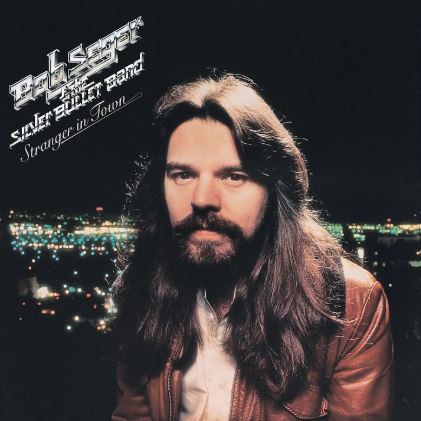
That happened to me recently with this song, “Still the Same,” by Bob Seger. For some mysterious reason, the song popped into my head about a week ago and wouldn’t leave. Maybe I heard it on the speakers at the grocery store; I don’t know. But for some reason, I kept hearing it, and I couldn’t stop thinking about it.
This was even more strange considering that, as a kid, I didn’t really groove to much of Seger’s music. I mean, I liked his stuff, especially “Night Moves.” And his songs were all over the classic rock station that me and my friends listened to, so I knew all of them by heart, almost, and I admired them. Ironically, though, the one Seger-hit that didn’t register on me at all was “Still the Same.”
Until now. I found myself looking it up on Youtube, playing it, then playing it again. I really listened to the lyrics for the first time, and I was totally blown away by them. On the surface, it’s another one of those mythopoetic songs about dark, conflicted hipsters in the 1970s (Steely Dan wrote some great ones, too). In this case, the narrator sings about a gambler—who could be a man or a woman—with whom he was friends but now rejects because they’re “still the same.” That is, despite enormous talent, intelligence, and self-control, the gambler is essentially dead, emotionally and spiritually. They’ve achieved the kind of life they always wanted, but they are basically at a dead-end. A corpse.
Of course, the mere act of describing the song makes me want to hear it again. After all, Seger says everything I just did, but in poetry. Take the first verse:
You always won every time you placed a bet You’re still damn good, no one’s gotten to you yet Every time they were sure they had you caught You were quicker than they thought You’d just turn your back and walk
Imagine how many more words a bad writer would need to say the same thing with much less effect. “You were consistent in your skill and ability, winning all the time. And you have maintained that skill, somehow, despite the fact that you are a lot older now. Both in the past and now, your rivals always underestimated you. On each occasion when they thought you were beaten, you managed to simply get up and leave as if nothing had happened.”
Blech!
As a writer, I find myself in awe of the economy and density of Seger’s lyrics. There is one line in particular—“You still aim high”—that I find heartbreaking, even though it’s only four words (four beats) long. Somehow, it encapsulates all the admiration, even love, that the narrator still feels for the “gambler.” (I put it in quotes here because I believe that “gambler” is really just a metaphor for some kind of hustler, male or female, who gets by on their smarts, charm, looks, and daring. E.g., almost everyone in Hollywood.) The narrator still loves the gambler (perhaps they were lovers, once?), even though he now sees the gambler as a bit pathetic. “Still the same,” but no better. Stuck. Stagnant. In another of Seger’s hits, he describes a “beautiful loser.” In this song, he describes a beautiful winner—who wins the world but loses their soul.
In other words, the song is a great 70s rock tragedy, in the same vein as “Layla”, “Dreams”, and “Free Bird”.
Maybe I should go back and re-listen to those songs, too.