
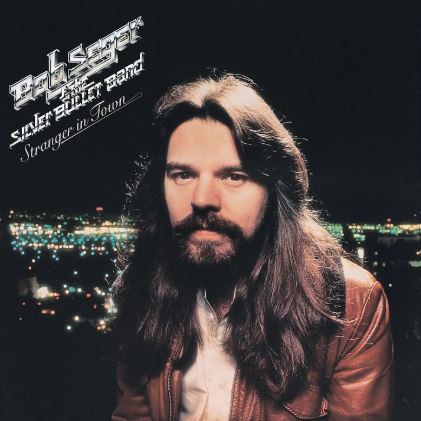
It’s almost a cliché to state that, as you get older, you re-evaluate a lot of things you liked in your youth. Often (alas), you discover that the books you read, the music you listened to, and the movies you listened to when you were in high school really weren’t that great—with a few exceptions. Also, as you age, you sometimes discover that something you didn’t pay much attention to when you were young is actually pretty frickin awesome.
That happened to me recently with this song, “Still the Same,” by Bob Seger. For some mysterious reason, the song popped into my head about a week ago and wouldn’t leave. Maybe I heard it on the speakers at the grocery store; I don’t know. But for some reason, I kept hearing it, and I couldn’t stop thinking about it.
This was even more strange considering that, as a kid, I didn’t really groove to much of Seger’s music. I mean, I liked his stuff, especially “Night Moves.” And his songs were all over the classic rock station that me and my friends listened to, so I knew all of them by heart, almost, and I admired them. Ironically, though, the one Seger-hit that didn’t register on me at all was “Still the Same.”
Until now. I found myself looking it up on Youtube, playing it, then playing it again. I really listened to the lyrics for the first time, and I was totally blown away by them. On the surface, it’s another one of those mythopoetic songs about dark, conflicted hipsters in the 1970s (Steely Dan wrote some great ones, too). In this case, the narrator sings about a gambler—who could be a man or a woman—with whom he was friends but now rejects because they’re “still the same.” That is, despite enormous talent, intelligence, and self-control, the gambler is essentially dead, emotionally and spiritually. They’ve achieved the kind of life they always wanted, but they are basically at a dead-end. A corpse.
Of course, the mere act of describing the song makes me want to hear it again. After all, Seger says everything I just did, but in poetry. Take the first verse:
You always won every time you placed a bet
You’re still damn good, no one’s gotten to you yet
Every time they were sure they had you caught
You were quicker than they thought
You’d just turn your back and walk
Imagine how many more words a bad writer would need to say the same thing with much less effect. “You were consistent in your skill and ability, winning all the time. And you have maintained that skill, somehow, despite the fact that you are a lot older now. Both in the past and now, your rivals always underestimated you. On each occasion when they thought you were beaten, you managed to simply get up and leave as if nothing had happened.”
Blech!
As a writer, I find myself in awe of the economy and density of Seger’s lyrics. There is one line in particular—“You still aim high”—that I find heartbreaking, even though it’s only four words (four beats) long. Somehow, it encapsulates all the admiration, even love, that the narrator still feels for the “gambler.” (I put it in quotes here because I believe that “gambler” is really just a metaphor for some kind of hustler, male or female, who gets by on their smarts, charm, looks, and daring. E.g., almost everyone in Hollywood.) The narrator still loves the gambler (perhaps they were lovers, once?), even though he now sees the gambler as a bit pathetic. “Still the same,” but no better. Stuck. Stagnant. In another of Seger’s hits, he describes a “beautiful loser.” In this song, he describes a beautiful winner—who wins the world but loses their soul.
In other words, the song is a great 70s rock tragedy, in the same vein as “Layla”, “Dreams”, and “Free Bird”.
Maybe I should go back and re-listen to those songs, too.

