
Author’s Note: I should have had this post ready for the 25th Commemoration of the 9/11 attacks on Friday, but I didn’t. Better late than never, I hope.
Like a lot of Southern boys with a literary bent, I absolutely love New York City. Ever since I went there in the early 1990s to visit a girlfriend (herself a native New Yorker), I have been entranced by the place, a feeling which only deepened after I got a remote job with a Manhattan consulting firm and got to make frequent trips there for business. (That’s the best way to see The City—when someone else is paying for it.)
Ever since then, it’s often occurred to me that NYC is still Hollywood’s most beloved city, too, with L.A. coming in a distant (and often more loathed than loved) second. This is probably due to the fact that NYC is still the cultural and artistic center of the nation, as well as the place where many young actors and directors get their start, still.
Of course, many great films show the dark side of New York. Too many to mention, in fact, but the list includes Rosemary’s Baby, Seven, Taxi Driver, The Warriors, Bad Lieutenant, and on and on. However, I want to focus on films that show it in a favorable light. That is, movies where The City is almost a main character, and a great one at that.
Here is a list of my top ten favorites. Note that I am including all five boroughs in my criteria, although Manhattan is, as usual, the stand-out.
Moonstruck
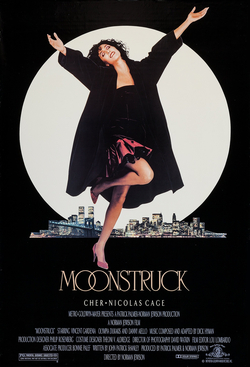
Moonstruck is the greatest romantic comedy film ever made. And so, it makes perfect sense that it takes place in New York City, which is our most romantic city. That is, it has the most character, the most mystery, and the most beauty. Like a lot of the films on this list, it takes place in one of the boroughs—Brooklyn, in this case, with its great Italian-American culture. Never has that city-within-a-city, with its family-owned shops, brownstones, and restaurants, seemed so magical. Like “moonlight in a martini,” as one character says. (He’s speaking of a woman, but close enough.)
Throughout the film, the towers of Manhattan loom in the distance like a fairy-tale kingdom, to which the heroine, Loretta Castorini (Cher), finally ventures with her new unlikely “prince,” Ronny (Nicholas Cage in one of his definitive roles) when he takes her to the opera.
Do the Right Thing
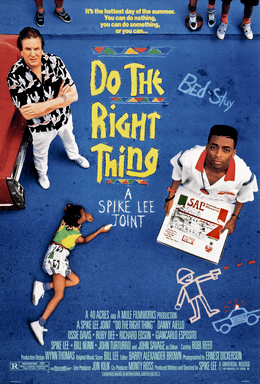
Spike Lee’s masterpiece from 1989 is not only one of the best movies ever made, it is also one of the very few to depict life in a predominantly black urban community (except crime thrillers full of drug dealers and prostitutes). Set in the legendary Bed-Stuy neighborhood of Brooklyn, it follows the lives of several people who live and work there, including Mookie (Spike Lee), a pizza-delivery man, his sister Jade (Joie Lee), and his boss, Sal (Danny Aiello). The story takes place on a single, hot summer day when tensions—racial, economic, familial, and sexual—all reach a boiling point. It’s a great film with a great soundtrack, to which artists as diverse as Public Enemy and Teddy Riley contributed. With its combination of propulsive music, kinetic cinematography, and excellent, all-in performances by the stars, Do the Right Thing captures the energy and spirit of working-class New York better than any other film. More importantly, it’s one of the first hit movies to focus on the African-American community of New York, which gets a lot more attention than the Italian-American or Irish-American or Any-Other-American community.
Basically, it’s just a great movie.
Manhattan
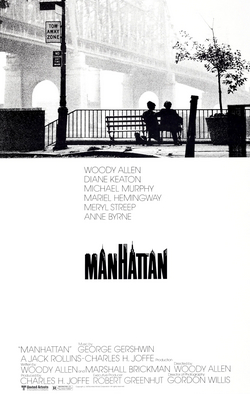
What list of great New York movies could be complete without at least one entry from The City’s most iconic director, Woody Allen? (Okay, he’s probably tied with Martin Scorsese; see below). Manhattan is Allen’s lyrical cinematic ode to the borough, shot in sumptuous black-and-white and featuring the music of George Gershwin (whose work, apparently, inspired the film). It tells the story of Isaac (Allen), a middle-aged TV comedy writer who is dating a beautiful, brilliant seventeen-year-old, Stacy (Mariel Hemingway). Their relationship might seem ridiculous (even he finds it so), but he’s happy. At least, he thinks he is, until his life is upended by a woman his own age, Mary (Diane Keaton). Mary is Isaac’s equal in intellect, spirit, and sheer neurotic energy, and he finds himself smitten with her. Unfortunately, she is currently the mistress of his best friend, Yale (Michael Murphy), who seems to take her affections for granted.
Like most of Allen’s early classics, Manhattan is an almost Dickensian satire of highly-paid, arty New Yorkers, with their hilarious pretensions and absurdly tortured relationships. Isaac laughs at them almost as much as he laughs at himself. But it’s clear that he (like Allen) loves them, too. Especially Mary. She essentially functions as a stand-in for Manhattan (the city) itself—complex, gorgeous, and endlessly changeable.
Arthur
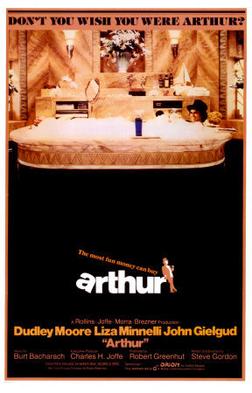
Steven Gordon’s 1981 rom-com Arthur is not a great film, but it is a very, very good one. Not only did it make Dudley Moore a Hollywood movie star (he had already been famous in the U.K. for decades), it revitalized the careers of Shakespearean actor John Gielgud and music-legend Liza Minelli. More importantly, the film brilliantly evokes the magic of Manhattan, as seen through the eyes of rich, alcoholic, and extremely lovable playboy, Arthur Bach.
Arthur (Moore) is a brilliantly witty, talented, and rich man. He is also a congenial drunk. He spends his days enjoying bubble baths in a huge, gilded tub set in the center of his penthouse apartment, sipping martinis made for him by his long-suffering butler, Hobson (Gielgud). Then, he spends his nights wining-and-dining streetwalkers whom he picks up on 8th Avenue.
In the hands of a lesser actor, Arthur might well have come off as a pathetic—even repulsive—character. But Moore was able to infuse him with so much charm and humor that it’s impossible not to like him. Crucially, Moore also imbues him with his (Moore’s) own wounded and vulnerable qualities. While Arthur has been psychologically crippled by his domineering and sadistic father, Moore was a chronically shy person who grew up with a myriad of physical disabilities (including a clubfoot). And Arthur, like Moore himself, was enchanting in his apparent childishness combined with a rapier wit.
In short, Arthur is a glittering, New York City archetype: the charming drunk who makes good in the end. And the movie’s title song, “Arthur’s Theme (Best That You Can Do),” is also a classic.
After Hours
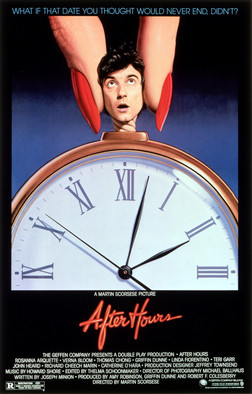
Martin Scorsese is known for a lot of things, but comedy isn’t one of them. Yet his 1985 film, After Hours is one of the funniest movies about NYC ever made. It follows the nightmarish adventure of a likeable, unassuming nebbish, Paul (Griffin Dunne), who works in a Manhattan office as a “word processor.” One day, he ventures to SoHo in pursuit of a beautiful young woman, Marcy (Roseanna Arquette), whom he has met at a café earlier. Things go pear-shaped when Paul loses all his money en route to Marcy’s apartment. When he finally gets there, he meets her equally beautiful—but also dangerous and possibly insane—roommate, Kiki (Linda Fiorentino), a sculptress who dabbles in S&M. Thus begins a Dantesque—and very funny—descent into the bowels of lower Manhattan, with its odd cast of avant garde artists, deranged cabbies, bar hoppers, burglars, and general freaks. Anyone who’s ever lost their wallet on the wrong side of NYC will instantly relate to this film, which celebrates The City’s weirdness as much as it mocks it.
Dinner Rush
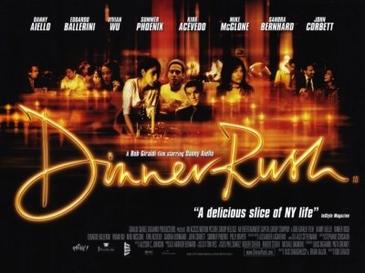
What list of great NYC movies would be complete without at least one film about the restaurant scene? My favorite is a little indie production from 2000, Dinner Rush. Directed by Bob Giraldi, the plot focuses on a single night in the lives of the people who run a posh TriBeCa restaurant. The joint is owned by Louis (Danny Aiello), an avuncular bookie and former mafioso, whose son, Udo, is the brilliant but pretentious head chef. Udo refuses to cook the traditional Italian meals that Louis loves, so the sous-chef, Duncan (Kirk Acevedo), secretly prepares them for him. Duncan is a working-class kid with a bad gambling habit, and Louis obviously thinks of him as a kind of second, “better” son. Duncan and Udo seem to hate each other, but they help each other when the going gets rough.
Intrigues abound among the restaurant staff as well as the diverse array of patrons who show up, including an art gallery owner (and his starving artists), a food critic, two young hoods, a pretty office girl, and a charming, mysterious Wall Street broker whose significance isn’t revealed until the end of the movie. (I won’t spoil it; you’ll have to watch the movie.)
Working Girl
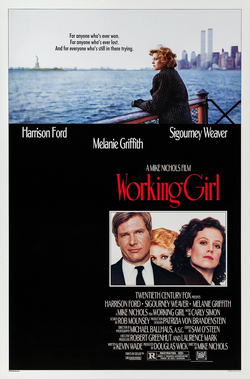
In many ways, Working Girl is the best movie on this list, with its tale of a hive-haired, Staten Island girl, Tess (Melanie Griffith), with the intelligence and audacity to take a shot at success in the cutthroat business world of New York.
Specifically, Tess dreams of becoming an executive in the big Manhattan M&A firm where she works as a secretary. That is, she dreams of becoming her boss, Katharine (Sigourney Weaver in one of her best roles), a tough-as-nails business operative. Katharine, whose blue-blood background is as upscale as Tess’s is trashy, seems nice at first, and even promises to mentor Tess on her way up the corporate ladder. But when Tess discovers that Katharine has secretly stolen one of Tess’s business ideas and fobbed it off as her own, she decides to beat Katherine and the whole, male-dominated business world at their own game.
I love this movie because not only is it one of the best romantic comedies ever made, it also asks many questions about the nature of the American dream: is it real? Is it corrupt? What does a girl have to do (really) to achieve it?
Fame
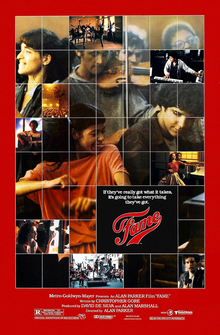
Alan Parker’s 1980 film Fame is an underrated film about the experiences of “gifted kids” who attend New York’s High School for the Performing Arts. As with any coming-of-age tale, the main characters—who each focus on dance, acting, or music—discover a lot about themselves as people, and also about what it takes to succeed in the arts. That is, how to achieve real fame.
The young actors are all first-rate, including Gene Anthony Ray, who had never acted before. A young Irene Cara is a stand-out. All-in-all, Fame is a great study of that most celebrated aspect of New York City: its music, theater, and dance culture. Basically, it’s about the bush-league for Broadway.
Men in Black
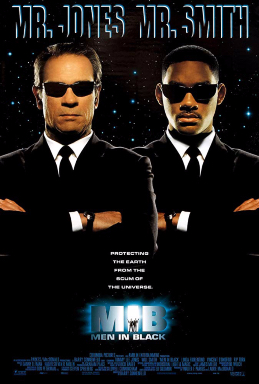
At one point in Barry Sonnenfeld’s classic summer movie, Men in Black, one of the main characters, veteran MIB agent K (Tommy Lee Jones) tells his young trainee that the MIB headquarters are “Just like Casablanca. Only no Nazis.” But this is not quite right. A much more apt description would be Ellis Island, where immigrants from all over the world (galaxy, in this case) come to gain entry to our civilization.
You don’t have to be an English lit major to glean that Men in Black is all about immigration and the diversity that immigration brings. The film opens with the MIB men disrupting an NIS raid of a truck near the Mexican border. (K mocks the way the NIS men treat the “dangerous aliens”—i.e., Mexican immigrants.) Later, the new MIB recruit, J (Will Smith), routinely mistakes weird-looking (but human) people on the streets of New York for extraterrestrials.
The point of the movie is that, well, we’re all people. (Except for those evil bugs, of course.) And diversity is a good thing—a miraculous thing—which is another reason NYC is the coolest city in the universe.
Ghostbusters
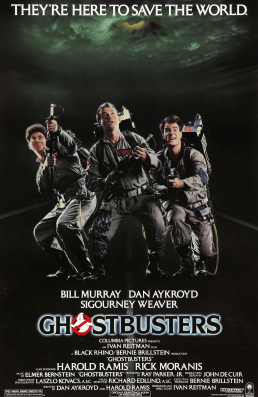
One of my favorite scenes in Ivan Reitman’s Ghostbusters is the one in which the demon-possessed accountant Louis Tully (Rick Moranis) wanders the streets of Central Park West. He encounters a horse-drawn carriage driver and warns the man (and his horse) about the imminent coming of Gozer, the God of Destruction. After Louis staggers off, the driver thinks for a moment and says to himself, “What an asshole.”
To me, this moment reveals the message of the entire movie—that New Yorkers are the toughest, most unflappable people on earth. They can handle anything, so long as they stick together.
While purportedly a horror-comedy, Ghostbusters is mainly one long celebration of that New York attitude, especially as demonstrated by Peter Venkman, the quick-thinking, bullshit-spewing, totally selfish guy who leads the Ghostbuster team. Venkman is one of the great anti-heroes of American cinema. He thinks he’s just looking out for himself—until the shit hits the fan and he has to step up to protect his friends and his city.
Another great example is the old rich guy in the lobby of the building where the heroes catch Slimer. When Venkman, clad in full nuclear-powered GB gear, tries to hold the elevator for the man, the old guy merely puffs on his cigar and deadpans, “I’ll wait.”

