The Coolest Discovery You’ve Never Heard Of

I recently learned that this year’s Nobel Prize in Physics went to a team of scientists who conducted experiments on quantum tunneling. Their experiments were conducted in the 1980s, which is typical of how the Nobel committees work—it takes around thirty years for a scientific consensus to build that a body of work was truly worthy of a Nobel Prize. 

I was interested in this news because, like most sci-fi nerds, I have an unflagging fascination with quantum mechanics. Heck, I even have a passing understanding of the fundamentals. (No, not just from Star Trek; I’ve read a few actual books! With facts, and stuff!)  A few years ago, I even tried to write a non-fiction book about Bell’s Theorem, which is a famous consent in Quantum Mechanics, albeit one that  you’ve probably never heard of (unless you’re a physicist or a science teacher or a sci-fi nerd). 

John Stewart Bell (copyright CERN)

To be frank, I had never heard of it either, until I read about it in a science book and then ventured to the Wikipedia page, where I learned that the theorem was written by an Anglo-Irish physicist named John Stewart Bell in the 1960s, and it hit the scientific community like a hurricane. Later, in 1975, another physicist Henry Stapp called it “the most profound discovery of science.

When I read this quote, I thought, “Whoa, dude! If it’s really the most ‘profound discovery of science’,” I should probably learn something about it.” 

And I did. Sort of.

Obviously, I will never really understand the underlying math, or even the root concepts that the math represents (which is one reason I abandoned the aforementioned book project). But the theorem itself is pretty easy to understand….

Continue reading “The Coolest Discovery You’ve Never Heard Of”

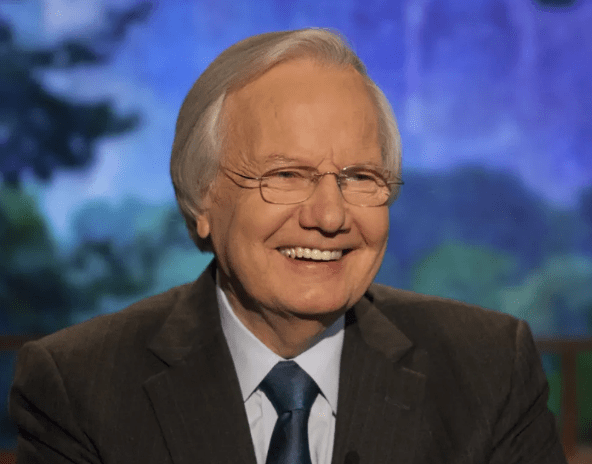
R.I.P. Bill Moyers

If you were a nerdy poor kid growing up in the 1970s and ’80s, you probably watched a lot of public television. Starting with kid shows like Sesame Street and the Electric Company, you graduated in your teens to science shows like Nova and edgy entertainment shows like Monty Python and surreal action series like The Prisoner, which PBS stations played late at night. 

As for myself, I also watched a lot of PBS news, especially The MacNeil/Lehrer NewsHour. And Bill Moyers. Lots of Bill moyers. If MacNeil and Lehrerwere the Kings of PBS news, then Bill Moyer was the high-ranking courtier. Moyers, who passed away last week, specialized in thoughtful and intelligent interviews with brilliant people of various stripes. As a would-be teenage intellectual, I really loved and appreciated these shows, and they introduced me to a lot of very smart artists, politicians, and writers. Chief among these was the iconic scholar of world mythology Joseph Campbell. Moyers’s now-famous interviews with Campbell, conducted at George Lucas’s Skywalker ranch (Lucas was inspired by Campbell’s writing when he penned the Star Wars saga), were probably the pinnacle of both men’s careers. 

I’ve been a fan of Campbell ever since, and also of Moyers. A one-time Baptist preacher, Moyers was a gentle, kind-spirited man who never descended into sentimentality or fatuous optimism. He was, rather, a first-rate journalist. And God knows there are very few of those these days. 

Moyers has been the subject of many on-line tributes in the past few days, including this one by the excellent historian Jonathan Alter.

Godspeed, Mr. Moyers….

What I’m Reading: “Rebbe”

I’ve read a lot of biographies in my time. Some of my favorites have been about great monarchs (Catherine the Great by Robert Massie), presidents (Truman by David McCoullough), scientists (Oppenheimer by Kai Bird), architects (Frank Lloyd Wright by Meryl Secrest). Now, I can finally add religious leaders to my list. Or at least one religious leader, the Rebbe Menachem Mendel Schneerson

It’s taken me this long, I think, because while I am fascinated by the study of various religions, I am not very interested in the life-story of most religious leaders. This is, in part, a consequence of the vexed historicity of such figures. Usually, they lived in the distant past, shrouded in veils of myth, with the actual, living person being lost to time. But this is not the case with Rebbe Schneerson. After all, he was not only a very recent figure, having passed away in 1994, but he spent most of his life right here in the United States—Brooklyn, in fact, that modern locus of Hasidic Judaism, and especially the Chabad-Lubavitch dynasty, which Schneerson led since 1951, succeeding his father-in-law. 

As Joseph Telushkin recounts in his excellent book, Rebbe: The Life and Teachings of Menachem M. Schneerson, the Most Influential Rabbi in Modern History, Schneerson was essentially appointed to the position by general acclimation, bypassing the previous Rebbe’s son who had been the heir apparent. Community leaders and other rabbis in the movement were simply awed by Schneerson’s considerable intellect—he spoke half-a-dozen languages, had an Engineering degree, and was considered a “genius” in Talmudic study from the age of seventeen—and pressured him to take the job. 

Which, thankfully, he did. I never thought I would ever read a book about an orthodox Jewish rabbi and, at the end, think to myself: “Wow, he seems like a really cool guy.” After all, I’m used to being utterly repulsed by most “leaders” in my own religious sphere, Christianity, with the exception of the current Pope and his immediate predecessor. But the more I read about Schneerson, the more impressed I was, not only by his general wisdom in matters of religion and morality, but also in his endless, practical concern for the well-being of ordinary (often poor) people, both Jews and Gentiles. 

One example Telushkin provides involves Shirley Chisholm, the first black woman elected to Congress. Racist creeps in the House refused to appoint her to any high-level committees and instead stuck her on the Agriculture Committee, which, considering Chisholm represented a section of New York, seemed absurd to most observers. Yet, the snub also presented an opportunity that she, herself, never suspected. As Telushkin writes:

She soon received a phone call from the office of one of her constituents. “The Lubavitcher Rebbe would like to meet with you.” Representative Chisholm came to 770. The Rebbe said, “I know you’re very upset.” Chisholm acknowledged both being upset and feeling insulted. “What should I do?” The Rebbe said: “What a blessing God has given you. This country has so much surplus food and there are so many hungry people and you can use this gift that God’s given you to feed hungry people. Find a creative way to do it.”

And she did, creating one of the first federal food-aid programs in the history of the United States, in which surplus food was bought by the government from American farmers and distributed to poor people, thus helping the recipients, the farmers, and pretty much everyone else.

On a more personal level, Schneerson always emphasized the importance of kindness and compassion over religious stricture. In one of his drashas (sermons), he famously told the story of how his predecessor, the Alter-Rebbe, once stopped in the middle of his Sabbath observations to attend to a young woman who had just given birth and who had been left alone by her family so that they could attend synagogue. Telushkin writes:

That day, the Alter Rebbe, having somehow learned that the new mother was alone, was suddenly overwhelmed with the certainty that the woman required someone to attend to her needs immediately; it might well be a matter of life and death. And since no one else was taking care of her, he concluded that he should be the one to do so.

This story apparently shocked his followers in way that most modern, secular people like myself cannot really appreciate. The idea that a rabbi might 1.) forsake the Sabbath observations in order to 2.) do menial work on the Sabbath like chopping wood and 3.) do so for an ordinary woman was radical in the extreme.  

Such was Schneerson’s boundless respect and love for ordinary people that he was always concerned about inadvertently embarrassing or insulting anyone, especially those who were most vulnerable. Decades before the so-called woke movement (a bad name for a very noble cause), Schneerson refused to use the word “handicapped” in reference to battle-maimed Israeli soldiers. Telushkin writes:

Referring to the fact that such people are designated in Israel as nechei Tzahal, “handicapped of the Israel Defense Forces,” the Rebbe addressed the men as follows: “If a person has been deprived of a limb or a faculty, this itself indicates that G-d has also given him special powers to overcome the limitations this entails, and to surpass [in other areas] the achievements of ordinary people. You are not disabled or handicapped, but special and unique as you possess potentials that the rest of us do not. I therefore suggest”—the Rebbe then interspersed with a smile—“of course it is none of my business, but Jews are famous for voicing opinions on matters that do not concern them—that you should no longer be referred to as ‘disabled veterans’ but as ‘exceptional veterans’ [metzuyanim], which more aptly describes what is unique about you.

In addition to being a genuinely good and wise person, Schneerson also seemed to have what can only be described as superpowers. He worked eighteen hours a day, six-days-a-week, for most of his life. Being busy with his primary duties during the day, he met with people seeking advice in the evenings, often as late one or two o’clock in the morning. Some of the people seeking advice including future and former Prime Ministers of Isreal such as Menachem Begin, as well as many other powerful and influential figures. But, more of than not, they were comprised of ordinary men and women in his congregation. I was especially impressed with Telushkin’s story of a young woman, Chana Scharfstein, who often came to his office seeking academic as well as personal (dating) advice:

The Rebbe clearly knew his agenda for this meeting, and the conversation quickly turned in a personal direction. At a certain point, he asked Sharfstein if she felt ready to get married. Sharfstein told him that she had begun dating—in Chasidic circles, young men and women date only for the purpose of marriage—and the Rebbe asked her about a specific young man. She recalls being taken aback and thinking to herself, That’s interesting that he should ask about somebody that I had met. Sharfstein told the Rebbe that she had met the young man he mentioned, that he was clearly a fine person, but not for her. The Rebbe said all right, and then mentioned another name, and again it was someone to whom Sharfstein had been introduced. Here, too, the young man was very nice but not for her. Then the Rebbe mentioned a third name, and a fourth, “and I became really uncomfortable then. How did the Rebbe choose all the names of young men (bachurim) that I had met? I was just absolutely overwhelmed that he should mention people that I had actually met.” Only later did she learn that prior to going out with a girl, each bachur in Chabad would write to the Rebbe to inquire if the girl seemed suitable for him, and so the Rebbe, who obviously had responded in each case that Chana Zuber was suitable, had a very precise idea of all the people with whom she had gone out. But even taking all this into account, Sharfstein still remained staggered at the Rebbe’s recall. After all, he “was [already] a world leader at this time, and to keep track of each person and who had been dating whom, it’s really mind-boggling.”

As this story relates, Schneerson’s remarkable memory and formidable intelligence were often sources of awe among those in congregation. Another example involves a young student, Irving Block, who came to discuss philosophy with the Rebbe:

At the time, Block, who was studying for an MA in philosophy, was immersed in the study of the great Greek thinkers, Plato in particular. And that’s the direction in which the Rebbe led the discussion. Only Block didn’t realize at first to whom the Rebbe was referring, because it was a man named Platon about whom the Rebbe started talking. It finally struck him that Platon is how the name of the Greek philosopher is written in Greek, though in English his name is always pronounced as Plato. It’s not that the n is silent in English; it isn’t written at all. This was Block’s first surprise of the day. The man seated in front of him, dressed in the garb of a Rebbe, obviously knew about Plato, or Platon, from the original Greek and pronounced his name as it was supposed to be pronounced.

Block was not only amazed by the Rebbe’s deep understanding of the “Platon’s” philosophy but by his utter rejection of it. (Plato believed that the nuclear family was an evil institution and should be abolished, an idea that was in direct contradiction to all humanist values, including those of Judaism.)

In recounting such stories as these, Telushkin’s book is really more of an appreciation or tribute than an in-depth biography. And yet he manages to relate the primary facts of Schneerson’s remarkable life with grace. Born in Imperial Russia, Schneerson moved with his family to the US in the spring of 1941. Thereafter, he served as Rebbe for over 50 years, finally passing away in a time when the world was much changed. 

One might say that he was born in the time of Tsars and passed away in the time of the internet. And, in all that time, one thing remained constant: his steadfast commitment to the practical well-being of all the people, rich and poor, high and low, in his community and around the world. Truly a person worth reading about. Check it out…


Why I Am Obsessed with UFOs

Phoenix_Lights

Recently I was watching an episode on one of my favorite YouTube channels, Answers with Joe. The episode was about UFOs, which made it was automatically a winner for me. Specifically, it focused on a few UFO videos that even a smart skeptic like Joe finds compelling. I enjoyed the episode so much, in fact, that I wanted to respond to it, and especially the last part, in which Joe enumerates some very rational arguments against the idea that UFOs are aliens. This is the so-called Extraterrestrial Hypothesis—the school of thought that believes UFOs are real and explicable as alien spacecraft.

(For the rest of this post, I’m going to use UFOs and the Extraterrestrial Hypothesis interchangeably. And, yeah—I believe UFOs are alien craft.)

Obviously, I have some deep feelings about the subject, although I’m not sure why, exactly. I can’t claim any special knowledge about UFOs. But like millions of other Americans, I have seen a UFO. It happened one night on the Mississippi Gulf Coast, when my son and I were having dinner at a little joint on shore. We were sitting outside, and somewhere the course of the meal we saw a strange light in the sky. It shone a powerful beam of light in our direction, then disappeared, then reappeared again. This went on for nearly an hour.

And, of course, it was totally silent.

Continue reading “Why I Am Obsessed with UFOs”

Books on Art: “The Slip”

I had an event to attend in New York City last week, but I couldn’t afford the hotel when the event was actually being held. So, I got a room for my wife and me a few blocks north, on 7th Avenue and 53rs Street. Venturing out for coffee the next morning, I was thrilled to see a sculpture directly across the street, a giant rendering of the word HOPE in red and green letters. 

The sculpture is, of course, by pop-artist Robert Indiana, and is a version of his famous LOVE print from 1964. With its simple, Didone letters and bright, primary colors, it’s one of the most instantly recognizable images in art history. Later, Indiana transformed the image into a sculpture which was installed in Central Park for decades. Later still, he made parallel sculptures using other words, like the HOPE version I saw (and photographed, below).

For me, seeing that particular sculpture, in that particular spot, literally right outside my randomly chosen hotel, seemed like a profound instance of synchronicity. This is because I had been reading Prudence Peiffer’s excellent non-fiction book The Slip: The New York City Street That Changed American Art Forever, which illuminates the history of Coenties Slip (pronounced koh-ENT-tees), a semi-abandoned industrial area of lower Manhattan that had once been a small pier jutting into the East River. The slip was filled-in during the early 19th Century and became a locus for sail-making, one of the most skilled and highest-paying trade jobs of the era. Sail-making requires a lot of open warehouse space, and in the early 1960s, those same warehouses (long since abandoned) became cheap studio space for struggling artists and actors, and it is these brave figures that Peiffer’s book illuminates. Chief among them were Robert Indiana, James Rosenquist, Agnes Martin, Elsworth Kelly, and Lenore Tawney.

Continue reading “Books on Art: “The Slip””

Synchronicity for Bookworms: Martin Caidin

Iron_Annie
German Ju-52 “Iron Annie”

Some years ago, my son Connor and I were watching the movie Dunkirk on DVD. It’s a very good movie, telling the story of that fateful week from multiple points-of-view. Of course, the most compelling thread of the narrative is that of the lone RAF pilot (played by Tom Hardy) doing his heroic best to protect the stranded British troops.

These scenes inevitably led to a geek-worthy discussion between Connor and me about the relative merits of the RAF’s Spitfire versus the Luftwaffe’s Messerschmitt 109. Believe it or not, such discussions are becoming more common between fathers and sons (and mothers and daughters, for all I know), mainly because of online games like War Thunder, whose popularity has breathed new life into the study of military history by the Millennial generation.

Anyway…. At some point during the discussion, I offhandedly commented that I had once flown in Adolf Hitler’s airplane.

Continue reading “Synchronicity for Bookworms: Martin Caidin”

What I’m Reading: Would You Baptize an Extraterrestrial?

WouldYouBaptizeAnET

I learned many things from reading the excellent nonfiction book Would You Baptize an Extraterrestrial? For instance, I learned that the Vatican has its own astronomical observatory, which is run, in part, by the authors, Guy Consolmagno and Paul Mueller. Both men are also Jesuits. (The current Pope, Francis, is also a Jesuit—that’s another thing I learned).

Now, I was raised Catholic, and I thought a knew a thing or two about the religion. But not only did I learn from this book that the Vatican has its own observatory, but that it  has had one for hundreds of years. In fact, I was so taken by this discovery that I Googled “Vatican observatory” and, to my amazement, found that the Vatican also runs an observatory in Tucson, Arizona.

Talk about synchronicity! When I was twenty-two years old, I went off to attend grad school at the University of Arizona, in Tucson, and I distinctly remember the first night I spent there. I impressed by the size of the city—much larger than my little hometown of Gainesville, Florida—but also by how beautiful the desert sky was. Even in the downtown area, the stars were clearly visible. This was no accident; the city, I was told, purposely kept the streets relatively dark, in deference to the many astronomical observatories that surround the valley, which could not function if too much light pollution bled from the metro area.

Apparently, the Vatican’s observatory is one of them.

Continue reading “What I’m Reading: Would You Baptize an Extraterrestrial?”

Just How Freakin Big is the (Whole) Freakin Universe, for Freak’s Sake?

The Helix Nebula

One of the coolest classes I took at U.F. was Intro To Astronomy, taught by a funny old German guy named Heinrich Eichorn who, I later learned, was Chair of the Astronomy Department. (Yes, this was back in those quaint old days when top-notch professors had to actually, you know, teach class. And not just to grad students!) While Professor Eichorn’s lectures tended to meander a bit, he had a genuine enthusiasm for the subject that students, myself included, could sense and respond to. I remember one particular class when, in one of his usual, off-topic asides, he said, “We know the universe is not infinite. If it were, then every point in the sky above us would always be as bright as a star.”

For me, this was one of those mind-blowing moments when one is exposed to the wisdom of the ages. In this case, it was that of another German astronomer, Johannes Kepler, who in 1610 realized that if the universe really were infinitely large, and infinitely old, then every line-of-sight direction one looks at in the sky should eventually hit a star. Thus, the entire sky should be as bright as (and, worse still, as hot as) the surface of a star. Nevermind the fact that most of these stars would be very, very far away. Their light would still have an infinite amount of time to reach us, and there would be an infinite number of them shining down on us. 

We should all be broiling alive right about now.

Continue reading “Just How Freakin Big is the (Whole) Freakin Universe, for Freak’s Sake?”

The Metaphysics of Left and Right (No, Not Politics; the Freakin Directions!)

pbride_swords
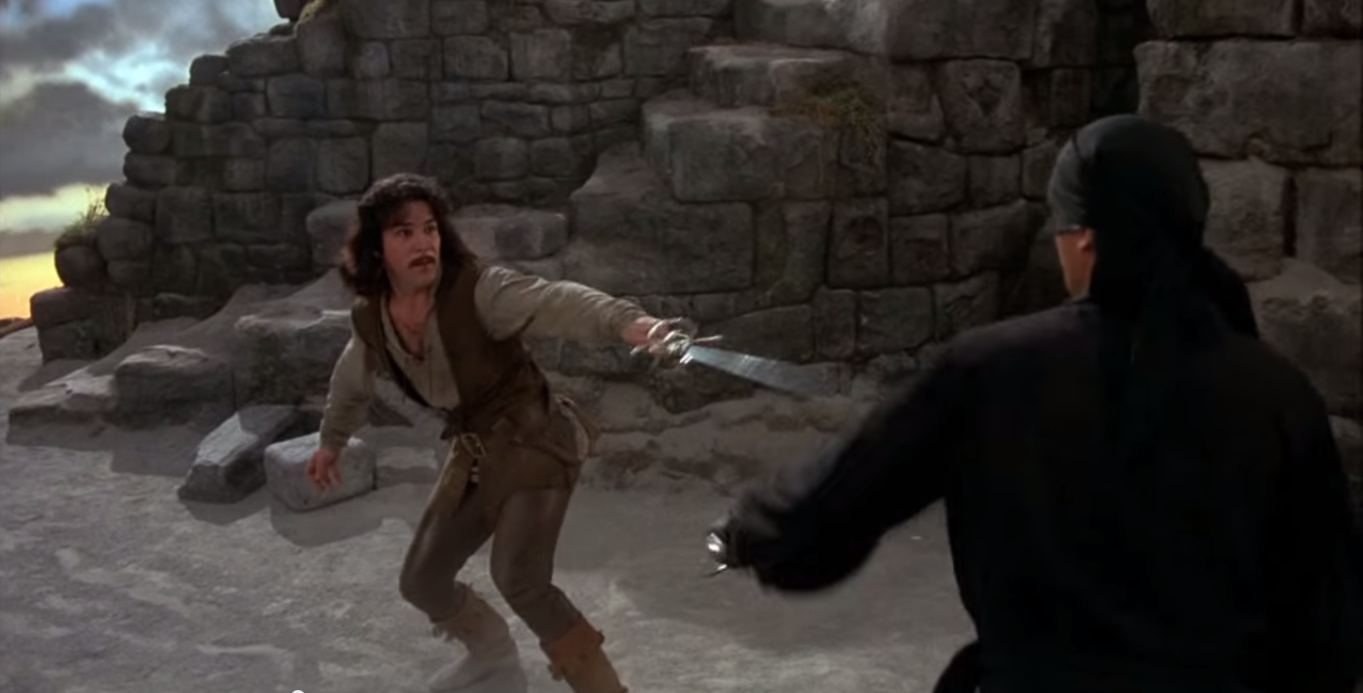
“I am not left-handed…”

I think I am losing my mind.

A few years ago, I was reading yet another popular science book—I think it was Brian Greene’s The Elegant Universe—when I came across a reference to one of those barroom brain teasers. It goes like this: if your image in a mirror is reversed with regard to right/left and left/right, why is not also reversed from up/down and down/up?

The answer, while elementary, is surprisingly difficult to articulate. It helps to imagine yourself, not face-to-face with your reflection, but back-to-back, with the plane of the mirror between you and your mirror-doppelgänger. Now stick your arms out and waggle your fingers. For both you and your reflection, up is still up, and down is still down. This side (left to you, right to your doppelgänger) is still this side, and that side (right) is still that side.

The only real difference is that up/down has an objective definition; that is, which direction is the earth and which the sky. But left/right has a purely subjective definition, relative to whose set of eyes one is looking through.

Simple, right?

Continue reading “The Metaphysics of Left and Right (No, Not Politics; the Freakin Directions!)”

“I’m Probably Wrong About Everything” Podcast Interview

Many thanks to Gerry Fialka for interviewing me on his great podcast. I have no idea why he thought of me, but I’m glad he did. It was fun.

Yes, my lighting sucks. I’m working on it. Check it out anyway, pls…