
Today I Learned a Word: “Precovery”

Uranus, The Seventh Planet from the Sun

As part of the work for the Read a Classic Novel…Together channel, I’ve been reading a very old classic indeed, The Life and Opinions of Tristram Shandy, Gentleman (almost always abbreviated to just Tristram Shandy). Published by Laurence Sterne in 1767, it’s a very funny, sly book—kind of like Curb Your Enthusiasm, but in the 18th Century—and I found myself imagining George Washington reading it (and laughing his ass off) while holed up in some winter bunker during the dark days of the American Revolutionary War

The story is told by Shandy himself, a very smart but self-absorbed and neurotic man (again, a lot like Larry David) who tells his life story in wry, sardonic, and occasionally schizophrenic prose. At one point in his rambling narrative, he mentions the “seven planets” in the heavens, which surprised me. Sure, I knew that even the ancient Romans knew about the inner planets, as well as Jupiter and Saturn. But the fact that the unfathomably distant Uranus was known in the 18th Century struck me as remarkable.

As it turns out, I was wrong. Uranus was not discovered until 1781, over a decade after Sterne wrote his novel (but still much earlier than I thought). Which means that there is no way that either Sterne, the writer, nor Shandy, the character, could have known about the actual seventh planet. 

So, what, exactly, is Shandy alluding to in the “seven planets” bit? It seems that he was referring to the astrological planets in their classical (and very unscientific) sense, i.e., the Moon, Mercury, Venus, the Sun, Mars, Jupiter, and Saturn. This context makes sense, in retrospect, because Shandy is obsessed with astrology and its supposed effect on a person’s character. (Yes, he’s a bit of a kook.)

Lawrence Sterne

By the time I sorted all this out, however, it was too late; I was already deep down the Wikipedia rabbit-hole. I looked up the history of the outermost planet (not to be confused with the dwarf planets like Pluto and Ceres), Neptune. Neptune was discovered by French astronomer Urbain Le Verrier in 1846. Not only was it the first planet to be discovered entirely by telescope, it was also the first one whose existence was surmised before it was actually observed. That is, Verrier and fellow astronomer John Couch Adams had noticed irregularities in Uranus’s orbit, which, they suspected, might be caused by a seventh, hitherto unseen planet. They then deduced the probable location of this hypothetical planet and hunted it down.

And that’s not all! I also learned that Neptune was actually discovered before it was discovered. As historians found later, Neptune was seen at least three times before, by Galileo Galilei in 1613, Jérôme Lalande in 1795, and John Herschel in 1830. Each of these men recorded seeing something in that spot, but none of them realized it was a planet and not just a weird “fixed” star.

Apparently, this sort of thing happens with some frequency in the world of science, to the point that it actually has a name: precovery. In a precovery, someone finds all the information they might need to make a real (and potentially career-making) discovery, but they never put the pieces together. (Or, at least, they never publish a paper about it.)

I think there might be a profound lesson here about the difference between data and knowledge, observation and understanding. 

It’s also a lesson about publishing what you’ve got, ASAP. Before some other doofus steals your thunder.

Today I Learned a Word: “Melisma”

I’ve always been a huge fan of Steve Winwood. Even as a kid, I loved how clean and bright his songs were, without ever being sappy or trite. Rather, they kept an edge somehow. Eric Clapton once said that Winwood was like a young, White, British Ray Charles. I kind of think he was right. 

Not long ago, I stumbled upon one of Winwood’s music videos. It was for “Valerie,” one of his greatest solo hits and one of my favorite songs of all time. The video was on YouTube, of course, and whoever posted it included lyric-captions. Normally I don’t like to follow the captions on a music video, but for some reason I did this time. And as I followed Winwood’s phrasing, I noticed something I had never seen before. Namely, the way he often splits single syllables into multiple notes. Take the line: “Music, hi and sweet.” It’s five syllables, but he sings it as six notes. 

If you are a music major, or anyone who knows a bit about voice training, you are probably rolling your eyes right about now. The technique that Winwood is using is so basic that it’s been around for thousands of years at least. But, being a musical ignoramus, I never thought of it before. It is, I just learned, called melisma and is usually contrasted with syllabic singing, in which notes and syllables match each other one for one. 

Ironically, as I did a bit more searching on the internet, I found a Facebook post by Winwood himself, mentioning melisma. It was in reference to the passing of the great singer Christine McVie of Fleetwood Mac. Winwood commented on how McVie stood out from many of her contemporary singers by virtue of her syllabic singing. And he’s right. McVie’s phrasing was so sharp it was almost like that of a jazz singer. 

And yet, off the top of my head, I can think of several instances of when McVie used melisma to great effect. My favorite example is in “You Make Loving Fun,” when she splits the word “believe” into so many notes I can’t even count them. And each one goes right through me each time I hear it. 

It’s taking me this many years to learn the definition of melisma. Go figure. You can’t teach an old dog new tricks, but you can teach them some new words.

Today I Learned a Word: “Mithraic”

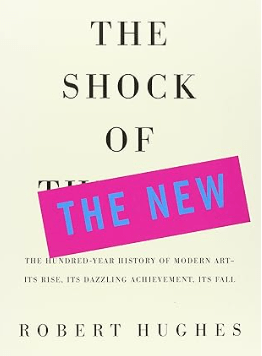
Back in the 1980s, I took a Humanities class during my freshman year of college. The professor was really good, and she supplemented her lectures by showing up a few episodes of Robert Hughes‘s BBC series Shock of the New, which covered the history of Modern Art as seen through Hughes’s own discerning, sardonic lens. 

I remember being struck by how witty and intelligent Hughes seemed as he talked about numerous examples of iconic modern art and architecture. He did exactly what a good critic is supposed to do: open your eyes to meaning and resonance in art that you might have missed, and connections you never would have thought of.

I liked the series so much that I’ve watched it a couple of times since on YouTube, and I recently bought the book that Hughes wrote to accompany it. Hughes really was one the smartest and most interesting art critics of his generation, and he could really write. Take this passage, for instance, about Pablo Picasso’s most famous and disturbing work, Guernica,

Seen detached from its social context, if such a way of seeing were either possible or desirable (in Picasso’s view it would not have been, but there are still formalists who disagree), it is a general meditation on suffering, and its symbols are archaic, not historical: the gored and speared horse (the Spanish Republic), the bull (Franco) louring over the bereaved, shrieking woman, the paraphernalia of pre-modernist images like the broken sword, the surviving flower, and the dove. Apart from the late Cubist style, the only specifically modern elements in Guernica are the Mithraic eye of the electric light, and the suggestion that the horse’s body is made of parallel lines of newsprint, like the newspaper in Picasso’s collages a quarter-century earlier. [emphasis mine]

As I read this passage, I thought to myself: wow. Then I thought to myself: Mithraic? WTF is that? So, naturally, I googled it and discovered that Mithraism was a religious cult in 4th Century C.E. Rome that directly opposed Christianity and was popular with Roman soldiers. I don’t know exactly what sense Hughes was employing the word, but I think he was getting at the idolatrous aspect of Fascism—literally, an ideology opposed to Christ and Christian values—as manifested in the mid-Twentieth Century love of technology and machines. Reading Hughes’s moving and trenchant prose, I was reminded of how Picasso, eighty-seven years before Christopher Nolan’s Oppenheimer, Picasso painted the most powerful and grotesque indictment of war, and especially high-tech war, ever conceived. (Sadly, it is as relevant now as it was in 1937.)

If you have a chance, you should watch Shock of the New, or any of Hughes’s other series if you can find them. If nothing else, you’ll probably be smitten by his fascinating and highly idiosyncratic rhetorical style, with his strange (theoretically Australian) accent and tendency to punch words harder than Mike Tyson. My wife and I still joke lovingly about the way he pronounced various famous artists: i.e., Pehblo Pehkesso.

He was a treasure, and I miss him. 

“Guernica” by Pablo Picasso

The Metaphysics of Left and Right (No, Not Politics; the Freakin Directions!)

pbride_swords
“I am not left-handed…”

I think I am losing my mind.

A few years ago, I was reading yet another popular science book—I think it was Brian Greene’s The Elegant Universe—when I came across a reference to one of those barroom brain teasers. It goes like this: if your image in a mirror is reversed with regard to right/left and left/right, why is not also reversed from up/down and down/up?

The answer, while elementary, is surprisingly difficult to articulate. It helps to imagine yourself, not face-to-face with your reflection, but back-to-back, with the plane of the mirror between you and your mirror-doppelgänger. Now stick your arms out and waggle your fingers. For both you and your reflection, up is still up, and down is still down. This side (left to you, right to your doppelgänger) is still this side, and that side (right) is still that side.

The only real difference is that up/down has an objective definition; that is, which direction is the earth and which the sky. But left/right has a purely subjective definition, relative to whose set of eyes one is looking through.

Simple, right?

Continue reading “The Metaphysics of Left and Right (No, Not Politics; the Freakin Directions!)”

Today I Learned a Word: “Luthier”

By Art Bromage from Seattle – Anthony Jackson in Flickr, CC BY-SA 2.0

A few nights ago I awoke, as I am wont to do, for no reason at all and found myself unable to get back to sleep. For some reason, the song “For the Love of Money” was echoing in my head. You know the one. It goes “Money money money money money money money…MUUUN-NAY!

It is, of course, by the great R&B band The O’Jays, but I couldn’t recall that fact at that moment, trapped as I was in a sleep-deprived stupor. So I did what any red-blooded nerd would do: I grabbed my tablet and Googled it. This led me to the Wikipedia page for the song, where I learned that the famous bass guitar riff was played by a session musician named Anthony Jackson

Then, from his Wikipedia page, I learned that Jackson is something of legend in guitar circles, described as “a master of the instrument” by AllMusic. Like many musical masters (including Eddie Van Halen), Jackson has designed his own guitars, and employed a famous luthier named Carl Thomson to craft a special instrument that he, Jackson, had conceived. Called a “contrabass guitar,” it’s a bass with six strings, which seems bizarre. (Even a music idiot like me knows that a bass only has four strings.) But, like all bass guitars, the contrabass is tuned much lower than rhythm guitars. 

So, thanks to that one bout of insomnia (and thanks to Wikipedia), I learned that some bass guitars have six strings, and that a craftsman who builds guitars is called a luthier

So, there’s that. Will I ever use this bit of information? Maybe, maybe not. But I feel better for having learned it. That’s just me, I guess—a nerd who likes being a nerd.

Today I Learned a Word: “Googie”

FloridaShoppingCenter

I was born in the 1960s, which means I am among the first generation to grow up with color TV. This also means I am also among the first Americans who are able to see their past in color. Or, at least, the urban landscape of our past. Maybe that’s why I love old TV shows like The Rockford Files—shows with a lot of exterior shots of working class cities and suburbs from back then. Once in a while, Rockford will race through Los Angeles and there, flashing by in the background, a McDonald’s from 1976 will appear. Or maybe a Woolworth’s or a Wash King.  (Yes, I do realize that most people have never heard of Woolworth’s or Wash King.)

These were the places I would visit with my parents when I was a kid, and it’s kind of neat to see them again, if only on a TV screen. Seeing them today, forty years later, I am often struck by how different the architecture was back then, especially the fast-food joints and coffee shops, many of which were getting on even when Rockford was in his prime. These vintage buildings from the 50s and 60s often had weird, playful curves and tilted walls, all of it stitched together at crazy angles. I remember one restaurant in particular that my mom used to take me to every weekend. It had plastic booths nestled under a rocket-red awning with trippy lights hanging down. It looked like something straight out of The Jetsons.

Continue reading “Today I Learned a Word: “Googie””

Today I Learned a Word: Extremophile

Recently, I stumbled upon the Wikipedia page for panspermia—a concept I was already familiar with, relating to the theory that life on Earth might have originated from an external source. Specifically, a primitive microorganism might have landed here on a meteorite (or, in some versions of the theory, on an alien probe).

While reading about panspermia—a theory that has gained a lot of scientific traction in recent years—I encountered a term I hadn’t seen before: extremophile. It refers to  “a microorganism, especially an archaean, that lives in conditions of extreme temperature, acidity, alkalinity, or chemical concentration.” In other words, a really tough bug. Tough to live in the deepest of the ocean, or even in the earth’s mantle.

Recently, I stumbled upon the Wikipedia page for panspermia—a concept I was already familiar with, relating to the theory that life on Earth might have originated from an external source. Specifically, a primitive microorganism might have landed here on a meteorite (or, in some versions of the theory, on an alien probe).

While reading about panspermia—a theory that has gained a lot of scientific traction in recent years—I encountered a term I hadn’t seen before: extremophile. It refers to any microorganism that has evolved to exist in an environment so extreme that most other life would be prohibited. Examples of such environments are hydrothermal vents, salt-ridden lakes, and frozen ice sheets.

Or, perhaps, outer space.

AndromedaStrain

Apparently, the concept of extremophiles—and of panspermia, in general—has taken on new relevancy in the past ten years. Even as we find more and more exoplanets (the most recent count is around 2,000), we have yet to find a single sign of life, intelligent or otherwise. This has led some cosmologists to adopt the so-called Rare Earth Hypothesis, which stipulates that while earth-like planets are a dime-a-dozen, actual Earths—that is, planets with life—might be fabulously uncommon. In fact, there might have only been a few in the early universe, from which all the other life-bearing planets were seeded. This could happen either accidentally (from asteroids; hence the extremophiles) or intentionally (from aliens deliberating spreading life across the galaxies).

All this speculation struck a chord with me. For one thing, it took me back to my youth, to all the sci-fi books and films I consumed. The idea of alien invaders taking the form of germs or seeds goes all the way back, I think, to Jack Finney’s classic The Invasion of the Body Snatchers, in which the evil “seed pods” are actually alien weeds that travel from planet to planet on the solar wind.

Continue reading “Today I Learned a Word: Extremophile”

Today I Learned a Word: “Panentheism”

I am continually amazed at how, even in my advanced middle-age, I still encounter perfectly reasonable words that I have never seen before. The latest is panentheism, which I ran into while reading an article on my favorite theological scholar, David Bentley Hart. When I first saw the word, I read it out loud to myself: pan-en-theism. Theism I knew. That’s the belief in a God who created the universe and who participates in its functioning. Pantheism I knew. That’s the belief that nature and God are the same thing. (I.e., the universe is God; this is pretty much the idea behind many Eastern religions.)

But panentheism? WTF?

David Bentley Hart

It turns out that panentheism is a pretty old idea, too, although the term itself dates only to the 19th Century. Panentheism states that God created the universe but also transcends the universe. Basically, the universe (heck, make that the multiverse) is a manifestation of the mind of God. It exists inside God, but it is not the same thing as God. 

Unless you’re an atheist (which is cool), you might be scratching your head right about now and saying “duh!” If so, that means you were probably not raised in an orthodox Christian or Jewish tradition, which, in the mode of classical theism, states that God created the world out of nothingness, and that God is inherently separate from (external to) the world. 

As modern, post-Star Wars (read: “the Force”) Americans, we tend to have a belief system much more in line with eastern traditions. Namely, that God is everywhere and everything. But that is not what classical, western, old-time religions teach.

Since I’ve learned about panentheism, I’ve found it an increasingly seductive idea. It merges the inclusive spirituality of pantheism with the belief in a personal, transcendent god that is more familiar to western theists. It also has implications to the concepts of God’s participation in time and to human free will. 

But those are topics for another post…