I had never heard of Young the Giant until a few months ago, when this song, “My Body,” popped up on the playlist at my gym. I liked the groove so much that I paused my incredibly wimpy set of curls (“Hey, I’m going for tone, dammit. TONE!”), went to my locker, got out my phone, and Googled it.
The rest is history…
People have compared Young The Giant to The Cure, but they remind me more of Coldplay, but with more of a rock-edge (not to mention a bit more soul).
Don’t let the name fool you. There is nothing “folksy” about The Folk Implosion, nor about this song. In fact, “Natural One” has a slightly demented, sinister quality to it that I really like.
This skewed quality might be due to the deliberately off-key, jangly sound of the lead guitar, which is the main hook of the song. It’s also, I believe, an example of musical dissonance. (I’m not sure of this; please correct me if I’m wrong.)
Also, don’t be fooled by the graphic for the video above. Those are not the band members. Rather, the image is taken from the poster of the 1995 film Kids, for whose soundtrack the song was composed. I haven’t seen Kids, but I’m told it’s a powerful, brutal depiction of alienation and apathy in a group of suburban youths in the drug-soaked 1990s.
Which means this song is a perfect fit.
Rock on…
BONUS! Here is a really cool video about musical dissonance.
Of the hundreds of kids who graduate from Gainesville High School every year, relatively few (I’m guessing) are aware that they attended the same school as the late, great Tom Petty. (My son Connor definitely was aware because I was constantly reminding him of it, to his annoyance. LOL.) Petty is still Gainesville’s most famous native son, and with good reason. He was one of the greatest rock musicians of his generation. In fact, I think of him as America’s version of David Bowie—brilliant, inventive, always changing and yet always the same.
(Fun fact: one of Gainesville’s other famous sons, Don Felder, taught Petty how to play piano, or guitar, depending on who you ask.)
My favorites of Petty’s songs are the early classics like this one, “Listen to her Heart.” If you’ve ever feared losing a lover to a rival with a lot of money and cocaine (and who hasn’t?), this song is for you.
Forget Van Halen. Forget Hendrix. Forget Clapton. Lindsey Buckingham is the greatest guitarist in the history of rock music. Don’t believe me? Listen to this song, “Trouble,” from his 1981 solo album Law and Order. If it doesn’t transport you to another plane of existence—yes, forgive the cliche; to an actual soundscape—then you need to get your ears checked.
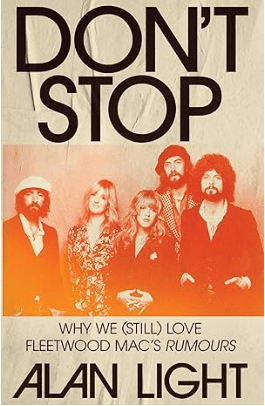
Buckingham was, of course, the driving force behind Fleetwood Mac’s second incarnation, when they produced one of the greatest rock LPs of all time, Rumours. (When he joined the band, he insisted they also hire his girlfriend, Stevie Nicks, who also had a bit to do with the group’s ultimate success.) As band leader Mick Fleetwood saw at the time, Buckingham is not just an incredible guitarist, he is also a phenomenally talented song-writer, multi-instrumentalist, and singer.
Getting back to his guitar playing, though, let me add that Buckingham uses an usual finger-picking technique—more like a banjo-player—which he employs in a variety of styles and with amazing creativity. That creativity is on full display here.
In any given decade, one or two musicians discovers exactly the right sound, look, and vibe to capture the spirit of the times. Such “triple-threat” artists are rare. Elvis Presley was one. David Bowie was another.
For many in my generation of kids growing up in the early 1980s, there were two such figures. One was Madonna. The other was Billy Idol. Unless you were a teenager in that dark, troubled time, you can’t imagine what a huge impact Idol had on youth culture. Let’s start with his look, an ingenious mix of pre-Goth romanticism (complete with black leather and rosary beads) and science-fiction cyberpunk (he had the same peroxide blond hair and chiseled features as Rutger Hauer’s Nazi replicant in Blade Runner).
Idol looked like…well…an idol. A pop idol, that is. But it was his sound that really mattered. Just as Elvis took the energy and soul of R&B and turned into something that middle-class, white American kids could enjoy, Idol took the punk sound of 1970s London and turned it into kick-ass American hard rock. His early hits like “White Wedding” and “Mony, Mony” stuck out a mile on FM radio (not to mention MTV, where they stuck out two miles). Not only were his songs vicious and fast, they had an actual beat; you could dance to them. And we did.
In short, Idol did what the Sex Pistols never could: he brought punk to mainstream America.
One of the many things I learned from Rod Stewart’s memoir, Rod: The Autobiography, is that the technical process of recording a studio album is very strange. For instance, the lead singer usually records his vocal track in a soundproofed room, by himself, wearing headphones so that he can listen to the band’s instrumental track.
It seems a very sterile and artificial process–not at all what one pictures when imagining a rock singer at work. And so I was impressed to learn that Stewart has always rejected this technique, insisting on recording all tracks directly with his band:
When we were recording, I liked to be in the sound room with the band, walking around with a microphone in hand, so that I could look them in the eye, interact with them, perform with them, basically. I think it slightly startled the engineer, who was more used to having the singer isolated behind screens, or in an entirely separate vocal booth. I remember hearing how Frank Sinatra had once been parked by an engineer behind a screen in a recording studio and he had made them take it down. In order to sing, he needed to feel the sound of the orchestra hit him in the chest. I guess this was my own version of that.
It’s interesting that Stewart draws a comparison between himself and Sinatra. As I learned from James Kaplan’s fine bio of Sinatra, the great crooner himself exerted tremendous effort when preparing for one his recordings. He was known to read the song lyrics aloud to himself, almost like prose. He felt he had to discover the emotional truth of the lyric before he could sing it, and if that truth was not forthcoming, he would nix the song.
If you took the entire West-Coast noir mystery genre and made it into a great 1980s song, “Welcome to the Boomtown” by David and David would be the result. When I first heard it on the radio in 1986, I went straight out and bought the album. It’s one of the most haunting rock songs ever made, right up there with “Hotel California” (another song about California’s own particular kind of purgatory).
I love the way David Baerwald’s dark, ravaged voice seems to meld with David Rickett’s equally dark, slightly atonal guitar playing. And the lyrics sound like something Ross Macdonald might have written. “Welcome to the Boomtown” is a minor classic.
One of my favorite films of all time is Michael Mann’s first feature, 1981’s Thief. That movie was not only the beginning of my life-long love of Mann’s movies, but also with the soundscapes of the German band Tangerine Dream, who composed the score.
When I saw the movie, I had never heard of Tangerine Dream, and thus had no idea that they were one of the iconic avant-guarde bands of the 1970s, producing legendary albums like Phaedra and Zeit. All I knew was their music was hypnotic and unbelievably powerful.
In fact, Tangerine Dream was sort of the Hans Zimmer of their day, creating some of truly great soundtracks. One of their other great scores was for William Friedkin’s 1977 suspense film Sorcerer. If you haven’t seen it, you should check it out. Nominally a thriller, it’s about four guys from totally different backgrounds, all hiding in out from the law in South America. When a local oil platform catches fire, the guys are offered a big payday if they will drive two trucks full of leaky nitroglycerin through the mountains to put the fire out. That’s the stated plot of the film. I have a theory, however, that its really about four guys who are in hell and just don’t realize it yet. They all have much to atone for, and each suffers and grows (or fails to grow) in his own way.
The score brilliantly evokes that sense of menace and evil that lies just around the corner. It’s a great piece to listen to when you’re in a dark and somewhat demented state of mind (or if you want to be in one, for whatever reason).