

Ever since I read her famous short story “Where Are You Going? Where Have You Been?” in college, I have loved Joyce Carol Oates. I continued to read her short stories through the 1980s and 90s, and my admiration only grew. She seemed to combine the style and critical eye of other great practitioners of modern realist fiction (think John Updike, Phillip Roth, John Cheever) with her own particularly empathic sensibility.
Empathic, yes, and also brutal. Oates writes about working class people in dire straights, including physical danger. Her female protagonists, especially, often face the threat of violence and even death (several of Oates’s stories involve rapists and serial killers). But even in these heightened situations, the primary threat is the internal, psychological one. For Oates, the real adversary is the self—that is, ourselves, with all of our passions and desires and resentments and jealousies.
And fear, of course. Fear is the greatest enemy in Oates’s imagined world, and overcoming fear, in all of its manifestations, is the greatest achievement of any Oates character. And so it makes perfect sense that the opening scene of her epic novel, Night. Sleep. Death. The Stars, would present the reader with a man engaged in an act of actual heroism. John Earle “Whitey” McClaren is the patriarch of an big family in Hammond, New York. His five children, all grown, are pillars of the community, and Whitey himself was once mayor of the Hammond. But when he spots two police officers brutalizing an Indian man on the side of the road, he pulls over and intervenes. The cops turn their fury on him, and he is brutally beaten. Whitey ends up in a coma, with his family gathering around him in the hospital. I don’t think I’m spoiling much when I state that White doesn’t survive his ordeal. And his death, in turn, impacts all the members of his family, from his devoted wife, Jessalyn, to his five adult children.
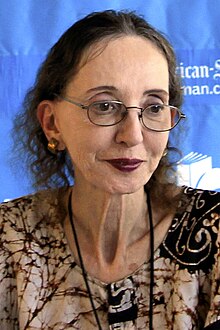
But instead of writing just another book about the grieving process—a so-called aftermath novel—Oates describes a series of titanic transformations that take place in each individual over the following two years. Flannery O’Connor once wrote that fiction is about the mystery of personality, and Oates seems to confirm this in the way she reveals how Whitey’s loss “breaks” the each of his children’s personalities. Like crystals, they all fracture along unique and unpredictable fault lines, and that’s the genius of Oates’s novels. Some of the children find themselves growing spiritually and sexually (with lots of missteps and false starts), while others spiral down into paranoia and bitterness. Jessalyn, Whitey’s widow, works her way through survivor’s guilt to find new love with a Hispanic liberal photographer who is as different from Whitey as a man could be (at least on the surface; spiritually, they are similar, as Jessalyn soon realizes).
One common shortcoming of big, third-person novels with many view-point characters is that some of those characters blur together. But Oates renders each of these people so vividly and convincingly that, by the end of the book, they feel as real to us as…well…someone in our own family. This is, I think, the highest achievement of fiction—to make us feel what it’s like to be another human being.
And (oh yeah) the book is funny as hell.
Check it out….
 Ash Clifton, Writer