
I’ve always been a huge fan of Steve Winwood. Even as a kid, I loved how clean and bright his songs were, without ever being sappy or trite. Rather, they kept an edge somehow. Eric Clapton once said that Winwood was like a young, White, British Ray Charles. I kind of think he was right.
Not long ago, I stumbled upon one of Winwood’s music videos. It was for “Valerie,” one of his greatest solo hits and one of my favorite songs of all time. The video was on YouTube, of course, and whoever posted it included lyric-captions. Normally I don’t like to follow the captions on a music video, but for some reason I did this time. And as I followed Winwood’s phrasing, I noticed something I had never seen before. Namely, the way he often splits single syllables into multiple notes. Take the line: “Music, hi and sweet.” It’s five syllables, but he sings it as six notes.
If you are a music major, or anyone who knows a bit about voice training, you are probably rolling your eyes right about now. The technique that Winwood is using is so basic that it’s been around for thousands of years at least. But, being a musical ignoramus, I never thought of it before. It is, I just learned, called melisma and is usually contrasted with syllabic singing, in which notes and syllables match each other one for one.
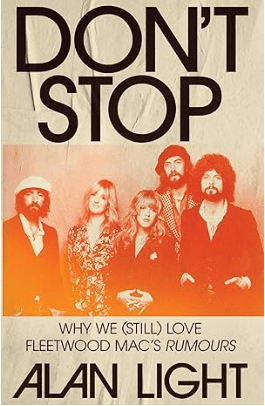
Ironically, as I did a bit more searching on the internet, I found a Facebook post by Winwood himself, mentioning melisma. It was in reference to the passing of the great singer Christine McVie of Fleetwood Mac. Winwood commented on how McVie stood out from many of her contemporary singers by virtue of her syllabic singing. And he’s right. McVie’s phrasing was so sharp it was almost like that of a jazz singer.
And yet, off the top of my head, I can think of several instances of when McVie used melisma to great effect. My favorite example is in “You Make Loving Fun,” when she splits the word “believe” into so many notes I can’t even count them. And each one goes right through me each time I hear it.
It’s taking me this many years to learn the definition of melisma. Go figure. You can’t teach an old dog new tricks, but you can teach them some new words.
In any given decade, one or two musicians discovers exactly the right sound, look, and vibe to capture the spirit of the times. Such “triple-threat” artists are rare. Elvis Presley was one. David Bowie was another.
For many in my generation of kids growing up in the early 1980s, there were two such figures. One was Madonna. The other was Billy Idol. Unless you were a teenager in that dark, troubled time, you can’t imagine what a huge impact Idol had on youth culture. Let’s start with his look, an ingenious mix of pre-Goth romanticism (complete with black leather and rosary beads) and science-fiction cyberpunk (he had the same peroxide blond hair and chiseled features as Rutger Hauer’s Nazi replicant in Blade Runner).
Idol looked like…well…an idol. A pop idol, that is. But it was his sound that really mattered. Just as Elvis took the energy and soul of R&B and turned into something that middle-class, white American kids could enjoy, Idol took the punk sound of 1970s London and turned it into kick-ass American hard rock. His early hits like “White Wedding” and “Mony, Mony” stuck out a mile on FM radio (not to mention MTV, where they stuck out two miles). Not only were his songs vicious and fast, they had an actual beat; you could dance to them. And we did.
In short, Idol did what the Sex Pistols never could: he brought punk to mainstream America.
One of the many things I learned from Rod Stewart’s memoir, Rod: The Autobiography, is that the technical process of recording a studio album is very strange. For instance, the lead singer usually records his vocal track in a soundproofed room, by himself, wearing headphones so that he can listen to the band’s instrumental track.
It seems a very sterile and artificial process–not at all what one pictures when imagining a rock singer at work. And so I was impressed to learn that Stewart has always rejected this technique, insisting on recording all tracks directly with his band:
When we were recording, I liked to be in the sound room with the band, walking around with a microphone in hand, so that I could look them in the eye, interact with them, perform with them, basically. I think it slightly startled the engineer, who was more used to having the singer isolated behind screens, or in an entirely separate vocal booth. I remember hearing how Frank Sinatra had once been parked by an engineer behind a screen in a recording studio and he had made them take it down. In order to sing, he needed to feel the sound of the orchestra hit him in the chest. I guess this was my own version of that.
It’s interesting that Stewart draws a comparison between himself and Sinatra. As I learned from James Kaplan’s fine bio of Sinatra, the great crooner himself exerted tremendous effort when preparing for one his recordings. He was known to read the song lyrics aloud to himself, almost like prose. He felt he had to discover the emotional truth of the lyric before he could sing it, and if that truth was not forthcoming, he would nix the song.
One of my favorite films of all time is Michael Mann’s first feature, 1981’s Thief. That movie was not only the beginning of my life-long love of Mann’s movies, but also with the soundscapes of the German band Tangerine Dream, who composed the score.
When I saw the movie, I had never heard of Tangerine Dream, and thus had no idea that they were one of the iconic avant-guarde bands of the 1970s, producing legendary albums like Phaedra and Zeit. All I knew was their music was hypnotic and unbelievably powerful.
In fact, Tangerine Dream was sort of the Hans Zimmer of their day, creating some of truly great soundtracks. One of their other great scores was for William Friedkin’s 1977 suspense film Sorcerer. If you haven’t seen it, you should check it out. Nominally a thriller, it’s about four guys from totally different backgrounds, all hiding in out from the law in South America. When a local oil platform catches fire, the guys are offered a big payday if they will drive two trucks full of leaky nitroglycerin through the mountains to put the fire out. That’s the stated plot of the film. I have a theory, however, that its really about four guys who are in hell and just don’t realize it yet. They all have much to atone for, and each suffers and grows (or fails to grow) in his own way.
The score brilliantly evokes that sense of menace and evil that lies just around the corner. It’s a great piece to listen to when you’re in a dark and somewhat demented state of mind (or if you want to be in one, for whatever reason).
I just watched a great inteview by Rick Beato of Ed Roland, the lead singer and mastermind of Collective Soul. I enjoyed the interview so much that I decided to re-post an essay I wrote on my old blog some years ago for my on-going “Battle of the Bands” series. Enjoy…!
The 1990s were a strange time. It was the decade between the two George Bushes—after the Gulf War but before 9/11—but it was also the first decade of the Internet and cell phones. The first truly digital special effects began to appear in films like Terminator 2 and Jurassic Park. The Soviet Union had fallen, only to be replaced by a globalized Russian mafia. Genocide was being committed in both Africa and Europe, all televised via the 24/7 global news cycle.
In short, this was the time when technology and social chaos really started to put the zap on our collective brain. And no bands were better at capturing this zeitgeist of psychological disintegration better than these two—Collective Soul and Garbage–although each did so in its own way.
Strangely, my concept of the “The 90s” didn’t really form until almost mid-decade. This was about the time that the amazingly vital Grunge movement began to fade from the scene. In its wake came a more diverse and accessible series of alternative rock bands. At the forefront was a five-man ensemble called Collective Soul, which had its first big hit in 1994 with “Shine.” While not their best song, “Shine” is an ambitious and even inspirational bit of rock that displays the band’s two great strengths: hard-edged, soaring vocals from frontman Ed Roland, and a vicious main riff from lead guitarist Ross Childress.
But the really cool thing about “Shine” was that despite having a very modern alterna-dude vibe it felt extremely retro. As Jon Pareles wrote in the New York Times, “Collective Soul breaks old ground. Its songs are comfortable where Southern-rock overlaps folk-rock, with solidly serviceable riffs in the usual places.”
Collective Soul was not trying to be Nirvana. It was trying to be Lynyrd Skynyrd.
Just one year after Shine, a band from Madison, Wisconsin named Garbage released their first album, Garbage (a.k.a. Garbage I). When I first heard the band, I was struck by lead singer Shirley Manson and her fabulously expressive voice—at times monotonal, at other times growling. This pale goth girl from Scotland had somehow tailored her vocals to exactly fit the manic-depressive zeitgeist of the 90s.
Indeed, I would argue that the band’s premier song, “Stupid Girl,” is the definitive song of the period (yes, even more so than Nirvana’s brilliant “Smells Like Teen Spirit”). In the song’s now-famous lyric, the narrator accuses an unnamed girl of being…well…stupid. In fact, the aspects of her stupidity are those evidenced by practically every person under 40 in modern urban America: vanity, self-absorption, consumerism, nihilism.
And fakery. Especially fakery. “[I] can’t believe you fake it…” as Manson sings portentously to the stupid girl in question. What is she faking? Being human.
Garbage I firmly established Garbage as the pre-eminent art-rock act of the decade, much as Collective Soul had ensconced itself as the pre-eminent hard-rock act. Collective Soul quickly cemented its position with their follow-up album (also eponymously titled), which included some of its greatest hits: “December,” “Where The River Flows,” and “Gel.” “December” went on to become the band’s second biggest hit (after “Shine”) and it remains my favorite, with Roland’s soulful lyrics counterpointed perfectly by Childress’s diamond-edged guitar work. I tell you, the Allman Brothers couldn’t have done better.
The song was so successful, in fact, that it engendered an almost immediate backlash which continues to this day. As far as I can tell, detractors of the song (and of Collective Soul in general) are upset by the fact that it not very Grungy. But wasn’t that the point? Grunge was a great period in American music, obviously. But in the end, it was just Punk’s Second Act. Like Punk, Grunge ran out of gas rather quickly. This is not surprising. Rage can only sustain an artist for so long; at some point, you have to write a song that works on multiple levels, and I think Collective Soul achieved that.
As for Garbage, the band was able to build on its initial success with the album Version 2.0 (which was produced under the delicious working title of Sad Alcoholic Clowns). The album has some good songs—I especially like the trippy and propulsive “Temptation Waits”—but none quite achieved the sublime level of “Stupid Girl.”
Ultimately, both bands were able to sustain themselves through the rest of the decade and beyond. Collective Soul suffered a near-fatal rift when Childress left the band in 2001. Even so, it has fared better than Garbage since the Millennium, producing some really fine albums especially 2004’s Youth. From that album come two of my favorite songs, “Better Now” and “There’s a Way”, which pick me right up whenever I am feeling lazy or down.
And yet, whenever I think of the 1990s, I remember “Stupid Girl,” with its techno-crazed background noises and jangly guitar riffs, all overlaid by Manson’s dirge-like vocals. To this day, “Stupid Girl” warns us like a klaxon just outside the entrance to hell: Don’t fake it…