R.I.P. Frank Gehry

I find it interesting that the two most famous architects in American history—famous, that is, among ordinary people who don’t subscribe to Architectural Digest—were both named Frank. They were, of course, Frank Lloyd Wright and Frank Gehry. Both men created buildings that captured the popular imagination like few others. And both were mavericks whose vision of what architecture could do often offended the mavens of the status quo (not to mention the bean-counters who worked for the rich people who funded their projects).

Both men also shared a sense of play and in their work—Gehry to a much greater degree, sometimes designing homes and offices and other buildings that veered into pure fantasy. He often brainstormed new projects with strips of paper and cardboard, envisioning light, fluid, soaring structures that, one could argue, would not have been possible to actually build in an age before computer-assisted design was available. 

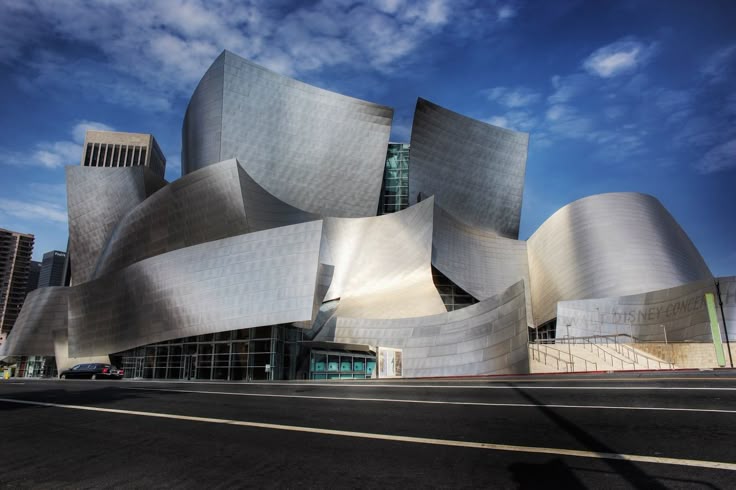
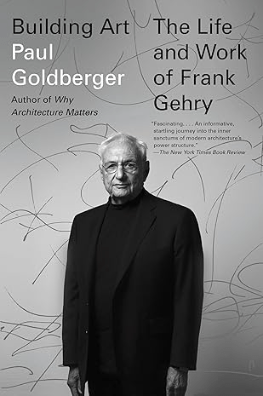
This emphasis on play and the power of imagination was evident in all his work, even in huge, civic projects like his Walt Disney Concert Hall in Los Angeles. As Paul Goldberger relates in his fine biography, Building Art: The Life and Work of Frank Gehry, Gehry took an almost impish pleasure in fooling around with his own designs. When he was in the early stages of mocking-up his plans for another auditorium in Asia, he shocked and amazed his colleagues by adjusting the position for the auditorium every night or so. As one friend put it, 

…[H]e became a monster. He started moving stuff around.… We were doing a project in Korea that never got built [the museum for Samsung] but every time I went on a trip and came back he had moved the auditorium. He was impeccable. He had incredible reasons for it. He’s really brilliant. He doesn’t sleep at night and he comes back the next morning and moves the auditorium.”

As Goldberger explains…

Moving the auditorium, in Frank’s view, was a form of what he liked to call “play,” and it was largely instinctive. “A serious CEO, you would imagine, does not think of creative spirit as play. And yet it is,” he said. “Creativity, the way I characterize it, is that you’re searching for something. You have a goal. You’re not sure where it’s going. So when I meet with my people and start thinking and making models and stuff, it is like play.” 

As the title of Goldberger’s book relates, Gehry saw himself almost as more an artist than an architect. At times, he refused to believe that one needed, necessarily, to make a distinction between the two. Early in his career, Gehry befriended and hung-out with great modern artists in Southern California, and they reciprocated his admiration. Perhaps this is the reason that Gehry’s greatest buildings resemble art more than perhaps other architect.

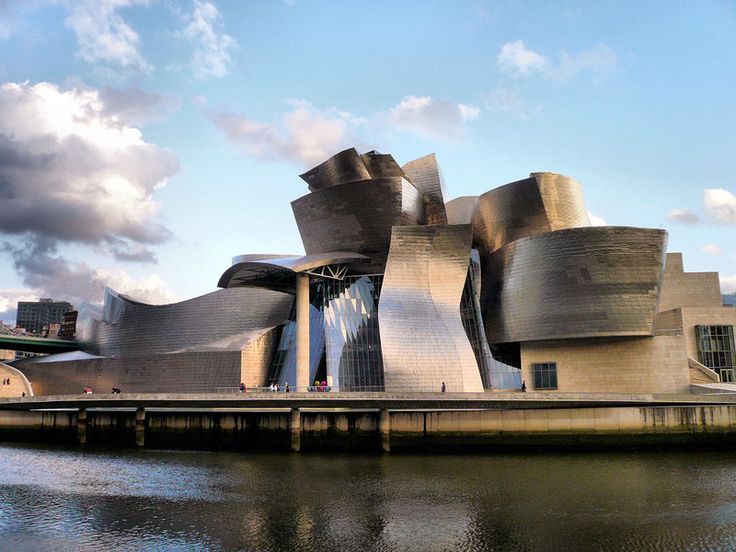
Guggenheim Museum, Bilbao

His most famous is, of course, the Guggenheim Museum in Bilbao, Spain. When the museum finally opened in 1987, a flood of tourists came from all over the world to see it, prompting some of the artists whose work was displayed inside the museum to feel that they were playing second fiddle to the building itself. This grumbling grew into a modest backlash among the artistic community, focused not so much on Gehry himself as on the fawning admiration of journalists and other architects who often lauded Gehry as an “artist.” As Gehry’s own collaborator and friend, the sculptor Richard Serra, said, 

I don’t believe Frank is an artist. I don’t believe Rem Koolhaas is an artist. Sure, there are comparable overlaps in the language between sculpture and architecture, between painting and architecture. There are overlaps between all kinds of human activities. But there are also differences that have gone on for centuries.”

Whether he was being lauded or criticized, Gehry himself never seemed concerned. In fact, when compared to that other great architect named Frank, Gehry usually seemed downright humble, if not pathologically shy. Goldberger writes:

Even though Gehry was ridden with angst throughout his life, his manner came off as relaxed, low-key, and amiable, and his steely determination, far from being obvious like Wright’s, was hidden behind an easygoing exterior, a kind of “aw shucks” air that Gehry’s old friend the artist Peter Alexander called “his gentle, humble ways.” Wright was never mistaken for being modest; Gehry often was.

Gehry was so shy, in fact, that I feel he could have been much more famous than he was if he gotten himself out there, gone on TV more and granted more interviews and written some puff-pieces for various magazines and web sites. The fact that he did not is, I suppose, the most telling fact about the man’s character. Namely, that he was a genius who was determined to create the most original and uplifting works as he could…and, then, to let those works speak for themselves.

Godspeed, Mr. Gehrey….

Walt Disney Concert Hall, Los Angeles

The Coolest Discovery You’ve Never Heard Of

I recently learned that this year’s Nobel Prize in Physics went to a team of scientists who conducted experiments on quantum tunneling. Their experiments were conducted in the 1980s, which is typical of how the Nobel committees work—it takes around thirty years for a scientific consensus to build that a body of work was truly worthy of a Nobel Prize. 

I was interested in this news because, like most sci-fi nerds, I have an unflagging fascination with quantum mechanics. Heck, I even have a passing understanding of the fundamentals. (No, not just from Star Trek; I’ve read a few actual books! With facts, and stuff!)  A few years ago, I even tried to write a non-fiction book about Bell’s Theorem, which is a famous consent in Quantum Mechanics, albeit one that  you’ve probably never heard of (unless you’re a physicist or a science teacher or a sci-fi nerd). 

John Stewart Bell (copyright CERN)

To be frank, I had never heard of it either, until I read about it in a science book and then ventured to the Wikipedia page, where I learned that the theorem was written by an Anglo-Irish physicist named John Stewart Bell in the 1960s, and it hit the scientific community like a hurricane. Later, in 1975, another physicist Henry Stapp called it “the most profound discovery of science.

When I read this quote, I thought, “Whoa, dude! If it’s really the most ‘profound discovery of science’,” I should probably learn something about it.” 

And I did. Sort of.

Obviously, I will never really understand the underlying math, or even the root concepts that the math represents (which is one reason I abandoned the aforementioned book project). But the theorem itself is pretty easy to understand….

Continue reading “The Coolest Discovery You’ve Never Heard Of”

R.I.P. Kenneth Colley

Once again, I’m writing a very belated obituary for a fine actor. The great British character actor Kenneth Colley passed away a couple of weeks ago. Thanks to the enduring magic of Star Wars, many young people today will know Colley from his brilliant, understated performance as Admiral Piett (a.k.a. the closest thing Darth Vader has to a trusted friend) in The Empire Strikes Back and Return of the Jedi.

With his stern voice, dour face, and no-fucks-left-to-give demeanor, Colley specialized in world-weary, authoritarian roles. But like Gene Hackman (who also passed away recently), Colley was an amazingly versatile actor who appeared in dozens of films and TV shows, playing everything from Jesus in The Life of Brian to Frédéric Chopin in Lisztomania.

My favorite of his performances was that of a revenge-corrupted cop in the great Inspector Morse series episode “The Second Time Around.” 

Godspeed, Mr. Colley…!

What I’m Watching: “The Intern”

There is a moment in Nancy Myers’ excellent 2015 film The Intern when the main character, Jules Ostin, complains about a man who has accused her of running a “chick-site.” Played with winning smarts and verve by Anne Hathaway, Jules is the powerhouse CEO of The Fit, a start-up on-line fashion company which she founded and which is doing gangbuster business out of its Brooklyn headquarters. This is a very telling moment in the narrative, not only because it reveals so much about Jules’s character—i.e., that she hates being pre-judged by chauvinistic men—but also because it gets at some larger aspect of the film as a whole. 

When critics, and especially male critics, put the prefix “chick-” before something, what they are really saying is that the thing in question has been cynically designed to appeal to women. When applied to films or books, the term means that the work is guilty of a specific kind of sentimentality. That is, it contains tropes and cliches, which women are (supposedly) prone to react to, regardless of whether they work dramatically or not. Puppy dogs. Cute kids. Men crying. Women crying. Break-up scenes. Makeup scenes. The viewer’s/reader’s emotional reaction is not earned. It’s pre-programmed.

Of course, it goes without saying that men are just as susceptible to sentimentality as women. That’s why so many male-focused “action” movies always have some kind of buddy-aspect (a “bromance”), as well as the hero’s beautiful but angry girl-friend who just doesn’t get his need to fight evil. But getting back to The intern, this moment struck me as profound because many critics accused the movie, itself, of being a “chick-flick.” Not in so many words perhaps, but the accusation was there nonetheless. 

There are, indeed, moments of sentimentality in The intern, especially toward the end. And, yes, the movie sometimes feels like a chick-flick. But it’s much more than that. It is, in fact, one of my favorite movies of the last ten years or so. It’s also one of the best, most complex performances Robert De Niro has given in decades. 

Part of my appreciation for the film can probably be chalked up to my own personal history. When I first watched it on DVD some years ago, I had, like the older protagonist Ben in the movie, been working for a trendy software consulting company (based out of India, in my case). Many of my workmates were so-called millennials, with very different backgrounds than my own, and I came to have a great appreciation and admiration for their talents and concerns. And, like Ben, I often found them exasperating. 

So, I was probably destined to enjoy a story about a 70-year-old retired corporate soldier, Ben, who takes a job as an intern at The Fit. Obviously, Ben has a lot to learn about the internet and modern technology from his 20-something workmates, but they have even more to learn from him about the work ethic, self-discipline, and good old-fashioned level-headedness. Surprisingly, many of the film’s best jokes have to do with Ben showing his very young male colleagues how to….well…be a man. That is, how to respect women, how to respect themselves, and how to behave with dignity and honor. 

But the heart of the film, naturally, has to do with Ben’s relationship with Jules. When he finds himself assigned to work for her directly as her intern, he is up for the challenge. Jules however sees the whole matter as an enormous pain in the ass, not to mention elder abuse. (She is, ironically, guilty of her own brand of prejudice—ageism.) Of course, Ben soon wins her over with his quiet confidence, shrewd intellect, and limitless wisdom on matters both corporate and personal. (Not to mention his burglary skills.)

One of my favorite scenes is when Jules is working late and Ben, being an old school company man, refuses to go home until the boss does. The two workaholics share a pizza, and Ben prevails that he worked in the very same building where the fit has its headquarters for forty years. Jules is understandably impressed and even a little moved. One senses that this might be  the first time that she has contemplated what an entire lifetime in business might look like, and where she might end up. The scene really works because of the way de Niro gradually reveals this information to her. He brilliantly conveys how much admiration—and even love, of a sort—that Ben feels for her. After all, she’s a lot like him.  She is him—the modern version of him. A driven entrepreneur and gifted business person who will do anything to make her vision a reality. 

In some ways, The Intern, is nothing less than a celebration of old school capitalism. What capitalism, at its best, can be, and what it can do for both individuals and communities. Jules’s company, The Fit, is a community of hard-working, like-minded people, all doing their best for a shared goal. Never mind the fact that most of them are millennials. The ideal of American Business remains the same. 

More importantly, though, The Intern is just a damned funny movie. The acting is uniformly excellent from both young and old players. Hathaway, in particular, radiates so much old-Hollywood grit and charm that she sometimes feels like the new Katherine Hepburn.

The Intern is streaming right now on Netflix. Check it out….

Science Fiction’s Latest Utopian Dream

When I was a kid, my parents bought me a book called A Pictorial History of Science Fiction by David Kyle, which covers the history of science fiction illustration from Jules Verne all the way through the 1970s. (The book was printed in 1976.) I still have it. I remember being especially enthralled by covers from pulp magazines in the 1930s like Astounding Science Fiction and Amazing Stories. Many of these covers were devoted to some artist’s vision of The City of The Future—usually some towering, high-tech, hive-like metropolis. 

It makes sense that sci-fi nerds of the 1930s would imagine a vertical, urban future. At the time, the most sophisticated places on earth were the great western cities of Europe and America. Paris. Berlin. And especially New York—Manhattan—with its great skyscrapers reaching ever higher. The obvious extrapolation of this trend was that someday everyone would be living in some vast, super-tall version of New York or Los Angeles, with buildings hundreds of stories high and millions of people living in close proximity. Ramps and walkways would connect these towers in the sky, allowing residents to hardly ever venture down to street-level. Airplanes, blimps, and elevated high-speed trains would speed residents from one end of the city to the next.

For most of these sci-fi artists and writers, this was going to be a good thing. A utopian vision, in fact. Future cities would be paradises of high technology, dense but egalitarian. Robots would do all the dirty work, and everyone would be rich. For others, though, the City of the Future would be a capitalist hell, with the decadent rich living high above the exploited poor. These upper-classes would hoard resources and technology, either out of fear or greed or sheer meanness. It is this dystopian vision that informs works like Fritz Lang’s Metropolis, as well as every instance of the cyberpunk genre from William Gibson’s Virtual Light to Ridley Scott’s Blade Runner.

Despite this dark side, however, the vision of an artificial, high-tech utopia has long existed in sci-fi, and it still does today. But the vision itself has changed. Relocated. These days, the City of Future is almost invariably depicted as being in outer space—”off-world,” in the lingo of movies like Blade Runner—either on a nearby planet or the moon or on a station floating in space.

Space stations, in particular, have captured the imagination of science fiction fans for the past four decades, ever since Princeton physicist Gerard K. O’Neill published The High Frontier: Human Colonies in Outer Space. In that landmark book, O’Neill explained the advantages of living on a space colony as opposed to a land-based colony like Mars or the moon. These include the fact that one could spin the colony to produce the same gravitational pull as Earth, thus avoiding any physiological problems the colonies might suffer from living on a smaller world. Unlimited solar power is another plus, as is the fact that, living outside the gravity well of a planet or moon, travel between colonies would be vastly cheaper. Trade would thrive, fueled by a steady flow of cheap, raw materials from the asteroid belt and various moons throughout the solar system.

Artist’s Depiction of Stanford Torus Interior, c. 1970s

O’Neill was the first, legit scientist to take the idea of people living in outer space seriously, and he was able to back up his ideas with hard data, including actual blueprints for working stations. Namely, he invented the O’Neill Cylinder, a tube-shaped world the size of a city with its residents living on the inner surface. Other designs were created by a diverse group of like-minded theorists. Of these, the most compelling is the Stanford torus (named for the university where the plan was cooked up). Instead of a tube, it’s a giant wheel. For whatever reason, it’s this ring-like design that has dominated most sci-fi stories of recent decades. Larry Niven’s Ringworld is basically a humongous Stanford torus (large enough to encircle a star). And the design is also represented in the wheel-worlds of the Halo videogame franchise and the fabulous Orbitals of Iain Banks’s The Culture novels. 

As was the case with the high-rise super-cities that were imagined of the 1920s, the space-colony vision isn’t always utopian. In the 2013 film Elysium, for example, the titular space station is an exclusive haven for the ultra-rich, desperate to escape an Earth ravaged by global warming and end-stage capitalism. Perhaps this is why many people become uneasy when billionaire tech-bros like Jeff Bezos openly embrace the idea of building giant colonies in space. They seem to be confirming the dystopian side of the space colony coin.

I have very little in common with Jeff Bezos. But, like him, I must confess to be completely captivated by the idea of colonies in space. They are not only fun to imagine, but I believe that they probably do represent the best possible, long-term vision for the future of humanity. I don’t know if they will happen, but I hope they do. 

Recent Artistic Depiction of Stanford Torus

Why do I harbor this hope? Lots of reasons. For one, space colonies offer our best chance of surviving as a species into the far future. Even if we somehow avoid the worst consequences of global-warming, there will always be some other looming disaster that threatens to exterminate life on Earth, from planet-killer asteroids to super-volcanoes to the next pandemic. With space colonies, there would soon be more people living in space than earth—perhaps trillions of people within a few centuries—thus making us a lot harder to wipe out. 

For another, the quality of life on space colonies would probably be much, much higher for the average citizen than it is likely to ever be on Earth. This is due to the advantages I listed above, like abundant solar power and cheap resources for asteroids. And overpopulation would never be a problem—at least, not for long. Whenever a colony got too crowded, any citizens who craved more elbow-room would simply build a new space colony and move into it.

Of course, many people will never be disavowed of the idea that space colonies represent nothing more than a “Plan-B” for the ultra-rich. That is, after all the rich people trash the earth with their greed and unfettered capitalism, space colonies give them the ultimate chance for escape from the consequences of their actions. 

This is, I think, a real possibility for why space colonies might eventually be built. But it’s not the only possibility, nor even the most likely. Rather, my guess is that space colonies will be built for the positive reasons that I mentioned—abundance, room, and quality of life. Indeed, one could imagine an era—in the three or four-hundred perhaps—when so many people choose to emigrate to space that Earth could become a giant Hawaii. That is, an ecological and historical preserve, with less than a billion people on the entire planet. People who are born on space colonies might endeavor to make a pilgrimage down to Earth at least once in their lives, the way many Irish-Americans eventually take a vacation in “the Old Country” of Ireland.

One thing Bezos and I vehemently disagree on (one of many things, actually) is the time-table for when space colonies will eventually be built. It won’t happen any time soon–not in Bezo’s lifetime (unless he has a store of some immortality drug stashed somewhere), nor in mine, nor in the next generation. But I think it will happen. 

Artistic Depiction of a Roofless Bishop Ring

Which leads to the question: Will space colonies really be utopias? That depends on your definition of utopia. If a citizen of mediaeval Europe were to be magically transported to a modern, western city, they would probably perceive it as a utopia. I mean, running water? Toilets? Central heating? All the food you can eat? How much more utopian can you get? Such a person would probably dismiss any argument we might make to the contrary—that people in the 21st Century have as many problems as those in the 13th. Bullshit, they would probably say. And they’d be right. For, while modern western civilization isn’t perfect (and it seems to be getting less perfect by the day, alas), it’s still pretty freakin cool. Yes, we still have evil and stupidity and greed. And all of those human failings will find their way onto space stations.

But still, we will be making progress. It’s a worthwhile vision, and exactly the kind of dream that good sci-fi can deliver. 

And should. At least some of the time.

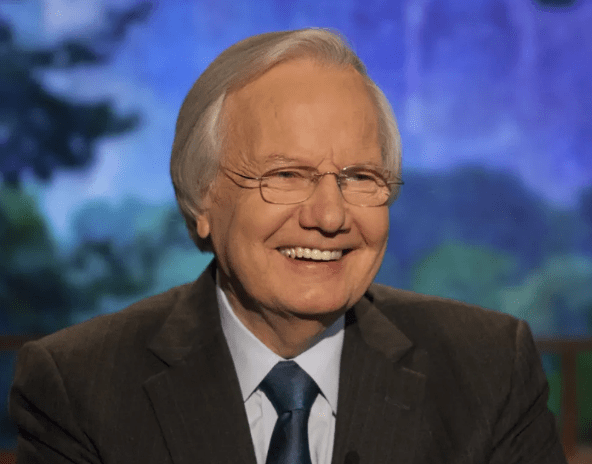
R.I.P. Bill Moyers

If you were a nerdy poor kid growing up in the 1970s and ’80s, you probably watched a lot of public television. Starting with kid shows like Sesame Street and the Electric Company, you graduated in your teens to science shows like Nova and edgy entertainment shows like Monty Python and surreal action series like The Prisoner, which PBS stations played late at night. 

As for myself, I also watched a lot of PBS news, especially The MacNeil/Lehrer NewsHour. And Bill Moyers. Lots of Bill moyers. If MacNeil and Lehrerwere the Kings of PBS news, then Bill Moyer was the high-ranking courtier. Moyers, who passed away last week, specialized in thoughtful and intelligent interviews with brilliant people of various stripes. As a would-be teenage intellectual, I really loved and appreciated these shows, and they introduced me to a lot of very smart artists, politicians, and writers. Chief among these was the iconic scholar of world mythology Joseph Campbell. Moyers’s now-famous interviews with Campbell, conducted at George Lucas’s Skywalker ranch (Lucas was inspired by Campbell’s writing when he penned the Star Wars saga), were probably the pinnacle of both men’s careers. 

I’ve been a fan of Campbell ever since, and also of Moyers. A one-time Baptist preacher, Moyers was a gentle, kind-spirited man who never descended into sentimentality or fatuous optimism. He was, rather, a first-rate journalist. And God knows there are very few of those these days. 

Moyers has been the subject of many on-line tributes in the past few days, including this one by the excellent historian Jonathan Alter.

Godspeed, Mr. Moyers….

What I’m Reading: “Rebbe”

I’ve read a lot of biographies in my time. Some of my favorites have been about great monarchs (Catherine the Great by Robert Massie), presidents (Truman by David McCoullough), scientists (Oppenheimer by Kai Bird), architects (Frank Lloyd Wright by Meryl Secrest). Now, I can finally add religious leaders to my list. Or at least one religious leader, the Rebbe Menachem Mendel Schneerson

It’s taken me this long, I think, because while I am fascinated by the study of various religions, I am not very interested in the life-story of most religious leaders. This is, in part, a consequence of the vexed historicity of such figures. Usually, they lived in the distant past, shrouded in veils of myth, with the actual, living person being lost to time. But this is not the case with Rebbe Schneerson. After all, he was not only a very recent figure, having passed away in 1994, but he spent most of his life right here in the United States—Brooklyn, in fact, that modern locus of Hasidic Judaism, and especially the Chabad-Lubavitch dynasty, which Schneerson led since 1951, succeeding his father-in-law. 

As Joseph Telushkin recounts in his excellent book, Rebbe: The Life and Teachings of Menachem M. Schneerson, the Most Influential Rabbi in Modern History, Schneerson was essentially appointed to the position by general acclimation, bypassing the previous Rebbe’s son who had been the heir apparent. Community leaders and other rabbis in the movement were simply awed by Schneerson’s considerable intellect—he spoke half-a-dozen languages, had an Engineering degree, and was considered a “genius” in Talmudic study from the age of seventeen—and pressured him to take the job. 

Which, thankfully, he did. I never thought I would ever read a book about an orthodox Jewish rabbi and, at the end, think to myself: “Wow, he seems like a really cool guy.” After all, I’m used to being utterly repulsed by most “leaders” in my own religious sphere, Christianity, with the exception of the current Pope and his immediate predecessor. But the more I read about Schneerson, the more impressed I was, not only by his general wisdom in matters of religion and morality, but also in his endless, practical concern for the well-being of ordinary (often poor) people, both Jews and Gentiles. 

One example Telushkin provides involves Shirley Chisholm, the first black woman elected to Congress. Racist creeps in the House refused to appoint her to any high-level committees and instead stuck her on the Agriculture Committee, which, considering Chisholm represented a section of New York, seemed absurd to most observers. Yet, the snub also presented an opportunity that she, herself, never suspected. As Telushkin writes:

She soon received a phone call from the office of one of her constituents. “The Lubavitcher Rebbe would like to meet with you.” Representative Chisholm came to 770. The Rebbe said, “I know you’re very upset.” Chisholm acknowledged both being upset and feeling insulted. “What should I do?” The Rebbe said: “What a blessing God has given you. This country has so much surplus food and there are so many hungry people and you can use this gift that God’s given you to feed hungry people. Find a creative way to do it.”

And she did, creating one of the first federal food-aid programs in the history of the United States, in which surplus food was bought by the government from American farmers and distributed to poor people, thus helping the recipients, the farmers, and pretty much everyone else.

On a more personal level, Schneerson always emphasized the importance of kindness and compassion over religious stricture. In one of his drashas (sermons), he famously told the story of how his predecessor, the Alter-Rebbe, once stopped in the middle of his Sabbath observations to attend to a young woman who had just given birth and who had been left alone by her family so that they could attend synagogue. Telushkin writes:

That day, the Alter Rebbe, having somehow learned that the new mother was alone, was suddenly overwhelmed with the certainty that the woman required someone to attend to her needs immediately; it might well be a matter of life and death. And since no one else was taking care of her, he concluded that he should be the one to do so.

This story apparently shocked his followers in way that most modern, secular people like myself cannot really appreciate. The idea that a rabbi might 1.) forsake the Sabbath observations in order to 2.) do menial work on the Sabbath like chopping wood and 3.) do so for an ordinary woman was radical in the extreme.  

Such was Schneerson’s boundless respect and love for ordinary people that he was always concerned about inadvertently embarrassing or insulting anyone, especially those who were most vulnerable. Decades before the so-called woke movement (a bad name for a very noble cause), Schneerson refused to use the word “handicapped” in reference to battle-maimed Israeli soldiers. Telushkin writes:

Referring to the fact that such people are designated in Israel as nechei Tzahal, “handicapped of the Israel Defense Forces,” the Rebbe addressed the men as follows: “If a person has been deprived of a limb or a faculty, this itself indicates that G-d has also given him special powers to overcome the limitations this entails, and to surpass [in other areas] the achievements of ordinary people. You are not disabled or handicapped, but special and unique as you possess potentials that the rest of us do not. I therefore suggest”—the Rebbe then interspersed with a smile—“of course it is none of my business, but Jews are famous for voicing opinions on matters that do not concern them—that you should no longer be referred to as ‘disabled veterans’ but as ‘exceptional veterans’ [metzuyanim], which more aptly describes what is unique about you.

In addition to being a genuinely good and wise person, Schneerson also seemed to have what can only be described as superpowers. He worked eighteen hours a day, six-days-a-week, for most of his life. Being busy with his primary duties during the day, he met with people seeking advice in the evenings, often as late one or two o’clock in the morning. Some of the people seeking advice including future and former Prime Ministers of Isreal such as Menachem Begin, as well as many other powerful and influential figures. But, more of than not, they were comprised of ordinary men and women in his congregation. I was especially impressed with Telushkin’s story of a young woman, Chana Scharfstein, who often came to his office seeking academic as well as personal (dating) advice:

The Rebbe clearly knew his agenda for this meeting, and the conversation quickly turned in a personal direction. At a certain point, he asked Sharfstein if she felt ready to get married. Sharfstein told him that she had begun dating—in Chasidic circles, young men and women date only for the purpose of marriage—and the Rebbe asked her about a specific young man. She recalls being taken aback and thinking to herself, That’s interesting that he should ask about somebody that I had met. Sharfstein told the Rebbe that she had met the young man he mentioned, that he was clearly a fine person, but not for her. The Rebbe said all right, and then mentioned another name, and again it was someone to whom Sharfstein had been introduced. Here, too, the young man was very nice but not for her. Then the Rebbe mentioned a third name, and a fourth, “and I became really uncomfortable then. How did the Rebbe choose all the names of young men (bachurim) that I had met? I was just absolutely overwhelmed that he should mention people that I had actually met.” Only later did she learn that prior to going out with a girl, each bachur in Chabad would write to the Rebbe to inquire if the girl seemed suitable for him, and so the Rebbe, who obviously had responded in each case that Chana Zuber was suitable, had a very precise idea of all the people with whom she had gone out. But even taking all this into account, Sharfstein still remained staggered at the Rebbe’s recall. After all, he “was [already] a world leader at this time, and to keep track of each person and who had been dating whom, it’s really mind-boggling.”

As this story relates, Schneerson’s remarkable memory and formidable intelligence were often sources of awe among those in congregation. Another example involves a young student, Irving Block, who came to discuss philosophy with the Rebbe:

At the time, Block, who was studying for an MA in philosophy, was immersed in the study of the great Greek thinkers, Plato in particular. And that’s the direction in which the Rebbe led the discussion. Only Block didn’t realize at first to whom the Rebbe was referring, because it was a man named Platon about whom the Rebbe started talking. It finally struck him that Platon is how the name of the Greek philosopher is written in Greek, though in English his name is always pronounced as Plato. It’s not that the n is silent in English; it isn’t written at all. This was Block’s first surprise of the day. The man seated in front of him, dressed in the garb of a Rebbe, obviously knew about Plato, or Platon, from the original Greek and pronounced his name as it was supposed to be pronounced.

Block was not only amazed by the Rebbe’s deep understanding of the “Platon’s” philosophy but by his utter rejection of it. (Plato believed that the nuclear family was an evil institution and should be abolished, an idea that was in direct contradiction to all humanist values, including those of Judaism.)

In recounting such stories as these, Telushkin’s book is really more of an appreciation or tribute than an in-depth biography. And yet he manages to relate the primary facts of Schneerson’s remarkable life with grace. Born in Imperial Russia, Schneerson moved with his family to the US in the spring of 1941. Thereafter, he served as Rebbe for over 50 years, finally passing away in a time when the world was much changed. 

One might say that he was born in the time of Tsars and passed away in the time of the internet. And, in all that time, one thing remained constant: his steadfast commitment to the practical well-being of all the people, rich and poor, high and low, in his community and around the world. Truly a person worth reading about. Check it out…

Edgar Awards De-Brief

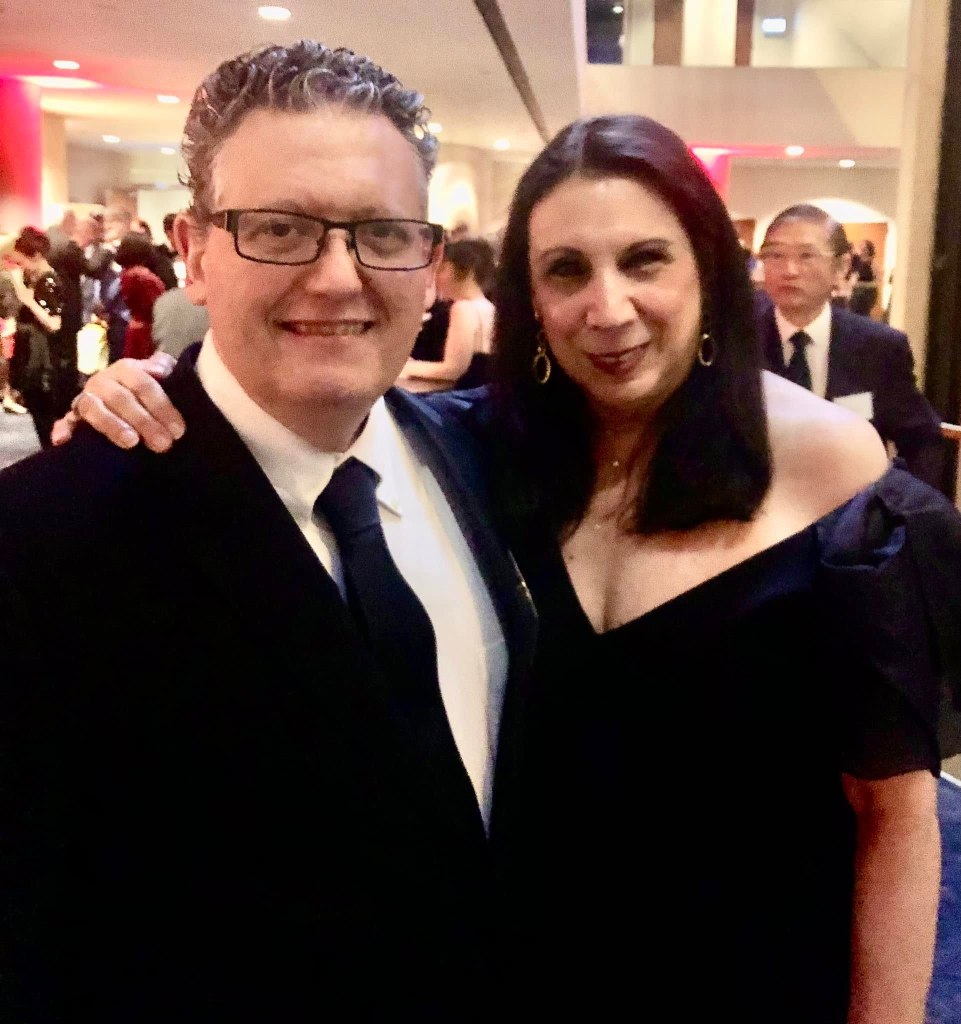
Me and my writer friend, Carol Floriani

Well, the 2025 Edgar Awards Ceremony is over. I didn’t win my category (that honor went to Henry Wise for his excellent novel Holy City, but I still had a blast. I met a lot of cool people, including my new editor at Crooked Lane, Sara Henry, CLB founder Matt Martz, and others. Best of all, I made some new friends in writers Kerri Hakoda, Audree Lee, and Carol Floriani.

And, for a bonus, Cathy and I got to spend some time in the greatest city in the world, Manhattan. (I am writing this post from inside a Starbucks on 7th Ave.) I used to come here pretty often in the early 2000s, when I was working for software consulting company on Prince Street, and I always loved it. I was last here for fun in 2017 with my son Connor, doing the tourist thing. The city hasn’t changed that much as far as I can tell. It’s still a rambling, teeming, kinetic barrage of sights, sounds, and languages. Manhattan is one of the few places on earth where you can step into a crowded elevator and hear Spanish, French, German, Russian, Hausa, and several others being spoken.

It’s also got the best museum in the world, the Met, which Cathy and I visited, of course. We got to see the John Singer Sargent exhibit, with Sargent’s masterpiece Portrait of Madame X on prominent display. I first learned about this amazing picture (and the scandal it caused) from David McCollough’s excellent history The Greater Journey: Americans in Paris, in which Sargent is one of the Paris-bound artists discussed. (Sargent painted Madame X in Paris with a well-known socialite as his subject; hence the scandal.)

So, all in all, a damn fine trip so far. I don’t know if I will ever get another Edgar nom, but if I do, you can bet I will be back.

Middlemarch Video (Part 2 of 2)!!!

Well, it took us a while, but my great friend Margaret Luongo and I finally finished George Eliot’s Middlemarch! (Hey, give us a break–it’s almost 900 freakin pages long!)

Here is our discussion of the second half and heart-stopping conclusion of the book for our Read a Classic Novel…Together channel. And, guess what! We both agree that it’s a truly great book (and probably should have been LONGER!).

Enjoy!

What I’m Reading: Would You Baptize an Extraterrestrial?

WouldYouBaptizeAnET

I learned many things from reading the excellent nonfiction book Would You Baptize an Extraterrestrial? For instance, I learned that the Vatican has its own astronomical observatory, which is run, in part, by the authors, Guy Consolmagno and Paul Mueller. Both men are also Jesuits. (The current Pope, Francis, is also a Jesuit—that’s another thing I learned).

Now, I was raised Catholic, and I thought a knew a thing or two about the religion. But not only did I learn from this book that the Vatican has its own observatory, but that it  has had one for hundreds of years. In fact, I was so taken by this discovery that I Googled “Vatican observatory” and, to my amazement, found that the Vatican also runs an observatory in Tucson, Arizona.

Talk about synchronicity! When I was twenty-two years old, I went off to attend grad school at the University of Arizona, in Tucson, and I distinctly remember the first night I spent there. I impressed by the size of the city—much larger than my little hometown of Gainesville, Florida—but also by how beautiful the desert sky was. Even in the downtown area, the stars were clearly visible. This was no accident; the city, I was told, purposely kept the streets relatively dark, in deference to the many astronomical observatories that surround the valley, which could not function if too much light pollution bled from the metro area.

Apparently, the Vatican’s observatory is one of them.

Continue reading “What I’m Reading: Would You Baptize an Extraterrestrial?”