Author’s Note: I’m told that Project Hail Mary is doing boffo b.o. in the American cinema currently. It looks like a really good movie, and I look forward to seeing it. It’s also based on an Andy Weir book, and I am a big fan of the film adaptation of his first book, The Martian. It’s not only a great movie, it’s culturally signficant.
So, it seemed like a good time to do a shameless rerun repost my thoughts on The Martian and on the new Hollywood archetype that, I think, it helped foster.
Enjoy…
One of my favorite movies of the last twenty years is Ridley Scott’s The Martian. It’s a science-fiction/adventure movie about an astronaut (Matt Damon) who becomes stranded on Mars after his comrades leave him for dead. Marooned on a barren, hostile world, he has to use his brains and ingenuity to survive until his friends come back to rescue him. By the end of the movie, he has survived dust storms, explosions, freezing temperatures, and starvation.
How does he overcome all these challenges?
Science.
The story is familiar, of course. It has many antecedents, including with the original stranded-on-an-island novel, Robinson Crusoe, and also (more directly) to a great B-movie Robinson Crusoe on Mars. In that classic 1964 cheese-fest, the hero survives by finding a Martian cave full of air where plants still grow, water still flows, and there’s a steady source of light (which is never explained). He even befriends an alien who is also trapped on the planet.
Unless you’re over forty, or from the U.K., you’ve probably never heard of the great 80s/90s band World Party. It was the creation of a Welsh dude named Kurt Wallinger, who, like many other musical geniuses (Lindsey Buckingham springs to mind) wrote all his own songs, and made demo tapes by playing every instrument. Pretty cool, huh?
Back in 1986, this little gem came out. It had a bluesy, funky feel that was different from anything else on the radio at the time. Like a lot of great songs, it seems to exist on many levels. That is, it’s a warning about the future. More importantly, it’s just a great song.
Strangely, it did better in the U.S. than the U.K., where the band’s biggest hit was a haunting gem called “She’s the One.”
A lot of movies have been made about a so-called eco-apocalyse, in which catastrophic climate change, or pollution, or crop-failure, or overpopulation, or some mixture of all-of-the-above wipes out big swathes of humanity. And some of those scenarios might yet play-out if we keep sleepwalking (make that speed-walking) into the future.
Smithsonian Magazine
Right now, however, environmental issues are manifesting in unexpected and almost mundane ways. Take house insurance. Here in Florida, frequent and more-powerful hurricanes are driving up premiums to insane levels. It’s the same along the gulf coast of Mississippi and Alabama. And a friend of mine from Texas told me the same thing is happening there (flooding is the disaster-de-jour, in his neck-of-the-woods). And then we have electric bills. Each year, increased demand for electricity (for air-conditioning and, now, frickin data centers) is driving up the cost of utilities. And what about clean drinking water? Near-constant drought (punctuated by hurricanes) makes it difficult to provide clean drinking water to growing populations in some parts of the country. This leads more people to buy bottled water. In parts of Mississippi, you will see everyone buying huge flats of the stuff from Wal-Mart, leading me to believe that bottled water is the primary of hydration for many rural Southerners.
So, whenever I run across a news story like this one about a small, ingenious invention of the sort that might—just might—help get us out of this mess, it warms my heart. And even more so when the inventors are young people. In this case, seventeen-year-old Virginian Mia Heller came up with a new, cheap, reliable way to filter microplastics from water. Her system is based on a type of nanoparticle-infused oil called a ferrofluid, which basically pulls the microplastics out of the water like a magnet. The oil is reusable and easy to make.
Will this invention take off? Will it scale? I don’t know, but it gives me hope. I often think of how the great Nazi Wehrmacht was defeated, in part, by clever G.I.s from America, some of whom came up with the clever idea of mounting a phone on the back of their tanks. With this phone, a ground-trooper could speak directly with the guys inside the tank and tell them where to shoot and move. It was the kind of simple, “no-brainer” innovation that the Germans, with their rigid class system and demoralized population, never came up with. And it helped win the war.
Climate change and pollution are Ms. Heller’s generation’s World War II. And I’m really hoping that smart people like her can figure out a way to save my generation’s collective butt.
Last year, I wrote a post about a fine non-fiction book called Paperbacks from Hell: The Twisted History of ‘70s and ‘80s Horror Fiction. I enjoyed the book primarily for the way the author, Grady Hendrix, mixes his obvious love of old, pulpy horror novels with an enormous amount of mockery and snark. Basically, he makes fun of the trends that ran through horror fiction back in the day, as well their emphasis on over-the-top gore and hilariously silly plots.
As I read the book, though, I noticed Hendrix mention one writer whom he does not mock: Michael McDowell. Rather, Hendrix uncharacteristically bestows a bit of praise on this particular novelist, which made me curious as to why I had never heard of the dude.
As it turns out, most people haven’t heard of McDowell, even though he was a very respected paperback fiction writer (Stephen King called him one of the best) as well as a successful screenwriter (he wrote the screenplays for Beetlejuice and The Nightmare before Christmas, as well as a lot of TV shows). I, especially, should have heard of McDowell considering he was, like me, a Southern writer—from the Gulf Coast of Alabama, not far from where I spent my summers in Pass Christian, Mississippi. He was also a writer who tried to blend a literary sensibility with an appreciation of genre narrative, which is an achievement which I admire.
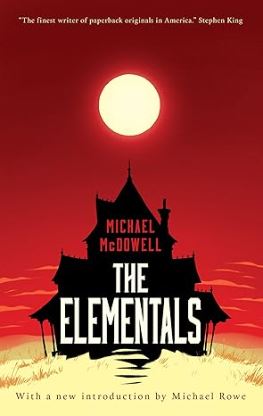
McDowell died in 1999, a latter casualty of the AIDS epidemic in America, just a few years before reliable HIV treatments came into common use. In the years since, his reputation seems to have grown, steadily if slowly, to the point where he is now considered a forgotten master. I was surprised to find an e-book edition of his most famous novel, The Elementals, on my local library’s Overdrive site, and I immediately checked it out and tore into it.
It’s definitely worth the read. Set in Alabama, it tells the story of a two wealthy, intermarried families: the Savages, with matriarch Marian and her adult son, Dauphin; and the McCrays, with matriarch Big Barbara and her adult children, Luker (who has a thirteen-year-old daughter, India) and Leigh (who is married to Dauphin Savage). At the start of the book, Marian has just died and the rest of the blended family is attending her funeral:
In the middle of a desolate Wednesday afternoon in the last sweltering days of May, a handful of mourners were gathered in the church dedicated to St. Jude Thaddeus in Mobile, Alabama. The air conditioning in the small sanctuary sometimes covered the noise of traffic at the intersection outside, but occasionally it did not, and the strident honking of an automobile horn would sound above the organ music like a mutilated stop. The space was dim, damply cool, and stank of refrigerated flowers. Two dozen enormous and very expensive arrangements had been set in converging lines behind the altar. A massive blanket of silver roses lay draped across the light-blue casket, and there were petals scattered over the white satin interior. In the coffin was the body of a woman no more than fifty-five. Her features were squarish and set; the lines that ran from the corners of her mouth to her jaw were deep-plowed. Marian Savage had not been overtaken happily.
Even for a funeral, it’s a very dreary and ominous affair. Yet it gets worse when, at one pre-arranged moment, Dauphin rises and stabs a ritual knife into his dead mother’s chest. Yeah, it’s that kind of book. The fact that McDowell can pull it off and still maintain a high-level of physical and emotional realism—not to mention vivid, sharp writing, as in the passage above—is a testament to his mastery.
The book gets even weirder after the funeral, when the family retreats to their ancestral vacation spot, a tiny barrier island called Beldame, taking with them their Black maid, the long-suffering (and very smart) Odessa. We soon learn that there are three houses on Beldame, yet the family occupies only two of them, leaving the third abandoned. (You can probably guess the reason why, but it has something to do with the house’s intermittent habit of…well…eating people.)
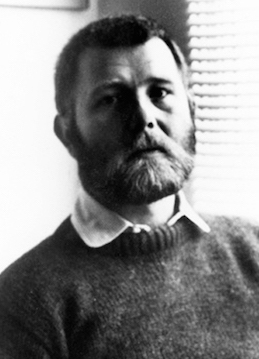
Michael McDowell
As the sand-dunes slowly encroach and bury it, the empty house attracts the curiosity of the young and intrepid India McCray, who ventures inside and sees something impossible yet real. And terrifying.
Of course, The Elementals isn’t just a generic ghost story, nor a generic Southern Gothic novel. The characters are vividly drawn, sympathetic, and believable. Their conversation is fraught with age-old tensions and resentments, yet it’s often very funny in a Curb Your Enthusiasm kind of way. And the characters of India and Odessa are especially well-realized. Linked by their intelligence and, as McDowell implies, some kind of psychic power reminiscent of The Shining, each comes off as a kind of hero in their battle against the evil hiding (rather obviously) in House #3.
The Elementals is a literary horror novel, meaning that it bridges the gap between genre story-telling and development of realistic characters. The book really comes to life (forgive the pun) in the chapters about India as well as of the adult male characters, Luker and Dauphin, both of whom struggle—in true Southern fashion—with the dark legacy of the past and especially surround their own family. Self-indulgent, smothering matriarchs like the recently deceased Marian are, in particular, a source of psychological revulsion. Indeed, they are central to the main theme of the novel, which I will not spoil here.
There is also a good amount of subtle criticism about the racial divide that existed at the time (and now) in the deep south. Odessa, the Black maid, is the only character who does any real work in the book, busy doing the cooking and cleaning for the affluent Whites, just as she has done (we are told) for thirty years. And, of course, Odessa is not only smarter than most of the family members (except, perhaps, for India) she is the only one who knows what the hell is going on in House #3, using her power of second-sight as well as (it is implied) a familial knowledge of voodoo.
Yes, as many reviewers on Reddit have observed, Odessa is an instance of the Magical Negro Trope, of the sort that genre writers, both Southern and not, have abused for a century. This trope is, of course, a literary stereotype, and like any stereotype it can be harmful if taken too far and left unexamined. But if Odessa is a Magical Negro, she is a very world-weary and snarky example, with both courage and brains. I simply loved her character. Sue me.
In fact, I loved the whole book, which feels a bit like a mash-up of Tennessee Williams and Stephen King. Check it out. It deserves some attention. Better late than never.
Author’s Note: This morning, I read that the 2026 Oscars Ceremony, which was held last night, omitted the great character actor Tom Noonan from its In Memoriam segment. I can’t throw stones at the Oscars. When Noonan passed away a few weeks ago, I didn’t say anything about it, either, in part because I had just posted a tribute to the great Robert Duval, who died about the same time. Also, I simply didn’t know enough about Noonan to do a proper post. He only had a few notable film roles, but they were all doozies.
His best was as the serial killer Dollarhyde in Michael Mann’s Manhunter. I am reposting this essay about the film as a kind of (admittedly lame) tribute.
*** SPOILERS BELOW ***
As any old movie buff knows (and many younger ones, too), crime thrillers in 1980s almost constituted their own sub-genre. That is, they had their own special vibe. Slick. Stylish. Erotic. Typically, they boasted good-looking actors with great 80s hair, wearing garish 80s clothes and doing dangerous things. These were exotic and entertaining films, usually set in one of two environments: a dark city landscape (i.e. L.A.) or a gorgeous, sun-drenched beach (i.e. Miami).
And then there was the soundtrack. Synth-heavy, but punctuated with propulsive rock songs from the era—usually something from Genesis or Phil Collins. Take 1984’s Against All Odds, for example, starring Jeff Bridges and Rachel Ward. Collins wrote and sang the theme song for that one, garnering him an Oscar nom. (And, yes, that movie was set against a dark L.A. landscape and a gorgeous beach.)
But my absolute favorite 1980s crime thriller, by far, is a movie almost no one remembers: Michael Mann’s 1986 serial killer flick Manhunter. I saw it when it first came out in 1986, and then saw it again, quickly, before it vanished from the cineplexes forever. In the forty years since, the film has gotten almost no respect, except from a few cinephiles like me. (Quinten Tarantino is a famous booster; he put Manhunter on his list of favorite 1980s films.)
I’ve often wondered why Manhunter is so underappreciated. It probably has something to do with its lame title, which the studio forced Mann for reasons too stupid to discuss here. The original working title was, of course, Red Dragon, taken from the source novel by Thomas Harris. I often think that if the studio had stuck with that title, the film would have been a hit. Another reason is that the brilliant soundtrack, which mostly samples great songs from the era but includes great original music from The Reds, was soon deemed as “dated”. (It has actually come back into fashion thanks to the rise of the Synthwave aesthetic.)
A few days ago, I saw a tweet (yes, damn it, a tweet) pointing out that the iconic song “Feel Good Inc” is now twenty years old. It’s amazing how much that song has permeated popular culture in those two decades. I first heard it in the excellent film The Big Short, where it featured prominently on the soundtrack. It’s one of those songs that, once heard, one never forgets.
However, there are a couple of things people might not know about the electronic band Gorillaz, who, with some help from De La Soul, created the song. First, they are a virtual band, meaning that the members seldom meet in person. Instead, they compose and record via the internet. One could write a whole book on the way the internet has changed music—and many already have—but the rise of virtual bands is a seldom-discussed sub-topic.
Another thing people might not know is that lead singer and founder Damon Albarn is also the mastermind behind the (even older) British band Blur, which blew people’s minds back in the 1990s. This song, especially, was hugely popular and influential. Entitled “Song 2” but almost universally known as the “Woo-Hoo Song,” it came out way back in 1997. And, for a few months, it was all you heard streaming out of people’s car radios (yes, we still had car radios, back then).
A few years ago, I wrote a post called “The Metaphysics of Left and Right (No, Not Politics; the Freakin Directions!),” in which I suggested that our ability to tell left from right, even as young children, and when facing a completely symmetrical landscape like the plane of the ocean, is somehow suggestive of a deeper truth about the nature of consciousness and dualism. As part of this philosophical (and very possibly harebrained) rumination, I explored how difficult it would be to communicate our definitions of left and right to a distant extraterrestrial civilization using only words or very simple pictures. One way, I argued, would be to use the inherent chirality of certain molecules, whose structure our hypothetical E.T. would recognize.
So, you can imagine my delight at discovering that one of my favorite YouTube channels, PBS Space Time, devoted an entire episode to this very subject. As host Matt O’Dowd explains, all biological life displays a mysterious homochirality, or bias toward either left- or right-handedness over the other. All DNA, for example, spirals the same way. Similarly, all sugar and amino acid molecules are not only chiral but unflippable. That is, their mirror images are never found in nature. And when these reversed molecules are deliberately created in a lab, they are biologically useless and, often, highly toxic. Not to mention totally…unnatural.
Even now, in the 21st Century, no one is sure why this handedness in nature exists, although it is theorized that it might be connected to the most fundamental laws of nature—specifically, the asymmetry of the weak force.
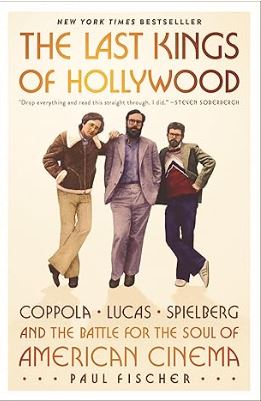
I’ve been reading an excellent non-fiction book by Paul Fischer called The Last Kings of Hollywood: Coppola, Lucas, Spielberg—and the Battle for the Soul of American Cinema. It’s very similar to another great book I read recently (and subsequently wrote a post about), Don’t Stop: Why We Still Love Fleetwood Mac’s “Rumours,” in that both books document the history of struggling artists—film directors, in the former, and rock stars, in the latter—who hit the Big Time. Inevitably, they each also tell the story of a bohemian sub-culture of the 1970s, when people lived hand-to-mouth in the canyons of Southern California, occupying cheap, hardscrabble houses and doing menial jobs while they developed their artistic skills. They also did a lot of drugs (mostly cocaine, booze, and marijuana) while having lots of sex with multiple partners. Fischer’s book, in particular, tells the great story of aspiring actress Margo Kidder, whose rented, A-frame house was frequented by young film makers, actors, musicians, and other arty-types, all attracted by Kidder’s good-natured wit, excellent cooking, and general hospitality. And by her beauty, of course. As Fischer relates, Kidder once joked that if she had bothered to write a memoir of that halcyon time, she would’ve entitled it I Fucked Everybody.
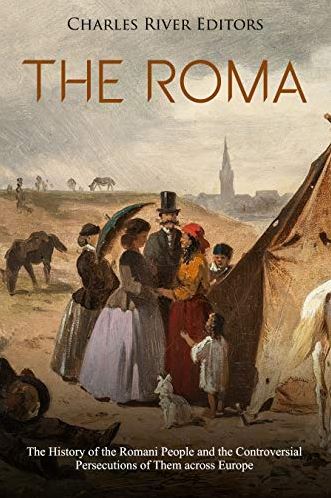
Such artistic, bohemian scenes are as old as…well, 19th Century Paris, when the term “bohemianism” came into use. Apparently, it first referred to the Romani people of Paris, who lived a nomadic existence doing odd-jobs and performing various services (most legal, some not) for local people. In French, they were called bohémiens, because they were thought (mistakenly) to have migrated to France from the Kingdom of Bohemia. Bohemian soon came to describe anyone who, by choice, lived an unconventional life on the edges of society, doing as they pleased. Often, these were artists (painters, writers, musicians) who refused to pursue a normal career, but it also included the moneyed, free-spirited offspring of rich people, who went “slumming” with those same artists.
As I was reading the Wikipedia page on bohemianism, I discovered that such bohemian subcultures are often examples of a precariat. Precariat (I learned) is a mashup of precarious and proletariat, the latter being Karl Marx’s term for the working class. (“Proles” as they are called in George Orwell’s 1984.) People in a precariat are usually just as poor but also lack even the job security of the traditional industrial class, going from low-paying job to low-paying job, with no guarantee of when they’ll land their next position (or be able to pay the rent).
The term (I also learned) is particularly apt today, being often used to describe our modern world of Uber drivers, digital freelancers, and other non-traditional workers. As I read about all this, I thought of a book I posted about some years ago called Nowtopia: How Pirate Programmers, Outlaw Bicyclists, and Vacant Lot Gardeners Are Inventing the Future Today! by Chris Carlston. Written at the dawn of the so-called gig economy, Carlston describes how, rather than dreading the precariousness of modern capitalism, some people have embraced it. By working temporary gigs, such people—whom Carlson calls Nowtopians—have managed to preserve the time and freedom to pursue their true passions like art, or education, or community service, or whatever. He writes:
What we see in the Nowtopian movement is not a fight for workers emancipation within the capitalist division of labor…. Instead we see people responding to the overwork and emptiness of a bifurcated life that is imposed in the precarious marketplace. They seek emancipation from being merely workers. To a growing minority of people, the endless treadmill of consumerism and overwork is something they are working to escape. Thus, for many people time is more important than money. Access to goods has been the major incentive for compliance with the dictatorship of the economy. But in pockets here and there, the allure of hollow material wealth, and with it the discipline imposed by economic life, is breaking down.
Looking back on these words now, they seem a bit naïve. The longings of a utopian dream. They hardly seem describe our current gig economy, which, instead of new bohemian class, seems little more than a last-ditch means of survival for those who can not find good, decent-paying jobs (with benefits). As wealth and power become more concentrated in the hands of a few (usually male) oligarchs, fewer people have the freedom to do anything, no less pursue art. They’re too busy working, looking for jobs, looking for housing, or generally getting by.
In fact, rather than a utopia, our precariat seems more like the dystopia of which William Gibson foretold in his early, cyberpunk novels. Worlds in which most people on earth are underemployed, rootless, and in constant danger, while a tiny middle-class manages everything for an even tinier upper-class. The heroes of such novels are usually young, smart people who resist in the only way they can—by entering an underworld of artists, hackers, thieves, and gangsters who make their living off the rich.
Does this mean that we, as modern Americans, are headed for a world in which the precariat is, essentially, everyone? I think so, yeah. After all, isn’t that the fantasy of every oligarch—to rule over a vast sea of unpaid serfs with no autonomy to control their own lives? A limitless, self-perpetuating underclass, with no agency to defend themselves from the predatory impulses of the ultra-rich, impulses are, ultimately, sadistic in nature.
Despite a youth in which I read literally hundreds of sci-fi novels, I somehow missed the works of Clifford D. Simak. I would blame the fact that Simak wrote his best books long before I was born, in the Golden Age of Science Fiction, but I managed to read other giants from that period like Isaac Asimov and Robert Heinlein. No, I think I missed Simak simply because, well, he wasn’t as popular as those guys. In fact, he became known as one of the founders of Pastoral Science Fiction, a sub-genre in which the stories are set in rural or other off-beat settings. (Sounds sexy, huh?)
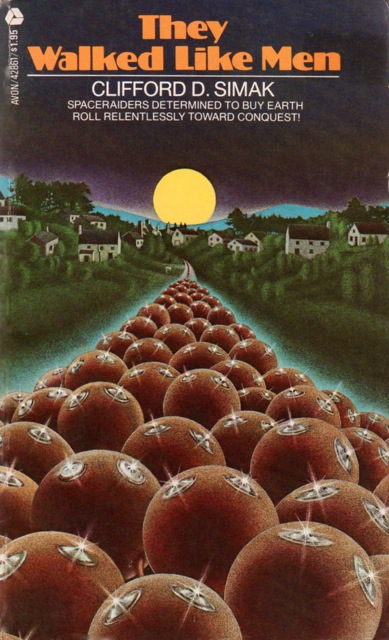
So, you can imagine my surprise when I read Simaks 1964 novel They Walked Like Men. I stumbled upon the book on my local library’s web site. It was a modern copy (see the excellent 1979 cover below by Jan Esteves), and I figured that if my librarians like it enough to buy an e-book copy, it must be worth a shot. So, I checked it out. And I loved it. It’s one of the strangest, edgiest sci-fi novels I read in a long time. Imagine an alien invasion narrative, set in the early 1960s, in which the major plot point is…real estate.
Sounds funky, right? The protagonist, Parker, is a hard-drinking, noirish newspaper man who stumbles upon a plot by mysterious strangers to buy all the real estate in town. Naturally, the strangers turn out to be aliens whose actual shape is something like a bowling ball, but who can simulate almost any form—kind of like the T-1000 in Terminator 2, with equally gruesome results. Parker makes it his mission to get to the bottom of the murderous aliens’ plan, whose true motive turns out to be even stranger than I suspected.
Honestly, I can’t believe no one has adapted this book into a movie. It reads like The Maltese Falcon meets Twin Peaks meets The Invasion of the Body Snatchers. I could someone like Jordan Peele coming in and making this into a really cool, eldritch thriller.
In the meantime, we have the book! Check it out…
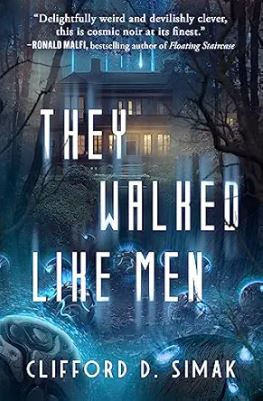
Here is the cover from the latest printing, which I also really like…





 Ash Clifton, Writer