Today I Learned a Word: “Precovery”

Uranus, The Seventh Planet from the Sun

As part of the work for the Read a Classic Novel…Together channel, I’ve been reading a very old classic indeed, The Life and Opinions of Tristram Shandy, Gentleman (almost always abbreviated to just Tristram Shandy). Published by Laurence Sterne in 1767, it’s a very funny, sly book—kind of like Curb Your Enthusiasm, but in the 18th Century—and I found myself imagining George Washington reading it (and laughing his ass off) while holed up in some winter bunker during the dark days of the American Revolutionary War

The story is told by Shandy himself, a very smart but self-absorbed and neurotic man (again, a lot like Larry David) who tells his life story in wry, sardonic, and occasionally schizophrenic prose. At one point in his rambling narrative, he mentions the “seven planets” in the heavens, which surprised me. Sure, I knew that even the ancient Romans knew about the inner planets, as well as Jupiter and Saturn. But the fact that the unfathomably distant Uranus was known in the 18th Century struck me as remarkable.

As it turns out, I was wrong. Uranus was not discovered until 1781, over a decade after Sterne wrote his novel (but still much earlier than I thought). Which means that there is no way that either Sterne, the writer, nor Shandy, the character, could have known about the actual seventh planet. 

So, what, exactly, is Shandy alluding to in the “seven planets” bit? It seems that he was referring to the astrological planets in their classical (and very unscientific) sense, i.e., the Moon, Mercury, Venus, the Sun, Mars, Jupiter, and Saturn. This context makes sense, in retrospect, because Shandy is obsessed with astrology and its supposed effect on a person’s character. (Yes, he’s a bit of a kook.)

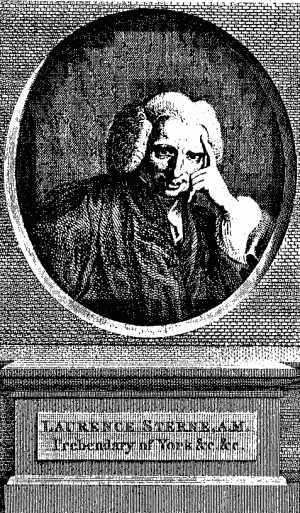
Lawrence Sterne

By the time I sorted all this out, however, it was too late; I was already deep down the Wikipedia rabbit-hole. I looked up the history of the outermost planet (not to be confused with the dwarf planets like Pluto and Ceres), Neptune. Neptune was discovered by French astronomer Urbain Le Verrier in 1846. Not only was it the first planet to be discovered entirely by telescope, it was also the first one whose existence was surmised before it was actually observed. That is, Verrier and fellow astronomer John Couch Adams had noticed irregularities in Uranus’s orbit, which, they suspected, might be caused by a seventh, hitherto unseen planet. They then deduced the probable location of this hypothetical planet and hunted it down.

And that’s not all! I also learned that Neptune was actually discovered before it was discovered. As historians found later, Neptune was seen at least three times before, by Galileo Galilei in 1613, Jérôme Lalande in 1795, and John Herschel in 1830. Each of these men recorded seeing something in that spot, but none of them realized it was a planet and not just a weird “fixed” star.

Apparently, this sort of thing happens with some frequency in the world of science, to the point that it actually has a name: precovery. In a precovery, someone finds all the information they might need to make a real (and potentially career-making) discovery, but they never put the pieces together. (Or, at least, they never publish a paper about it.)

I think there might be a profound lesson here about the difference between data and knowledge, observation and understanding. 

It’s also a lesson about publishing what you’ve got, ASAP. Before some other doofus steals your thunder.

What I’m Reading: “Paperbacks from Hell”

Having had exactly one book traditionally published, I am far from an expert on the world of publishing. Even so, I learned a lot more than I ever expected, and have since become fascinated by the industry as a whole. Also, I am currently working on a supernatural horror novel. So, it makes perfect sense that I would be drawn to Grady Hendrix’s excellent non-fiction book, Paperbacks from Hell, which examines (skewers?) pulp horror literature as it existed in the 1970s and 80s, both as a uber-genre and as an industry. 

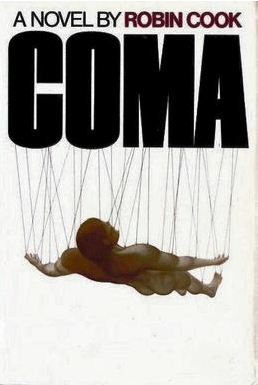
Let me say right up front that this is a very funny book. I found myself laughing out loud many, many times as Hendrix describes the trends and fads that overtook the genre. Take this passage where he introduces the wildly successful pop writer Robin Cook, whose 1977 book Coma is, in Hendrix’s words, the “source of the medical-thriller Nile.” As Hendrix goes on:

It all started with Robin Cook and his novels: Fever, Outbreak, Mutation, Shock, Seizure…terse nouns splashed across paperback racks. And just when you thought you had Cook pegged, he adds an adjective: Fatal Cure, Acceptable Risk, Mortal Fear, Harmful Intent. An ophthalmologist as well as an author, Cook has checked eyes and written best sellers with equal frequency. He’s best known for Coma (1977)…. Its heroine, Susan Wheeler, is one of those beautiful, brilliant medical students who’s constantly earning double takes from male colleagues or looking in the mirror and wondering if she’s a doctor or a woman—and why can’t she be both, dammit? On her first day as a trainee at Boston Memorial, she settles on “woman” and allows herself to flirt with an attractive patient on his way into a routine surgery. They make a date for coffee, but something goes wrong on the table and he goes into…a COMA!

Hendrix cleverly divides each chapter to a single, overarching trend in the pulp horror universe, with titles like HAIL, SATAN (novels of demonic possession and devil-sex), WEIRD SCIENCE (evil doctors and mad scientist-sex), INHUMANIOIDS (deformed monsters and mutant-sex), and so on. I was especially impressed by the way Hendrix explains each publishing fad as a symptom of a larger societal shift. For example, he explains how the white-flight phenomenon of the 1970s in which white middle- and upper-class families abandoned the big cities and moved to quaint, charming little towns in upstate New York or the mid-west or norther California or wherever, results in a surge of small-town horror novels like Harvest Home (wherein evil pagan matriarchs conduct human sacrifices to make the corn grow) and Effigies (wherein Satan is breeding grotesque monsters in the basement of the local church).

Another chapter entitled CREEPY KIDS, which deals with such diverse plot concepts as children who are fathered by Satan, children are who are really small adults pretending to be children, and children who, for whatever reason, just love to kill people. I particularly love this passage:

Some parents will feel helpless. “How can I possibly stop my child from murdering strangers with a hammer because she thinks they are demons from hell?” you might wail (Mama’s Little Girl). Fortunately there are some practical, commonsense steps you can take to lower the body count. Most important, try not to have sex with Satan. Fornicating with the incarnation of all evil usually produces children who are genetically predisposed to use their supernatural powers to cram their grandmothers into television sets, headfirst. “But how do I know if the man I’m dating is the devil?” I hear you ask. Here are some warning signs learned from Seed of Evil: Does he refuse to use contractions when he speaks? Does he deliver pickup lines like, “You live on the edge of darkness”? When nude, is his body the most beautiful male form you have ever seen, but possessed of a penis that’s either monstrously enormous, double-headed, has glowing yellow eyes, or all three? After intercourse, does he laugh malevolently, urinate on your mattress, and then disappear? If you spot any of these behaviors, chances are you went on a date with Satan. Or an alien.

One the many things I learned from reading the book was how the entire publishing world (not just horror) was permanently changed in 1979 by an obscure tax-law case called The Thor Power Tool Co. v Commissioner. In this case, the U.S. Supreme Court ruled that manufacturers could not write-down poor-selling or slow-selling inventory and thus reduce their tax liability. The case was focused on unsold parts for power-tools, but the ruling equally applied to publishing houses, who had hitherto done the same kind of write-down on their slow-selling novels. As Hendrix explains: “Suddenly, the day of the mid-list novel was over. Paperbacks were given six weeks on the racks to find an audience, then it was off to the shredder.” And so, inevitably, came the frantic scramble to find those half-dozen or so “blockbuster” books each season, behind which publishers focused their resources. (A similar “blockbuster” effect ravaged Hollywood in the 1970s, in this case due to the success of summer films like Jaws and Star Wars.) Books got less pulpy and more sparkly, with foil covers and die-cast cutouts like those made famous by the V.C. Andrews novels (which continued to be published, zombie-like, long after Andrews’s death).

Whether you’re a writer or just a pulp-paperback fan, Paperbacks from Hell is a great read. Check it out…

What I’m Reading: “UFOs: Generals, Pilots, and Government Officials Go on the Record”

Author’s Note: There has a been a lot of really cool UFO news lately (especially this article), so I thought I would re-share an old post I wrote some years ago regarding a fine book on the subject. Enjoy!

UFOs

From 1989 to 1992 I went to graduate school at the University of Arizona. This was around the same time that Fife Symington was elected governor of that fine state. I don’t remember having any opinion of Symington at the time, except that he seemed a man very much in the mold of Arizona politicians: a conservative, folksy cowboy.

So it was probably not that big of a surprise when, six years later, Symington handled an unusual political crisis in what many saw as a callous, flippant way. The crisis in question was a UFO—literally, an unidentified flying object—that was spotted by hundreds of people in the Phoenix area on the night of March 13th, 1997. The incident, which has since become known as The Phoenix Lights UFO Incident, resulted in dozens of 911 calls and hundreds of letters being written to the governor. Eventually, Symington was forced to hold a press conference about the event, in which he essentially laughed-off the whole affair. (One of his aides came to conference dressed as a green alien. Hilarity ensued.)

Continue reading “What I’m Reading: “UFOs: Generals, Pilots, and Government Officials Go on the Record””

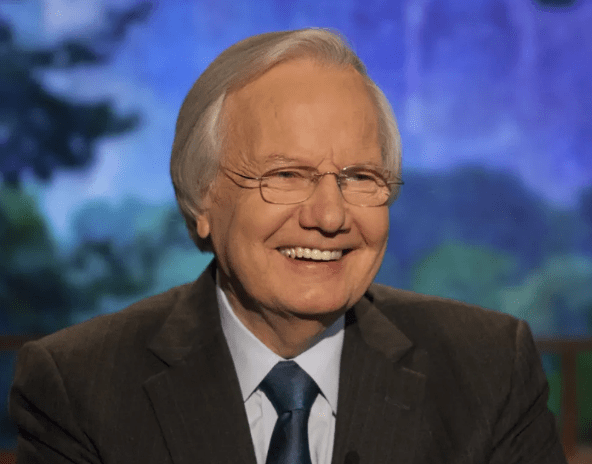
R.I.P. Bill Moyers

If you were a nerdy poor kid growing up in the 1970s and ’80s, you probably watched a lot of public television. Starting with kid shows like Sesame Street and the Electric Company, you graduated in your teens to science shows like Nova and edgy entertainment shows like Monty Python and surreal action series like The Prisoner, which PBS stations played late at night. 

As for myself, I also watched a lot of PBS news, especially The MacNeil/Lehrer NewsHour. And Bill Moyers. Lots of Bill moyers. If MacNeil and Lehrerwere the Kings of PBS news, then Bill Moyer was the high-ranking courtier. Moyers, who passed away last week, specialized in thoughtful and intelligent interviews with brilliant people of various stripes. As a would-be teenage intellectual, I really loved and appreciated these shows, and they introduced me to a lot of very smart artists, politicians, and writers. Chief among these was the iconic scholar of world mythology Joseph Campbell. Moyers’s now-famous interviews with Campbell, conducted at George Lucas’s Skywalker ranch (Lucas was inspired by Campbell’s writing when he penned the Star Wars saga), were probably the pinnacle of both men’s careers. 

I’ve been a fan of Campbell ever since, and also of Moyers. A one-time Baptist preacher, Moyers was a gentle, kind-spirited man who never descended into sentimentality or fatuous optimism. He was, rather, a first-rate journalist. And God knows there are very few of those these days. 

Moyers has been the subject of many on-line tributes in the past few days, including this one by the excellent historian Jonathan Alter.

Godspeed, Mr. Moyers….

What I’m Reading: “Rebbe”

I’ve read a lot of biographies in my time. Some of my favorites have been about great monarchs (Catherine the Great by Robert Massie), presidents (Truman by David McCoullough), scientists (Oppenheimer by Kai Bird), architects (Frank Lloyd Wright by Meryl Secrest). Now, I can finally add religious leaders to my list. Or at least one religious leader, the Rebbe Menachem Mendel Schneerson

It’s taken me this long, I think, because while I am fascinated by the study of various religions, I am not very interested in the life-story of most religious leaders. This is, in part, a consequence of the vexed historicity of such figures. Usually, they lived in the distant past, shrouded in veils of myth, with the actual, living person being lost to time. But this is not the case with Rebbe Schneerson. After all, he was not only a very recent figure, having passed away in 1994, but he spent most of his life right here in the United States—Brooklyn, in fact, that modern locus of Hasidic Judaism, and especially the Chabad-Lubavitch dynasty, which Schneerson led since 1951, succeeding his father-in-law. 

As Joseph Telushkin recounts in his excellent book, Rebbe: The Life and Teachings of Menachem M. Schneerson, the Most Influential Rabbi in Modern History, Schneerson was essentially appointed to the position by general acclimation, bypassing the previous Rebbe’s son who had been the heir apparent. Community leaders and other rabbis in the movement were simply awed by Schneerson’s considerable intellect—he spoke half-a-dozen languages, had an Engineering degree, and was considered a “genius” in Talmudic study from the age of seventeen—and pressured him to take the job. 

Which, thankfully, he did. I never thought I would ever read a book about an orthodox Jewish rabbi and, at the end, think to myself: “Wow, he seems like a really cool guy.” After all, I’m used to being utterly repulsed by most “leaders” in my own religious sphere, Christianity, with the exception of the current Pope and his immediate predecessor. But the more I read about Schneerson, the more impressed I was, not only by his general wisdom in matters of religion and morality, but also in his endless, practical concern for the well-being of ordinary (often poor) people, both Jews and Gentiles. 

One example Telushkin provides involves Shirley Chisholm, the first black woman elected to Congress. Racist creeps in the House refused to appoint her to any high-level committees and instead stuck her on the Agriculture Committee, which, considering Chisholm represented a section of New York, seemed absurd to most observers. Yet, the snub also presented an opportunity that she, herself, never suspected. As Telushkin writes:

She soon received a phone call from the office of one of her constituents. “The Lubavitcher Rebbe would like to meet with you.” Representative Chisholm came to 770. The Rebbe said, “I know you’re very upset.” Chisholm acknowledged both being upset and feeling insulted. “What should I do?” The Rebbe said: “What a blessing God has given you. This country has so much surplus food and there are so many hungry people and you can use this gift that God’s given you to feed hungry people. Find a creative way to do it.”

And she did, creating one of the first federal food-aid programs in the history of the United States, in which surplus food was bought by the government from American farmers and distributed to poor people, thus helping the recipients, the farmers, and pretty much everyone else.

On a more personal level, Schneerson always emphasized the importance of kindness and compassion over religious stricture. In one of his drashas (sermons), he famously told the story of how his predecessor, the Alter-Rebbe, once stopped in the middle of his Sabbath observations to attend to a young woman who had just given birth and who had been left alone by her family so that they could attend synagogue. Telushkin writes:

That day, the Alter Rebbe, having somehow learned that the new mother was alone, was suddenly overwhelmed with the certainty that the woman required someone to attend to her needs immediately; it might well be a matter of life and death. And since no one else was taking care of her, he concluded that he should be the one to do so.

This story apparently shocked his followers in way that most modern, secular people like myself cannot really appreciate. The idea that a rabbi might 1.) forsake the Sabbath observations in order to 2.) do menial work on the Sabbath like chopping wood and 3.) do so for an ordinary woman was radical in the extreme.  

Such was Schneerson’s boundless respect and love for ordinary people that he was always concerned about inadvertently embarrassing or insulting anyone, especially those who were most vulnerable. Decades before the so-called woke movement (a bad name for a very noble cause), Schneerson refused to use the word “handicapped” in reference to battle-maimed Israeli soldiers. Telushkin writes:

Referring to the fact that such people are designated in Israel as nechei Tzahal, “handicapped of the Israel Defense Forces,” the Rebbe addressed the men as follows: “If a person has been deprived of a limb or a faculty, this itself indicates that G-d has also given him special powers to overcome the limitations this entails, and to surpass [in other areas] the achievements of ordinary people. You are not disabled or handicapped, but special and unique as you possess potentials that the rest of us do not. I therefore suggest”—the Rebbe then interspersed with a smile—“of course it is none of my business, but Jews are famous for voicing opinions on matters that do not concern them—that you should no longer be referred to as ‘disabled veterans’ but as ‘exceptional veterans’ [metzuyanim], which more aptly describes what is unique about you.

In addition to being a genuinely good and wise person, Schneerson also seemed to have what can only be described as superpowers. He worked eighteen hours a day, six-days-a-week, for most of his life. Being busy with his primary duties during the day, he met with people seeking advice in the evenings, often as late one or two o’clock in the morning. Some of the people seeking advice including future and former Prime Ministers of Isreal such as Menachem Begin, as well as many other powerful and influential figures. But, more of than not, they were comprised of ordinary men and women in his congregation. I was especially impressed with Telushkin’s story of a young woman, Chana Scharfstein, who often came to his office seeking academic as well as personal (dating) advice:

The Rebbe clearly knew his agenda for this meeting, and the conversation quickly turned in a personal direction. At a certain point, he asked Sharfstein if she felt ready to get married. Sharfstein told him that she had begun dating—in Chasidic circles, young men and women date only for the purpose of marriage—and the Rebbe asked her about a specific young man. She recalls being taken aback and thinking to herself, That’s interesting that he should ask about somebody that I had met. Sharfstein told the Rebbe that she had met the young man he mentioned, that he was clearly a fine person, but not for her. The Rebbe said all right, and then mentioned another name, and again it was someone to whom Sharfstein had been introduced. Here, too, the young man was very nice but not for her. Then the Rebbe mentioned a third name, and a fourth, “and I became really uncomfortable then. How did the Rebbe choose all the names of young men (bachurim) that I had met? I was just absolutely overwhelmed that he should mention people that I had actually met.” Only later did she learn that prior to going out with a girl, each bachur in Chabad would write to the Rebbe to inquire if the girl seemed suitable for him, and so the Rebbe, who obviously had responded in each case that Chana Zuber was suitable, had a very precise idea of all the people with whom she had gone out. But even taking all this into account, Sharfstein still remained staggered at the Rebbe’s recall. After all, he “was [already] a world leader at this time, and to keep track of each person and who had been dating whom, it’s really mind-boggling.”

As this story relates, Schneerson’s remarkable memory and formidable intelligence were often sources of awe among those in congregation. Another example involves a young student, Irving Block, who came to discuss philosophy with the Rebbe:

At the time, Block, who was studying for an MA in philosophy, was immersed in the study of the great Greek thinkers, Plato in particular. And that’s the direction in which the Rebbe led the discussion. Only Block didn’t realize at first to whom the Rebbe was referring, because it was a man named Platon about whom the Rebbe started talking. It finally struck him that Platon is how the name of the Greek philosopher is written in Greek, though in English his name is always pronounced as Plato. It’s not that the n is silent in English; it isn’t written at all. This was Block’s first surprise of the day. The man seated in front of him, dressed in the garb of a Rebbe, obviously knew about Plato, or Platon, from the original Greek and pronounced his name as it was supposed to be pronounced.

Block was not only amazed by the Rebbe’s deep understanding of the “Platon’s” philosophy but by his utter rejection of it. (Plato believed that the nuclear family was an evil institution and should be abolished, an idea that was in direct contradiction to all humanist values, including those of Judaism.)

In recounting such stories as these, Telushkin’s book is really more of an appreciation or tribute than an in-depth biography. And yet he manages to relate the primary facts of Schneerson’s remarkable life with grace. Born in Imperial Russia, Schneerson moved with his family to the US in the spring of 1941. Thereafter, he served as Rebbe for over 50 years, finally passing away in a time when the world was much changed. 

One might say that he was born in the time of Tsars and passed away in the time of the internet. And, in all that time, one thing remained constant: his steadfast commitment to the practical well-being of all the people, rich and poor, high and low, in his community and around the world. Truly a person worth reading about. Check it out…

Why I Am Obsessed with UFOs

Phoenix_Lights

Recently I was watching an episode on one of my favorite YouTube channels, Answers with Joe. The episode was about UFOs, which made it was automatically a winner for me. Specifically, it focused on a few UFO videos that even a smart skeptic like Joe finds compelling. I enjoyed the episode so much, in fact, that I wanted to respond to it, and especially the last part, in which Joe enumerates some very rational arguments against the idea that UFOs are aliens. This is the so-called Extraterrestrial Hypothesis—the school of thought that believes UFOs are real and explicable as alien spacecraft.

(For the rest of this post, I’m going to use UFOs and the Extraterrestrial Hypothesis interchangeably. And, yeah—I believe UFOs are alien craft.)

Obviously, I have some deep feelings about the subject, although I’m not sure why, exactly. I can’t claim any special knowledge about UFOs. But like millions of other Americans, I have seen a UFO. It happened one night on the Mississippi Gulf Coast, when my son and I were having dinner at a little joint on shore. We were sitting outside, and somewhere the course of the meal we saw a strange light in the sky. It shone a powerful beam of light in our direction, then disappeared, then reappeared again. This went on for nearly an hour.

And, of course, it was totally silent.

Continue reading “Why I Am Obsessed with UFOs”

What I’m Reading: “A Guest of the Reich”

GuestofTheReich

Ever since Donald Trump was first elected in 2016, people have been talking about the “two Americas.” Namely, the working class, poorly educated, white, xenophobic America that voted for Trump and the middle- and upper-class, highly educated, “elitist,” multi-cultural America that voted for Hillary Clinton (and, later, Kamala Harris).

This perception of two Americas—and, indeed, of a “cold” Civil War that is currently being waged between them—is warranted and realistic. America is more polarized than it has been since the 1860s, and there is a very real possibility of the country tearing itself apart (not militarily, I think, but politically, in the same way the USSR erased itself in 1990).

However, I’m not sure we are in a battle between two Americas, per se, as in one between two worldviews. In one worldview, America is under threat of racial dilution, socialist revolution, and religious transgression, all of which will create an evil, perverse America, which its adherents would rather be dead than live in. In the other world view, America is under threat of nascent Fascism, corporatism, kleptocracy, and the climate apocalypse that will inevitably result from all these things.

As usual, the Germans have a much better word for this: Weltanschauung, a term that encapsulates the philosophical and cognitive underpinnings that define a social group or generation (or both). As an English major in the 1980s, I was obliged to read Eustace M. Tillyard’s classic The Elizabethan World Picture, which explores the conscious and subconscious belief system of Britons in the time of Shakespeare. More recently, I read Robert O’Niell’s memoir The Operator, which recounts his years as a Navy Seal fighting in Iraq and Afghanistan. In this book, he describes the weltanschauung of the Afghani locals whom he encountered, some of whom—quite literally—believed in dragons.

Continue reading “What I’m Reading: “A Guest of the Reich””

Books on Art: “de Kooning – An American Master”

deKooning

On those rare occasions when I choose to read a big, fat, thick-as-a-brick book about a famous person, I usually pick one about a politician. David McCullough’s Truman is a great example. I tend to gravitate toward books about political figures because, in the course of reading about their lives, you also get a free history lesson. That is, the story of Harry Truman is also the story of World War II, the atomic bomb, Korea, the founding of Israel, and the Berlin Wall.

Biographies of artists are more problematic, for me.  I just finished reading de Kooning: An American Master, by Mark Stevens and Annalyn Swan. It chronicles the long life of the great painter—a life barely contained within the span of the Twentieth Century—in which de Kooning lived to be the celebrated, Grand Old Man of modern American art. He became, in fact, the only American artist whose figure and reputation approached those of Picasso.

Continue reading “Books on Art: “de Kooning – An American Master””

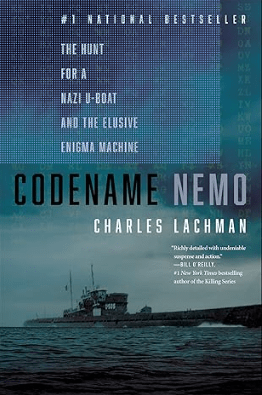
What I’m Reading: “Codename Nemo”

( *** Spoilers Below ***)

When most people think of the archetypal techno-thriller writer, they probably think of Tom Clancy. He didn’t invent the genre, but with the publication of his 1984 mega-hit The Hunt for Red October, he took it to a whole new level of mainstream popularity. Henceforth, the pop lit shelves in bookstores and airport gift shops across the countries would be filled with works by Clancy and an army of his imitators.

And why not? The techno-thriller novel combines aspects of several other genres, including “caper” fiction (a group of determined men taking on a seeming impossible mission), science fiction (the “techno” part is often so cutting-edge that it is more like sci-fi), mysteries (there is always a hidden bad guy in the mix), and, of course, thrillers (duh).

I kept thinking of The Hunt for Red October as I read an excellent history book recently, Codename Nemo: The Hunt for a Nazi U-Boat and the Elusive Enigma Machine by Charles Lachman. It recounts the fantastical story of a visionary naval captain, Daniel Gallery, who comes up with a hare-brained plan to capture a German U-boat. He developed the idea while stationed at a naval base in Iceland, seeing the damage that U-boats could wreak. He also learned how to sink them.

Continue reading “What I’m Reading: “Codename Nemo””

What I’m Reading: “I am Spartacus”

I_Am_Spartacus

(Author’s Note: this post originally appeared on my old blog, Bakhtin’s Cigarettes.) I don’t want to jinx the man, but the fact that Kirk Douglas still lives is an unmitigated source of joy for me. If you believe, as I do, that movie stars become movie stars because of some internal life-force, whose aura is palpable even when projected onto a silver screen, then Kirk Douglas seems like the best proof of this theory.

At 101, Douglas is a living bridge to Hollywood’s second Golden Age—the 1940s to late 1950s. A bone fide movie start by 1949, Douglas was, along with other mavericks like Burt Lancaster, one of the first major actors to become a power-player in his own right. In an era when the Hollywood studio system traded actors like cattle, he formed his own studio and made his own films. He fostered young writers and directors—most notably, a brilliant, aloof young filmmaker named Stanley Kubrick.

Continue reading “What I’m Reading: “I am Spartacus””