In the summer of 1982, I was a very unhappy boy. Being a nerd in an upper-class high school full of preppies and jocks, I didn’t fit in very well. I hated most of my classes. I had a few good, close friends (including some jocks), but that was it. As one would expect, I spent a lot of time in my room reading sci-fi novels and typing short stories on the typewriter my mother had bought me.
The only thing that kept me sane was movies. Fortunately, 1982 turned out to be the most incredible time in cinematic history to be a nerd. A string of classics came out that summer including Blade Runner, The Thing, The Road Warrior (a.k.a. Max Max II), Star Trek II: The Wrath of Khan, Poltergeist, Tron, Conan the Barbarian, and (the 800-pound gorilla) E.T. Even at the time, I was cognizant that this bumper crop of cool films, all coming out within a few weeks of each other, was a very unusual, almost magical development. I spent many hours on the bus with my friends going to and from the local cineplex, where we watched many of these films over and over.
For forty years, I labored under the delusion that this rapid series of classics was just a lucky coincidence. But while reading Chris Nashawaty’s fine nonfiction book, The Future Was Now: Madmen, Mavericks, and the Epic Sci-Fi Summer of 1982, I learned otherwise. A good historian will reveal that any event, no matter how seemingly incredible or unlikely, actually emerges logically from previous events. That is, the seeds were planted years or even decades before. And in 1982, main seed was a little film called Star Wars. As Nashawaty explains:
There’s an unwritten rule for reporters and trendwatchers who cover Hollywood that if you want to know why a movie—or a particular group of movies—was made, all you need to do is look back and see what was a hit at the box office five years earlier since that’s the typical gestation period for studio executives to spot a trend, develop and green-light an imitator, push it into production, and usher it into theaters. And the summer of 1982 would prove no exception, coming exactly five years after Star Wars. What seemed underreported, however, was how this new wave of sci-fi titles had been conceived and carried out. It is a wave that we’re still feeling the aftereffects of, for better and worse, today.
As any old movie buff knows (and many younger ones, too), crime thrillers in 1980s almost constituted their own sub-genre. That is, they had their own special vibe. Slick. Stylish. Erotic. Typically, they boasted good-looking actors with great 80s hair, wearing garish 80s clothes and doing dangerous things. These were exotic and entertaining films, usually set in one of two environments: a dark city landscape (i.e. L.A.) or a gorgeous, sun-drenched beach (i.e. Miami).
And then there was the soundtrack. Synth-heavy, but punctuated with propulsive rock songs from the era—usually something from Genesis or Phil Collins. Take 1984’s Against All Odds, for example, starring Jeff Bridges and Rachel Ward. Collins wrote and sang the theme song for that one, garnering him an Oscar nom. (And, yes, that movie was set against a dark L.A. landscape and a gorgeous beach.)
But my absolute favorite 1980s crime thriller, by far, is a movie almost no one remembers: Michael Mann’s 1986 serial killer flick Manhunter. I saw it when it first came out in 1986, and then saw it again, quickly, before it vanished from the cineplexes forever. In the forty years since, the film has gotten almost no respect, except from a few cinephiles like me. (Quinten Tarantino is a famous booster; he put Manhunter on his list of favorite 1980s films.)
I’ve often wondered why Manhunter is so underappreciated. It probably has something to do with its lame title, which the studio forced Mann for reasons too stupid to discuss here. The original working title was, of course, Red Dragon, taken from the source novel by Thomas Harris. I often think that if the studio had stuck with that title, the film would have been a hit. Another reason is that the brilliant soundtrack, which mostly samples great songs from the era but includes great original music from The Reds, was soon deemed as “dated”. (It has actually come back into fashion thanks to the rise of the Synthwave aesthetic.)
There is a scene in Steven Soderbergh’s 1999 noir thriller The Limey when the main character, Wilson, a career-criminal and generally scary guy, is questioning a woman in her house about a man named Valentine. Wilson (played with enormous power by Terance Stamp), is looking for the man who killed his daughter, and Valentine is his prime suspect. The woman, naively, offers to give Wilson Valentine’s phone number, at which point Wilson smiles wickedly and says, mostly to himself, “I’ve got his number.”
It’s a great, almost chilling moment. What we, the viewers, know (and the woman doesn’t) is that Wilson has already killed five men to get Valentine’s “number”, every sense of the term. And Stamp’s delivery of this line speaks volumes about Wilson’s character—his steely-eyed determination, his courage, and his constant, barely controlled rage.
It’s a great moment in a great movie, which marked one of several come-backs in Stamp’s long career. His filmography is so great and varied that one must divide not in stages but in ages. First, there was Stamp the movie star, an epically handsome, Angry-Young-Man who got the lead in several fine, gritty films in the 1960s, including William Wyler’s The Collector and Ken Loach’s Poor Cow. But he never really clicked as a leading-man, either in England or in Hollywood, and his next big break didn’t come until 1980’s Superman II, in which he reprised his role as the evil General Zod (a.k.a. the chief of the three baddies whom Superman’s dad banishes to the Phantom Zone in Superman.)
To this day, Stamp is best remembered for this one, silly role, Zod—at least, in America. But film nerds such as myself admired his work in many other small, supporting roles throughout the 80s. My favorite was his scene-stealing cameo in 1987 Wall Street, playing a redoubtable corporate raider who has reformed his ways and stands in opposition to the evil Gordon Gekko.
Then, in the 1990’s, Stamp had his next, and greatest, comeback with his role as transexual woman in The Adventures of Priscilla, Queen of the Desert, which remains one of my favorite films of all time. Stamp was nominated for a BAFTA for that one, and he should have been nominated for an Oscar, too. But no matter. The role is a classic, and it re-introduced him to American audiences.
This led to Stamp’s last leading role in a major motion picture. This was, of course, The Limey, and it is perhaps his greatest performance, in part because he was able to leverage his own, real-life history as 1960s hipster in the role of Wilson, who was a master thief in 1960s England. Indeed, Soderbergh sampled black-and-white footage of Stamp from Ken Loach’s Poor Cow to use in flashbacks of Wilson’s earlier life—a daring artistic choice which, although done with permission from Loach himself, remains controversial to this day. However one might feel about this cinematic cribbing, though, Soderbergh made one hell of a good movie—a genuine classic—in which Stamp finally got a chance to shine in the lead, one last time.
Terance Stamp passed away on Sunday, at the age of 87. Not bad, for such a hell-raiser. I’ll miss him.
This is one is kind of a no-brainer, given the recent passing of Ozzy Osbourne. I rediscovered this song through my son, Connor, who heard it at the end of 2008’s Iron Man with Robert Downey, Jr. The song plays over the closing credits, and it’s the perfect end to a perfect movie.
It’s also, arguably, the greatest, most archetypal heavy metal song of all time.
There is a moment in Nancy Myers’ excellent 2015 film The Intern when the main character, Jules Ostin, complains about a man who has accused her of running a “chick-site.” Played with winning smarts and verve by Anne Hathaway, Jules is the powerhouse CEO of The Fit, a start-up on-line fashion company which she founded and which is doing gangbuster business out of its Brooklyn headquarters. This is a very telling moment in the narrative, not only because it reveals so much about Jules’s character—i.e., that she hates being pre-judged by chauvinistic men—but also because it gets at some larger aspect of the film as a whole.
When critics, and especially male critics, put the prefix “chick-” before something, what they are really saying is that the thing in question has been cynically designed to appeal to women. When applied to films or books, the term means that the work is guilty of a specific kind of sentimentality. That is, it contains tropes and cliches, which women are (supposedly) prone to react to, regardless of whether they work dramatically or not. Puppy dogs. Cute kids. Men crying. Women crying. Break-up scenes. Makeup scenes. The viewer’s/reader’s emotional reaction is not earned. It’s pre-programmed.
Of course, it goes without saying that men are just as susceptible to sentimentality as women. That’s why so many male-focused “action” movies always have some kind of buddy-aspect (a “bromance”), as well as the hero’s beautiful but angry girl-friend who just doesn’t get his need to fight evil. But getting back to The intern, this moment struck me as profound because many critics accused the movie, itself, of being a “chick-flick.” Not in so many words perhaps, but the accusation was there nonetheless.
There are, indeed, moments of sentimentality in The intern, especially toward the end. And, yes, the movie sometimes feels like a chick-flick. But it’s much more than that. It is, in fact, one of my favorite movies of the last ten years or so. It’s also one of the best, most complex performances Robert De Niro has given in decades.
Part of my appreciation for the film can probably be chalked up to my own personal history. When I first watched it on DVD some years ago, I had, like the older protagonist Ben in the movie, been working for a trendy software consulting company (based out of India, in my case). Many of my workmates were so-called millennials, with very different backgrounds than my own, and I came to have a great appreciation and admiration for their talents and concerns. And, like Ben, I often found them exasperating.
So, I was probably destined to enjoy a story about a 70-year-old retired corporate soldier, Ben, who takes a job as an intern at The Fit. Obviously, Ben has a lot to learn about the internet and modern technology from his 20-something workmates, but they have even more to learn from him about the work ethic, self-discipline, and good old-fashioned level-headedness. Surprisingly, many of the film’s best jokes have to do with Ben showing his very young male colleagues how to….well…be a man. That is, how to respect women, how to respect themselves, and how to behave with dignity and honor.
But the heart of the film, naturally, has to do with Ben’s relationship with Jules. When he finds himself assigned to work for her directly as her intern, he is up for the challenge. Jules however sees the whole matter as an enormous pain in the ass, not to mention elder abuse. (She is, ironically, guilty of her own brand of prejudice—ageism.) Of course, Ben soon wins her over with his quiet confidence, shrewd intellect, and limitless wisdom on matters both corporate and personal. (Not to mention his burglary skills.)
One of my favorite scenes is when Jules is working late and Ben, being an old school company man, refuses to go home until the boss does. The two workaholics share a pizza, and Ben prevails that he worked in the very same building where the fit has its headquarters for forty years. Jules is understandably impressed and even a little moved. One senses that this might be the first time that she has contemplated what an entire lifetime in business might look like, and where she might end up. The scene really works because of the way de Niro gradually reveals this information to her. He brilliantly conveys how much admiration—and even love, of a sort—that Ben feels for her. After all, she’s a lot like him. She is him—the modern version of him. A driven entrepreneur and gifted business person who will do anything to make her vision a reality.
In some ways, The Intern, is nothing less than a celebration of old school capitalism. What capitalism, at its best, can be, and what it can do for both individuals and communities. Jules’s company, The Fit, is a community of hard-working, like-minded people, all doing their best for a shared goal. Never mind the fact that most of them are millennials. The ideal of American Business remains the same.
More importantly, though, The Intern is just a damned funny movie. The acting is uniformly excellent from both young and old players. Hathaway, in particular, radiates so much old-Hollywood grit and charm that she sometimes feels like the new Katherine Hepburn.
The Intern is streaming right now on Netflix. Check it out….
Let’s face it. New Wave music has a bad rap. It’s associated with bad 1980s movies and “Old Wave” nostalgia night at your local dance club.
Having grown up in the era of both punk music and New Wave, I can say with some authority that New Wave music, at its best, was every bit as powerful—and a lot more meaningful—than punk. In fact, New Wave gave us some of the best music of the 20th Century. The Talking Heads. Blondie. Gary Numan. And on and on.
One of my favorite songs of the era is this little number by Romeo Void. You might remember it from an obscure (but not bad) 1980s movie called Reckless starring Aiden Quinn and Daryll Hannah, who dance to the song in one surprisingly effective scene.
I like the song because it’s like a mash-up of The Sex Pistols and a San Francisco poetry-slam. It hits.
Having once been an art student (well, a creative-writing student; close enough), I know from experience that the quickest way to start an argument among a bunch of art majors is to ask them what the definition of “real” art is. Similarly, the best way to start an argument among a bunch of cinephiles is to ask them what “real” cinema is.
That is essentially what the great director Martin Scorsese did in 2019 when he suggested that Marvel superhero movies (in their zenith, at the time) were “not cinema”. He stated:
Honestly, the closest I can think of them, as well made as they are, with actors doing the best they can under the circumstances, is theme parks. It isn’t the cinema of human beings trying to convey emotional, psychological experiences to another human being.
Scorsese thus not only managed to make himself sound like a bit of a snob—not to mention a grumpy old man—but to also start an internet flame-war that continues to this day.
Ultimately, though, the whole affair was a tempest-in-a-teapot. Of course the Marvel films are “real” cinema. That is, they are fabulously well-crafted motion pictures that, at their best, have an emotional and even a physical impact on their viewers. They also (again, at their best) make important philosophical and political points.
However, they are a different kind of cinema than what Scorsese works in. In other words, what we’re really talking about her is the difference between literary cinema and popular (that is, genre-based) cinema.
This is the same distinction one must make between literary fiction and genre fiction. The purest and simplest definition of genre fiction is that, for the most part, the reader knows what they’re gonna get. A mystery is going to have a murderer and a sleuth. A horror story is going to have a monster and hero/heroine fighting it. A rom-com is going to have two people who should get together romantically but just can’t, for some reason, until the very end. And a superhero movie is going to have, well, a superhero with some kind of superpowers who is fighting some equally superlative evil.
The devil, of course, is in the details. We consume genre cinema for the same reason we consume genre literature—because we want to see how they pull it off. “They” in the case of cinema, being the director and the writer and the actors. How do they change-up the old formula, make it interesting and somehow new?
That is how genres evolve and adapt to new time periods and new zeitgeists. Daniel Craig’s interpretation of James Bond was different from Sean Connery’s or Roger Moore’s—it was more brutal, more bloodthirsty, and yet somehow more vulnerable, too. Just like us, the American film-viewing public.
In the same way, Marvel superhero movies are different from superhero movies of the 1970s (think Superman) or the 1980s. The characters are more believable, as well as being more complex and even vulnerable. I am, again, thinking of the very best Marvel movies: the first Ironman starring Robert Downey Jr. and Captain America: The Winter Soldier. This latter film, which came out in 2014 (yes, it’s been that long), is probably the best film of the entire series. And, yes, it is “real” cinema.
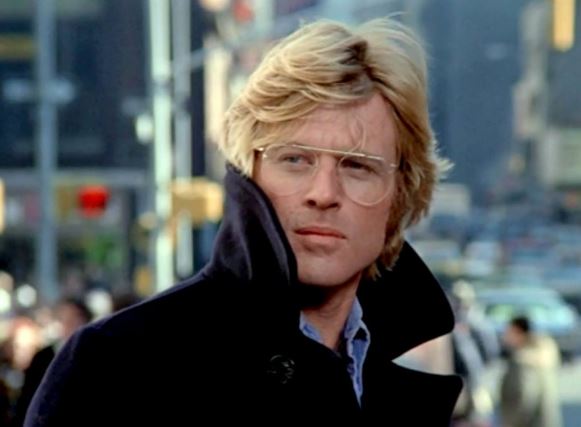
Robert Redford in “Three Days of the Condor”
In fact, as very few people have realized, The Winter Soldier is almost a remake of a 1975 film that most film snobs would agree is “real” cinema: Three Days of the Condor.
The only obvious similarity is that both films feature Robert Redford. In Condor, Redford plays a brilliant but very bookish CIA analyst named Turner who works in a New York City branch office. One day, he comes back from lunch to find everyone in the office dead, murdered by professional assassins. Turner goes on the run. Unsure of who he can trust, he kidnaps an unsuspecting, beautiful woman (Faye Dunnaway) and hides in her apartment. From there, he gradually figures out that the assassins who killed his work-mates were sent by a rogue faction inside the CIA itself. Apparently, Turner’s branch had stumbled upon a secret plot by the faction to invade the Middle East and capture all the oil fields (how very far-fetched, right?). Turner eventually confronts the leader of the faction, as well the head assassin, a Zen-Master-like Frenchman named Joubert (played with brilliant, icy effectiveness by Max von Sydow).
On the surface, Condor might seem like a very different film from The Winter Soldier. But the closer you look, the more The Winter Soldier seems almost like a remix of the earlier film. That is, it has all the same elements. The good-guy-betrayed-by-his-government figure is Steve Rogers (a.k.a. Captain America) who, like Turner in Condor, discovers a vast conspiracy within U.S. intelligence (S.H.I.E.L.D, in this case, rather than the CIA). Like Turner, Rogers finds himself on the run with a beautiful woman (Natasha Romanoff/Black Widow). He confronts the leader of the conspiracy (played by none other than Robert Redford himself). And of course he confronts the lead assassin, Barnes, who (like Joubert in Condor) turns out to be far more complicated than he appears.
Even some of the individual scenes in The Winter Soldier are eerily reminiscent of those in Condor. Take the now famous elevator sequence, which is not only the best in the film but one of the best in the entire MCU series. On his way out of the high-tech and vaguely fascistic H.Q. of S.H.I.E.L.D., Rogers steps into an elevator and rides down. As the elevator stops at successive floors, more and more men step on, each menacing but seemingly disinterested. The scene works so well because everyone can relate to it, to that sense of unease we all fell when forced into close proximity with strangers. We begin to wonder: what if some of these people were evil. They could hurt us—maybe even kill us—before we could react. And yet, despite this unease, we do nothing because we have no real evidence of evil intent. We’re playing a social role. And that’s just what Rogers—a good-natured man if ever there was one, willing to give anyone the benefit of the doubt—does.
Robert Redford in “The Winter Soldier”
I love the moment when Rogers notices sweat streaming down the face of one of the men next to him. He knows—as we, the viewers, know—that this is really, really bad. But there is nothing he can do about it…yet. It’s still in the future. Alfred Hitchcock couldn’t have done it any better. Nor, for that matter, could Sidney Pollack, who has an almost identical scene in Condor, in which the hapless Turner finds himself in an elevator with Joubert, the master assassin. Each man knows that the other man knows who he really is, but neither can take any action…yet.
Ever since I read Mark Crispin Miller’s landmark essay “Hollywood: The Ad” many years ago, I’ve been fascinated the way in which the tropes and elements of an early “classic” movie can end up rearranged and transformed in a later pop film. Miller gives the example of 2001: A Space Odyssey (1968) and Star Wars (1977). If you look closely, many of the components of the former get transmogrified in the latter. The apes of 2001 become the loyal Wookie Chewbacca. The cold, robotic voice of HAL the computer becomes that of C3PO the droid. The white, sterile interiors of the spaceship Discovery become the stark, sterile halls of the Death Star. And so on and so forth.
Martin Scorsese
That’s just what has happened here, with Condor and The Winter Solider. They’re practically the same movie, but shaken up by time and changing purposes. That is, The Winter Soldier is every inch a pop film, with the full intention of stimulating the audience with all the action and explosions and kung-fu fights that we’ve come to expect from a Hollywood blockbuster. But, on some level, the kernel of Condor is still there. The Winter Soldier is also a story about evil, rapacious men seizing control of government, and also the creeping power of America’s military-industrial complex. It’s also about the dehumanization the soldiers like Rogers and Barnes undergo as pawns in the hands of callous leaders and ruthless institutions.
In short, despite all its roller-coaster-ride thrills and spectacle, The Winter Solider is a “real” movie.
American cinema and theater has lost another great character actor this week, Harris Yulin. With his lumpy face and gruff demeanor, Yulin was an everyman—one of those actors that you recognize from countless roles but whose name you never knew.
He was one of the most respected stage, film, and TV actors in the country. And yet, ironically, most viewers today will know his work from two unlikely sources: the TV show Frasier on which he played an affable crime boss and Star Trek: Deep Space Nine, for which Yulin appeared in one famous episode, Duet. It was this particular gig (yes, a frickin episode of Star Trek) that gave Yulin one of his few chances to really show-off his acting chops to a mass audience. I still think he should have gotten an Emmy nomination for it, but oh, well.
In all his performances, Yulin was one of those actors who exude a kind of intelligence, presence and grace that make them stand out a mile on the screen or stage.
The world is a little less interesting today without him in it.
Okay, let’s get this out of the way: Something Wicked this Way Comes is not a science fiction novel. It’s dark fantasy, and, in my opinion, a precursor to many famous books in that genre from the likes of Stephen King, Anne Rice, Erin Morgenstern, and others.
However, Ray Bradbury’s books were always sold in the science fiction aisle when I was a kid. And I read all his books thinking they were science fiction. (I didn’t read fantasy back then.) So, I’m shoe-horning him into my classic sci-fi book covers thread.
Having said all that, let me add that this is one of my favorite novels, not to mention Bradbury’s best. It’s the tale of two 13-year-old boys, Will and Jim, who have grown up next door to each other in 1930s Illinois. Will and Jim are almost exactly the same age, with Will being born one minute before midnight on October 30th and Jim being born one minute after midnight on October 31st. Yes, one boy is born a minute before Halloween begins and the other born a minute after. (Guess which one is the “bad” kid?)
It might seem like clunky symbolism, but in Bradbury’s prolix hands, it works. The duality between the introverted, good-natured Will and the adventurous, mischievous Jim—that is, between light and dark sides of our being—is repeated throughout the novel. Both boys are forced to confront their darker impulses when a demonic carnival arrives on the edge of town in the middle of the night. Will and Jim soon discover that the carnival is a vehicle for a bunch of malevolent, vampire-like beings who want nothing more to lure innocent people onto the midway and tempt them into evil.
The only person who believes the boys when they tell what they’ve seen is Will’s father, an older man who doubts his own strength and courage. Together, they challenge the men who run the carnival, Mr. Cougar and Mr. Dark (another light/dark duality) for the soul of the town.
I really like this cover—created by veteran illustrator David Grove—because it captures the nostalgia, magic, and dark wonder that are the great strengths of the novel. Specifically, it refers to a moment in the story when Mr. Dark wanders through the town looking for Will and Jim. He has the images of the boy tattooed on his palms, and he shows them to passersby to see if anyone recognizes them. It’s an extremely creepy scene in an amazing book. (It’s also the first moment when Will’s father shows his courage and guile in besting Mr. Dark.)
My appreciation for the cover is in no way diminished by the fact that it appears to be a poster tie-in with the film adaptation produced by Disney in 1983, depicting the likenesses of some of the actors (most notably, the great Jonathan Pryce, who performance as Mr. Dark is worth the price of admission all by itself).
Also, not long after Mr. Grove passed away, Tor.com published a tribute to him and his career. You can see it here…
Ever since I was a kid I’ve had a deep love for classic murder mysteries like The Maltese Falcon and The Big Sleep. Combine this with my obsession with history and biography—especially Hollywood biography—and you get something like William J. Mann’s Tinseltown: Murder, Morphine, and Madness at the Dawn of Hollywood, the true story of one of the most notorious crimes in American history.
Centered on the still-unsolved killing of director William Desmond Taylor in 1922, Mann’s book comes as close to a “nonfiction novel” as I’ve seen since Truman Capote first coined the term. Being lit geek, I know that 1922 happens to be the year in which The Maltese Falcon is set, and Mann’s story might well have been lifted from one of Hammet’s books, filled as it with hoods, con-men, cops, junkies, sugar daddies and blackmailers.
And beautiful women, of course. Beautiful, deadly women.
The Los Angeles police implicated three women in Taylor’s murder, all actresses of some renown: Mabel Norman, a one-time star whose addiction to cocaine and booze nearly ended her career; Mary Mile Minters, a vapid teenage starlet whose romantic delusions were exceeded only by her considerable box office appeal; and Margaret “Gibby” Gibson, a former Vitagraph player (and occasional prostitute) determined to make herself into a producer.





 Ash Clifton, Writer