Yes, the Marvel Movies Are “Real” Cinema

Having once been an art student (well, a creative-writing student; close enough), I know from experience that the quickest way to start an argument among a bunch of art majors is to ask them what the definition of “real” art is. Similarly, the best way to start an argument among a bunch of cinephiles is to ask them what “real” cinema is. 

That is essentially what the great director Martin Scorsese did in 2019 when he suggested that Marvel superhero movies (in their zenith, at the time) were “not cinema”. He stated: 

Honestly, the closest I can think of them, as well made as they are, with actors doing the best they can under the circumstances, is theme parks. It isn’t the cinema of human beings trying to convey emotional, psychological experiences to another human being.

Scorsese thus not only managed to make himself sound like a bit of a snob—not to mention a grumpy old man—but to also start an internet flame-war that continues to this day.

Ultimately, though, the whole affair was a tempest-in-a-teapot. Of course the Marvel films are “real” cinema. That is, they are fabulously well-crafted motion pictures that, at their best, have an emotional and even a physical impact on their viewers. They also (again, at their best) make important philosophical and political points.

However, they are a different kind of cinema than what Scorsese works in. In other words, what we’re really talking about her is the difference between literary cinema and popular (that is, genre-based) cinema.

This is the same distinction one must make between literary fiction and genre fiction. The purest and simplest definition of genre fiction is that, for the most part, the reader knows what they’re gonna get. A mystery is going to have a murderer and a sleuth. A horror story is going to have a monster and hero/heroine fighting it. A rom-com is going to have two people who should get together romantically but just can’t, for some reason, until the very end. And a superhero movie is going to have, well, a superhero with some kind of superpowers who is fighting some equally superlative evil.

The devil, of course, is in the details. We consume genre cinema for the same reason we consume genre literature—because we want to see how they pull it off. “They” in the case of cinema, being the director and the writer and the actors. How do they change-up the old formula, make it interesting and somehow new? 

That is how genres evolve and adapt to new time periods and new zeitgeists. Daniel Craig’s interpretation of James Bond was different from Sean Connery’s or Roger Moore’s—it was more brutal, more bloodthirsty, and yet somehow more vulnerable, too. Just like us, the American film-viewing public. 

In the same way, Marvel superhero movies are different from superhero movies of the 1970s (think Superman) or the 1980s. The characters are more believable, as well as being more complex and even vulnerable. I am, again, thinking of the very best Marvel movies: the first Ironman starring Robert Downey Jr. and Captain America: The Winter Soldier. This latter film, which came out in 2014 (yes, it’s been that long), is probably the best film of the entire series. And, yes, it is “real” cinema.

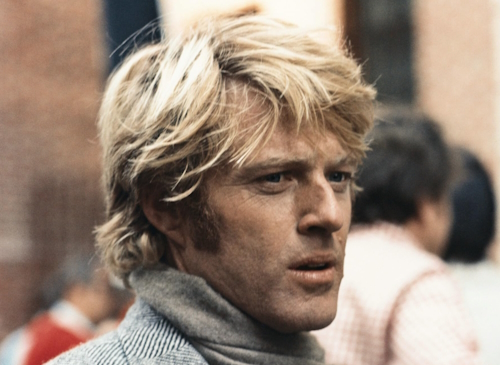
Robert Redford in “Three Days of the Condor”

In fact, as very few people have realized, The Winter Soldier is almost a remake of a 1975 film that most film snobs would agree is “real” cinema: Three Days of the Condor.

The only obvious similarity is that both films feature Robert Redford. In Condor, Redford plays a brilliant but very bookish CIA analyst named Turner who works in a New York City branch office. One day, he comes back from lunch to find everyone in the office dead, murdered by professional assassins. Turner goes on the run. Unsure of who he can trust, he kidnaps an unsuspecting, beautiful woman (Faye Dunnaway) and hides in her apartment. From there, he gradually figures out that the assassins who killed his work-mates were sent by a rogue faction inside the CIA itself. Apparently, Turner’s branch had stumbled upon a secret plot by the faction to invade the Middle East and capture all the oil fields (how very far-fetched, right?). Turner eventually confronts the leader of the faction, as well the head assassin, a Zen-Master-like Frenchman named Joubert (played with brilliant, icy effectiveness by Max von Sydow). 

On the surface, Condor might seem like a very different film from The Winter Soldier. But the closer you look, the more The Winter Soldier seems almost like a remix of the earlier film. That is, it has all the same elements. The good-guy-betrayed-by-his-government figure is Steve Rogers (a.k.a. Captain America) who, like Turner in Condor, discovers a vast conspiracy within U.S. intelligence (S.H.I.E.L.D, in this case, rather than the CIA). Like Turner, Rogers finds himself on the run with a beautiful woman (Natasha Romanoff/Black Widow). He confronts the leader of the conspiracy (played by none other than Robert Redford himself). And of course he confronts the lead assassin, Barnes, who (like Joubert in Condor) turns out to be far more complicated than he appears. 

Even some of the individual scenes in The Winter Soldier are eerily reminiscent of those in Condor. Take the now famous elevator sequence, which is not only the best in the film but one of the best in the entire MCU series. On his way out of the high-tech and vaguely fascistic H.Q. of S.H.I.E.L.D., Rogers steps into an elevator and rides down. As the elevator stops at successive floors, more and more men step on, each menacing but seemingly disinterested. The scene works so well because everyone can relate to it, to that sense of unease we all fell when forced into close proximity with strangers. We begin to wonder: what if some of these people were evil. They could hurt us—maybe even kill us—before we could react. And yet, despite this unease, we do nothing because we have no real evidence of evil intent. We’re playing a social role. And that’s just what Rogers—a good-natured man if ever there was one, willing to give anyone the benefit of the doubt—does. 

Robert Redford in “The Winter Soldier”

I love the moment when Rogers notices sweat streaming down the face of one of the men next to him. He knows—as we, the viewers, know—that this is really, really bad. But there is nothing he can do about it…yet. It’s still in the future. Alfred Hitchcock couldn’t have done it any better. Nor, for that matter, could Sidney Pollack, who has an almost identical scene in Condor, in which the hapless Turner finds himself in an elevator with Joubert, the master assassin. Each man knows that the other man knows who he really is, but neither can take any action…yet. 

Ever since I read Mark Crispin Miller’s landmark essay “Hollywood: The Ad” many years ago, I’ve been fascinated the way in which the tropes and elements of an early “classic” movie can end up rearranged and transformed in a later pop film. Miller gives the example of 2001: A Space Odyssey (1968) and Star Wars (1977). If you look closely, many of the components of the former get transmogrified in the latter. The apes of 2001 become the loyal Wookie Chewbacca. The cold, robotic voice of HAL the computer becomes that of C3PO the droid. The white, sterile interiors of the spaceship Discovery become the stark, sterile halls of the Death Star. And so on and so forth.

Martin Scorsese

That’s just what has happened here, with Condor and The Winter Solider. They’re practically the same movie, but shaken up by time and changing purposes. That is, The Winter Soldier is every inch a pop film, with the full intention of stimulating the audience with all the action and explosions and kung-fu fights that we’ve come to expect from a Hollywood blockbuster. But, on some level, the kernel of Condor is still there. The Winter Soldier is also a story about evil, rapacious men seizing control of government, and also the creeping power of America’s military-industrial complex. It’s also about the dehumanization the soldiers like Rogers and Barnes undergo as pawns in the hands of callous leaders and ruthless institutions.

In short, despite all its roller-coaster-ride thrills and spectacle, The Winter Solider is a “real” movie. 

And, yes, it’s “real” cinema.

R.I.P. Harris Yulin

American cinema and theater has lost another great character actor this week, Harris Yulin. With his lumpy face and gruff demeanor, Yulin was an everyman—one of those actors that you recognize from countless roles but whose name you never knew. 

He was one of the most respected stage, film, and TV actors in the country. And yet, ironically, most viewers today will know his work from two unlikely sources: the TV show Frasier on which he played an affable crime boss and Star Trek: Deep Space Nine, for which Yulin appeared in one famous episode, Duet. It was this particular gig (yes, a frickin episode of Star Trek) that gave Yulin one of his few chances to really show-off his acting chops to a mass audience. I still think he should have gotten an Emmy nomination for it, but oh, well.

In all his performances, Yulin was one of those actors who exude a kind of intelligence, presence and grace that make them stand out a mile on the screen or stage. 

The world is a little less interesting today without him in it. 

Godspeed, Mr Yulin.

Classic Sci-Fi Book Cover: “Something Wicked This Way Comes”

Okay, let’s get this out of the way: Something Wicked this Way Comes is not a science fiction novel. It’s dark fantasy, and, in my opinion, a precursor to many famous books in that genre from the likes of Stephen King, Anne Rice, Erin Morgenstern, and others. 

However, Ray Bradbury’s books were always sold in the science fiction aisle when I was a kid. And I read all his books thinking they were science fiction. (I didn’t read fantasy back then.) So, I’m shoe-horning him into my classic sci-fi book covers thread. 

Having said all that, let me add that this is one of my favorite novels, not to mention Bradbury’s best. It’s the tale of two 13-year-old boys, Will and Jim, who have grown up next door to each other in 1930s Illinois. Will and Jim are almost exactly the same age, with Will being born one minute before midnight on October 30th and Jim being born one minute after midnight on October 31st. Yes, one boy is born a minute before Halloween begins and the other born a minute after. (Guess which one is the “bad” kid?)

It might seem like clunky symbolism, but in Bradbury’s prolix hands, it works. The duality between the introverted, good-natured Will and the adventurous, mischievous Jim—that is, between light and dark sides of our being—is repeated throughout the novel. Both boys are forced to confront their darker impulses when a demonic carnival arrives on the edge of town in the middle of the night. Will and Jim soon discover that the carnival is a vehicle for a bunch of malevolent,  vampire-like beings who want nothing more to lure innocent people onto the midway and tempt them into evil.

The only person who believes the boys when they tell what they’ve seen is Will’s father, an older man who doubts his own strength and courage. Together, they challenge the men who run the carnival, Mr. Cougar and Mr. Dark (another light/dark duality) for the soul of the town.

I really like this cover—created by veteran illustrator David Grove—because it captures the nostalgia, magic, and dark wonder that are the great strengths of the novel. Specifically, it refers to a moment in the story when Mr. Dark wanders through the town looking for Will and Jim. He has the images of the boy tattooed on his palms, and he shows them to passersby to see if anyone recognizes them. It’s an extremely creepy scene in an amazing book. (It’s also the first moment when Will’s father shows his courage and guile in besting Mr. Dark.)

My appreciation for the cover is in no way diminished by the fact that it appears to be a poster tie-in with the film adaptation produced by Disney in 1983, depicting the likenesses of some of the actors (most notably, the great Jonathan Pryce, who performance as Mr. Dark is worth the price of admission all by itself).

Also, not long after Mr. Grove passed away, Tor.com published a tribute to him and his career. You can see it here

What I’m Reading: “Tinseltown”

tinseltown

Ever since I was a kid I’ve had a deep love for classic murder mysteries like The Maltese Falcon and The Big Sleep. Combine this with my obsession with history and biography—especially Hollywood biography—and you get something like William J. Mann’s Tinseltown: Murder, Morphine, and Madness at the Dawn of Hollywood, the true story of one of the most notorious crimes in American history.

Centered on the still-unsolved killing of director William Desmond Taylor in 1922, Mann’s book comes as close to a “nonfiction novel” as I’ve seen since Truman Capote first coined the term.  Being lit geek, I know that 1922 happens to be the year in which The Maltese Falcon is set, and Mann’s story might well have been lifted from one of Hammet’s books, filled as it with hoods, con-men, cops, junkies, sugar daddies and blackmailers.

And beautiful women, of course. Beautiful, deadly women.

The Los Angeles police implicated three women in Taylor’s murder, all actresses of some renown: Mabel Norman, a one-time star whose addiction to cocaine and booze nearly ended her career; Mary Mile Minters, a vapid teenage starlet whose romantic delusions were exceeded only by her considerable box office appeal; and Margaret “Gibby” Gibson, a former Vitagraph player (and occasional prostitute) determined to make herself into a producer.

Continue reading “What I’m Reading: “Tinseltown””

R.I.P. Val Kilmer

By Georges Biard, CC BY-SA 3.0

Once again, it has taken me far too long to write a short tribute to a fine person who has passed away—Val Kilmer, who died of pneumonia on April 1. This time, it was more than just my workload that explains the delay. I had a bit of trouble discovering what I wanted to say about Kilmer, who was a great actor but also a bit of a cipher. A few years ago, I read his memoir, I’m Your Huckleberry, and I enjoyed it. I was struck, however, by how little Valmer says about his filmmaking experiences. For instance, he barely mentions the production of Tombstone, the film in which Kilmer had his most celebrated film performance—playing the famous gunfighter Doc Holliday—and from which the book’s title is taken. He says even less about the making of Michael Mann’s Heat, in which Kilmer portrays a talented but slightly crazy master-burglar with pitch-perfect ferocity. 

This lack of detail was especially disappointing, to me, in part because Heat has my favorite action-sequence of all time—the shoot-out in Century City. More than any other actor in the scene, it’s Kilmer who makes it work, with his fluid transition from cool and controlled bank-robber to machine-gun wielding warrior. I read an autobiography written by a Navy Seal who wrote that he and his comrades once watched Heat together and were impressed by Kilmer’s magazine-changing speed in the film. High praise, indeed. 

This reticence on Kilmer’s part to discuss his film-making career—the very aspect of his life that made him famous across the world—suggests to me that Kilmer was deeply ambivalent about being a movie star. I suspect that, like the great Welsh actor Richard Burton, Kilmer was simply too intelligent to think that movie-making was a worthy and serious endeavor. I also suspect that, like Burton, Kilmer was much happier as a stage actor. (His one-man show of Mark Twain was universally praised.)

Unfortunately, his ambivalence somehow bled into his performances whenever he played a leading man, as he did in several major films, none of which was terribly successful. He never seemed to really have his heart in it. But that self-doubt evaporated when he played supporting roles, and these are what he will be remembered for: Iceman in the Top Gun films; Doc Holliday in Tombstone; Chris in Heat. In each of the movies, Kilmer seemed to bring his entire soul to the performance, and he was every inch the movie star.

Godspeed, Mr. Kilmer…

Perfect Films: “Us”

** SPOILERS BELOW **

The better part of a decade has passed since Jordan Peele’s landmark horror film Get Out was released, marking Peele’s transformation from famed comedy writer and sketch artist to one of the most important filmmakers of our time. Peele has since added two more films to his horror oeuvre—2019’s Us and 2022’s Nope

All three are great, but my favorite is Us. For me, it hits on the deepest and most disturbing level, and it has the richest palette in terms of effects. It’s also the hardest to figure out in terms of plot. With Nope and Get Out, the viewer has a vague sense of what’s going on, even early in the film (although the details turn out to be more shocking and terrifying than anyone suspected). But while watching Us, I was totally mystified. I knew it had something to do with evil twins—true doppelgängers in both the literal and the psychological sense—but I had no real idea of what the actual plot would turn out to reveal. And what a reveal it is!

But I’m getting ahead of myself. Part of Us’s appeal lies in its slow-burn first act. (This is true of Get Out and Nope, too, but Us takes it to the next level.) The movie starts with a flashback to 1986, when a little girl, Adelaide, breaks away from her bickering parents at a beach boardwalk and finds a strange funhouse. It’s a simple premise, yet so much disturbing stuff is going on in this segment that it’s almost impossible to describe. We have the tension between the parents, raising the specter of divorce (the thing most kids fear more than anything else except death). Then, we have the separation of the child from the parents (another primal fear). And, finally, we have the freakish funhouse, which, though apparently deserted, is still lit with eerie neon light.

Continue reading “Perfect Films: “Us””

R.I.P. Wings Hauser

When I saw Michael Mann’s brilliant film The Insider in 1999, one of the many highlights, for me, came in a pivotal courtroom scene. The film’s co-protagonists, Jeffrey Weygand, is trying to testify against the tobacco industry with the help of a Mississippi attorney, Ron Motley, played by Bruce McGill. McGill gives a great, over-the-top performance, but it’s matched by that of the guy playing the evil tobacco attorney. When I realized who this second actor was, I almost shouted at the screen, “That’s Wings Hauser!

It thrilled my heart to see Hauser in an A-list movie, at last. And he was giving an A-list (if brief) performance! On this blog, I write a lot about great B-Movies, and Hauser appeared in more B-movies than any other actor I can think of (except, perhaps, Michael Caine in his “I-need-money” phase). With his country-boy good looks and imposing physique, Hauser ended up playing a lot of villains. Most notably, he played the psychopathic pimp Ramrod in 1982’s Vice Squad with sadistic panache. (Fun fact: that film also features Season Hubley, Kurt Russel’s then-girlfriend, who also appeared in Escape from New York.)

Whatever role he played, though, Hauser was always great. As an actor, he had that rarest and most coveted of gifts—the ability to seem completely real. That is, you never noticed he was acting. He was always convincing, and magnetic, too.

He also did a great turn in 1987’s noir film Tough Guys Don’t Dance, which was critically panned but which I really liked; it’s one of the most gleefully perverse films ever released by a major studio.

Sadly, Hauser passed away last week. He was a great character actor. I’ll miss him.

What Is It Like to be The Terminator?

I can’t believe it’s been 41 years since James Cameron’s The Terminator came out. I first saw it in the movie theater and like everyone else I was completely stunned by its energy and creativity. It might well be the best B-movie action film ever made. (Its sequel, T2, is an A-movie action flick that still feels like a B-movie, in a good way.) Cameron’s spin on what is essentially the ancient hunter-vs.-the-hunted plot—mashed up with about a dozen sci-fi tropes and a heaping serving of the Frankenstein/Dr. Faust myth—results in an almost perfect piece of entertainment. There is not a dull moment or lame moment in it. Every scene either surprises, shocks, or tickles the viewer.

The sequel, T2, is even better, mainly because it’s a coming-of-age film. Rather, it’s a becoming-human film. We watch as the Terminator observes human beings, learns from them, and begins to emulate their best qualities. It’s an archetypal story, and I (almost) tire of watching it. And, in the process of watching the film so many times over the years, I’ve repeatedly asked myself: What is it like to be the Terminator?

Continue reading “What Is It Like to be The Terminator?”

R.I.P. Gene Hackman

My parents divorced when I was a little kid. My mom was struggling with mental illness (undiagnosed, at the time) and so I went to live with my father and his new wife, my step-mother Eileen. I saw my mom mostly on the weekends, and we would invariably go to the movies. I probably saw over fifty movies in the theater per year, all with my mom.

I seldom went to the movies with my father, and even more seldomly when it was just the two of us. The last time I remember was in 1992. Eileen was out-of-town with my brother and sister, so Dad and I went to see Clint Eastwood’s Unforgiven. It’s a great movie, and both my father and I loved it. We especially admired Gene Hackman’s performance as the villainous sheriff Little Bill Daggett, who, as Hackman himself revealed, is a kind of precursor to the modern right-wing movement. 

My dad and I went out to dinner after the movie, and we shared our favorite moments from the film. It’s one of my fondest memories. I thought of it this morning when I read that Hackman had died. And I thought of something else, too. It occurred to me that the last movie I saw alone with my mother was also a Gene Hackman film, 1985’s Twice in a Lifetime. It’s about as different a film from Unforgiven as one can possibly imagine, with Hackman playing a completely different kind of character. And yet, it was still Hackman. Still low-key. Still forceful. Still brilliant.

What are the odds that the two last movies I saw with each of my parents alone were both Hackman films? Pretty good, actually. He was in a lot of movies. In fact, you could argue that he was the most versatile, compelling, and attractive character actor in Hollywood history. He played villains and heroes, and everything in between, across genres from action to mystery to sci-fi. In Twice in a Lifetime, he played an unassuming everyman who, on the tail-end of middle-age, leaves his wife to make a new start. He was also Lex Luthor in Superman. And Pop-eye Doyle in The French Connection. And the blind guy in Young Frankenstein

Being a writer of mysteries, I’m particularly fond of Authur Penn’s 1975 film Night Moves, in which Hackman played a world-weary P.I. searching for a missing girl. It’s one of trademark, understated performances, and yet it crackles with energy. That was his gift. 

Godspeed, Mr. Hackman…!!!

The Scientist Hero: Our Newest Cinema Archetype

Martian3

One of my favorite movies of the last twenty years is Ridley Scott’s The Martian. It’s a science-fiction/adventure movie about an astronaut (Matt Damon) who becomes stranded on Mars after his comrades leave him for dead. Marooned on a barren, hostile world, he has to use his brains and ingenuity to survive until his friends come back to rescue him. By the end of the movie, he has survived dust storms, explosions, freezing temperatures, and starvation.

How does he overcome all these challenges?

Science.

The story is familiar, of course. It has many antecedents, including with the original stranded-on-an-island novel, Robinson Crusoe, and also (more directly) to a great B-movie Robinson Crusoe on Mars. In that classic 1964 cheese-fest, the hero survives by finding a Martian cave full of air where plants still grow, water still flows, and there’s a steady source of light (which is never explained). He even befriends an alien who is also trapped on the planet.

Continue reading “The Scientist Hero: Our Newest Cinema Archetype”