What I’m Reading: “Paperbacks from Hell”

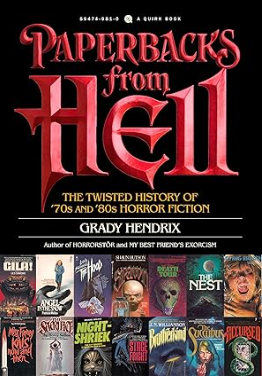
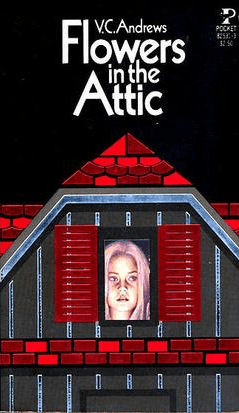
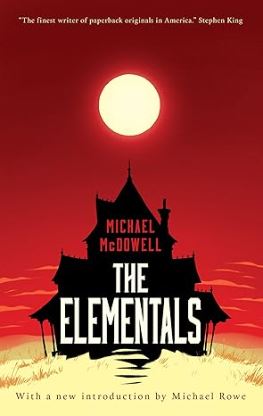
Having had exactly one book traditionally published, I am far from an expert on the world of publishing. Even so, I learned a lot more than I ever expected, and have since become fascinated by the industry as a whole. Also, I am currently working on a supernatural horror novel. So, it makes perfect sense that I would be drawn to Grady Hendrix’s excellent non-fiction book, Paperbacks from Hell, which examines (skewers?) pulp horror literature as it existed in the 1970s and 80s, both as a uber-genre and as an industry. 

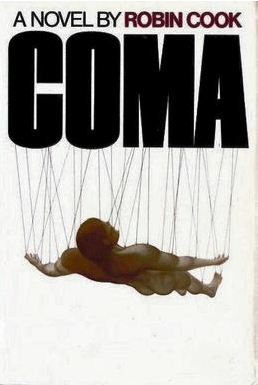
Let me say right up front that this is a very funny book. I found myself laughing out loud many, many times as Hendrix describes the trends and fads that overtook the genre. Take this passage where he introduces the wildly successful pop writer Robin Cook, whose 1977 book Coma is, in Hendrix’s words, the “source of the medical-thriller Nile.” As Hendrix goes on:

It all started with Robin Cook and his novels: Fever, Outbreak, Mutation, Shock, Seizure…terse nouns splashed across paperback racks. And just when you thought you had Cook pegged, he adds an adjective: Fatal Cure, Acceptable Risk, Mortal Fear, Harmful Intent. An ophthalmologist as well as an author, Cook has checked eyes and written best sellers with equal frequency. He’s best known for Coma (1977)…. Its heroine, Susan Wheeler, is one of those beautiful, brilliant medical students who’s constantly earning double takes from male colleagues or looking in the mirror and wondering if she’s a doctor or a woman—and why can’t she be both, dammit? On her first day as a trainee at Boston Memorial, she settles on “woman” and allows herself to flirt with an attractive patient on his way into a routine surgery. They make a date for coffee, but something goes wrong on the table and he goes into…a COMA!

Hendrix cleverly divides each chapter to a single, overarching trend in the pulp horror universe, with titles like HAIL, SATAN (novels of demonic possession and devil-sex), WEIRD SCIENCE (evil doctors and mad scientist-sex), INHUMANIOIDS (deformed monsters and mutant-sex), and so on. I was especially impressed by the way Hendrix explains each publishing fad as a symptom of a larger societal shift. For example, he explains how the white-flight phenomenon of the 1970s in which white middle- and upper-class families abandoned the big cities and moved to quaint, charming little towns in upstate New York or the mid-west or norther California or wherever, results in a surge of small-town horror novels like Harvest Home (wherein evil pagan matriarchs conduct human sacrifices to make the corn grow) and Effigies (wherein Satan is breeding grotesque monsters in the basement of the local church).

Another chapter entitled CREEPY KIDS, which deals with such diverse plot concepts as children who are fathered by Satan, children are who are really small adults pretending to be children, and children who, for whatever reason, just love to kill people. I particularly love this passage:

Some parents will feel helpless. “How can I possibly stop my child from murdering strangers with a hammer because she thinks they are demons from hell?” you might wail (Mama’s Little Girl). Fortunately there are some practical, commonsense steps you can take to lower the body count. Most important, try not to have sex with Satan. Fornicating with the incarnation of all evil usually produces children who are genetically predisposed to use their supernatural powers to cram their grandmothers into television sets, headfirst. “But how do I know if the man I’m dating is the devil?” I hear you ask. Here are some warning signs learned from Seed of Evil: Does he refuse to use contractions when he speaks? Does he deliver pickup lines like, “You live on the edge of darkness”? When nude, is his body the most beautiful male form you have ever seen, but possessed of a penis that’s either monstrously enormous, double-headed, has glowing yellow eyes, or all three? After intercourse, does he laugh malevolently, urinate on your mattress, and then disappear? If you spot any of these behaviors, chances are you went on a date with Satan. Or an alien.

One the many things I learned from reading the book was how the entire publishing world (not just horror) was permanently changed in 1979 by an obscure tax-law case called The Thor Power Tool Co. v Commissioner. In this case, the U.S. Supreme Court ruled that manufacturers could not write-down poor-selling or slow-selling inventory and thus reduce their tax liability. The case was focused on unsold parts for power-tools, but the ruling equally applied to publishing houses, who had hitherto done the same kind of write-down on their slow-selling novels. As Hendrix explains: “Suddenly, the day of the mid-list novel was over. Paperbacks were given six weeks on the racks to find an audience, then it was off to the shredder.” And so, inevitably, came the frantic scramble to find those half-dozen or so “blockbuster” books each season, behind which publishers focused their resources. (A similar “blockbuster” effect ravaged Hollywood in the 1970s, in this case due to the success of summer films like Jaws and Star Wars.) Books got less pulpy and more sparkly, with foil covers and die-cast cutouts like those made famous by the V.C. Andrews novels (which continued to be published, zombie-like, long after Andrews’s death).

Whether you’re a writer or just a pulp-paperback fan, Paperbacks from Hell is a great read. Check it out…

Classic Sci-Fi Book Cover: “Something Wicked This Way Comes”

Okay, let’s get this out of the way: Something Wicked this Way Comes is not a science fiction novel. It’s dark fantasy, and, in my opinion, a precursor to many famous books in that genre from the likes of Stephen King, Anne Rice, Erin Morgenstern, and others. 

However, Ray Bradbury’s books were always sold in the science fiction aisle when I was a kid. And I read all his books thinking they were science fiction. (I didn’t read fantasy back then.) So, I’m shoe-horning him into my classic sci-fi book covers thread. 

Having said all that, let me add that this is one of my favorite novels, not to mention Bradbury’s best. It’s the tale of two 13-year-old boys, Will and Jim, who have grown up next door to each other in 1930s Illinois. Will and Jim are almost exactly the same age, with Will being born one minute before midnight on October 30th and Jim being born one minute after midnight on October 31st. Yes, one boy is born a minute before Halloween begins and the other born a minute after. (Guess which one is the “bad” kid?)

It might seem like clunky symbolism, but in Bradbury’s prolix hands, it works. The duality between the introverted, good-natured Will and the adventurous, mischievous Jim—that is, between light and dark sides of our being—is repeated throughout the novel. Both boys are forced to confront their darker impulses when a demonic carnival arrives on the edge of town in the middle of the night. Will and Jim soon discover that the carnival is a vehicle for a bunch of malevolent,  vampire-like beings who want nothing more to lure innocent people onto the midway and tempt them into evil.

The only person who believes the boys when they tell what they’ve seen is Will’s father, an older man who doubts his own strength and courage. Together, they challenge the men who run the carnival, Mr. Cougar and Mr. Dark (another light/dark duality) for the soul of the town.

I really like this cover—created by veteran illustrator David Grove—because it captures the nostalgia, magic, and dark wonder that are the great strengths of the novel. Specifically, it refers to a moment in the story when Mr. Dark wanders through the town looking for Will and Jim. He has the images of the boy tattooed on his palms, and he shows them to passersby to see if anyone recognizes them. It’s an extremely creepy scene in an amazing book. (It’s also the first moment when Will’s father shows his courage and guile in besting Mr. Dark.)

My appreciation for the cover is in no way diminished by the fact that it appears to be a poster tie-in with the film adaptation produced by Disney in 1983, depicting the likenesses of some of the actors (most notably, the great Jonathan Pryce, who performance as Mr. Dark is worth the price of admission all by itself).

Also, not long after Mr. Grove passed away, Tor.com published a tribute to him and his career. You can see it here

Perfect Films: “Us”

** SPOILERS BELOW **

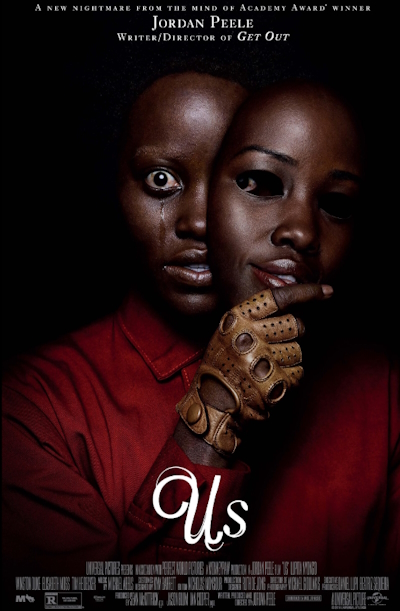
The better part of a decade has passed since Jordan Peele’s landmark horror film Get Out was released, marking Peele’s transformation from famed comedy writer and sketch artist to one of the most important filmmakers of our time. Peele has since added two more films to his horror oeuvre—2019’s Us and 2022’s Nope

All three are great, but my favorite is Us. For me, it hits on the deepest and most disturbing level, and it has the richest palette in terms of effects. It’s also the hardest to figure out in terms of plot. With Nope and Get Out, the viewer has a vague sense of what’s going on, even early in the film (although the details turn out to be more shocking and terrifying than anyone suspected). But while watching Us, I was totally mystified. I knew it had something to do with evil twins—true doppelgängers in both the literal and the psychological sense—but I had no real idea of what the actual plot would turn out to reveal. And what a reveal it is!

But I’m getting ahead of myself. Part of Us’s appeal lies in its slow-burn first act. (This is true of Get Out and Nope, too, but Us takes it to the next level.) The movie starts with a flashback to 1986, when a little girl, Adelaide, breaks away from her bickering parents at a beach boardwalk and finds a strange funhouse. It’s a simple premise, yet so much disturbing stuff going on in this segment that it’s almost impossible to describe. We have the tension between the parents, raising the specter of divorce (the thing most kids fear more than anything else except death). Then we have the separation of the child from the parents (another primal fear). And, finally, we have the freakish funhouse, which, though apparently deserted, is still lit with eerie neon light.

Continue reading “Perfect Films: “Us””

“Dracula” Isn’t About What You Think It’s About

I’ve been seeing a lot of on-line ads for the new Nosferatu movie directed by Dave Eggers. It looks like a pretty good movie, although, judging by the trailers, it seems to be emphasizing the horror (e.g., slasher) elements of the classic Nosferatu/Dracula story over the erotic angle (which most film adaptations have veered toward).

Or does it? Looking at the poster, the hook line poster reads “Succumb to the Darkness.” It’s a seductive line, which doesn’t quite seem to go with the image portrayed—that of a beautiful young woman in a nightgown lying on her back with her mouth open, while a skeletal, monstrously taloned hand reaches for her face.

Erotic? Not really. Gross? Yeah, kinda. This thematic confusion between the film’s trailer and its poster reflects, I think, the difficulty in adapting the Dracula story to the screen. (Yes, I know that Nosferatu is not the same as Dracula, but close enough.) The difficulty is made worse in our present time, the 21st Century, when porn is only a few clicks away and the idea of truly transgressive sexual activity is more and more difficult to imagine.

Continue reading ““Dracula” Isn’t About What You Think It’s About”

What I’m Reading: “Soon”

I have a theory about horror novels. The secret to a good horror novel, I think, is not gore, or violence, or even suspense. The secret is empathy. The empathy we, as readers, form for the main characters, and the empathy the main characters feel for each other.

This should be obvious, but it’s not. I have read (well, started) many celebrated horror novels, some of them very well written, only to set them aside after a chapter two because I didn’t care about any of the characters. Contrast this with the very best horror fiction from masters like Stephen King. King is famous for creating main characters who are kind, decent, spirited people with whom the reader instantly connects (and worries about). King’s characters also tend to be underdogs and outcasts. Nerds. Geeks. Handicapped kids. Fat kids. Gay kids. Such types are the most vulnerable in our society, and therefore most vulnerable to whatever monster Kings pits them against. Their underdog status makes them even more sypathetic to readers, and makes their courage even more admirable.

This is not to say that protagonists of horror novels should be all good. Far from it. In fact, King often presents the reader with deeply flawed, erratic main characters who must discover their own inner resilience and courage to face the evil that confronts them. 

Recently, I found myself thinking about such matters as I read Lois Murphy’s excellent novel Soon from 2019. Like many great horror books (or many great books of any kind), Soon stays with you long after you finish the last page. It’s got some genuinely creepy stuff in it. Most of all, though, it has a likable, sympathetic, and funny main character named Pete.

Pete is a retired cop who lives in the tiny town of Nebulah in rural Australia. Nebulah is a new twist on the concept of a “ghost town” in that its inhabitants are literally tormented by ghosts. Rather, by a strange, evil entity called The Mist that descends upon the town every evening. From this vapor, a hellish gallery of semi-corporeal spirits attacks any person foolish or unlucky enough to be caught outside after sundown. The victims suffer grisly, violent deaths,  but their bodies are never found. (Their remains dissolve mysteriously in the mist soon after being discovered.)

Not surprisingly, the town’s population rapidly dwindles from a few hundred to a few dozen, and then down to just eleven. Most people leave. The rest are picked off one by one. Pete is one of the de facto leaders of this tiny remnant of hard-core town folk, most of whom are too poor or feckless or otherwise attached to the place to ever leave. Pete is neither poor, nor attached, nor feckless, but he stays anyway, mainly to protect his friends. These survivors meet each night at one of their homes and spend the night together, trying to hear the demonic wailings and thrashings coming from outside the windows and doors. (The Mist, rather like vampires, can’t cross the solid threshold of a home unless there is some gap that would let it in.) 

I find myself admiring much of Ms. Murphy’s writing, especially in the way she renders the character of Pete. The plot also has some genuinely surprising twists and interludes, such as when Pete goes to visit his estranged daughter in a distant city.

Most of all, I liked the psychological realism of the book. Everyone left in Nebulah has some damned good, practical reasons for not leaving (just ask them), but none of these seems greater than what we suspect is a fundamental weakness in their character. Some are afraid of being poor in a new place. Others are reluctant to give up the homesteads they have labored to improve over the years. Some are just too tired.

Others, like Pete himself, have some secret sin to atone for, and a guilt that keeps them from leaving. 

Soon is a cool book. Check it out…

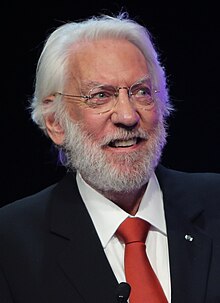
R.I.P. Donald Sutherland

I really enjoyed The Hunger Games movies when they came out. Not only were they great examples of dystopian science fiction, but they served as a refresher course in the nature of fascism. The main baddie in the films was, of course, President Snow, played with great menace and understatement by the great Donald Sutherland. 

I am very grateful to the producers of The Hunger Games for introducing Sutherland to a new generation of film lovers, especially at a time when his career was in a bit of a lull. Sutherland was one of my favorite actors when I was growing up, best known for career-making roles like Hawkeye Pierce in M.A.S.H., Oddball in Kelly’s Heroes, and the titular role in Klute. One of the great ironies of film history is that Sutherland should now be so closely associated with the role of President Snow—literally a right-wing fascist dictator—when his early, defining performances were usually as lovable, left-of-center antiheroes (Hawkeye Pierce especially). 

Sutherland was one of the few movie stars from the 70s and 80s to have curly, hippie-hair, and his entire persona seemed to be that of a counter-cultural smart guy. The Alpha-Hippie that all Beta-Hippies aspired to be. I say he was a smart-guy, and it’s true—never did an actor so effortlessly exude intelligence, even without dialog, as Sutherland did. But while he was so obviously a smart-guy, he was never a smart-ass. Even the irreverent Hawkeye Pierce—perhaps the most famous prankster in cinema history—reserved his mocking for when he needed it to retain his sanity, and focused it on those who most deserved it.

One of the best ways to understand Sutherland as an artist is to imagine his stylistic opposite, Nicholas Cage. Like Sutherland, Cage is a brilliant actor, and a very smart guy, but while Cage is famous for his artistic daring, often taking his performances to frenetic heights that would seem ridiculous for other, lesser actors, Sutherland was known for his almost impenetrable reserve. He always seemed to be holding something back, in a good way. He kept the viewer guessing about what was really going on behind those crystalline blue eyes. 

Perhaps my favorite Sutherland role when I was growing up was as a world-weary health inspector in Philip Kaufman’s 1978 sci-fi horror masterpiece The Invasion of the Body Snatchers. In this film, Sutherland almost drips existential cool, even when faced with an invasion of alien pod-people (read: communists, right-wing conformists, or your boogey-men of choice) who want to eliminate humanity.

Check it out.