Despite a youth in which I read literally hundreds of sci-fi novels, I somehow missed the works of Clifford D. Simak. I would blame the fact that Simak wrote his best books long before I was born, in the Golden Age of Science Fiction, but I managed to read other giants from that period like Isaac Asimov and Robert Heinlein. No, I think I missed Simak simply because, well, he wasn’t as popular as those guys. In fact, he became known as one of the founders of Pastoral Science Fiction, a sub-genre in which the stories are set in rural or other off-beat settings. (Sounds sexy, huh?)
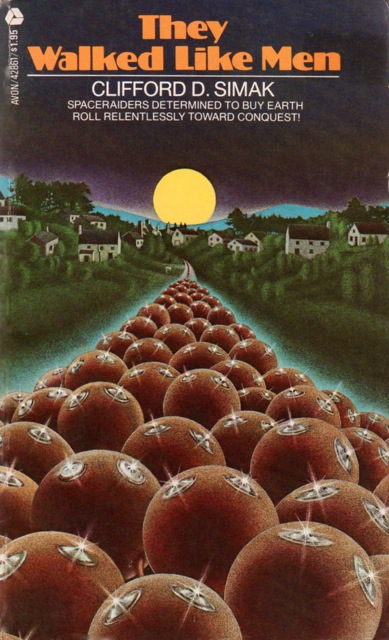
So, you can imagine my surprise when I read Simaks 1964 novel They Walked Like Men. I stumbled upon the book on my local library’s web site. It was a modern copy (see the excellent 1979 cover below by Jan Esteves), and I figured that if my librarians like it enough to buy an e-book copy, it must be worth a shot. So, I checked it out. And I loved it. It’s one of the strangest, edgiest sci-fi novels I read in a long time. Imagine an alien invasion narrative, set in the early 1960s, in which the major plot point is…real estate.
Sounds funky, right? The protagonist, Parker, is a hard-drinking, noirish newspaper man who stumbles upon a plot by mysterious strangers to buy all the real estate in town. Naturally, the strangers turn out to be aliens whose actual shape is something like a bowling ball, but who can simulate almost any form—kind of like the T-1000 in Terminator 2, with equally gruesome results. Parker makes it his mission to get to the bottom of the murderous aliens’ plan, whose true motive turns out to be even stranger than I suspected.
Honestly, I can’t believe no one has adapted this book into a movie. It reads like The Maltese Falcon meets Twin Peaks meets The Invasion of the Body Snatchers. I could someone like Jordan Peele coming in and making this into a really cool, eldritch thriller.
In the meantime, we have the book! Check it out…
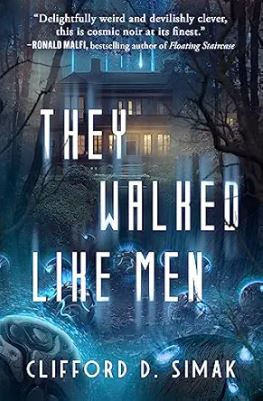
Here is the cover from the latest printing, which I also really like…
Author’s Note: I just learned that Ridley Scott’s classic sci-fi film Blade Runner will be back in theaters this month (today, actually) in a limited release of the so-called “Final Cut” version. None of the participating theaters is near me, alas. So, instead of going, I thought I would re-post this tribute that I wrote some years ago. I hope you like it…
When Philip K. Dick was shown a rough cut of the classic movie Blade Runner a few months before his death in 1981, he was so amazed by the power of Ridley Scott’s vision that he said, “You would literally have to go five times to see it before you could assimilate the information that is fired at you.”
Dick might have been amused to know that I did go to see the movie five movies, when it was released in 1982—forty-four years ago. Ridley Scott might be amused, too, especially since I paid full price for every viewing, which means I am completely absolved of the dismal box office totals that the film accrued during that long-ago summer.
It’s hard to look back across so many years and try to remember what it was about the movie that captured my imagination so relentlessly. But I think it was simply this: for the 117 minutes of the film’s running time, I was in that world. I was completely immersed in that dark, crowded urban nightmare of some unknown future.
Yes, I said “unknown.” The opening crawl says that the movie is set in Los Angeles of 2019, but it’s really set in Scott’s imagination—a dizzying collage of 1940s film noir mixed in with 1980s Ginza, Japan, with a good dose of the Weimar Republic of 1930’s Germany thrown in for good measure. Oh, did I mention the Heavy Metal comic books?
Blade Runner was the first movie to actually pull-off this “collapsed time” effect, and it did so mainly thanks to Scott’s own obsessive genius for detail. It is perhaps the most dense visual landscape ever created on film. Every time I saw it in the theater, I noticed different details, whole new layers that I had missed before. Like a dream, this movie really is bottomless.
It’s also just very, very smart. 1982 was a big year for science fiction movies—The Wrath of Khan came out that year, as did E.T. and Tron. I liked those movies (especially Khaaan!!!), but even as a kid, I knew that they were full of crap. Blade Runner, despite being a movie about androids and flying cars and implanted memories, felt like the most realistic film I had ever seen.
Ironically, it’s one of the most human as well. It’s a love story, after all. (Actually, it’s two love stories, if you count Pris and Sebastian.) I found myself caring about all the characters in the film, replicant and otherwise. And despite the fact that he has pretty much disowned the film, Harrison Ford is the glue that holds it all together. Without his low-key, soulful performance as Deckard, the movie might have drowned in one of Scott’s magnificent sets. Ford keeps the movie centered.
Of course, when I watch the movie now, as a middle-aged man, I notice other great things about the movie. As a writer, I am struck by its tautness, its almost total mastery over film time and space. Contemporary directors should study it, if only as a brilliant demonstration of how to improve a film by leaving crap out. Think of all the scenes we don’t see: the replicants escaping from the off-world colony; Tyrell telling Deckard about Rachel’s memory implants; Baty killing Sebastian. All of this happens off-screen, and as a result we are never taken out of that vivid, meticulously imagined cityscape, (which, by the end of the movie, feels as real to me as my own hometown).
There is also no junk dialogue—no thinly-veiled backstory or explication. Scott seems to realize that the viewer is smart, and he asks us to keep up without a lot of summary. As a result, there is hardly a false note in the movie (one exception being the interview scene with Bryant, which clunks in one or two places, through no fault of the great character actor M. Emmet Walsh).
I also love how the script, penned by Hampton Fancher and David Peoples, delivers so many genuine surprises. My favorite moment, in fact, is one that I have never seen discussed at length in any tribute or essay. It’s the moment when Deckard drunk-dials Rachel on the video phone in Taffy’s bar. This gesture of neediness and naked humanity is totally unexpected. It seems to have nothing to do with the overall plot of the film. And yet it’s totally believable.
Very seldom does a director allow his film to venture off the rails like this. But Scott often does, with brilliant effect. It’s this kind of realism that gives his movies a totally different vibe than almost any other major-league filmmaker.
Anyway, here is my statement of thanks to Scott, Fancher, Peoples, and (of course) P. K. Dick. It was a great summer. I’m glad the rest of the world finally caught on.
The great sci-fi writer Clifford D. Simak was known for writing novels and short stories with off-beat main characters. Often, his protagonists were cynical, working-class stiffs (often with a drinking problem) who stuck to their own, private, moral code, often at great cost to themselves. One of Simak’s editors once groused that all of his stories were about “losers.”
“I like losers,” Simak replied.
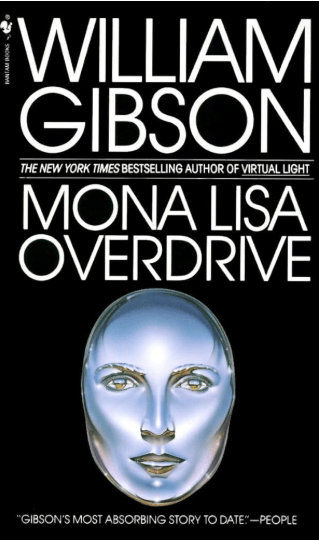
I just read this quote the other day, and I immediately thought of William Gibson’s books—specifically, Mona Lisa Overdrive. I first read MLO back in the early 1990s, just a few years after its publication, and I thought it was great. I never really thought of reading it again, but for some reason—perhaps because I’ve been a bit down, of late—I recently checked-out the book and re-read it. And I’m really glad I did. One of the foundational works of the cyberpunk sub-genre (along with Gibson’s Burning Chrome, Neuromancer, Count Zero, and other books), it still holds up, both as a work of speculative fiction as well as just a damned good, vividly imagined, human story.
A lot of people heap praise on Gibson’s novel—and on the Cyberpunk genre in general—because of their ideas, the thematic questions they ask about how humanity can relate in an age of overwhelming, dehumanizing technology. And what are the brutalizing effects of the ever-increasing disparity between the high-tech haves and the lower-tech have nots? Et cetera et cetera.
Myself, I like Gibson’s characters. Often, they are losers, of the sort Simak wrote about. Little people eking-out an existence on the fringes of society. MLO is no exception. The last of Gibson’s Sprawl trilogy, after Neuromancer and Count Zero, it’s set on a near-ish future Earth where mega-corporations, trillionaires, and criminal cartels have replaced all governments, and most of humanity muddles along in a rat-race of late-stage capitalism. The plot is a complicated skein of four interlocking narratives, each centered on a different character: Mona, a teenaged prostitute; Kumiko, the tween-aged daughter of a Yakuza boss; Angie, a beautiful young star of virtual reality films (“simstims”); and Slick Henry, an artist who sculpts robots and suffers from government-inflicted memory loss. I find it interesting that, of these four characters, two are children (Mona is sixteen), one is addicted to drugs, and one is brain-damaged. Additionally, two of them (Mona and Slick Henry) are poor, while the other two “rich” characters (Angie and Kumiko) are virtual prisoners of their wealth and position, separated from any real friendships or human connection.
Most notably, none of them have real families. Mona is an orphan; Kumiko’s mother died under mysterious circumstances, and her father is an aloof cypher.
In short, all of Gibson’s view-point characters are underdogs, one way or another. The closest he has ever come to a real, kick-ass hero is in one of his best supporting characters, Molly Millions, the cybernetically enhanced mercenary who figures so prominently throughout the Sprawl trilogy (not to mention Gibson’s landmark short-story “Johnny Mneumonic”, which first appeared in Omni Magazine in 1981; yeah, I read it fresh off the newsstand). And even Molly is more of an anti-hero, selling her services to the highest bidder, yet always displaying a basic, inner decency and compassion.
It is Molly, in fact, who becomes the physical catalyst that eventually brings the four narrative threads of the plot together in the MLO’s final chapters. I don’t want to spoil it completely, but the story involves a plot to kidnap Angie (the simstim star, whom Mona strongly resembles; hint, hint) and prevent her from reuniting with her boyfriend, Bobby Newmark, whose body lies comatose in Slick Henry’s art studio while his mind is busy in cyberspace. Kumiko, too, finds herself caught up in this plot, if only tangentially.
Having just re-read the book for the first time in thirty-odd years, I find myself liking it even more now than I did back then. I am awestruck by how deft Gibson’s prose is (he is surely one of America’s most underrated writers), as well as how quickly the story sucks the reader in. Almost every pop-novel out there these days is written from multiple, shifting points-of-view, but very, very few manage to draw their individual characters so vividly, or keep the reader as invested in the plight of each.
And, yeah, Gibson’s ideas are really, really cool. My favorite revelation in the book is when Slick Henry’s friend, Gentry, figures out that the L.F., the device attached to Bobby’s skull, is really an aleph, referencing the 1945 short story by Jorge Luis Borges. (If you read enough cyberpunk novels—or urban fantasy novels, for that matter—you’re going to run into Borges eventually.)
To sum up, Mona Lisa Overdrive is one of my favorite novels, sci-fi or otherwise. Check it out…
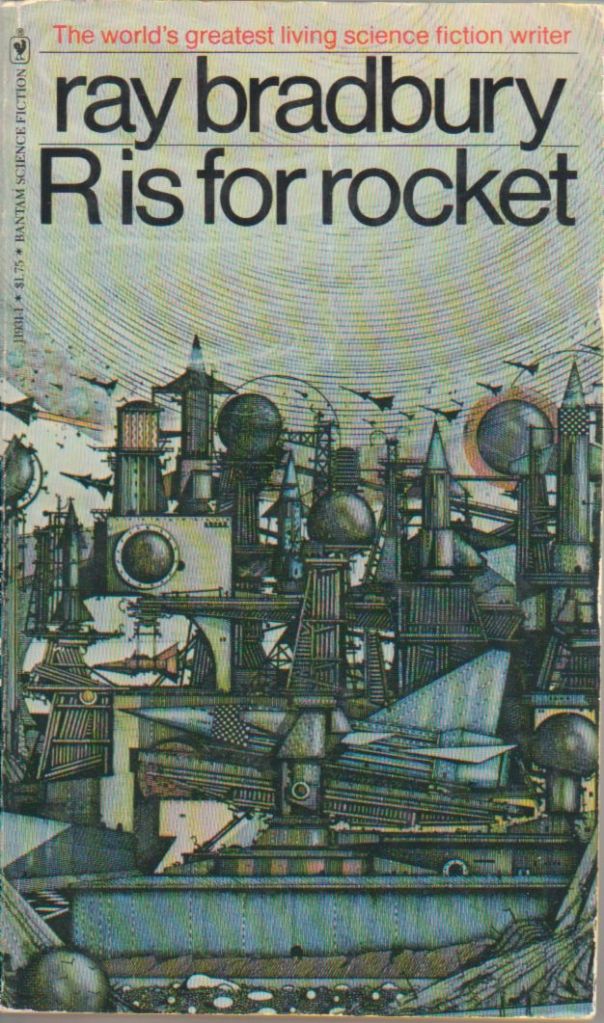
This 1977 cover for Ray Bradbury’s The Martian Chronicles is probably an off-beat choice for my Classic Sci-Fi Book Covers series. After all, it’s a pen-and-ink illustration, which is a very unusual choice for sci-fi art.
Unusual, that is, unless you’re the great Ian Miller, who does most of his work in pencil or pen. Miller did a lot of Bradbury covers in the 1970s and 80s, and I love every single one of them. They have a weird, surreal, almost cubist quality that evokes the sense of mystery and magic that the best sci-fi novels create.
It is almost a law of nature that if you scroll through Twitter for long enough, you will run across a Star Trek meme. And, if you keep scrolling, you will eventually run into a “There are four lights!” meme.
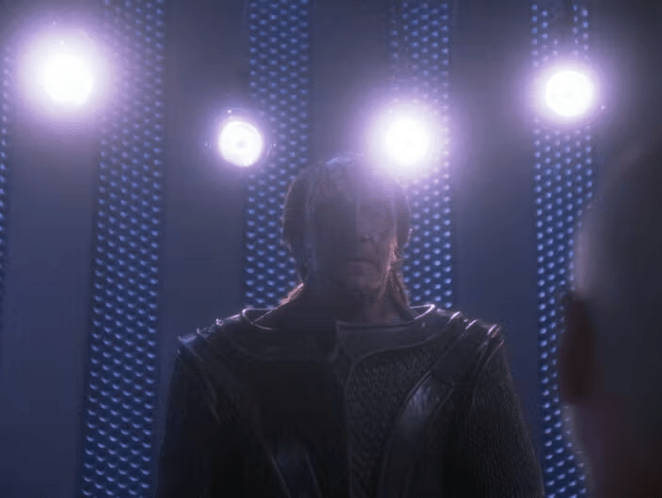
These memes are, of course, a reference to one of the most famous episodes of Star Trek: The Next Generation. Entitled “Chain of Command,” it depicts the ordeal that Captain Picard must endure at the hands of a Cardassian interrogator named Gul Madred. It is one of the most famous (infamous?) episodes because of its brutal depiction of torture and humiliation, up to and including the truly shocking moment when Picard is hung naked by his wrists (thus cinematically immortalizing Patrick Stewart’s impressively muscular British arse). Despite the disturbing subject—or, perhaps, because of it—the episode has become one of the most beloved and acclaimed of the entire series.
I, for one, believe that “Chain of Command” deserves every iota of the praise it has received. It’s brilliantly acted, of course, by Stewart and his former Shakespearean colleague David Warner, who was one of the greatest actors of his generation. And it tackles a dreadful but important subject—the nature of political torture. Screenwriter Frank Abatemarco conducted research into the impact and nature of such torture as reported by Amnesty International, and the episode seems completely believable, not to mention chilling. It dissects the psychology of the victim but also of the torturer, with Warner brilliantly conveying how Madred, an intelligent man and, apparently, a loving father, is nonetheless able to rationalize his activities by dehumanizing his victim.
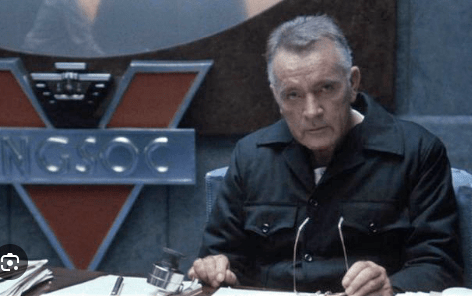
If one trawls the many Reddit threads and other chat-board threads that have been devoted to the episode, one learns that many of its fans—especially those former English majors, like myself—were quick to seize on its central homage to George Orwell’s 1984. Specifically, it echoes the climactic scenes in 1984 when Winston Smith is tortured by O’Brien, a man whom Winston believes to be a friend and fellow-revolutionary but who turns out to be a commander of the Thought Police.
As every Star Trek nerd knows, of course, the most direct parallel between 1984 and “Chain of Command” comes in the episode’s climax, when Madred shines four lights on the wall and asks Picard how many lights he sees. When Picard answers, truthfully, “four,” Madred shocks him.
In 1984, O’Brien lays Winston out on an electronic torture-rack and says to him,
“Do you remember,” he went on, “writing in your diary, ‘Freedom is the freedom to say that two plus two make four?”
“Yes,” said Winston.
O’Brien held up his left hand, its back toward Winston, with the thumb hidden and the four fingers extended.
“How many fingers am I holding up, Winston?”
“Four.”
“And if the Party says that it is not four but five—then how many?”
“Four.”
The word ended in a gasp of pain.
The torment continues, with Winston replying “five” and “three” and anything else he can think of to stop the pain. At which point O’Brien pauses the interrogation and says, “Sometimes, Winston. Sometimes they are five. Sometimes they are three. Sometimes they are all of them at once. You must try harder. It is not easy to become sane.”
Richard Burton as O’Brien in 1984
It’s this portion of 1984 that, to me, establishes O’Brien as the supreme villain of world literature. He is also its greatest nihilist. He seems to have no illusions about the purpose of Big Brother’s totalitarian rule—namely, for the rulers to partake of the ultimate sadistic pleasure in endlessly tormenting their subjects, forever. He blithely explains to Winston how the state will soon make things even worse for the common people, including modifying human anatomy so that people cannot even have orgasms. When O’Brien also suggests that the state might increase the pace of life so that people go senile at thirty, Winston pleads:
“Somehow you will fail. Something will defeat you. Life will defeat you.”
“We control life, Winston, at all its levels. You are imagining that there is something called human nature which will be outraged by what we do and will turn against us. But we create human nature. Men are infinitely malleable.”
Many dudes on Reddit have observed, correctly, that the scene with Picard and Madred are about mind control, and how strong people must fight to resist it. But the greater issue comes in the last scene of “Chain of Command,” after Picard has been freed and is safely back on the Enterprise. There, washed and fed, he meets with Counselor Troy and explains the worst part of his ordeal—namely that, in the delirium of his agony, he actually saw “five lights,” as he was commanded to do by Madred.
In other words, despite his great intellect and courage, Picard’s body began to alter his perceptions. He became, in O’Brien’s words, “infinitely malleable.”
In 1984, Winston experiences the same horrific revelation.
And he did see them, for a fleeting instant, before the scenery of his mind changed. He saw five fingers, and there was no deformity. Then everything was normal again, and the old fear, the hatred, and the bewilderment came crowding back again. But there had been a moment—he did not know how long, thirty seconds, perhaps—of luminous certainty, when each new suggestion of O’Brien’s had filled up a patch of emptiness and become absolute truth, and when two and two could have been three as easily as five, if that were what was needed. It had faded out before O’Brien had dropped his hand; but though he could not recapture it, he could remember it, as one remembers a vivid experience at some remote period of one’s life when one was in effect a different person.
I have written before about how the greatest themes in literature are best posed as questions. The question here is, “Is there really some indominable spirit in us that can’t be crushed and mastered by force and torture?” Or, put another way, “Are human beings really infinitely malleable, to the point that they can’t even trust their own senses?”
To many—and especially to those who adhere to a philosophy of materialism—this might seem a banal question. Their answer would certainly be: Of course, people are infinitely malleable; human beings are the product of their sensations, and if those sensations can be completely controlled (through drugs or torture or propaganda), then those beings can be complete controlled, too.
If this is true, I fear that the future of humanity is hopeless. We will, eventually, devolve into some kind of hive-mind existence (yes, rather like the Borg in Star Trek), which, even if it isn’t quite as hellish as the nightmare-state that O’Brien creates for the proles of 1984, would still be devoid of individuality or any authentic human experience.
Fortunately, I don’t believe it is true. For one thing, as a practical matter, I don’t believe that a ruling class whose only motivation is sadistic sexual pleasure could sustain itself. It’s too destructive, and its members would inevitably turn on each other. And even if they didn’t, they would die out, unable to create and nurture the most basic form of life—children. In other words, Big Brother can only destroy. It cannot create.
On a more philosophical note, I do believe that there is a “something called human nature,” as O’Brien puts it, that will inevitably rebel against tyranny. All the hero stories of world mythology reflect this, as do our own, modern mythologies. Like, for instance, Star Trek. Clearly, in the imagined universe of the twenty-fourth century, civilization has not devolved into some kind of soul-destroying dystopia. Quite the opposite. The Federation represents civilizations response to the ever-present threat of oppression, in all its forms, from fascist militarism (the Klingons), xenophobic isolationism (the Romulans), to full-on, cybernetic collectivism (the Borg). The Federation beats them all.
So, what is the Federation’s secret? Probably a lot of things. But, for my money, it’s that the Federation is a pluralistic society, open to all races, ideas, and voices.
Back in college, I studied the great Russian literary critic M. M. Bakhtin, who saw the greatest innovation in art as the novel. The novel represents a quantum leap in art because it is the greatest example of what Bakhtin called dialogism—the interplay of voices and perceptions from which our shared experience of consciousness emerges. This impulse toward dialogism—dialogue—is always set in opposition to the evil but omnipresent forces of monologism, which strive to establish a singular, monolithic truth on humanity and thus control it.
Big Brother’s IngSoc party might be the most monologic literary creation ever imagined by a writer (Orwell). Conversely, the Federation might be the most dialogic, combining not only an endless multiple of voices and point-of-view but actual sentient species from all over the galaxy, united by there shared…humanity? For lack of a better word, yes.
Let’s hope Star Trek’s vision of the future is the one that plays out.
For some reason, I read a lot of science fiction during the holidays. Maybe this is because I loved science fiction as a kid, and I had more time to read it during the Christmas break. At any rate, this year I decided to post a list of great literary science fiction novels.
I’m not qualified to give a meaningful explanation of the difference between popular and literary fiction. My old professor, Jonathan Penner has already done that in his fine essay “Literary Fiction Versus Popular Fiction” (which I cannot find on the Internets, alas). But suffice to say that popular fiction is defined by a formula. As Penner states, “Every work of literary fiction seeks to be like none other; every work of genre fiction seeks to be like many others. Genre fiction works for effects on which the reader knows he or she may rely. Literary fiction always tries to see the world freshly.”
The novels I list below certainly fall into the category of popular fiction. They all make use of the common tropes of science fiction stories: space travel, robots, aliens, and the end-of-the-world. So why do I call them literary? Because each one of them, while remaining on a generic level, is centered around a vivid and successfully realized characters. Also, each is written with a emphatic artfulness and grace.
So here’s the list:
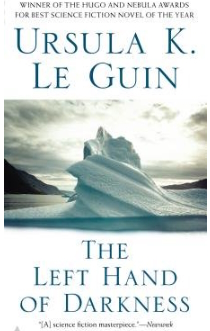
The Left Hand of Darkness Strangely enough, I first got interested in Ursula K. Le Guin’s classic novel when I read a review of it by John Updike. It’s about a human envoy who is sent to a distant alien planet called Gethen. Gethen is remarkable not only for its isolation, but also because the locals, although descended from homo sapiens thousands of years of previously, are all hermaphrodites. Specifically, they function as men for certain part of their lives, and as women for the other. It sounds a bit hokey now (the plot was even ripped-off on an episode of Star Trek), but it’s a fine little novel, with some genuinely compelling drama. (It actually develops into a kind of wilderness adventure story when the main character gets entangled in the political intrigue of the Gethen government.)
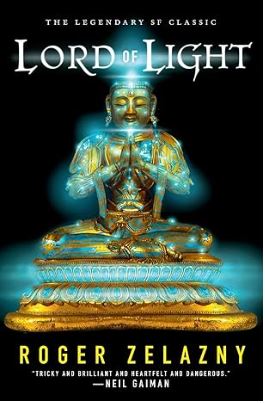
Lord of Light Roger Zelazny was a hell of a good writer who is best known for his Chronicles of Amber series of fantasy novels. But my favorite is Lord of Light, which is the first novel I ever read that seems, at first, to be one genre (religious fantasy), but then reveals itself—convincingly—to be another (science fiction). Zelazny sets the story on an unnamed, earth-like planet where the gods of the Hindu pantheon (Brahma, Vishnu, Shiva, etc.) are real and very much alive. These dieties use their Godly powers to rule over a pre-literate culture of peasants (controlling them in ways that are often less-than-divine).
The story centers on Sam—who closely resembles Gautama Buddha but with a Marlowesque twist—who is trying to unseat the vain and profligate Gods from their position of power. Sam, we soon learn, is one of the original crew members of a starship called The Star of India, which crash-landed on the planet eons previously. Apparently, Sam and the other surviving officers used their technology to set themselves up as “gods” to rule over the other castaways, and eventually came to believe their own propaganda. It’s a far-out idea, which Zelazny delivers in a surprisingly subtle, vivid novel that is part epic, part spoof.
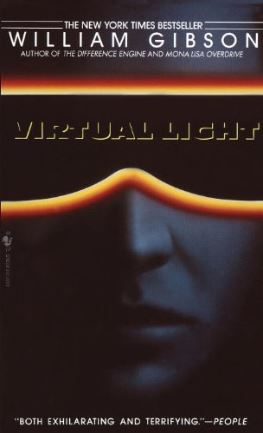
Virtual Light I think William Gibson is one of the best writers of his generation, literary or otherwise. He invented the term cyberpunk, and its attending genre, of which Virtual Light is my favorite example. It’s about a young bike messenger, Chevette, who spends her day cycling through the teeming, corporate-ruled streets of a future San Francisco. In a plot twist that is almost Dickensian in its lyricism, Chevette accidentally comes into possession of a very unusual pair of computerized sunglasses, which a villainous corporate hit-man is very anxious to get back. Gibson is a genius at mixing high-tech plots with low-tech heroes, and Chevette soon has to take refuge in an underground, DIY society based on the remnants of the Oakland Bay Bridge.
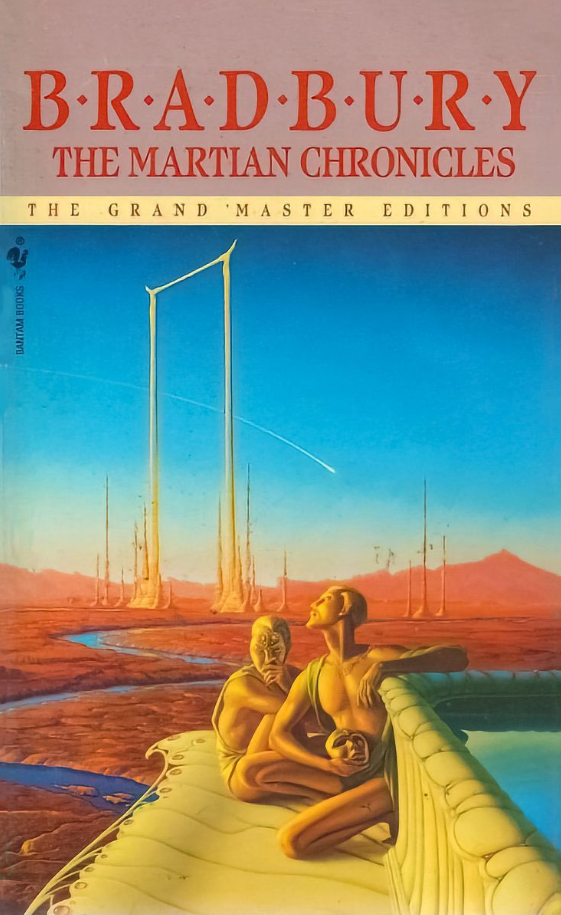
The Martian Chronicles Okay, it’s a stretch to put this one on the list, not because it isn’t literary, but because it really isn’t science fiction. It’s actually a collection of interlocking fables, all of which are based on Mars during the early phases of its colonization. Unfortunately, the planet is already occupied by an ancient race of Martians. If you substitute Illinois for Mars and the Sioux for the Martians, you get an idea of the feel of this novel, which Bradbury himself said was inspired by Sherwood Anderson’s classic collection, Winesburg, Ohio. Many of the stories are genuinely beautiful and haunting.
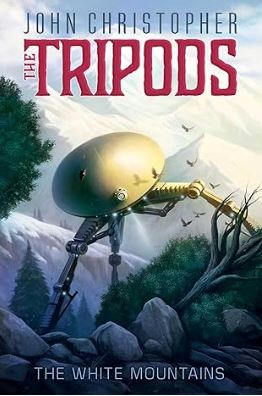
The Tripods If you didn’t read Samuel Youd’s trilogy when you were a kid, you should do so now, especially if you have a kid of your own. Earth has been conquered by aliens, and what remains of humanity exists in a servile, pre-industrial society. Young Will and his cousin Fritz escape their village and go on a quest for the fabled “White Mountains” where a human resistance is forming.
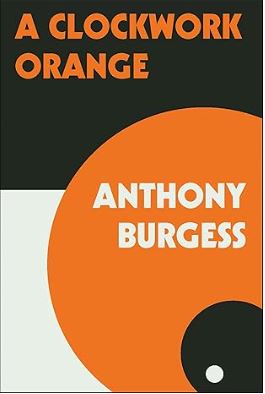
A Clockwork Orange The movie has outshone the book for most of my lifetime. But the book is actually better, written in the inimitable voice of Alex, a fourteen-year-old sociopath who is just trying to have a good time in an Orwellian England of the near future.
God Emperor of Dune The original Dune is a really cool adventure story. I always thought of it as Lawrence of Arabia in the 30th Century. But I think Herbert’s fourth novel in the series, God Emperor of Dune, is the best, from both a narrative and stylistic point-of-view. It focuses on just a couple of characters (as opposed to dozens) and it presents Leto Atreides (son of Paul) as genuinely sympathetic character.
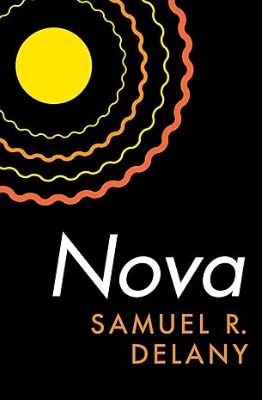
Nova Samuel R. Delany could never decide whether he was a physicist or a mythologist or an literary fiction writer. Why limit yourself? Nova, the story of a mad space-captain seeking to fly through the center of an exploding star, is Delany’s tightest and most interesting novel.
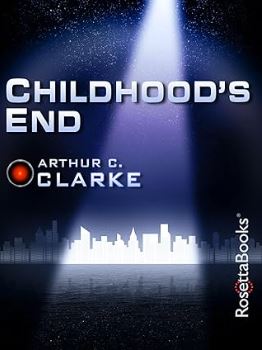
Childhood’s End I hesitate to put this one on the list. I loved it as a kid, as I loved all of Arthur C. Clarke’s books. As a writer, he was very, very limited. But in Childhood’s End, he really outdid himself. It’s the first novel I ever read that broached the concept of a technological Singularity.
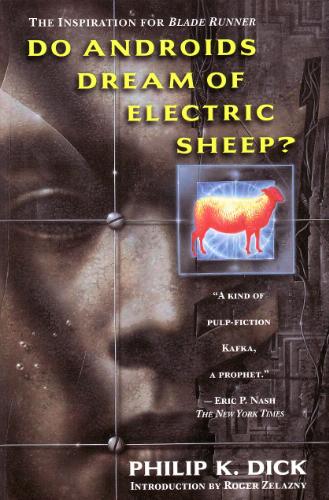
Do Androids Dream of Electric Sheep I can’t help but think that, in some alternate universe much like those he described in his novels, Phillip K. Dick is alive and well and living as a respected and beloved literary fiction writer. In this universe, however, he wrote mesmerizing, almost hallucinogenic sci-fi novels about good and evil, the definition of “reality”, and what it means to human. His best book, Do Androids Dream of Electric Sheep, is a haunting classic.
Author’s Note: This post first appeared some years ago on my old blog, Bakhtin’s Cigarettes.
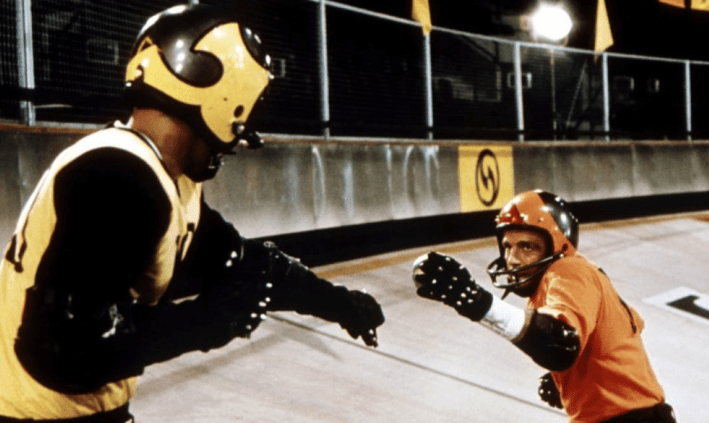
It still amazes me that Norman Jewison, the same guy that directed Moonstruck, also directed Rollerball. I can’t imagine two films that are more different in content, genre, style, and tone. Moonstruck is a rom-com (imho, the best ever made); Rollerball is a dystopian sci-fi movie. Moonstruck is a comedy; Rollerball is a violent, brutal drama.
And yet, when one thinks about it, the twinning of these two movies under Jewison’s visionary eye kind of makes sense. Both are about an individual seeking personal freedom—self-actualization, as the shrinks say. The main difference is that, in Moonstruck, the obstacle is the protagonist’s own self-doubt and traumatized soul, while in Rollerball, it’s an oppressive, corporatist state.
Moonstruck is the better film, by far. But, as a kid, I absolutely loved Rollerball. It came out fifty years ago, in 1975, and it’s hard to describe how incredibly cool it was among the 11-to-14-year-old boy demographic. It checked all the teenage-boy boxes: sci-fi, sports, violence, motorcycles, and sex.
And then there was the novelty of the game itself, a nightmarish blend of NFL football, roller derby, motocross, and MMA. Of these, football seemed to be the primary influence, with the protagonist coming off very much like one of the celebrity quarterbacks of the era (think Joe Namath or Snake Stabler).
So, basically you had a futuristic, ultra-violent sport where Joe Namath got to kill people! How cool is that??? The film also had the appeal of forbidden fruit. A “hard R”-rated movie, its violence was deemed shocking, even transgressive, at the time. This was especially true considering the film’s A-list imprimatur; it was released by a major Hollywood studio (United Artists) with a major star (James Caan) and a major director (Jewison).
In retrospect, the fact that Rollerball was made at all seems a bit miraculous. It’s a good movie, and there is still much to love about it. Set on a near-future Earth where huge mega-corporations have replaced governments, it tells the story of an elite athlete, Jonathan E., who plays the violent, gladiatorial sport of Rollerball. Jonathan is so good that, after ten years in the sport, he is its oldest living practitioner, as well as its best. He is beloved and famous—so famous, in fact, that he worries the reigning cabal of corporate bosses, who use the game as a kind of panem et circenses form of mass entertainment, giving the oppressed masses an outlet for their (potentially revolutionary) rage.
Mr. Bartholomew, the CEO of the corporation that owns Jonathan’s team (and, it is implied, Jonathan himself, bodily, as a kind of company chattel), is especially concerned. He orders the aging star to announce his retirement. Jonathan refuses. Bartholomew orders him again. Jonathan refuses, again. Unfortunately, Jonathan is too famous to arrest or kill, so Bartholomew contrives to make the next few Rollerball matches so absurdly violent, even by the standards of the game, that Jonathan will change his mind, get injured, or get killed.
If this plot sounds familiar, it’s because it is. Rollerball essentially invented the extreme-sports-of-the-future sub-genre of sci-fi, beginning with Death Race 2000 and continuing all the way up to The Hunger Games series. It also anticipated cyberpunk, in which evil corporations have taken over all aspects of modern life, creating an authoritarian hellscape of haves vs have-nots.
In our current, CGI-corrupted age of cinema, Rollerball is especially impressive for its great, practical stunts. Supposedly, the stuntmen got so adept at the titular game that they would play matches amongst themselves between shooting sessions. And the acting is great, too. James Caan’s understated, nuanced performance as Jonathan is one of his best. He was bashed by some film critics for seeming “checked-out” in the role, but I think they were wrong. He’s playing a somewhat inarticulate but courageous character who is trying to make sense of his plight—and find a way to win.
Now that I have said all those good things about Rollerball, it’s time for me to add that it is also an extremely dated film. Alas, it suffers from much of the garishness of the 1970s, as well as a whiff of misogyny that even the patriarchal/fascist setting cannot quite explain. But if you can get past these flaws, it’s a good movie.
Check it out. It’s currently streaming on Amazon Prime.
I know, I know. This cover is a bit out-there. Not every sci-fi book cover, after all, has a spaceship hovering in a night sky over a plus-size female model in a metal bikini, go-go boots, and mail headdress. (But I kind of wish they did.)
Even so, this cover for Babel-17 by Samuel R. Delany is a bonafide classic by the great Spanish illustrator Vicente Segrelles, who has created a ton of great covers throughout his long and brilliant career. It was done for a series of Delany’s novels that were re-released by Bantam in the 1980s, all of which had great, subtle, off-beat covers.
Now, I’ve read a lot of snark about this cover on various chat-boards. Younger guys, especially, find it hilariously bad (and perhaps a lot of girls, too). I think this is because the woman depicted is not the usual, skinny, spandex-clad sci-fi babe. Personally, that’s one reason I like her. I think she’s mysterious, regal, and (yes) sexy.
More importantly, she captures the essence of the novel’s main character, Rydra Wong, who is not only the captain of a spaceship but also a master linguist. When government operatives seek her help in cracking an enemy, alien code called Babel-17, she discovers that it is not just a code—it’s an entire language. She promptly sets-off on a space-adventure to decipher the language, a quest that leads her into a war zone on the edge of the galaxy.
One of the things I love about Babel-17 is the way Delany, even way back in 1966, managed to push a message of tolerance and multi-culturalism. Wong’s spaceship is crewed by a rag-tag group of mercenaries, some of whom are not only transsexual but transhuman, opting for synthetically altered bodies that make them resemble wild animals or fairy tale creatures, and so on. Moreover, Wong’s desire to find the source of Babel-17—and, thus, better understand the aliens who are attacking humanity—suggests a deeper response to the usual fear and xenophobia that was so endemic in America at the time (and is again now, alas).
Babel-17 a classic sci-novel with a classic cover. Check it out…
Well, over a week has passed since Halloween, and I’m still working through the classic horror and sci-fi movies that I rewatch every year around this time. One of my favorites (heck, one of everybody’s favorites, as far as I can tell, assuming that everybody is a nerd of a certain age) is Roger Wise’s 1951 classic The Day the Earth Stood Still (henceforth, TDTESS). Here are ten things I love about it….
1.) The Opening
This movie doesn’t dick around. It opens with the frantic calls of radar operators across the globe tracking an ultra-fast UAP as it enters the earth’s atmosphere. Word leaks out to press, generating a world-wide media frenzy—the “media,” in this case, being radio. Wise cast several then-famous, real-life radio broadcasters to play themselves, and I simply love hearing their great, precise modulated voices as they simultaneously try to inform the public without causing panic. It’s hard to believe there was ever such a time when journalists were so revered and appreciated, with good reason.
2.) The Music
From the title sequence onward, the film makes great use of Bernard Herrmann’s brilliant score. Hermann notably employed electronic instruments, including a kind of stone-age synthesizer called a theremin. It’s the theremin that gives the score that haunting, weird quality that has since become synonymous with atomic-era sci-fi movies.
Speaking of atomic-era stuff, this leads me to my next item…
3.) Analog technology
I don’t know why, but I am fascinated by how the movie gives the viewer a glimpse—almost a cross-section, really—of the analog technology of the day. We see radio transmitters, of course, but also phone switch boards with dozens of (women) operators frantically switching lines, and people yelling into telephones. And, of course, we have all the accoutrements of World War II, which was still a recent event: tanks, jeeps, motorcycles, rifles (yes, rifles). There is something soothing about all this old-fashioned stuff, especially when it is contrasted with….
4.) Singularity Technology
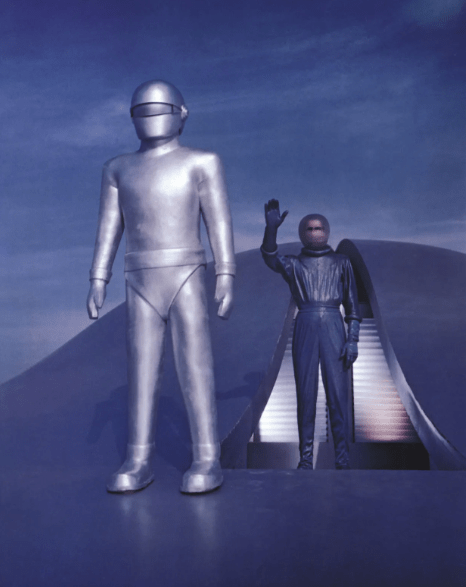
When the UAP finally lands (in Washington D.C., naturally, near the Capitol), we see that it represents a kind of futuristic tech that is the diametrical opposite of the local analog, atomic-era tech. The ship is all smooth silver metal until a seam appears, and the seam opens smoothly to allow a ramp to extend. A door forms in the same way, and the alien pilot Klaatu (Michael Renne) emerges, dressed in a silver suit and a helmet that, one assumes, is made of the same silver metal. All of this seems magical, even now, and also presages the later sci-fi tropes of nanotechnology, lasers, force-fields, atomic energy, computers, etc. etc.
Of course, Klaatu’s most impressive piece of tech is….
5.) Gort
Why is Gort so damned cool? Because he’s terrifying. As a giant, lumbering robot, he evokes the golem myth of implacable, supernatural force that has no emotions and no fear. And, with his single, death-ray emitting eye, he also reminds us of another mythic archetype—the cyclops. And in the way he suggests enormous power, barely held in check, he anticipates The Terminator films of three decades later.
6.) Michael Rennie
As with most classic, once-in-a-lifetime performances, Michael Rennie’s portrayal of Klaatu is so good that it’s now impossible to imagine anyone else doing it. With his smiling, gentle, athletic demeanor, he projects a firm but benevolent presence. He genuinely wants to help humanity escape its seemingly inevitable fate (i.e., being destroyed, either at its own hand or that of Gort). Also, he seems genuinely curious and likeable, especially in…
7.) Klaatu’s Interactions with Danny
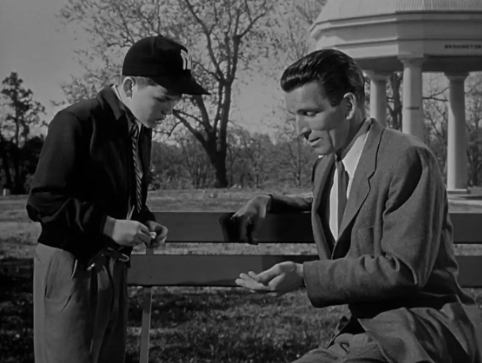
I love the scenes where Klaatu and Danny, the little boy whose boarding house Klaatu finds himself in, go on a site-seeing tour of Washington D.C. They are the emotional core of the movie. After all, in our world, Klaatu is very much like a little boy himself. His sense of wonder is almost as strong as Danny’s.
8.) Patricia Neal
Instead of casting some bombshell scream-queen in the role of Helen, Danny’s mother, Wise chose the formidable and mesmerizing Patrica Neal. She was a great actress who would later hold her own against Paul Newman in 1963’s Hud. As Helen, she exudes an intelligence and moral strength that not only saves Klaatu from capture and death; she saves the entire planet.
9.) How Much you Don’t See
I could write an entire post on the paradox of old thriller movies whose lack of CGI effects (TDTESS was made thirty-three years before Jurassic Park), was actually an advantage. The film is actually made stronger by how much Wise doesn’t show on-screen. That is, we don’t see how Klaatu stops all electrical stuff from working on the titular day. We don’t see Gort walking across D.C. on his way to liberate Klaatu’s body from its jail cell. You know, stuff that would be easy to render in the CGI era (and which would also be rather boring). After all, the ultimate special effect is the human imagination, which happily fills in the blanks better than any whiz-bang effect.
My favorite example of this in the film is when Danny secretly follows Klaatu to his spaceship one night. He watches as Klaatu uses a flashlight to wake-up Gort, who then knocks-out the two G.I. ‘s guarding the ship. The genius of this scene is that we don’t actually see Gort do this. We just see him lumber over to the two dudes. Then, at the last moment, the camera switches back to Danny’s horrified face as he watches the moment of (rather mild) violence. Then, the camera switches back to Gort as he stands over the crumpled, unconscious bodies of the soldiers on the ground. Brilliant.
10.) Multiculturalism
It’s important to remember that TDTESS is a cold-war era movie, produced at the very height of the Red Scare and its attendant paranoia and xenophobia. It also came out just a few years before the start of the American Civil Rights movie. So, I am always amazed, and even a bit moved, by how progressive Wise’s vision is. In the opening scenes, we see people from other countries—France, India, China, and even Russia—depicted in a sympathetic light, human light. At least once in the film, Wise goes out of his way to show some genuine, actual Black people in the crowd watching Klaatu’s spaceship land. (This might seem trivial, now, but it was momentous decision back then.) And, of course, the climax of the movie comes with a miniature U.N. assembly, arranged by Professor Barnhardt (wonderfully played by the great Sam Jaffe, incidentally), full of people of all ethnicities and cultures. The message is clear—it’s only by cooperation and friendship that humanity can survive. And it’s a message that is just as relevant now as it was back then, perhaps even more so.
See also this cool post from another blogger (from whom I stole one of the screenshots above)…
The most important novel in the dystopian science fiction sub-genre is George Orwell’s 1984. The second most important is Anthony Burgess’s A Clockwork Orange. I would go so far to argue that Burgess’s book has, in some ways, been even more influential and culturally significant than Orwell’s, especially for those generations that grew up in the 1970s and later.
It was in 1971 that Stanley Kubrick adapted the book into a landmark film, which was how I first discovered the novel. By the time I was a teenager, in the early 80s, Kubrick’s movie had taken on cult status—almost as much as 2001: A Space Odyssey. My friends and I all loved the movie. And I, being a particularly bookish kid, decided to check the novel out, too.
The secret to A Clockwork Orange’s success, topping that of almost all other dystopian novels, is that it has a great, exciting twist. Its protagonist, a fifteen-year-old delinquent named Alex, seems more like a villain than a hero. He is, after all, a thug, a thief, a gang-member, a rapist, a drug user, and a lover of all things violent (“ultraviolence,” as he and his gang friends call it). Yet, in comparison to the oppressive, authoritarian, end-stage-Capitalist society in which he lives, he is a kind of hero. Against that iron-grey backdrop, his better, human qualities come to the fore—his intelligence, his ferocious courage, and his absolute dedication to personal pleasure, the state-be-damned.
This twist is one of the greatest, central ironies in modern literature, and it’s the reason teenage boys (and probably a few girls, too) continue to find themselves drawn to the book, just as they have been for sixty years. Conversely, this is also the reason that social conservatives have hated the book for just as long. In fact, as I recently learned from openculture.com, A Clockwork Orange was the most banned book of the 2024-25 school year.
I have no doubt that Burgess would have been very, very proud.
Kubrick’s film version was so powerful that it influenced the cover-design for most subsequent editions of the book. Many of these covers were thinly-veiled riffs on the movie poster or on Malcolm McDowell’s brilliant performance, wearing his singularly perverse, false-eyelash. I really like this cover from 1995 by Robert Longo because it bucked that trend and did something new.
Also, I think it really captures the madness of the book—the ferocity of Alex’s character as he rages against the machine. Yes, he’s an evil character, but that’s sort of the point of the whole book. Alex has a God-given right to be evil, if that’s his choice. Evil is an implied, but not a necessary, product of his free will, and he fights valiantly against being “programmed” by the cold authority figures of the story.
Just like most teenagers. Even the ones that aren’t psychopaths.