The brilliant singer and musician Chris Rea has passed away. I remember when I first heard this song (my favorite of his). I was in grad school in Tucson, Arizona and had a summer job teaching English at Pima Community College. I was driving there one day in July when the temperature hit 117. My little car started to overheat so I turned off the A/C, rolled the windows down, and hoped for the best. Then this song came on. It had such a great groove to it that I almost forgot my miserable circumstances. Almost.
It was also so very, very appropriate. Still is, even in winter.
For some reason, I read a lot of science fiction during the holidays. Maybe this is because I loved science fiction as a kid, and I had more time to read it during the Christmas break. At any rate, this year I decided to post a list of great literary science fiction novels.
I’m not qualified to give a meaningful explanation of the difference between popular and literary fiction. My old professor, Jonathan Penner has already done that in his fine essay “Literary Fiction Versus Popular Fiction” (which I cannot find on the Internets, alas). But suffice to say that popular fiction is defined by a formula. As Penner states, “Every work of literary fiction seeks to be like none other; every work of genre fiction seeks to be like many others. Genre fiction works for effects on which the reader knows he or she may rely. Literary fiction always tries to see the world freshly.”
The novels I list below certainly fall into the category of popular fiction. They all make use of the common tropes of science fiction stories: space travel, robots, aliens, and the end-of-the-world. So why do I call them literary? Because each one of them, while remaining on a generic level, is centered around a vivid and successfully realized characters. Also, each is written with a emphatic artfulness and grace.
So here’s the list:
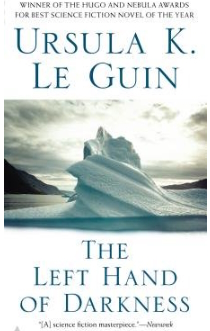
The Left Hand of Darkness Strangely enough, I first got interested in Ursula K. Le Guin’s classic novel when I read a review of it by John Updike. It’s about a human envoy who is sent to a distant alien planet called Gethen. Gethen is remarkable not only for its isolation, but also because the locals, although descended from homo sapiens thousands of years of previously, are all hermaphrodites. Specifically, they function as men for certain part of their lives, and as women for the other. It sounds a bit hokey now (the plot was even ripped-off on an episode of Star Trek), but it’s a fine little novel, with some genuinely compelling drama. (It actually develops into a kind of wilderness adventure story when the main character gets entangled in the political intrigue of the Gethen government.)
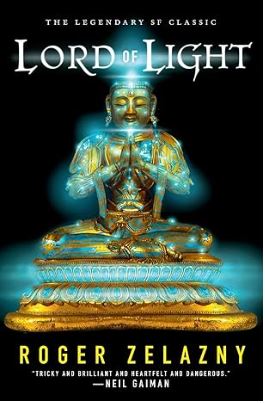
Lord of Light Roger Zelazny was a hell of a good writer who is best known for his Chronicles of Amber series of fantasy novels. But my favorite is Lord of Light, which is the first novel I ever read that seems, at first, to be one genre (religious fantasy), but then reveals itself—convincingly—to be another (science fiction). Zelazny sets the story on an unnamed, earth-like planet where the gods of the Hindu pantheon (Brahma, Vishnu, Shiva, etc.) are real and very much alive. These dieties use their Godly powers to rule over a pre-literate culture of peasants (controlling them in ways that are often less-than-divine).
The story centers on Sam—who closely resembles Gautama Buddha but with a Marlowesque twist—who is trying to unseat the vain and profligate Gods from their position of power. Sam, we soon learn, is one of the original crew members of a starship called The Star of India, which crash-landed on the planet eons previously. Apparently, Sam and the other surviving officers used their technology to set themselves up as “gods” to rule over the other castaways, and eventually came to believe their own propaganda. It’s a far-out idea, which Zelazny delivers in a surprisingly subtle, vivid novel that is part epic, part spoof.
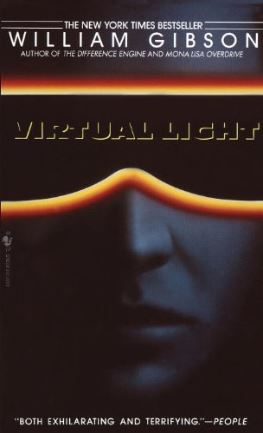
Virtual Light I think William Gibson is one of the best writers of his generation, literary or otherwise. He invented the term cyberpunk, and its attending genre, of which Virtual Light is my favorite example. It’s about a young bike messenger, Chevette, who spends her day cycling through the teeming, corporate-ruled streets of a future San Francisco. In a plot twist that is almost Dickensian in its lyricism, Chevette accidentally comes into possession of a very unusual pair of computerized sunglasses, which a villainous corporate hit-man is very anxious to get back. Gibson is a genius at mixing high-tech plots with low-tech heroes, and Chevette soon has to take refuge in an underground, DIY society based on the remnants of the Oakland Bay Bridge.
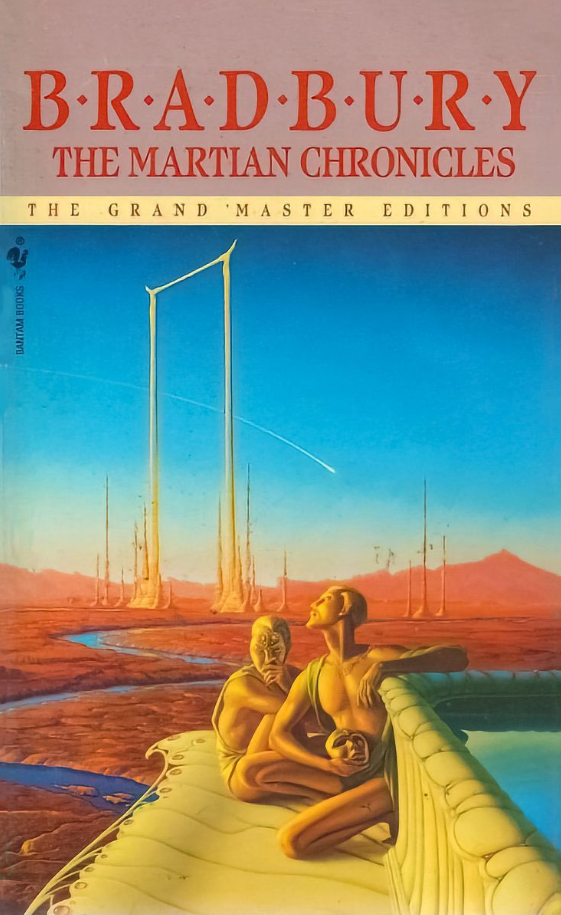
The Martian Chronicles Okay, it’s a stretch to put this one on the list, not because it isn’t literary, but because it really isn’t science fiction. It’s actually a collection of interlocking fables, all of which are based on Mars during the early phases of its colonization. Unfortunately, the planet is already occupied by an ancient race of Martians. If you substitute Illinois for Mars and the Sioux for the Martians, you get an idea of the feel of this novel, which Bradbury himself said was inspired by Sherwood Anderson’s classic collection, Winesburg, Ohio. Many of the stories are genuinely beautiful and haunting.
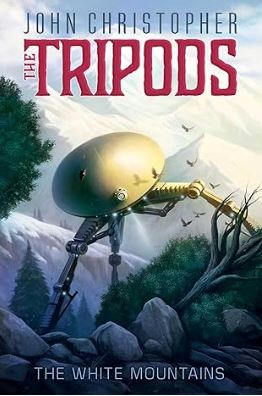
The Tripods If you didn’t read Samuel Youd’s trilogy when you were a kid, you should do so now, especially if you have a kid of your own. Earth has been conquered by aliens, and what remains of humanity exists in a servile, pre-industrial society. Young Will and his cousin Fritz escape their village and go on a quest for the fabled “White Mountains” where a human resistance is forming.
A Clockwork Orange The movie has outshone the book for most of my lifetime. But the book is actually better, written in the inimitable voice of Alex, a fourteen-year-old sociopath who is just trying to have a good time in an Orwellian England of the near future.
God Emperor of Dune The original Dune is a really cool adventure story. I always thought of it as Lawrence of Arabia in the 30th Century. But I think Herbert’s fourth novel in the series, God Emperor of Dune, is the best, from both a narrative and stylistic point-of-view. It focuses on just a couple of characters (as opposed to dozens) and it presents Leto Atreides (son of Paul) as genuinely sympathetic character.
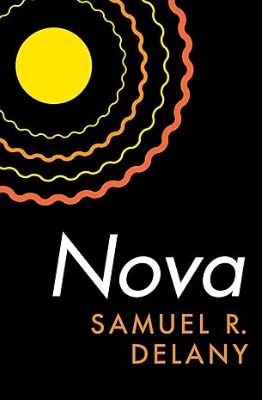
Nova Samuel R. Delany could never decide whether he was a physicist or a mythologist or an literary fiction writer. Why limit yourself? Nova, the story of a mad space-captain seeking to fly through the center of an exploding star, is Delany’s tightest and most interesting novel.
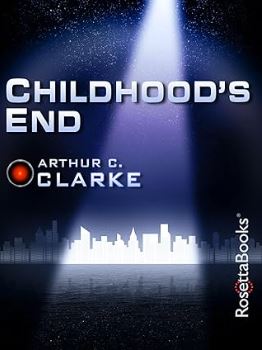
Childhood’s End I hesitate to put this one on the list. I loved it as a kid, as I loved all of Arthur C. Clarke’s books. As a writer, he was very, very limited. But in Childhood’s End, he really outdid himself. It’s the first novel I ever read that broached the concept of a technological Singularity.
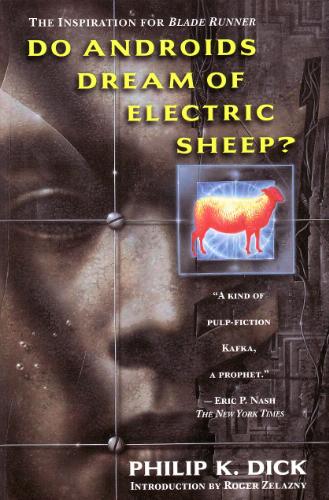
Do Androids Dream of Electric Sheep I can’t help but think that, in some alternate universe much like those he described in his novels, Phillip K. Dick is alive and well and living as a respected and beloved literary fiction writer. In this universe, however, he wrote mesmerizing, almost hallucinogenic sci-fi novels about good and evil, the definition of “reality”, and what it means to human. His best book, Do Androids Dream of Electric Sheep, is a haunting classic.
Author’s Note: This post first appeared some years ago on my old blog, Bakhtin’s Cigarettes.
Well, it’s another day of the week ending Y, so it’s time for another Shameless Plug! This one is not even original, alas. Even so, it’s pretty cool that you can listen to the first three chapters of my novel, Twice the Trouble, totally free on Youtube! And it’s legal, even! (I think.)
I had never heard of Young the Giant until a few months ago, when this song, “My Body,” popped up on the playlist at my gym. I liked the groove so much that I paused my incredibly wimpy set of curls (“Hey, I’m going for tone, dammit. TONE!”), went to my locker, got out my phone, and Googled it.
The rest is history…
People have compared Young The Giant to The Cure, but they remind me more of Coldplay, but with more of a rock-edge (not to mention a bit more soul).
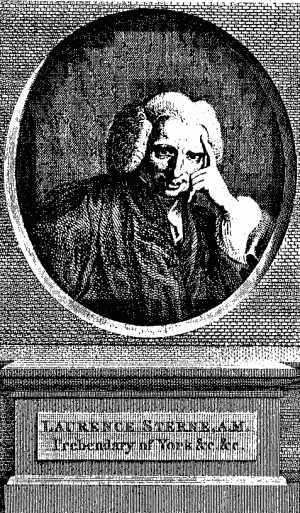
As part of the work for the Read a Classic Novel…Together channel, I’ve been reading a very old classic indeed, The Life and Opinions of Tristram Shandy, Gentleman (almost always abbreviated to just Tristram Shandy). Published by Laurence Sterne in 1767, it’s a very funny, sly book—kind of like Curb Your Enthusiasm, but in the 18th Century—and I found myself imagining George Washington reading it (and laughing his ass off) while holed up in some winter bunker during the dark days of the American Revolutionary War.
The story is told by Shandy himself, a very smart but self-absorbed and neurotic man (again, a lot like Larry David) who tells his life story in wry, sardonic, and occasionally schizophrenic prose. At one point in his rambling narrative, he mentions the “seven planets” in the heavens, which surprised me. Sure, I knew that even the ancient Romans knew about the inner planets, as well as Jupiter and Saturn. But the fact that the unfathomably distant Uranus was known in the 18th Century struck me as remarkable.
As it turns out, I was wrong. Uranus was not discovered until 1781, over a decade after Sterne wrote his novel (but still much earlier than I thought). Which means that there is no way that either Sterne, the writer, nor Shandy, the character, could have known about the actual seventh planet.
So, what, exactly, is Shandy alluding to in the “seven planets” bit? It seems that he was referring to the astrological planets in their classical (and very unscientific) sense, i.e., the Moon, Mercury, Venus, the Sun, Mars, Jupiter, and Saturn. This context makes sense, in retrospect, because Shandy is obsessed with astrology and its supposed effect on a person’s character. (Yes, he’s a bit of a kook.)
Lawrence Sterne
By the time I sorted all this out, however, it was too late; I was already deep down the Wikipedia rabbit-hole. I looked up the history of the outermost planet (not to be confused with the dwarf planets like Pluto and Ceres), Neptune. Neptune was discovered by French astronomer Urbain Le Verrier in 1846. Not only was it the first planet to be discovered entirely by telescope, it was also the first one whose existence was surmised before it was actually observed. That is, Verrier and fellow astronomer John Couch Adams had noticed irregularities in Uranus’s orbit, which, they suspected, might be caused by a seventh, hitherto unseen planet. They then deduced the probable location of this hypothetical planet and hunted it down.
And that’s not all! I also learned that Neptune was actually discovered before it was discovered. As historians found later, Neptune was seen at least three times before, by Galileo Galilei in 1613, Jérôme Lalande in 1795, and John Herschel in 1830. Each of these men recorded seeing something in that spot, but none of them realized it was a planet and not just a weird “fixed” star.
Apparently, this sort of thing happens with some frequency in the world of science, to the point that it actually has a name: precovery. In a precovery, someone finds all the information they might need to make a real (and potentially career-making) discovery, but they never put the pieces together. (Or, at least, they never publish a paper about it.)
I think there might be a profound lesson here about the difference between data and knowledge, observation and understanding.
It’s also a lesson about publishing what you’ve got, ASAP. Before some other doofus steals your thunder.
I find it interesting that the two most famous architects in American history—famous, that is, among ordinary people who don’t subscribe to Architectural Digest—were both named Frank. They were, of course, Frank Lloyd Wright and Frank Gehry. Both men created buildings that captured the popular imagination like few others. And both were mavericks whose vision of what architecture could do often offended the mavens of the status quo (not to mention the bean-counters who worked for the rich people who funded their projects).
Both men also shared a sense of play and in their work—Gehry to a much greater degree, sometimes designing homes and offices and other buildings that veered into pure fantasy. He often brainstormed new projects with strips of paper and cardboard, envisioning light, fluid, soaring structures that, one could argue, would not have been possible to actually build in an age before computer-assisted design was available.
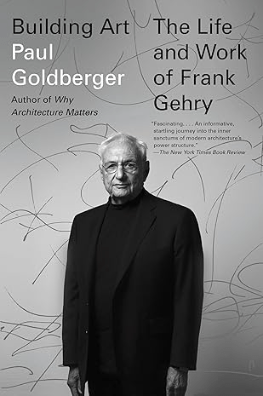
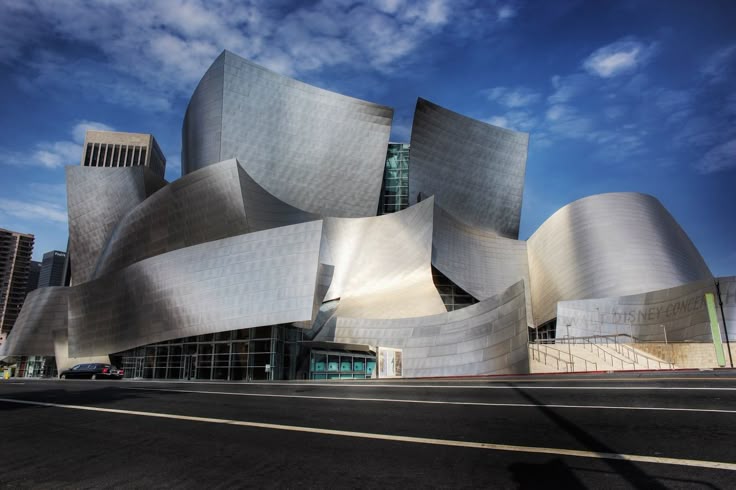
This emphasis on play and the power of imagination was evident in all his work, even in huge, civic projects like his Walt Disney Concert Hall in Los Angeles. As Paul Goldberger relates in his fine biography, Building Art: The Life and Work of Frank Gehry, Gehry took an almost impish pleasure in fooling around with his own designs. When he was in the early stages of mocking-up his plans for another auditorium in Asia, he shocked and amazed his colleagues by adjusting the position for the auditorium every night or so. As one friend put it,
…[H]e became a monster. He started moving stuff around.… We were doing a project in Korea that never got built [the museum for Samsung] but every time I went on a trip and came back he had moved the auditorium. He was impeccable. He had incredible reasons for it. He’s really brilliant. He doesn’t sleep at night and he comes back the next morning and moves the auditorium.”
As Goldberger explains…
Moving the auditorium, in Frank’s view, was a form of what he liked to call “play,” and it was largely instinctive. “A serious CEO, you would imagine, does not think of creative spirit as play. And yet it is,” he said. “Creativity, the way I characterize it, is that you’re searching for something. You have a goal. You’re not sure where it’s going. So when I meet with my people and start thinking and making models and stuff, it is like play.”
As the title of Goldberger’s book relates, Gehry saw himself almost as more an artist than an architect. At times, he refused to believe that one needed, necessarily, to make a distinction between the two. Early in his career, Gehry befriended and hung-out with great modern artists in Southern California, and they reciprocated his admiration. Perhaps this is the reason that Gehry’s greatest buildings resemble art more than perhaps other architect.
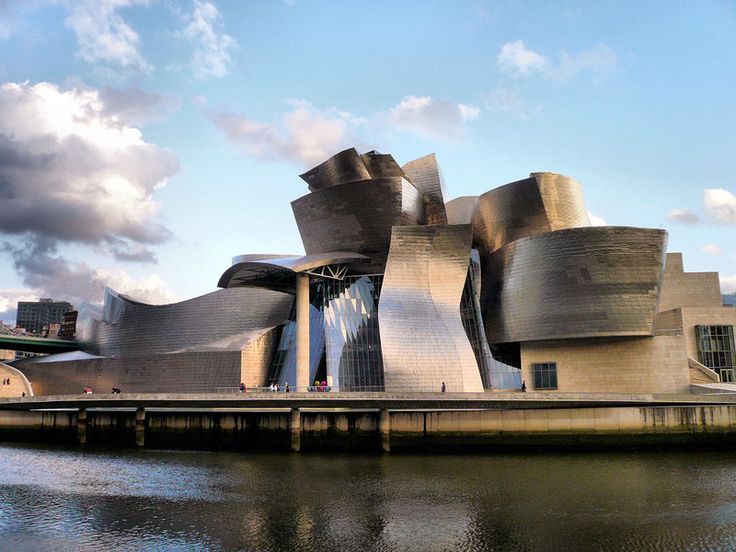
Guggenheim Museum, Bilbao
His most famous is, of course, the Guggenheim Museum in Bilbao, Spain. When the museum finally opened in 1987, a flood of tourists came from all over the world to see it, prompting some of the artists whose work was displayed inside the museum to feel that they were playing second fiddle to the building itself. This grumbling grew into a modest backlash among the artistic community, focused not so much on Gehry himself as on the fawning admiration of journalists and other architects who often lauded Gehry as an “artist.” As Gehry’s own collaborator and friend, the sculptor Richard Serra, said,
I don’t believe Frank is an artist. I don’t believe Rem Koolhaas is an artist. Sure, there are comparable overlaps in the language between sculpture and architecture, between painting and architecture. There are overlaps between all kinds of human activities. But there are also differences that have gone on for centuries.”
Whether he was being lauded or criticized, Gehry himself never seemed concerned. In fact, when compared to that other great architect named Frank, Gehry usually seemed downright humble, if not pathologically shy. Goldberger writes:
Even though Gehry was ridden with angst throughout his life, his manner came off as relaxed, low-key, and amiable, and his steely determination, far from being obvious like Wright’s, was hidden behind an easygoing exterior, a kind of “aw shucks” air that Gehry’s old friend the artist Peter Alexander called “his gentle, humble ways.” Wright was never mistaken for being modest; Gehry often was.
Gehry was so shy, in fact, that I feel he could have been much more famous than he was if he gotten himself out there, gone on TV more and granted more interviews and written some puff-pieces for various magazines and web sites. The fact that he did not is, I suppose, the most telling fact about the man’s character. Namely, that he was a genius who was determined to create the most original and uplifting works as he could…and, then, to let those works speak for themselves.
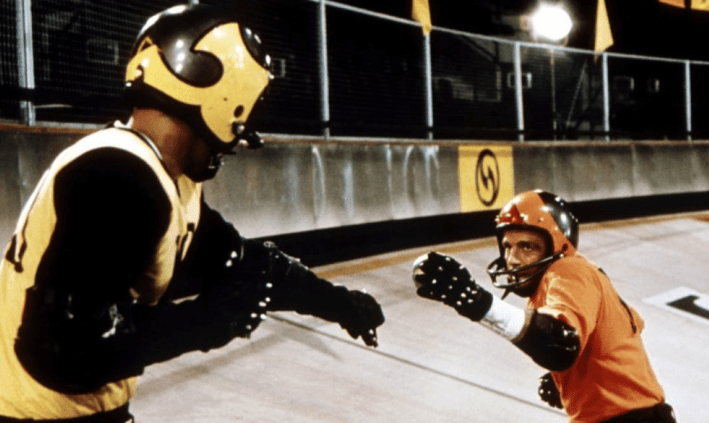
It still amazes me that Norman Jewison, the same guy that directed Moonstruck, also directed Rollerball. I can’t imagine two films that are more different in content, genre, style, and tone. Moonstruck is a rom-com (imho, the best ever made); Rollerball is a dystopian sci-fi movie. Moonstruck is a comedy; Rollerball is a violent, brutal drama.
And yet, when one thinks about it, the twinning of these two movies under Jewison’s visionary eye kind of makes sense. Both are about an individual seeking personal freedom—self-actualization, as the shrinks say. The main difference is that, in Moonstruck, the obstacle is the protagonist’s own self-doubt and traumatized soul, while in Rollerball, it’s an oppressive, corporatist state.
Moonstruck is the better film, by far. But, as a kid, I absolutely loved Rollerball. It came out fifty years ago, in 1975, and it’s hard to describe how incredibly cool it was among the 11-to-14-year-old boy demographic. It checked all the teenage-boy boxes: sci-fi, sports, violence, motorcycles, and sex.
And then there was the novelty of the game itself, a nightmarish blend of NFL football, roller derby, motocross, and MMA. Of these, football seemed to be the primary influence, with the protagonist coming off very much like one of the celebrity quarterbacks of the era (think Joe Namath or Snake Stabler).
So, basically you had a futuristic, ultra-violent sport where Joe Namath got to kill people! How cool is that??? The film also had the appeal of forbidden fruit. A “hard R”-rated movie, its violence was deemed shocking, even transgressive, at the time. This was especially true considering the film’s A-list imprimatur; it was released by a major Hollywood studio (United Artists) with a major star (James Caan) and a major director (Jewison).
In retrospect, the fact that Rollerball was made at all seems a bit miraculous. It’s a good movie, and there is still much to love about it. Set on a near-future Earth where huge mega-corporations have replaced governments, it tells the story of an elite athlete, Jonathan E., who plays the violent, gladiatorial sport of Rollerball. Jonathan is so good that, after ten years in the sport, he is its oldest living practitioner, as well as its best. He is beloved and famous—so famous, in fact, that he worries the reigning cabal of corporate bosses, who use the game as a kind of panem et circenses form of mass entertainment, giving the oppressed masses an outlet for their (potentially revolutionary) rage.
Mr. Bartholomew, the CEO of the corporation that owns Jonathan’s team (and, it is implied, Jonathan himself, bodily, as a kind of company chattel), is especially concerned. He orders the aging star to announce his retirement. Jonathan refuses. Bartholomew orders him again. Jonathan refuses, again. Unfortunately, Jonathan is too famous to arrest or kill, so Bartholomew contrives to make the next few Rollerball matches so absurdly violent, even by the standards of the game, that Jonathan will change his mind, get injured, or get killed.
If this plot sounds familiar, it’s because it is. Rollerball essentially invented the extreme-sports-of-the-future sub-genre of sci-fi, beginning with Death Race 2000 and continuing all the way up to The Hunger Games series. It also anticipated cyberpunk, in which evil corporations have taken over all aspects of modern life, creating an authoritarian hellscape of haves vs have-nots.
In our current, CGI-corrupted age of cinema, Rollerball is especially impressive for its great, practical stunts. Supposedly, the stuntmen got so adept at the titular game that they would play matches amongst themselves between shooting sessions. And the acting is great, too. James Caan’s understated, nuanced performance as Jonathan is one of his best. He was bashed by some film critics for seeming “checked-out” in the role, but I think they were wrong. He’s playing a somewhat inarticulate but courageous character who is trying to make sense of his plight—and find a way to win.
Now that I have said all those good things about Rollerball, it’s time for me to add that it is also an extremely dated film. Alas, it suffers from much of the garishness of the 1970s, as well as a whiff of misogyny that even the patriarchal/fascist setting cannot quite explain. But if you can get past these flaws, it’s a good movie.
Check it out. It’s currently streaming on Amazon Prime.
If you’re of a certain age (i.e., over fifty), you probably spent many a summer afternoon in the long-ago past listening to the 45 single of “Hotel California” over and over and over. (You might also have enjoyed a mildly illegal form of herbal, hand-rolled cigarette as you listened.) If you did, you’ve probably read a lot of articles about the song, and heard a lot of interviews by Don Henley or Glenn Frey or others about it, to the point that you probably think you know everything about it. You know, for instance, that Henley and Frey wrote the lyrics in a very short period of time (by some accounts, a few hours; by others, over a weekend). You know that the album cover is a photo of the Beverly Hills Hotel, and that some people think they see a mysterious figure in the bell tower. And you know that the song is really about Hell, or California-as-Hell, or American hedonism, or…something cool like that.
What you probably don’t know is that song is, primarily, the creation of guitarist Don Felder, who wrote the melody by himself before he even joined the band. As Marty Jourard recounts in his excellent non-fiction book Music Everywhere: The Rock and Roll Roots of a Southern Town:
One afternoon while enjoying his ocean view and no doubt the general situation, Felder sat on his sofa and idly strummed an acoustic twelve-string, eventually refining his musical idea into a carefully crafted guitar arrangement. Using a Teac four-track reel-to-reel recorder, Felder first recorded his Rhythm Ace drum machine playing a cha-cha beat, then added acoustic and electric guitar and bass, then an idea for two solo guitars. Don Henley listened to a cassette mix of this song and more than a dozen others Felder had submitted for consideration and declared this rhythmically complex instrumental the best, giving it a working title of “Mexican Bolero,” and along with Glenn Frey wrote lyrics that transformed Felder’s music demo into “Hotel California,” the title track of the next Eagles album and its first single.
It’s also Felder’s actual guitar playing, along with that of co-lead Joe Walsh, that gives the song its unbelievably haunting tone and its indelible, dark crescendo. I’m not just saying this because Felder, like his childhood friend Tom Petty, is a Gainesville boy like me. Felder is, in fact, one of the most underrated musician/composers in the history of rock-and-roll.
Of course, I don’t mean to denigrate Henley’s and Frey’s brilliant lyrics, gave the song its cachet among the teenage set of the 1970s (and now, even). One thing I’ve noted about “Hotel California” is that is one of those rare examples of a narrative poem (i.e., it tells a continuous story). Also, it’s written in ballad quatrains, with a rhyming scheme of ABCB. How cool is that?
And, yes, I do see a mysterious figure in the bell tower.
Just a heads-up…. My Edgar-nominated and Shamus-winning novel, Twice the Trouble, is a Kindle Deal all this month. You can get the ebook for just $1.99. That’s less than half the price of a Starbucks’ latte (and it will last a lot longer)!
I know, I know. This cover is a bit out-there. Not every sci-fi book cover, after all, has a spaceship hovering in a night sky over a plus-size female model in a metal bikini, go-go boots, and mail headdress. (But I kind of wish they did.)
Even so, this cover for Babel-17 by Samuel R. Delany is a bonafide classic by the great Spanish illustrator Vicente Segrelles, who has created a ton of great covers throughout his long and brilliant career. It was done for a series of Delany’s novels that were re-released by Bantam in the 1980s, all of which had great, subtle, off-beat covers.
Now, I’ve read a lot of snark about this cover on various chat-boards. Younger guys, especially, find it hilariously bad (and perhaps a lot of girls, too). I think this is because the woman depicted is not the usual, skinny, spandex-clad sci-fi babe. Personally, that’s one reason I like her. I think she’s mysterious, regal, and (yes) sexy.
More importantly, she captures the essence of the novel’s main character, Rydra Wong, who is not only the captain of a spaceship but also a master linguist. When government operatives seek her help in cracking an enemy, alien code called Babel-17, she discovers that it is not just a code—it’s an entire language. She promptly sets-off on a space-adventure to decipher the language, a quest that leads her into a war zone on the edge of the galaxy.
One of the things I love about Babel-17 is the way Delany, even way back in 1966, managed to push a message of tolerance and multi-culturalism. Wong’s spaceship is crewed by a rag-tag group of mercenaries, some of whom are not only transsexual but transhuman, opting for synthetically altered bodies that make them resemble wild animals or fairy tale creatures, and so on. Moreover, Wong’s desire to find the source of Babel-17—and, thus, better understand the aliens who are attacking humanity—suggests a deeper response to the usual fear and xenophobia that was so endemic in America at the time (and is again now, alas).
Babel-17 a classic sci-novel with a classic cover. Check it out…









 Ash Clifton, Writer