What I’m Reading: “Paperbacks from Hell”

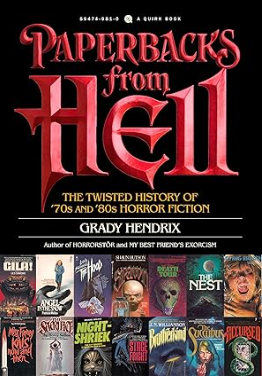
Having had exactly one book traditionally published, I am far from an expert on the world of publishing. Even so, I learned a lot more than I ever expected, and have since become fascinated by the industry as a whole. Also, I am currently working on a supernatural horror novel. So, it makes perfect sense that I would be drawn to Grady Hendrix’s excellent non-fiction book, Paperbacks from Hell, which examines (skewers?) pulp horror literature as it existed in the 1970s and 80s, both as a uber-genre and as an industry. 

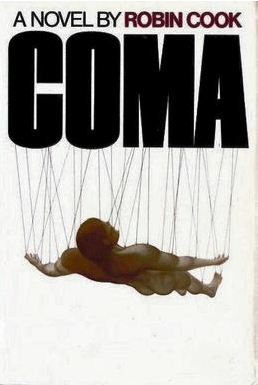
Let me say right up front that this is a very funny book. I found myself laughing out loud many, many times as Hendrix describes the trends and fads that overtook the genre. Take this passage where he introduces the wildly successful pop writer Robin Cook, whose 1977 book Coma is, in Hendrix’s words, the “source of the medical-thriller Nile.” As Hendrix goes on:

It all started with Robin Cook and his novels: Fever, Outbreak, Mutation, Shock, Seizure…terse nouns splashed across paperback racks. And just when you thought you had Cook pegged, he adds an adjective: Fatal Cure, Acceptable Risk, Mortal Fear, Harmful Intent. An ophthalmologist as well as an author, Cook has checked eyes and written best sellers with equal frequency. He’s best known for Coma (1977)…. Its heroine, Susan Wheeler, is one of those beautiful, brilliant medical students who’s constantly earning double takes from male colleagues or looking in the mirror and wondering if she’s a doctor or a woman—and why can’t she be both, dammit? On her first day as a trainee at Boston Memorial, she settles on “woman” and allows herself to flirt with an attractive patient on his way into a routine surgery. They make a date for coffee, but something goes wrong on the table and he goes into…a COMA!

Hendrix cleverly divides each chapter to a single, overarching trend in the pulp horror universe, with titles like HAIL, SATAN (novels of demonic possession and devil-sex), WEIRD SCIENCE (evil doctors and mad scientist-sex), INHUMANIOIDS (deformed monsters and mutant-sex), and so on. I was especially impressed by the way Hendrix explains each publishing fad as a symptom of a larger societal shift. For example, he explains how the white-flight phenomenon of the 1970s in which white middle- and upper-class families abandoned the big cities and moved to quaint, charming little towns in upstate New York or the mid-west or norther California or wherever, results in a surge of small-town horror novels like Harvest Home (wherein evil pagan matriarchs conduct human sacrifices to make the corn grow) and Effigies (wherein Satan is breeding grotesque monsters in the basement of the local church).

Another chapter entitled CREEPY KIDS, which deals with such diverse plot concepts as children who are fathered by Satan, children are who are really small adults pretending to be children, and children who, for whatever reason, just love to kill people. I particularly love this passage:

Some parents will feel helpless. “How can I possibly stop my child from murdering strangers with a hammer because she thinks they are demons from hell?” you might wail (Mama’s Little Girl). Fortunately there are some practical, commonsense steps you can take to lower the body count. Most important, try not to have sex with Satan. Fornicating with the incarnation of all evil usually produces children who are genetically predisposed to use their supernatural powers to cram their grandmothers into television sets, headfirst. “But how do I know if the man I’m dating is the devil?” I hear you ask. Here are some warning signs learned from Seed of Evil: Does he refuse to use contractions when he speaks? Does he deliver pickup lines like, “You live on the edge of darkness”? When nude, is his body the most beautiful male form you have ever seen, but possessed of a penis that’s either monstrously enormous, double-headed, has glowing yellow eyes, or all three? After intercourse, does he laugh malevolently, urinate on your mattress, and then disappear? If you spot any of these behaviors, chances are you went on a date with Satan. Or an alien.

One the many things I learned from reading the book was how the entire publishing world (not just horror) was permanently changed in 1979 by an obscure tax-law case called The Thor Power Tool Co. v Commissioner. In this case, the U.S. Supreme Court ruled that manufacturers could not write-down poor-selling or slow-selling inventory and thus reduce their tax liability. The case was focused on unsold parts for power-tools, but the ruling equally applied to publishing houses, who had hitherto done the same kind of write-down on their slow-selling novels. As Hendrix explains: “Suddenly, the day of the mid-list novel was over. Paperbacks were given six weeks on the racks to find an audience, then it was off to the shredder.” And so, inevitably, came the frantic scramble to find those half-dozen or so “blockbuster” books each season, behind which publishers focused their resources. (A similar “blockbuster” effect ravaged Hollywood in the 1970s, in this case due to the success of summer films like Jaws and Star Wars.) Books got less pulpy and more sparkly, with foil covers and die-cast cutouts like those made famous by the V.C. Andrews novels (which continued to be published, zombie-like, long after Andrews’s death).

Whether you’re a writer or just a pulp-paperback fan, Paperbacks from Hell is a great read. Check it out…

Why Do Movies Get Remakes, but Books Don’t?

TomJonesMovie1
Tom Jones, 1963

If you’re a liberal-arts nerd like me who thinks about culture all the time, you have probably pondered this question: why do people remake movies, but not books?

Yeah, I know. On the surface, this seems like a silly and even naive question. Movies, after all, are a popular medium. They belong primarily in the category of the performing arts, like theater and ballet and classical music. And, as we all understand, no one over ever gives the “final” performance of Hamlet or Don Giovanni or The Jupiter Symphony. Yes, there are certainly “classic” performances of all these works—some of them, made in the past century, have been recorded for the ages—but none is ever the last performance. Each generation must have its own Hamlet, Don Giovanni, etc.

Okay, so we’ve settled that question.

Or have we?

Continue reading “Why Do Movies Get Remakes, but Books Don’t?”

Synchronicity for Bookworms: Harlan Ellison

Harlan Ellison in the 1970s

The great film critic Roger Ebert once noted that the people we think of as heroes are those we looked up to when we were kids. As adults, we might admire a particularly talented athlete or actor or musician, but they won’t really be “heroes” to us; they’ll just be really cool (but life-sized) people. 

I think that my middle-aged affection for Harlan Ellison might be a slight exception to this adage, however. I was a fan of his when I was growing up (he became famous in the 1970s with his revolutionary, sci-fi short-stories like “I Have No Mouth, and I Must Scream”), but he wasn’t exactly a “hero” of mine. Then, in the 1990s, Ellison began to appear on TV as a talk-show celebrity, especially on the sci-fi channel, where he essentially co-hosted a show called Sci-Fi Buzz, where he was often very funny and always insightful. Also, to my amazement, one of his stories, “The Man Who Rowed Christopher Columbus Ashore,” was included in 1993’s Best American Short Stories collection. I saw an Ellison interview around that time, in which related that the series’ editor called him to give him the good news. At the end of their brief conversation, she asked him if had written any other short stories—an unintentional slight that Ellison said felt like “a dagger to the heart.” 

But this was typical of Ellison’s relationship to the literary world, and to Hollywood. He couldn’t get no respect. Part of this life-long diss was, surely, his own fault. He was famously abrasive and out-spoken, and hated to have his work messed with. When he wrote the screenplay for the what is generally considered the best episode of the original Star Trek series, “City on the Edge of Forever,” he hated Gene Roddenbury’s changes so much that he tried to have his name taken off the credits. (Fortunately, he failed.) In fact, he was so contentious about such matters that he had a special pseudonym, Cordwainer Smith, that he would use when he felt his work had been to mangled by studio executives that he no longer wanted his real name associated with it.

Paradoxically, the more interviews I watched of Ellison in the 1990s and beyond, the more I liked him. He had a razor wit, and he did not suffer fools easily. He could also be mean as hell when he felt attacked. But these were all characteristics I had seen before in some exceptional people I have met over the years, including my great teacher, the writer Harry Crews. I never met Ellison, but I suspect that we would have gotten along just fine. 

Indeed, I came to admire even Elllison’s famously pugilistic nature. He was quick to sue anyone who he felt had stolen his ideas. Most famously, he sued Orion Pictures over 1984’s The Terminator, alleging that director/writer James Cameron had cribbed the concept from a script Ellison wrote for The Outer Limits. Orion settled the suit out of court. (Cameron later called Ellison a “blood-sucking ghoul,” which I still find hilarious.)

Clearly, Ellison knew how to defend himself and his ideas, and to get what he felt was owed to him. Much of this toughness, I imagine, came from Ellison’s early life, growing up as an diminutive Jewish kid in Ohio. Like a lot of smart, little guys, Ellison learned how to punch back, and punch hard. 

After I wrote a blog post about Ellison and Isaac Asimov last year, I found myself thinking about Ellison more and more. So much so, in fact, that a couple of weeks ago I decided to write something about him, although what form that would take. 

Then, in one of those moments of synchronicity that happen to writers when they immerse themselves in a subject, I stumbled upon a fact regarding Ellison that I had never read before, and it came from a totally unrelated source.

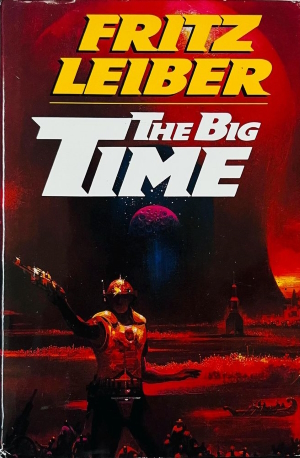
I was looking at some classic sci-fi book covers when I spotted one for Fritz Leiber’s The Big Time. I hadn’t thought of Leiber in decades (he was a favorite of a friend of mine in middle school), so out of pure curiosity I checked out his Wikipedia page. There, I was saddened to learn that Leiber spent the last few years of his life in poverty. As with so many writers, alcohol had taken its toll, and Leiber ended up living in a cheap motel. Apparently, Ellison came to visit him one day and was appalled by the state of his affairs, with Leiber not even able to afford a writing table. Rather, he was composing his latest work on a “manual typewriter propped up over the sink.” 

Fritz Leiber’s Sci-Fi Classic, “The Big Time”

Okay, maybe this wasn’t a good example of full-blown, Jungian synchronicity. I guess it wasn’t that unlikely that I should stumble upon a Ellison anecdote while reading about Leiber. They were both great science fiction writers, after all, and it make sense that they might have known each other. In fact, as I learned, Ellison included some of Leiber’s short stories in the Dangerous Vision anthologies that he (Ellison) edited for decades. Still, I didn’t know of any connection between the men. They were of different generations and circumstances, linked only by their genre and talent.

Unfortunately, the Wikipedia article does not cite the source of this (if anyone knows, please tell me), nor does it say what action, if any, Ellison took to improve Leiber’s circumstances. But I like to think that he did something to help. After all, he was a pugnacious, smart-ass little guy who looked after himself and other little guys. I miss him.

Here is a good interview that Ellison gave to the BBC in the 1970s.

Perfect Films: “Us”

** SPOILERS BELOW **

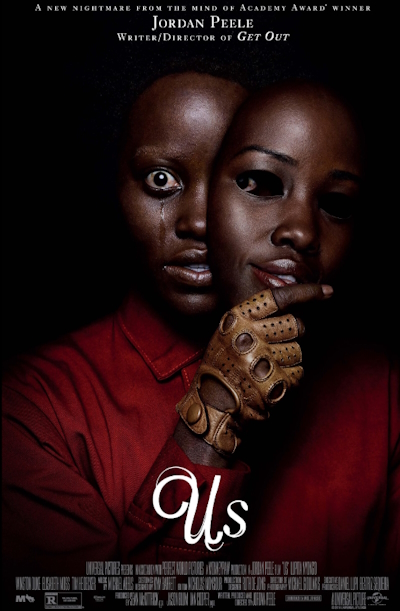
The better part of a decade has passed since Jordan Peele’s landmark horror film Get Out was released, marking Peele’s transformation from famed comedy writer and sketch artist to one of the most important filmmakers of our time. Peele has since added two more films to his horror oeuvre—2019’s Us and 2022’s Nope

All three are great, but my favorite is Us. For me, it hits on the deepest and most disturbing level, and it has the richest palette in terms of effects. It’s also the hardest to figure out in terms of plot. With Nope and Get Out, the viewer has a vague sense of what’s going on, even early in the film (although the details turn out to be more shocking and terrifying than anyone suspected). But while watching Us, I was totally mystified. I knew it had something to do with evil twins—true doppelgängers in both the literal and the psychological sense—but I had no real idea of what the actual plot would turn out to reveal. And what a reveal it is!

But I’m getting ahead of myself. Part of Us’s appeal lies in its slow-burn first act. (This is true of Get Out and Nope, too, but Us takes it to the next level.) The movie starts with a flashback to 1986, when a little girl, Adelaide, breaks away from her bickering parents at a beach boardwalk and finds a strange funhouse. It’s a simple premise, yet so much disturbing stuff going on in this segment that it’s almost impossible to describe. We have the tension between the parents, raising the specter of divorce (the thing most kids fear more than anything else except death). Then we have the separation of the child from the parents (another primal fear). And, finally, we have the freakish funhouse, which, though apparently deserted, is still lit with eerie neon light.

Continue reading “Perfect Films: “Us””

“Dracula” Isn’t About What You Think It’s About

I’ve been seeing a lot of on-line ads for the new Nosferatu movie directed by Dave Eggers. It looks like a pretty good movie, although, judging by the trailers, it seems to be emphasizing the horror (e.g., slasher) elements of the classic Nosferatu/Dracula story over the erotic angle (which most film adaptations have veered toward).

Or does it? Looking at the poster, the hook line poster reads “Succumb to the Darkness.” It’s a seductive line, which doesn’t quite seem to go with the image portrayed—that of a beautiful young woman in a nightgown lying on her back with her mouth open, while a skeletal, monstrously taloned hand reaches for her face.

Erotic? Not really. Gross? Yeah, kinda. This thematic confusion between the film’s trailer and its poster reflects, I think, the difficulty in adapting the Dracula story to the screen. (Yes, I know that Nosferatu is not the same as Dracula, but close enough.) The difficulty is made worse in our present time, the 21st Century, when porn is only a few clicks away and the idea of truly transgressive sexual activity is more and more difficult to imagine.

Continue reading ““Dracula” Isn’t About What You Think It’s About”

Five Great Movies about the Press

I’ve been meaning to write a post listing some great movies about the press. Normally, I would make this a “top-10” list, but the fact is that I couldn’t think of that many, unless I resorted to some cheating (yes, Citizen Kane involves the muckraking journalism of the early 1900s, but you can’t really call it a movie about the press). So, here’s my list, from great to greatest…

ThePaper

The Paper

Ron Howard’s 1994 film The Paper focuses on one frantic day in the newsroom of a major metropolitan newspaper. The day begins with a high-profile murder, for which two young African-American men are arrested. Michael Keaton, Glenn Close, and Robert Duvall are the editors who are fighting to uncover the truth—before deadline. The Paper is a bit broad compared to the other entries on my list, but it’s still a fine movie with a great story.

Continue reading “Five Great Movies about the Press”

Perfect Films: “The Dead Zone”

DeadZone1

Author’s Note: One of my favorite films, The Dead Zone, is free to stream on Amazon Prime right now. I thought I would take the opportunity to repost my tribute to the film, which I originally published on my old blog, Bakhtin’s Cigarettes.

When I was a student at the University of Florida in the late 1980s, I took writing classes under the great novelist Harry Crews. Harry was almost as famous for being a wild man as he was for being a writer, but by the time I knew him he had quit drinking and was leading a simple, almost monastic life of writing and teaching. Like many recovering alcoholics, he had lost many of his old friends, and he was also divorced, so he was alone a lot.

Continue reading “Perfect Films: “The Dead Zone””