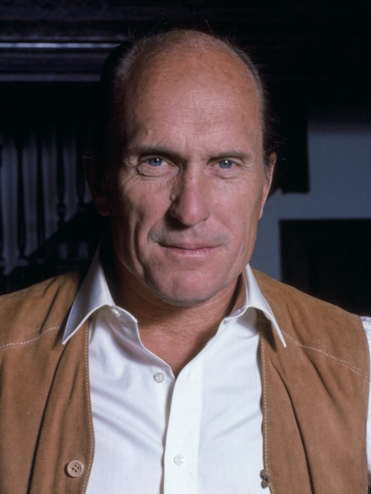
Yesterday I got a three-word text message from my son Connor: Kilgore is dead.
I knew, of course, exactly who he was referring to—Robert Duvall, the great actor who passed away yesterday at the age of 95. More specifically, Connor was calling out one of Duvall’s most memorable characters, that of Lt. Colonel Kilgore, the cheerfully psychopathic Army commander in Francis Ford Coppola’s Apocalypse Now.
Everyone, it seems, has a favorite Duvall role. For many young dudes these days, it is Kilgore. For others, it’s the soft-spoken but iron-willed Tom Hagen in the Godfather films. For still others, it is the authoritarian Marine dad in The Great Santini, or the fearless Texas Ranger Augustus McCrae. No matter what kind of character he was playing, Duvall’s own, real-life character always shone through: smart, fierce, tough, and comfortable in his own skin.
Being a mega-film-nerd, my definitive Duvall role was that of THX 1138, the titular character in George Lucas’s first film, which is still one of the most daring and visually stunning movies ever made. THX 1138 also marked one of the few films in which Duvall got to play the lead. Most of the time, he was cast in supporting roles, working in the background. Invariably, this allowed him—like Kilgore in his helicopter—to swoop in and steal the movie.
Although he trained with many famous Method actors, he was not generally considered to be one himself. Yet, he could hang with the De Niros, Pacinos, and Hoffmans of the world with seemingly effortless ease. Indeed, as an actor, he could hang with anybody.
For many (White) guys my age, Duvall represented the ideal American man. German/Irish but still cool. Macho but not toxic. Smart but not showy.
And funny. Even in the midst of mass-slaughter, Kilgore is funny. So is Santini. So, in his own way, is THX 1138. One of my favorite, later roles that Duval played is that of the craggy old Marine who helps Tom Cruise in the 2012’s Jack Reacher. With just a few lines of dialogue, and a barely suppressed, ghoulish chuckle, he manages to deliver some of the funny moments in recent cinema.
If you’re a liberal-arts nerd like me who thinks about culture all the time, you have probably pondered this question: why do people remake movies, but not books?
Yeah, I know. On the surface, this seems like a silly and even naive question. Movies, after all, are a popular medium. They belong primarily in the category of the performing arts, like theater and ballet and classical music. And, as we all understand, no one over ever gives the “final” performance of Hamlet or Don Giovanni or The Jupiter Symphony. Yes, there are certainly “classic” performances of all these works—some of them, made in the past century, have been recorded for the ages—but none is ever the last performance. Each generation must have its own Hamlet, Don Giovanni, etc.
The great scholar Joseph Campbell once explained that every time we go into a cinema and see a movie star—Tom Cruise, for example—up on the screen, some part of our brains is aware that the real person, the actor Tom Cruise, is alive somewhere else in that same, exact moment. This ability to exist in two places at once, Campbell said, is an aspect of a God, a living divinity.
Our subconscious perception of actors as gods is one reason we are always surprised by the death of a movie star, especially one who has been around since we, ourselves, were kids. How could they ever die? They seem to occupy a higher plane of reality, immortal, always youthful if not actually young.
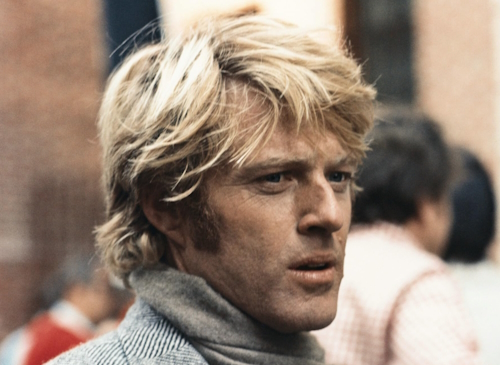
Robert Redford was surely one of the greatest movie stars of my youth, and he starred in two of my favorite films of all time, All the President’s Men and Three Days of the Condor, both of which I have written about on this blog. What made him interesting was that weird dichotomy of blond, athletic, all-American good-looks combined with a reserved, wary intelligence. (On my list of Hollywood Archetypes, he fits squarely in the “Dark Prince” slot.) He was a very smart man, who did a lot of amazing things both on-screen and off-. Among the most notable of these was his founding of the Sundance Film Festival, which has come to rival Cannes as the preferred venue for indie-film directors to premiere their movies.
The fact that Redford would create an alternative festival for “the little guys” in the film industry was typical. He was, in some ways, the most counter-cultural movie star of the last fifty years—even more so than Easy Rider himself, Peter Fonda—in that he made movies about men fighting some vast, evil establishment. Often, this was the military-industrial complex in either its actual (All the President’s Men) or its fantasy (Three Days of the Condor) form. In his later years, when Redford could no longer play the lead, he took on the role of the villain who represents this evil empire, as in Captain America: The Winter Soldier.
As a kid, I always found something soothing about Robert Redford, even in movies filled with threats and violence. I suspect that, in my mind, he represented the best spirit of my parents’ generation (he was roughly the same age as my father). That is, the young adults of the 1960s and 70s. Post-hippie, but very hip. World-weary, but not broken. Brave, but not foolhardy. Idealistic, but not naïve.
Once again, it has taken me far too long to write a short tribute to a fine person who has passed away—Val Kilmer, who died of pneumonia on April 1. This time, it was more than just my workload that explains the delay. I had a bit of trouble discovering what I wanted to say about Kilmer, who was a great actor but also a bit of a cipher. A few years ago, I read his memoir, I’m Your Huckleberry, and I enjoyed it. I was struck, however, by how little Valmer says about his filmmaking experiences. For instance, he barely mentions the production of Tombstone, the film in which Kilmer had his most celebrated film performance—playing the famous gunfighter Doc Holliday—and from which the book’s title is taken. He says even less about the making of Michael Mann’s Heat, in which Kilmer portrays a talented but slightly crazy master-burglar with pitch-perfect ferocity.
This lack of detail was especially disappointing, to me, in part because Heat has my favorite action-sequence of all time—the shoot-out in Century City. More than any other actor in the scene, it’s Kilmer who makes it work, with his fluid transition from cool and controlled bank-robber to machine-gun wielding warrior. I read an autobiography written by a Navy Seal who wrote that he and his comrades once watched Heat together and were impressed by Kilmer’s magazine-changing speed in the film. High praise, indeed.
This reticence on Kilmer’s part to discuss his film-making career—the very aspect of his life that made him famous across the world—suggests to me that Kilmer was deeply ambivalent about being a movie star. I suspect that, like the great Welsh actor Richard Burton, Kilmer was simply too intelligent to think that movie-making was a worthy and serious endeavor. I also suspect that, like Burton, Kilmer was much happier as a stage actor. (His one-man show of Mark Twain was universally praised.)
Unfortunately, his ambivalence somehow bled into his performances whenever he played a leading man, as he did in several major films, none of which was terribly successful. He never seemed to really have his heart in it. But that self-doubt evaporated when he played supporting roles, and these are what he will be remembered for: Iceman in the Top Gun films; Doc Holliday in Tombstone; Chris in Heat. In each of the movies, Kilmer seemed to bring his entire soul to the performance, and he was every inch the movie star.
When I was teenager (ahem, some years ago) I had the good fortune to see Robin Williams perform. He was the lead entertainment for that year’s Gator Growl, the annual pep rally thrown by the University of Florida. At the time, Williams was mainly known as the odd but extremely funny star of TV’s Mork & Mindy. Few were aware that he was first and foremost a stand-up comedian, and even fewer knew just how brilliant—not to mention obscene—his style of comedy could be. So, you can imagine the surprise (and shock) that ensued when he walked out on stage and did his first joke, miming the cocking action of a shotgun as well as the sound: KA-CHICK. “Down here in the South,” he said, “if you hear that sound, you’d better be one fast motherfucker!”
The ensuing performance became a local legend. I remember it as being as incredibly manic and astoundingly creative. William’s comedy was like nothing else around at that time. It wasn’t long before he emerged as the premier comedian of his generation. And, since his suicide in 2014, he has become firmly embedded in our national consciousness as the Greatest Comedian of All Time.
This is a justifiable opinion. For my money, though, there was one comic who surpassed even Williams in his intellect, inventiveness, and sheer genius. This was Richard Pryor.
I’ve been meaning to write a post listing some great movies about the press. Normally, I would make this a “top-10” list, but the fact is that I couldn’t think of that many, unless I resorted to some cheating (yes, Citizen Kane involves the muckraking journalism of the early 1900s, but you can’t really call it a movie about the press). So, here’s my list, from great to greatest…
The Paper
Ron Howard’s 1994 film The Paper focuses on one frantic day in the newsroom of a major metropolitan newspaper. The day begins with a high-profile murder, for which two young African-American men are arrested. Michael Keaton, Glenn Close, and Robert Duvall are the editors who are fighting to uncover the truth—before deadline. The Paper is a bit broad compared to the other entries on my list, but it’s still a fine movie with a great story.
I just watched a great inteview by Rick Beato of Ed Roland, the lead singer and mastermind of Collective Soul. I enjoyed the interview so much that I decided to re-post an essay I wrote on my old blog some years ago for my on-going “Battle of the Bands” series. Enjoy…!
The 1990s were a strange time. It was the decade between the two George Bushes—after the Gulf War but before 9/11—but it was also the first decade of the Internet and cell phones. The first truly digital special effects began to appear in films like Terminator 2 and Jurassic Park. The Soviet Union had fallen, only to be replaced by a globalized Russian mafia. Genocide was being committed in both Africa and Europe, all televised via the 24/7 global news cycle.
In short, this was the time when technology and social chaos really started to put the zap on our collective brain. And no bands were better at capturing this zeitgeist of psychological disintegration better than these two—Collective Soul and Garbage–although each did so in its own way.
Strangely, my concept of the “The 90s” didn’t really form until almost mid-decade. This was about the time that the amazingly vital Grunge movement began to fade from the scene. In its wake came a more diverse and accessible series of alternative rock bands. At the forefront was a five-man ensemble called Collective Soul, which had its first big hit in 1994 with “Shine.” While not their best song, “Shine” is an ambitious and even inspirational bit of rock that displays the band’s two great strengths: hard-edged, soaring vocals from frontman Ed Roland, and a vicious main riff from lead guitarist Ross Childress.
But the really cool thing about “Shine” was that despite having a very modern alterna-dude vibe it felt extremely retro. As Jon Pareles wrote in the New York Times, “Collective Soul breaks old ground. Its songs are comfortable where Southern-rock overlaps folk-rock, with solidly serviceable riffs in the usual places.”
Collective Soul was not trying to be Nirvana. It was trying to be Lynyrd Skynyrd.
Just one year after Shine, a band from Madison, Wisconsin named Garbage released their first album, Garbage (a.k.a. Garbage I). When I first heard the band, I was struck by lead singer Shirley Manson and her fabulously expressive voice—at times monotonal, at other times growling. This pale goth girl from Scotland had somehow tailored her vocals to exactly fit the manic-depressive zeitgeist of the 90s.
Indeed, I would argue that the band’s premier song, “Stupid Girl,” is the definitive song of the period (yes, even more so than Nirvana’s brilliant “Smells Like Teen Spirit”). In the song’s now-famous lyric, the narrator accuses an unnamed girl of being…well…stupid. In fact, the aspects of her stupidity are those evidenced by practically every person under 40 in modern urban America: vanity, self-absorption, consumerism, nihilism.
And fakery. Especially fakery. “[I] can’t believe you fake it…” as Manson sings portentously to the stupid girl in question. What is she faking? Being human.
Garbage I firmly established Garbage as the pre-eminent art-rock act of the decade, much as Collective Soul had ensconced itself as the pre-eminent hard-rock act. Collective Soul quickly cemented its position with their follow-up album (also eponymously titled), which included some of its greatest hits: “December,” “Where The River Flows,” and “Gel.” “December” went on to become the band’s second biggest hit (after “Shine”) and it remains my favorite, with Roland’s soulful lyrics counterpointed perfectly by Childress’s diamond-edged guitar work. I tell you, the Allman Brothers couldn’t have done better.
The song was so successful, in fact, that it engendered an almost immediate backlash which continues to this day. As far as I can tell, detractors of the song (and of Collective Soul in general) are upset by the fact that it not very Grungy. But wasn’t that the point? Grunge was a great period in American music, obviously. But in the end, it was just Punk’s Second Act. Like Punk, Grunge ran out of gas rather quickly. This is not surprising. Rage can only sustain an artist for so long; at some point, you have to write a song that works on multiple levels, and I think Collective Soul achieved that.
As for Garbage, the band was able to build on its initial success with the album Version 2.0 (which was produced under the delicious working title of Sad Alcoholic Clowns). The album has some good songs—I especially like the trippy and propulsive “Temptation Waits”—but none quite achieved the sublime level of “Stupid Girl.”
Ultimately, both bands were able to sustain themselves through the rest of the decade and beyond. Collective Soul suffered a near-fatal rift when Childress left the band in 2001. Even so, it has fared better than Garbage since the Millennium, producing some really fine albums especially 2004’s Youth. From that album come two of my favorite songs, “Better Now” and “There’s a Way”, which pick me right up whenever I am feeling lazy or down.
And yet, whenever I think of the 1990s, I remember “Stupid Girl,” with its techno-crazed background noises and jangly guitar riffs, all overlaid by Manson’s dirge-like vocals. To this day, “Stupid Girl” warns us like a klaxon just outside the entrance to hell: Don’t fake it…




 Ash Clifton, Writer