What We Talk About When We Talk About “Theme”

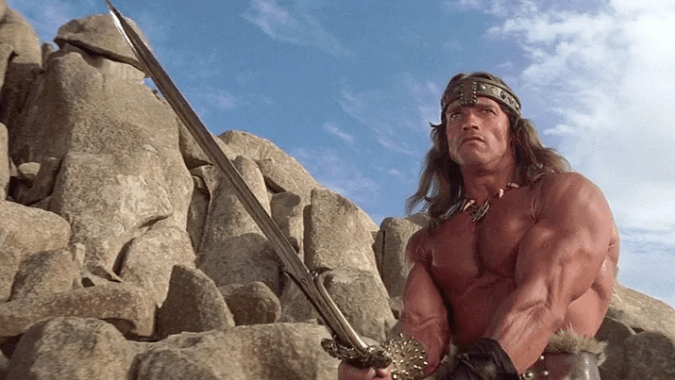
As I was working on a recent post about the great sci-fi and fantasy movies of 1982, I re-read the Wikipedia page on one of those films, Conan the Barbarian. It’s a great movie (despite the fact that it’s really just a raunchy, gory, over-the-top B-movie with an A-movie budget), and I loved it when it came out, as did millions of others. It was, in fact, a culturally significant film, in its own way, and the Wiki page reflects this. A lot of passionate, obviously smart people have contributed to the page over the years. (Wikipedia is, imho, the single greatest triumph of the internet, but that’s a subject for another post.) 

As such, the page inevitably includes a rather insightful section called “Themes,” in which people have enumerated the topics that the film explores—or at least seems concerned with. These include “The Riddle of Steel,” “Death,” “Wagnerian Opera,” “Individualism,” and “Sex.”

I’m sorry, but “Sex” is not a theme of this movie nor any other. Neither, for that matter, is “Death.” It’s a topic, surely, perhaps even a motif. (Note that I’m using the word “motif” in its strictest, compositional sense, as it is referenced in musicology.) But it’s not a theme.

Yeah, I know. I’m being a bit of an English-major-snob on this one. A word-Nazi. But bear with me, please. If you’re a person who really tries to appreciate literature, either on the page or on film, then the distinction between theme and motif is important. It’s even more important if you’re a fiction writer who struggles to create books that have some meaning and not mere entertainment that is purely disposable. Not that there is anything wrong with fiction that is mere entertainment—entertainment is great—but let’s not kid ourselves that it’s the pinnacle that people should aim for.

The film’s Wiki page comes much closer to the idea of a real theme when it discusses “The Riddle of Steel” (although it completely mischaracterizes and misinterprets the real matter at hand). As anyone who has seen the movie knows, The Riddle of Steel is a connundrum—not so much a riddle as a philosophical question—that Conan believes god will ask him when he dies. The question goes something like this: “Which is stronger? The sword, or the hand that wields it?” Or, put another way, “Technology? Or willpower?” “Brute force, or the power of conviction?”

It’s actually a pretty deep question, especially when one considers the fact that film’s original script writer, Oliver Stone (who later went on to direct a few films, too) is a veteran of the Vietnam War, which surely represented one of the greatest struggles of all time between technology, on the American side, versus sheer determination and courage on the North Vietnamese side. (Please don’t write to me and tell me that determination and courage were displayed on both sides of that tragic war. I realize this, and I am over-simplifying the conflict for the sake of argument.)

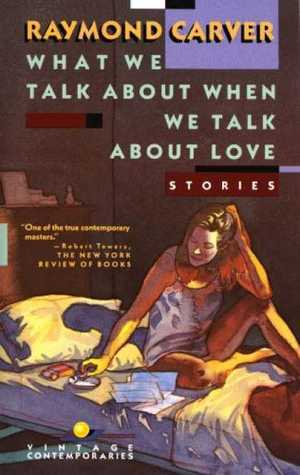
This posing of a philosophical and moral question, which the hero of the film (and, thus, the viewer) struggles to answer is, to my mind, the real definition of a theme. Perhaps the supreme example of this is Raymond Carver’s classic short story, “What We Talk About When We Talk About Love,” in which three couples—all in late middle-age, all jaded—discuss the definition of “love” over hard-drinks. It’s a great story, not just because it captures the individual voice and attitude of each character, but also because all of the characters seem to be genuinely struggling with something—a matter of real import that, each one senses, will reveal something about their own lives. As one might expect, each character has their own story to tell about the subject, beginning with this one from a woman named Terri.

Terri said the man she lived with before she lived with Mel loved her so much he tried to kill her. Then Terry said, “He beat me up one night. He dragged me around the living room by my ankles. He kept saying, “I love you, I love you, you bitch.” He went on dragging me around the living room. My head kept knocking on things.” Terri looked around the table. “What do you do with love like that.”

She was a bone-thin woman with a pretty face, dark eyes, and brown hair that hung down her back. She like necklaces made of turquoise, and long pendant earrings.

“My god, don’t be silly. That’s not love and you know it,” Mel said. “I don’t know what you’d call it, but I sure know you wouldn’t call it love.”

The story continues around the table, with each character telling their own story about the general subject of “love.” In Carver’s supremely able hands, each of these stories is shocking, yet rings true. Completely, brutally true. Some of them are also funny as hell, in a gallows-humor sort of way. One of the greatest things about the story, though, is the way it never gives us a definitive answer to the question it asks. To the contrary, the story raises even more questions—deeper meta-questions that the characters, themselves, are unaware of but which we, as readers, are. Is there a single definition for love? Is that question even meaningful? Does love even exist, really, in the cosmic sense? Does it matter?

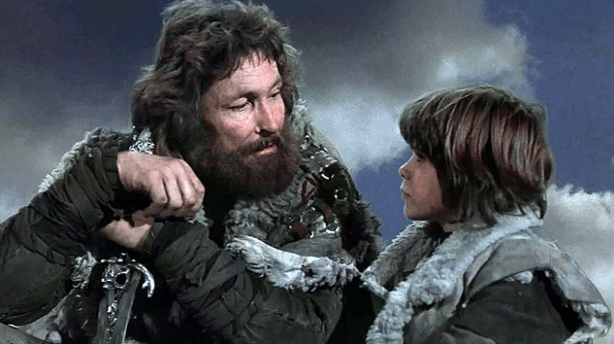
In the same way, Conan the Barbarian presents its hero with several possible answers to its central thematic question. The first is given by Conan’s father (played by the great character actor William Smith) in the opening scene, where he tells the young Conan that the one thing he can ever depend on. “Not men. Not women. Not beasts. This,” he says, gesturing to a sword he has just made. Of course, he is not talking about that particular sword, or even swords in general. He is, we sense, talking about all the intangible things for which the sword is a symbol—discipline, training, courage. The martial ideal. 

Later in the film, the villainous Thulsa Doom presents Conan with another answer. In that famous (and surprisingly shocking, even now) scene when he beckons one of his followers to literally jump off a cliff, he suggests that control over the human mind—through dogma, religion, and all the other tools of tyrants—is far more powerful than strength of arms, either literal or metaphorical.

So, which of these answers does Conan accept. Neither! In fact, his tale seems to suggest a third answer, one which is never articulated—never explicitly told—to either Conan or the viewer, but is rather born out by the action of the narrative. The answer, simply, is love. It’s Conan’s love for his murdered parents that sustains him through the ordeal of slavery and drives his desire for revenge. He loves his friend, Subotai, after rescuing him from death, and he comes to love Valeria even though she is, initially, a rival. Later, it’s Valeria’s love of Conan (along with some help from Subotai) that saves his life after they rescue him from the Tree of Woe. And it’s Conan’s grief over the death of Valeria that causes him to go on his final (foolhardy) confrontation with Thulsa Doom, where he uses his father’s broken sword (note the symbolism, there; steel really isn’t that strong, after all) to behead the man.

I think it is important to note that even in a “silly” genre movie like Conan the Barbarian—a friggin sword-and-sandal movie, for Pete’s sake—good writing can add a level of thematic resonance to any work of fiction. That is, it can turn a potentially crappy movie into a good movie, and a good movie into a great movie. It’s this complexity that separates the vast majority of films (and books, for that matter) from the few we remember years later—that tiny minority that we deem “classics” after the fact.

Another thing to consider is how Conan the Barbarian, like Carver’s short story, doesn’t fully answer its own thematic question. At least, not completely. The ending is ambiguous. Yes, Conan kills the bad guy, and (we are told) ends up a king himself, but he “sits on his throne with a troubled brow.” In others, the verdict is still out on what the real answer to The Riddle of Steel is, after all.This kind of ambiguity is, of course, a hallmark of all good fiction. We, as viewers and readers, don’t get a definitive answer—mainly because the kinds of questions that good fiction asks are, ultimately, unanswerable in any objective sense. They are always about choices. Priorities. Does honor matter more, or friendship? Revenge, or love?

Synchronicity for Bookworms: Harlan Ellison

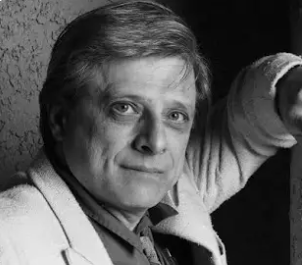
Harlan Ellison in the 1970s

The great film critic Roger Ebert once noted that the people we think of as heroes are those we looked up to when we were kids. As adults, we might admire a particularly talented athlete or actor or musician, but they won’t really be “heroes” to us; they’ll just be really cool (but life-sized) people. 

I think that my middle-aged affection for Harlan Ellison might be a slight exception to this adage, however. I was a fan of his when I was growing up (he became famous in the 1970s with his revolutionary, sci-fi short-stories like “I Have No Mouth, and I Must Scream”), but he wasn’t exactly a “hero” of mine. Then, in the 1990s, Ellison began to appear on TV as a talk-show celebrity, especially on the sci-fi channel, where he essentially co-hosted a show called Sci-Fi Buzz, where he was often very funny and always insightful. Also, to my amazement, one of his stories, “The Man Who Rowed Christopher Columbus Ashore,” was included in 1993’s Best American Short Stories collection. I saw an Ellison interview around that time, in which related that the series’ editor called him to give him the good news. At the end of their brief conversation, she asked him if had written any other short stories—an unintentional slight that Ellison said felt like “a dagger to the heart.” 

But this was typical of Ellison’s relationship to the literary world, and to Hollywood. He couldn’t get no respect. Part of this life-long diss was, surely, his own fault. He was famously abrasive and out-spoken, and hated to have his work messed with. When he wrote the screenplay for the what is generally considered the best episode of the original Star Trek series, “City on the Edge of Forever,” he hated Gene Roddenbury’s changes so much that he tried to have his name taken off the credits. (Fortunately, he failed.) In fact, he was so contentious about such matters that he had a special pseudonym, Cordwainer Smith, that he would use when he felt his work had been to mangled by studio executives that he no longer wanted his real name associated with it.

Paradoxically, the more interviews I watched of Ellison in the 1990s and beyond, the more I liked him. He had a razor wit, and he did not suffer fools easily. He could also be mean as hell when he felt attacked. But these were all characteristics I had seen before in some exceptional people I have met over the years, including my great teacher, the writer Harry Crews. I never met Ellison, but I suspect that we would have gotten along just fine. 

Indeed, I came to admire even Elllison’s famously pugilistic nature. He was quick to sue anyone who he felt had stolen his ideas. Most famously, he sued Orion Pictures over 1984’s The Terminator, alleging that director/writer James Cameron had cribbed the concept from a script Ellison wrote for The Outer Limits. Orion settled the suit out of court. (Cameron later called Ellison a “blood-sucking ghoul,” which I still find hilarious.)

Clearly, Ellison knew how to defend himself and his ideas, and to get what he felt was owed to him. Much of this toughness, I imagine, came from Ellison’s early life, growing up as an diminutive Jewish kid in Ohio. Like a lot of smart, little guys, Ellison learned how to punch back, and punch hard. 

After I wrote a blog post about Ellison and Isaac Asimov last year, I found myself thinking about Ellison more and more. So much so, in fact, that a couple of weeks ago I decided to write something about him, although what form that would take. 

Then, in one of those moments of synchronicity that happen to writers when they immerse themselves in a subject, I stumbled upon a fact regarding Ellison that I had never read before, and it came from a totally unrelated source.

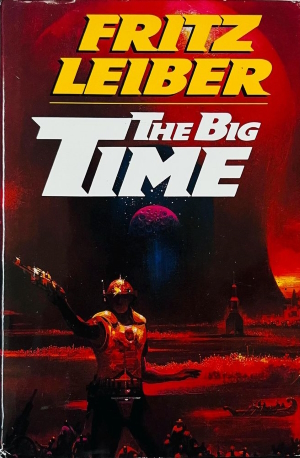
I was looking at some classic sci-fi book covers when I spotted one for Fritz Leiber’s The Big Time. I hadn’t thought of Leiber in decades (he was a favorite of a friend of mine in middle school), so out of pure curiosity I checked out his Wikipedia page. There, I was saddened to learn that Leiber spent the last few years of his life in poverty. As with so many writers, alcohol had taken its toll, and Leiber ended up living in a cheap motel. Apparently, Ellison came to visit him one day and was appalled by the state of his affairs, with Leiber not even able to afford a writing table. Rather, he was composing his latest work on a “manual typewriter propped up over the sink.” 

Fritz Leiber’s Sci-Fi Classic, “The Big Time”

Okay, maybe this wasn’t a good example of full-blown, Jungian synchronicity. I guess it wasn’t that unlikely that I should stumble upon a Ellison anecdote while reading about Leiber. They were both great science fiction writers, after all, and it make sense that they might have known each other. In fact, as I learned, Ellison included some of Leiber’s short stories in the Dangerous Vision anthologies that he (Ellison) edited for decades. Still, I didn’t know of any connection between the men. They were of different generations and circumstances, linked only by their genre and talent.

Unfortunately, the Wikipedia article does not cite the source of this (if anyone knows, please tell me), nor does it say what action, if any, Ellison took to improve Leiber’s circumstances. But I like to think that he did something to help. After all, he was a pugnacious, smart-ass little guy who looked after himself and other little guys. I miss him.

Here is a good interview that Ellison gave to the BBC in the 1970s.

Today I Learned a Word: “Melisma”

I’ve always been a huge fan of Steve Winwood. Even as a kid, I loved how clean and bright his songs were, without ever being sappy or trite. Rather, they kept an edge somehow. Eric Clapton once said that Winwood was like a young, White, British Ray Charles. I kind of think he was right. 

Not long ago, I stumbled upon one of Winwood’s music videos. It was for “Valerie,” one of his greatest solo hits and one of my favorite songs of all time. The video was on YouTube, of course, and whoever posted it included lyric-captions. Normally I don’t like to follow the captions on a music video, but for some reason I did this time. And as I followed Winwood’s phrasing, I noticed something I had never seen before. Namely, the way he often splits single syllables into multiple notes. Take the line: “Music, hi and sweet.” It’s five syllables, but he sings it as six notes. 

If you are a music major, or anyone who knows a bit about voice training, you are probably rolling your eyes right about now. The technique that Winwood is using is so basic that it’s been around for thousands of years at least. But, being a musical ignoramus, I never thought of it before. It is, I just learned, called melisma and is usually contrasted with syllabic singing, in which notes and syllables match each other one for one. 

Ironically, as I did a bit more searching on the internet, I found a Facebook post by Winwood himself, mentioning melisma. It was in reference to the passing of the great singer Christine McVie of Fleetwood Mac. Winwood commented on how McVie stood out from many of her contemporary singers by virtue of her syllabic singing. And he’s right. McVie’s phrasing was so sharp it was almost like that of a jazz singer. 

And yet, off the top of my head, I can think of several instances of when McVie used melisma to great effect. My favorite example is in “You Make Loving Fun,” when she splits the word “believe” into so many notes I can’t even count them. And each one goes right through me each time I hear it. 

It’s taking me this many years to learn the definition of melisma. Go figure. You can’t teach an old dog new tricks, but you can teach them some new words.

Edgar Awards De-Brief

Me and my writer friend, Carol Floriani

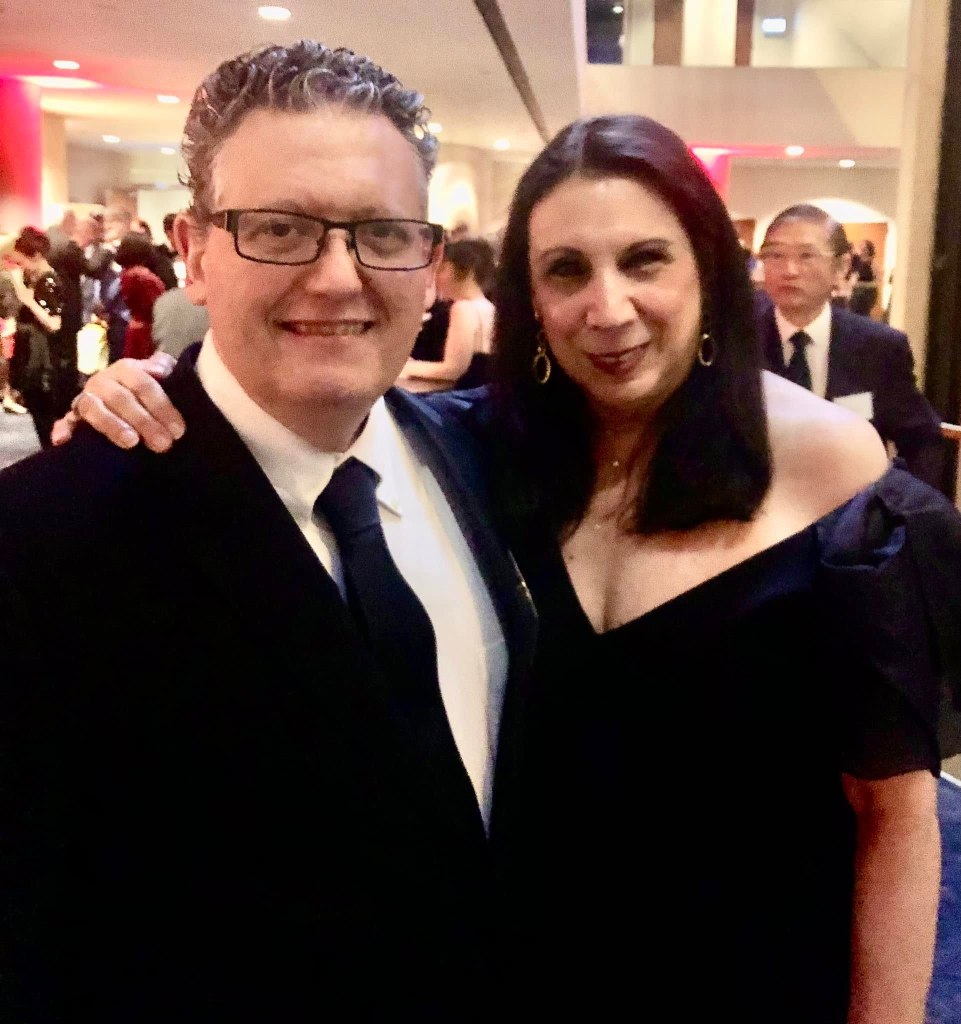
Well, the 2025 Edgar Awards Ceremony is over. I didn’t win my category (that honor went to Henry Wise for his excellent novel Holy City, but I still had a blast. I met a lot of cool people, including my new editor at Crooked Lane, Sara Henry, CLB founder Matt Martz, and others. Best of all, I made some new friends in writers Kerri Hakoda, Audree Lee, and Carol Floriani.

And, for a bonus, Cathy and I got to spend some time in the greatest city in the world, Manhattan. (I am writing this post from inside a Starbucks on 7th Ave.) I used to come here pretty often in the early 2000s, when I was working for software consulting company on Prince Street, and I always loved it. I was last here for fun in 2017 with my son Connor, doing the tourist thing. The city hasn’t changed that much as far as I can tell. It’s still a rambling, teeming, kinetic barrage of sights, sounds, and languages. Manhattan is one of the few places on earth where you can step into a crowded elevator and hear Spanish, French, German, Russian, Hausa, and several others being spoken.

It’s also got the best museum in the world, the Met, which Cathy and I visited, of course. We got to see the John Singer Sargent exhibit, with Sargent’s masterpiece Portrait of Madame X on prominent display. I first learned about this amazing picture (and the scandal it caused) from David McCollough’s excellent history The Greater Journey: Americans in Paris, in which Sargent is one of the Paris-bound artists discussed. (Sargent painted Madame X in Paris with a well-known socialite as his subject; hence the scandal.)

So, all in all, a damn fine trip so far. I don’t know if I will ever get another Edgar nom, but if I do, you can bet I will be back.

Classic Sci-Fi Book Cover: “The War Against the Rull”

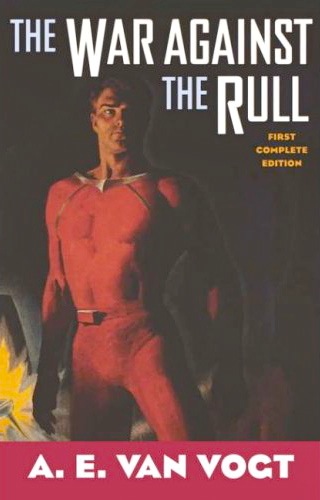
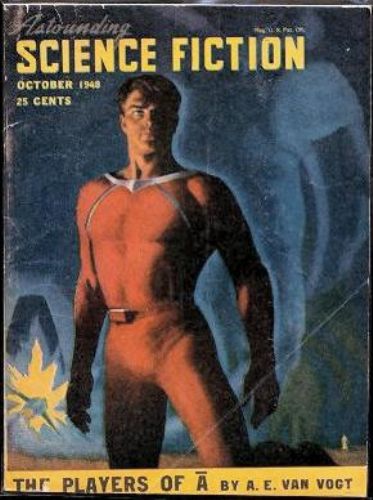
This entry in my on-going Classic Sci-Fi Book Covers series is both old and new. That is, it’s a modern touch-up of the cover from the October 1949 edition of Astounding Science Fiction painted by Hubert Rogers. That issue included a work by A.E. van Vogt, but not the one we are interested in here. This modern version is from a 1999 edition of van Vogt’s classic sci-fi novel, The War Against the Rull, which I distinctly remember devouring in two days when I was in eighth-grade.

I like this cover a lot. It’s not just a classic. It’s an archetype. Specifically, the archetype of the heroic (America) scientist, a buff intellectual and polymath whose ilk could be found in countless works of Isaac Asimov, Robert Heinlein, Roger Zelazny, and on an on. In The War Against the Rull, the man is Dr. Trevor Jamieson, a brilliant scientist who is also a fierce warrior and survival-expert. He’s stranded on an alien planet with a huge, six-legged, intelligent creature called an ezwal who wants to kill him. But when both Jamieson and the ezwal encounter a mutual enemy—a race of aggressive, centipede-like aliens called the Rull—they decide to work together to survive.

It’s a great story, like so many from the sci-fi’s Golden Age. I’ve written before about why sci-fi novels from that era are so much more enjoyable (to me, at least) than most of those written in the last ten years or so. I think it has to do with the gritty humanity of such stories. Yeah, Jamieson is essentially a comic-book character (think Doctor Quest and Race Bannon rolled into one), but van Vogt does a great job of making you believe he’s in real trouble. The ezwal, too—he’s a compelling character in his own right. You get involved in the desperate nature of their situation, and you keep reading to see how they will get out of it.

Anyway, check it out if you can…

Original Cover from Astounding
Cover from the 1970 edition that I read as a kid (by artist John Schoenherr)
Another version of the Scientist Hero Archetype (by artist James Bama)

AI Heaven, AI Hell

When I was an English major at the University of Florida, one of the best classes I took was a Survey of Science Fiction Literature course. It covered a lot of famous American and British SF, some of which I had already read as a teenager and some of which were new to me.

Looking back on it now, it occurs to me that two of the writers we read in the class were not only totally different from each other, they also presented two completely opposite visions of what we now call artificial intelligence. These writers were Isaac Asimov and Harlan Ellison.

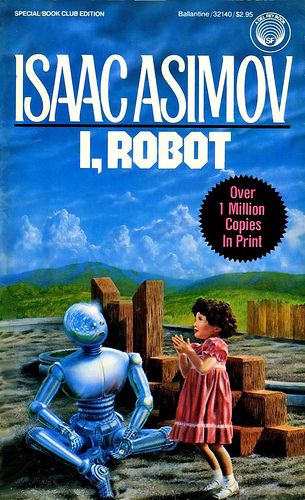
For Asimov, we read his early, seminal work, I, Robot. This is the short story collection that included his first formulation of the Three Laws of Robotics, which have been alluded to (i.e, ripped off) in countless other science fiction stories, including Star Trek. The book came out before the term AI became common parlance. Yet, in Asimov’s imagined future, the world is rife with robots that are essentially AIs with mechanical bodies. All of them have positronic brains (yeah, Star Trek ripped off this conceit, too) with the Three Laws hard-wired in. The result is that all robots function as humanity’s tireless, benevolent servants. (Some would say, slaves.) 

Actually, they are much more than that. They can think, reason, and make choices. In fact, they have to make choices. The moral dilemmas created by the Three Laws as the robots interact with chaotic (and often evil) human beings is the source of drama in most of the stories. 

Despite the mystery and drama of the stories, though, Asimov’s vision is a very optimistic, almost Buck-Rogers-esque idea of the future—not quite a utopia but close to it. There is no poverty, no hunger, no war. It’s only upon close reading of the stories in I, Robot that the exact nature of the master/servant relationship between humans and robots appears fraught—probably more so than Asimov consciously intended. This is especially true in a few of the stories, where it’s revealed that future governments are secretly run by the highest order of HAL 9000 style robots, whose plans might be beyond human comprehension. 

Later in the Science Fiction class, we read Harlan Ellison’s short story “I Have No Mouth and I Must Scream,” which is quite possibly the darkest and most disturbing short story I have ever read, sci-fi or otherwise. And, of course, it involves an AI.

The story is mostly set underground, about one hundred years after a nuclear war wiped out all of humanity except for five people. The war was started by a mutinous Pentagon computer (yeah, just like Skynet) called AM that becomes self-aware and decides it hates human beings more than anything. After killing everyone on the planet, it preserves the five people as its playthings, running them through an endless number of elaborate, sadistic games. Unfortunately for them, AM has somehow obtained God-like technological power over physics, able to shape and project matter wherever it wishes, and also to keep the humans alive and immortal in their banged-up, miserable state. So, in effect, the protagonists spend an eternity in a kind of Holodeck-like hellscape, trying to figure out how to either escape or kill themselves.

Yeah, it’s heavy. 

This enormous gulf between Asimov’s and Ellison’s visions of the future—an AI paradise versus an almost literal AI hell—is, in part, symptomatic of various generational and cultural shifts between the two men. I, Robot was published in 1950, on the tail-end of the Golden Age of Science Fiction, the time when the prosperity of America in the post-war years seemed destined to go on forever, fueled by newer and greater technological innovations (AI among them). In contrast, Ellison’s short story was published in 1967, at the height of a counter-cultural revolution that extended into science fiction literature —the New Wave that introduced some of my favorite sci-fi writers of all time, such as Samuel R. Delany, Ursula K. Le Guin, Roger Zelazny, and Ellison himself. 

Thus, the difference between Asimov and Ellison’s work is essentially the difference between the lingering triumph of World War II and the horrors of VietNam. Between the optimism of the Atomic Age and the nihilism of the Cold War. In some ways, it’s also the difference between fantasy and realism, and between genre fiction and literary fiction. As dark as Ellison’s short story is, it’s also a much better work of fiction than Asimov’s. More convincing, too, alas. Told from the point-of-view of AM’s youngest victim, Ted, the story is filled with vivid, sharp writing and devastating passages, like this one:

Nimdok (which was the name the machine had forced him to use, because AM amused itself with strange sounds) was hallucinating that there were canned goods in the ice caverns. Gorrister and I were very dubious. “It’s another shuck,” I told them. “Like the goddam frozen elephant AM sold us. Benny almost went out of his mind over that one. We’ll hike all that way and it’ll be putrified or some damn thing. I say forget it. Stay here, it’ll have to come up with something pretty soon or we’ll die.”

Benny shrugged. Three days it had been since we’d last eaten. Worms. Thick, ropey.

You don’t have to be a literary critic to see that Asimov and Ellison are worlds apart, not just on the subject of Artificial Intelligence but on literally everything. Asimov was a scientist, a rationalist, and his optimistic views on the future of humanity were deeply rooted in the legacy of the Enlightenment. Ellison is more of a Gothic Romantic, full of existential angst and cosmic horror. His story is essentially an updated version of Mary Shelley’s Frankenstein, with the supercomputer in the role of the monster, determined to torment its creator.  

Of course, the Frankenstein story is, itself, a reworking of an even older one—the Faustian myth. According to German legend, Faust is an intellectual who sells his soul to the devil in exchange for knowledge, and ends up going to hell. If the story seems familiar, it’s probably because the legend has been the psychological basis for countless tales of perverted science for centuries. Scientists, the story goes, want to attain the power of God, and thus end up being destroyed by their own hubris (often in the form of some infernal creation like Frankenstein’s monster or, more recently, SkyNet). 

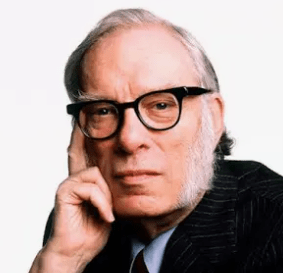
Isaac Asimov

Perhaps the biggest irony here (at least for me, personally) is that while I have great admiration for Ellison’s story, and I believe it is a much greater artistic work that anything ever penned by Asimov, Asimov’s vision is probably more accurate of what we can actually expect from the AI revolution. For all the hype about AIs destroying art and music and literature and taking away our jobs, I think AI will be a net positive for humanity. Perhaps a big net positive. It’s already making contributions in the fields of materials science, medicine, and even fusion energy. Yeah, it’s probably going to take away some people’s jobs, but those were probably crap jobs anyway. (If you train an AI to do it as well as a human, it’s probably not worth doing.) 

As for the whole AM/Skynet thing, I don’t worry about it because I don’t believe computers will ever become conscious. In fact, the very idea of a machine becoming conscious seems like a category error, the kind of conceit that will seem laughable a hundred years from now as those old drawings of “men of the future” with feathered wings strapped to their arms. 

Harlan Ellison

This doesn’t mean, of course, that we won’t, someday, create an artificial life form that might replace us. But it won’t be a computer. It will be…something else. 

But that’s a subject for another post.

The Metaphysics of Left and Right (No, Not Politics; the Freakin Directions!)

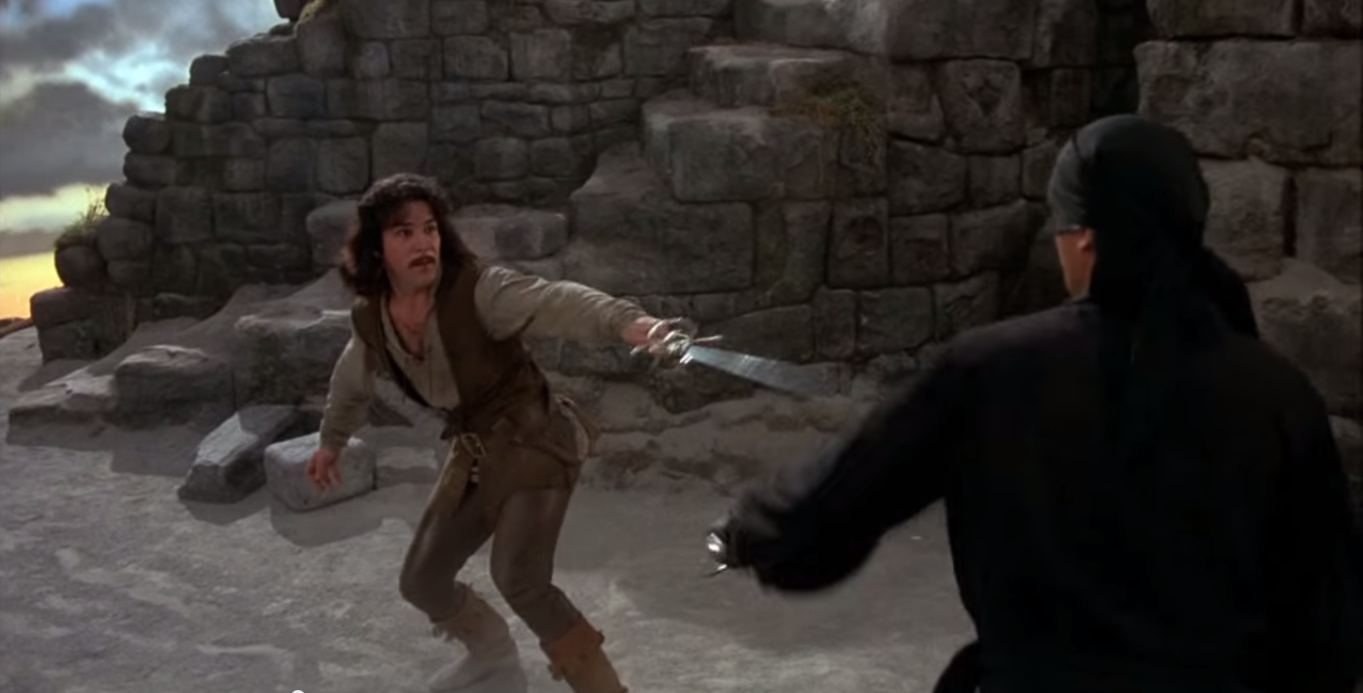
pbride_swords
“I am not left-handed…”

I think I am losing my mind.

A few years ago, I was reading yet another popular science book—I think it was Brian Greene’s The Elegant Universe—when I came across a reference to one of those barroom brain teasers. It goes like this: if your image in a mirror is reversed with regard to right/left and left/right, why is not also reversed from up/down and down/up?

The answer, while elementary, is surprisingly difficult to articulate. It helps to imagine yourself, not face-to-face with your reflection, but back-to-back, with the plane of the mirror between you and your mirror-doppelgänger. Now stick your arms out and waggle your fingers. For both you and your reflection, up is still up, and down is still down. This side (left to you, right to your doppelgänger) is still this side, and that side (right) is still that side.

The only real difference is that up/down has an objective definition; that is, which direction is the earth and which the sky. But left/right has a purely subjective definition, relative to whose set of eyes one is looking through.

Simple, right?

Continue reading “The Metaphysics of Left and Right (No, Not Politics; the Freakin Directions!)”