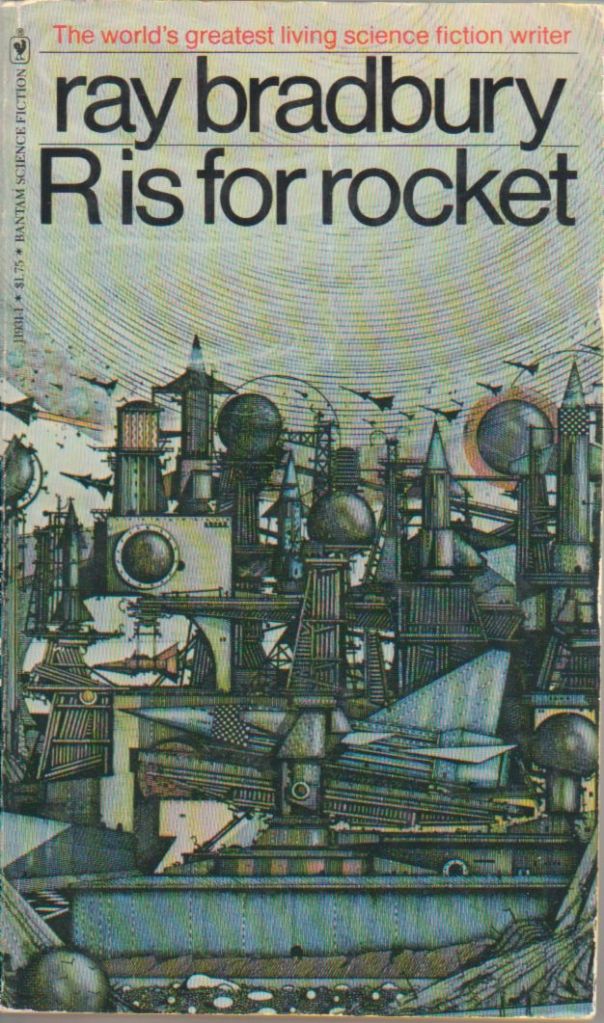
This 1977 cover for Ray Bradbury’s The Martian Chronicles is probably an off-beat choice for my Classic Sci-Fi Book Covers series. After all, it’s a pen-and-ink illustration, which is a very unusual choice for sci-fi art.
Unusual, that is, unless you’re the great Ian Miller, who does most of his work in pencil or pen. Miller did a lot of Bradbury covers in the 1970s and 80s, and I love every single one of them. They have a weird, surreal, almost cubist quality that evokes the sense of mystery and magic that the best sci-fi novels create.
I find it interesting that the two most famous architects in American history—famous, that is, among ordinary people who don’t subscribe to Architectural Digest—were both named Frank. They were, of course, Frank Lloyd Wright and Frank Gehry. Both men created buildings that captured the popular imagination like few others. And both were mavericks whose vision of what architecture could do often offended the mavens of the status quo (not to mention the bean-counters who worked for the rich people who funded their projects).
Both men also shared a sense of play and in their work—Gehry to a much greater degree, sometimes designing homes and offices and other buildings that veered into pure fantasy. He often brainstormed new projects with strips of paper and cardboard, envisioning light, fluid, soaring structures that, one could argue, would not have been possible to actually build in an age before computer-assisted design was available.
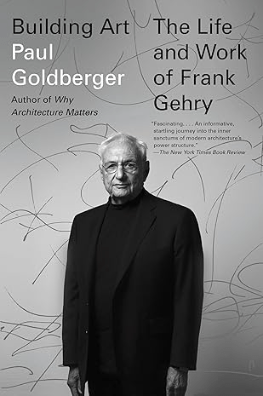
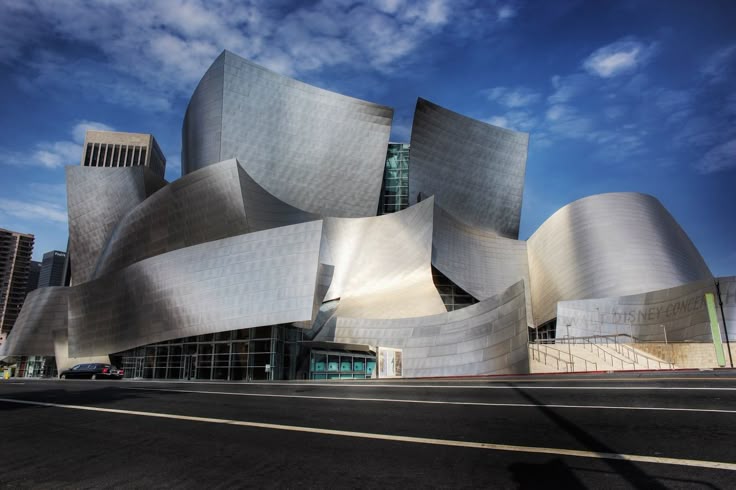
This emphasis on play and the power of imagination was evident in all his work, even in huge, civic projects like his Walt Disney Concert Hall in Los Angeles. As Paul Goldberger relates in his fine biography, Building Art: The Life and Work of Frank Gehry, Gehry took an almost impish pleasure in fooling around with his own designs. When he was in the early stages of mocking-up his plans for another auditorium in Asia, he shocked and amazed his colleagues by adjusting the position for the auditorium every night or so. As one friend put it,
…[H]e became a monster. He started moving stuff around.… We were doing a project in Korea that never got built [the museum for Samsung] but every time I went on a trip and came back he had moved the auditorium. He was impeccable. He had incredible reasons for it. He’s really brilliant. He doesn’t sleep at night and he comes back the next morning and moves the auditorium.”
As Goldberger explains…
Moving the auditorium, in Frank’s view, was a form of what he liked to call “play,” and it was largely instinctive. “A serious CEO, you would imagine, does not think of creative spirit as play. And yet it is,” he said. “Creativity, the way I characterize it, is that you’re searching for something. You have a goal. You’re not sure where it’s going. So when I meet with my people and start thinking and making models and stuff, it is like play.”
As the title of Goldberger’s book relates, Gehry saw himself almost as more an artist than an architect. At times, he refused to believe that one needed, necessarily, to make a distinction between the two. Early in his career, Gehry befriended and hung-out with great modern artists in Southern California, and they reciprocated his admiration. Perhaps this is the reason that Gehry’s greatest buildings resemble art more than perhaps other architect.
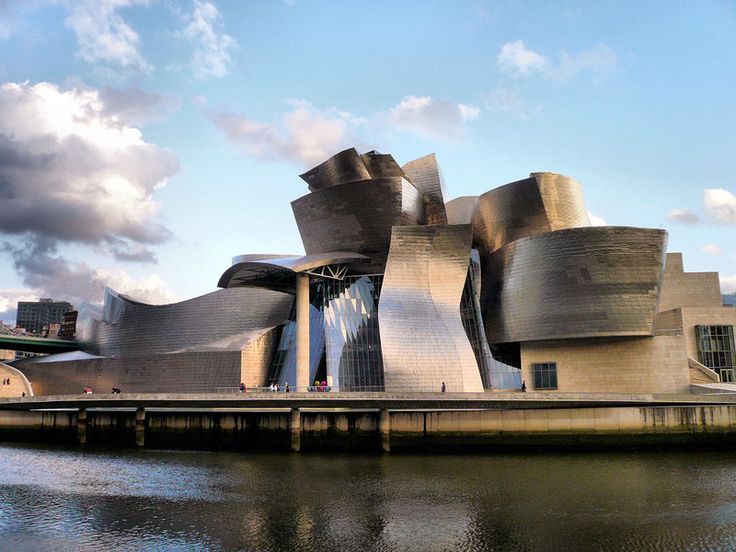
Guggenheim Museum, Bilbao
His most famous is, of course, the Guggenheim Museum in Bilbao, Spain. When the museum finally opened in 1987, a flood of tourists came from all over the world to see it, prompting some of the artists whose work was displayed inside the museum to feel that they were playing second fiddle to the building itself. This grumbling grew into a modest backlash among the artistic community, focused not so much on Gehry himself as on the fawning admiration of journalists and other architects who often lauded Gehry as an “artist.” As Gehry’s own collaborator and friend, the sculptor Richard Serra, said,
I don’t believe Frank is an artist. I don’t believe Rem Koolhaas is an artist. Sure, there are comparable overlaps in the language between sculpture and architecture, between painting and architecture. There are overlaps between all kinds of human activities. But there are also differences that have gone on for centuries.”
Whether he was being lauded or criticized, Gehry himself never seemed concerned. In fact, when compared to that other great architect named Frank, Gehry usually seemed downright humble, if not pathologically shy. Goldberger writes:
Even though Gehry was ridden with angst throughout his life, his manner came off as relaxed, low-key, and amiable, and his steely determination, far from being obvious like Wright’s, was hidden behind an easygoing exterior, a kind of “aw shucks” air that Gehry’s old friend the artist Peter Alexander called “his gentle, humble ways.” Wright was never mistaken for being modest; Gehry often was.
Gehry was so shy, in fact, that I feel he could have been much more famous than he was if he gotten himself out there, gone on TV more and granted more interviews and written some puff-pieces for various magazines and web sites. The fact that he did not is, I suppose, the most telling fact about the man’s character. Namely, that he was a genius who was determined to create the most original and uplifting works as he could…and, then, to let those works speak for themselves.
If you’re a liberal-arts nerd like me who thinks about culture all the time, you have probably pondered this question: why do people remake movies, but not books?
Yeah, I know. On the surface, this seems like a silly and even naive question. Movies, after all, are a popular medium. They belong primarily in the category of the performing arts, like theater and ballet and classical music. And, as we all understand, no one over ever gives the “final” performance of Hamlet or Don Giovanni or The Jupiter Symphony. Yes, there are certainly “classic” performances of all these works—some of them, made in the past century, have been recorded for the ages—but none is ever the last performance. Each generation must have its own Hamlet, Don Giovanni, etc.
I was surfing the YouTube this morning when I stumbled upon this really cool video essay about the (diminished) immersive experience of modern films as opposed to old, classic ones. The author echoes some of the ideas I sketched out in a similar post from a few years ago called Whatever Happened to Open-Form Films?
Please check-out the video and the post if you are interested.
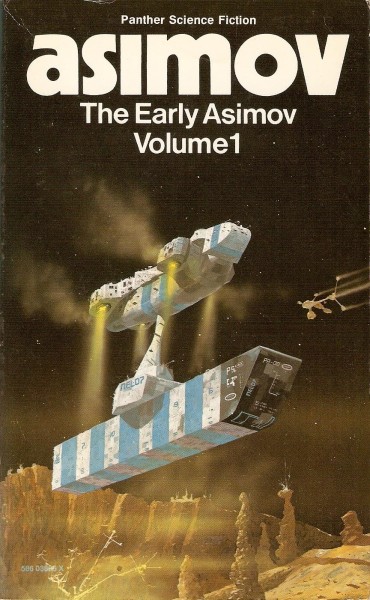
Ever since I started this series, I’ve been meaning to write a post about Chris Foss. For a sci-fi nerd growing up in the 1970s and ’80s, it was impossible not to see and be familiar with Foss’s artwork. After all, he illustrated more than 1,000 book covers during his long and celebrated career. His style is so distinct and memorable that one can recognize it on a bookshelf (or a computer screen) from twenty yards away.
I remember seeing some of his sci-fi book covers back in the 1970s and being struck by their originality and vividness. He specialized in images depicting spaceships or futuristic craft, which he rendered with a strange, industrial-style realism that was new and striking. In particular, his spaceships look like real, constructed things with visible welds and spanners and plates, often painted in bright, almost nautical color schemes. He also likes to depict smoke. Or mist. Or dust. Something to give the otherwise static vacuum of space some drama and sense of motion.
His work was so good, in fact, that no one seemed to care whether the depicted image had anything to do with the plot of the book itself. Often, it did not. But that didn’t matter. The cover always said two things: science fiction and drama. And that was enough. It was plenty.
While I was doing a bit of research for this post, I was delighted to learn that Mr. Foss is still alive and still working. You can see more of his artwork on his website, which I encourage everyone to visit.
Having once been an art student (well, a creative-writing student; close enough), I know from experience that the quickest way to start an argument among a bunch of art majors is to ask them what the definition of “real” art is. Similarly, the best way to start an argument among a bunch of cinephiles is to ask them what “real” cinema is.
That is essentially what the great director Martin Scorsese did in 2019 when he suggested that Marvel superhero movies (in their zenith, at the time) were “not cinema”. He stated:
Honestly, the closest I can think of them, as well made as they are, with actors doing the best they can under the circumstances, is theme parks. It isn’t the cinema of human beings trying to convey emotional, psychological experiences to another human being.
Scorsese thus not only managed to make himself sound like a bit of a snob—not to mention a grumpy old man—but to also start an internet flame-war that continues to this day.
Ultimately, though, the whole affair was a tempest-in-a-teapot. Of course the Marvel films are “real” cinema. That is, they are fabulously well-crafted motion pictures that, at their best, have an emotional and even a physical impact on their viewers. They also (again, at their best) make important philosophical and political points.
However, they are a different kind of cinema than what Scorsese works in. In other words, what we’re really talking about her is the difference between literary cinema and popular (that is, genre-based) cinema.
This is the same distinction one must make between literary fiction and genre fiction. The purest and simplest definition of genre fiction is that, for the most part, the reader knows what they’re gonna get. A mystery is going to have a murderer and a sleuth. A horror story is going to have a monster and hero/heroine fighting it. A rom-com is going to have two people who should get together romantically but just can’t, for some reason, until the very end. And a superhero movie is going to have, well, a superhero with some kind of superpowers who is fighting some equally superlative evil.
The devil, of course, is in the details. We consume genre cinema for the same reason we consume genre literature—because we want to see how they pull it off. “They” in the case of cinema, being the director and the writer and the actors. How do they change-up the old formula, make it interesting and somehow new?
That is how genres evolve and adapt to new time periods and new zeitgeists. Daniel Craig’s interpretation of James Bond was different from Sean Connery’s or Roger Moore’s—it was more brutal, more bloodthirsty, and yet somehow more vulnerable, too. Just like us, the American film-viewing public.
In the same way, Marvel superhero movies are different from superhero movies of the 1970s (think Superman) or the 1980s. The characters are more believable, as well as being more complex and even vulnerable. I am, again, thinking of the very best Marvel movies: the first Ironman starring Robert Downey Jr. and Captain America: The Winter Soldier. This latter film, which came out in 2014 (yes, it’s been that long), is probably the best film of the entire series. And, yes, it is “real” cinema.
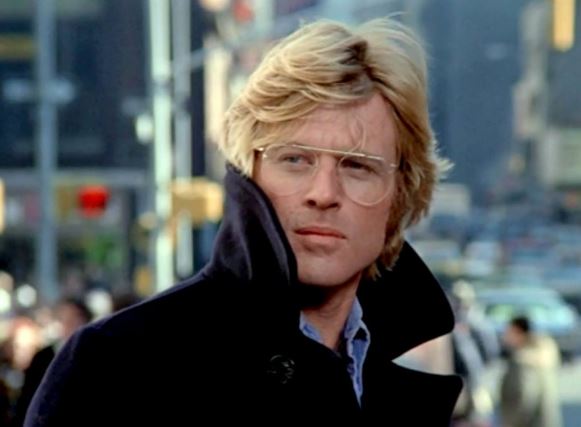
Robert Redford in “Three Days of the Condor”
In fact, as very few people have realized, The Winter Soldier is almost a remake of a 1975 film that most film snobs would agree is “real” cinema: Three Days of the Condor.
The only obvious similarity is that both films feature Robert Redford. In Condor, Redford plays a brilliant but very bookish CIA analyst named Turner who works in a New York City branch office. One day, he comes back from lunch to find everyone in the office dead, murdered by professional assassins. Turner goes on the run. Unsure of who he can trust, he kidnaps an unsuspecting, beautiful woman (Faye Dunnaway) and hides in her apartment. From there, he gradually figures out that the assassins who killed his work-mates were sent by a rogue faction inside the CIA itself. Apparently, Turner’s branch had stumbled upon a secret plot by the faction to invade the Middle East and capture all the oil fields (how very far-fetched, right?). Turner eventually confronts the leader of the faction, as well the head assassin, a Zen-Master-like Frenchman named Joubert (played with brilliant, icy effectiveness by Max von Sydow).
On the surface, Condor might seem like a very different film from The Winter Soldier. But the closer you look, the more The Winter Soldier seems almost like a remix of the earlier film. That is, it has all the same elements. The good-guy-betrayed-by-his-government figure is Steve Rogers (a.k.a. Captain America) who, like Turner in Condor, discovers a vast conspiracy within U.S. intelligence (S.H.I.E.L.D, in this case, rather than the CIA). Like Turner, Rogers finds himself on the run with a beautiful woman (Natasha Romanoff/Black Widow). He confronts the leader of the conspiracy (played by none other than Robert Redford himself). And of course he confronts the lead assassin, Barnes, who (like Joubert in Condor) turns out to be far more complicated than he appears.
Even some of the individual scenes in The Winter Soldier are eerily reminiscent of those in Condor. Take the now famous elevator sequence, which is not only the best in the film but one of the best in the entire MCU series. On his way out of the high-tech and vaguely fascistic H.Q. of S.H.I.E.L.D., Rogers steps into an elevator and rides down. As the elevator stops at successive floors, more and more men step on, each menacing but seemingly disinterested. The scene works so well because everyone can relate to it, to that sense of unease we all fell when forced into close proximity with strangers. We begin to wonder: what if some of these people were evil. They could hurt us—maybe even kill us—before we could react. And yet, despite this unease, we do nothing because we have no real evidence of evil intent. We’re playing a social role. And that’s just what Rogers—a good-natured man if ever there was one, willing to give anyone the benefit of the doubt—does.
Robert Redford in “The Winter Soldier”
I love the moment when Rogers notices sweat streaming down the face of one of the men next to him. He knows—as we, the viewers, know—that this is really, really bad. But there is nothing he can do about it…yet. It’s still in the future. Alfred Hitchcock couldn’t have done it any better. Nor, for that matter, could Sidney Pollack, who has an almost identical scene in Condor, in which the hapless Turner finds himself in an elevator with Joubert, the master assassin. Each man knows that the other man knows who he really is, but neither can take any action…yet.
Ever since I read Mark Crispin Miller’s landmark essay “Hollywood: The Ad” many years ago, I’ve been fascinated the way in which the tropes and elements of an early “classic” movie can end up rearranged and transformed in a later pop film. Miller gives the example of 2001: A Space Odyssey (1968) and Star Wars (1977). If you look closely, many of the components of the former get transmogrified in the latter. The apes of 2001 become the loyal Wookie Chewbacca. The cold, robotic voice of HAL the computer becomes that of C3PO the droid. The white, sterile interiors of the spaceship Discovery become the stark, sterile halls of the Death Star. And so on and so forth.
Martin Scorsese
That’s just what has happened here, with Condor and The Winter Solider. They’re practically the same movie, but shaken up by time and changing purposes. That is, The Winter Soldier is every inch a pop film, with the full intention of stimulating the audience with all the action and explosions and kung-fu fights that we’ve come to expect from a Hollywood blockbuster. But, on some level, the kernel of Condor is still there. The Winter Soldier is also a story about evil, rapacious men seizing control of government, and also the creeping power of America’s military-industrial complex. It’s also about the dehumanization the soldiers like Rogers and Barnes undergo as pawns in the hands of callous leaders and ruthless institutions.
In short, despite all its roller-coaster-ride thrills and spectacle, The Winter Solider is a “real” movie.
I had an event to attend in New York City last week, but I couldn’t afford the hotel when the event was actually being held. So, I got a room for my wife and me a few blocks north, on 7th Avenue and 53rs Street. Venturing out for coffee the next morning, I was thrilled to see a sculpture directly across the street, a giant rendering of the word HOPE in red and green letters.
The sculpture is, of course, by pop-artist Robert Indiana, and is a version of his famous LOVE print from 1964. With its simple, Didone letters and bright, primary colors, it’s one of the most instantly recognizable images in art history. Later, Indiana transformed the image into a sculpture which was installed in Central Park for decades. Later still, he made parallel sculptures using other words, like the HOPE version I saw (and photographed, below).
For me, seeing that particular sculpture, in that particular spot, literally right outside my randomly chosen hotel, seemed like a profound instance of synchronicity. This is because I had been reading Prudence Peiffer’s excellent non-fiction book The Slip: The New York City Street That Changed American Art Forever, which illuminates the history of Coenties Slip (pronounced koh-ENT-tees), a semi-abandoned industrial area of lower Manhattan that had once been a small pier jutting into the East River. The slip was filled-in during the early 19th Century and became a locus for sail-making, one of the most skilled and highest-paying trade jobs of the era. Sail-making requires a lot of open warehouse space, and in the early 1960s, those same warehouses (long since abandoned) became cheap studio space for struggling artists and actors, and it is these brave figures that Peiffer’s book illuminates. Chief among them were Robert Indiana, James Rosenquist, Agnes Martin, Elsworth Kelly, and Lenore Tawney.
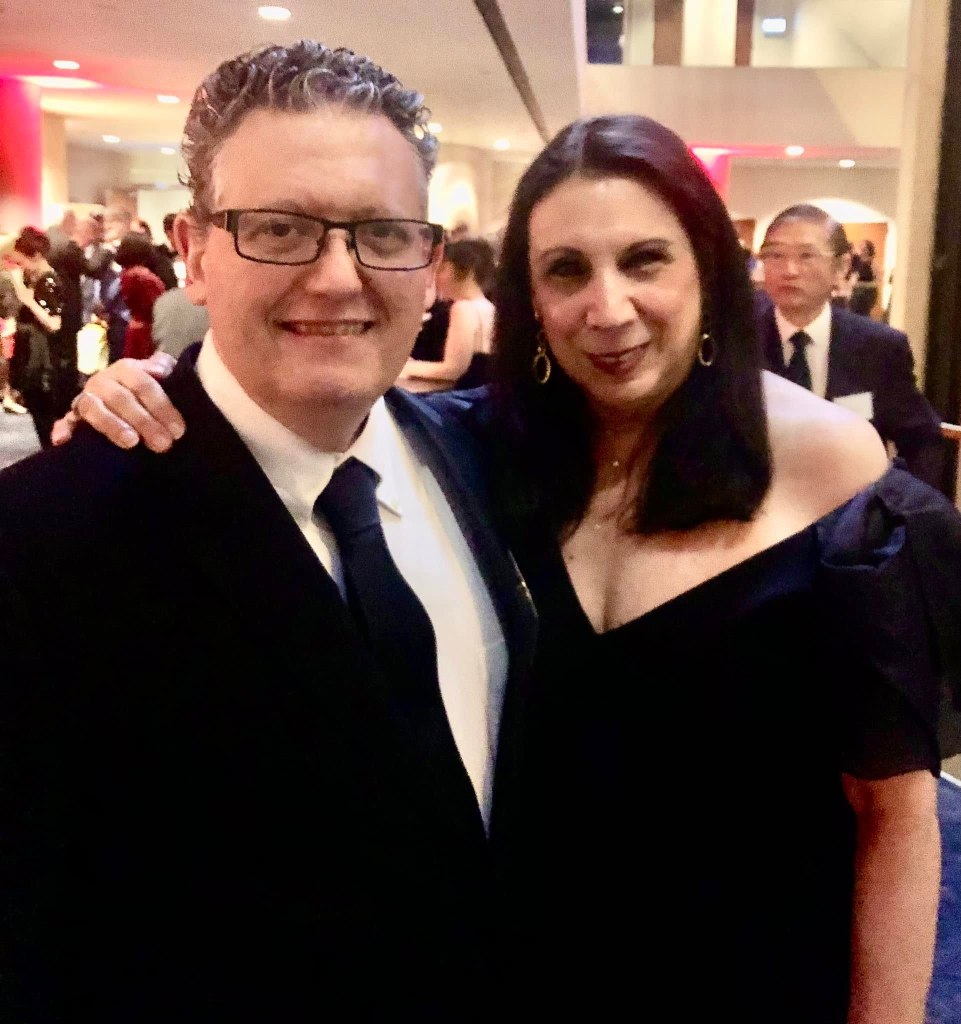
Well, the 2025 Edgar Awards Ceremony is over. I didn’t win my category (that honor went to Henry Wise for his excellent novel Holy City, but I still had a blast. I met a lot of cool people, including my new editor at Crooked Lane, Sara Henry, CLB founder Matt Martz, and others. Best of all, I made some new friends in writers Kerri Hakoda, Audree Lee, and Carol Floriani.
And, for a bonus, Cathy and I got to spend some time in the greatest city in the world, Manhattan. (I am writing this post from inside a Starbucks on 7th Ave.) I used to come here pretty often in the early 2000s, when I was working for software consulting company on Prince Street, and I always loved it. I was last here for fun in 2017 with my son Connor, doing the tourist thing. The city hasn’t changed that much as far as I can tell. It’s still a rambling, teeming, kinetic barrage of sights, sounds, and languages. Manhattan is one of the few places on earth where you can step into a crowded elevator and hear Spanish, French, German, Russian, Hausa, and several others being spoken.
It’s also got the best museum in the world, the Met, which Cathy and I visited, of course. We got to see the John Singer Sargent exhibit, with Sargent’s masterpiece Portrait of Madame X on prominent display. I first learned about this amazing picture (and the scandal it caused) from David McCollough’s excellent history The Greater Journey: Americans in Paris, in which Sargent is one of the Paris-bound artists discussed. (Sargent painted Madame X in Paris with a well-known socialite as his subject; hence the scandal.)
So, all in all, a damn fine trip so far. I don’t know if I will ever get another Edgar nom, but if I do, you can bet I will be back.
I have a confession to make: I dream about shopping malls. Specifically, one shopping mall, the Oaks Mall here in Gainesville.
The “Collapsed Time” Effect of Vaporwave
After my parents’ divorce, I saw my mother mostly on the weekends, and one of our routine activities was to go to the mall. We would have lunch, see a movie, and wander around. Later, when I got into my teens, I spent a lot more time at the mall with my friends. We hit all the usual spots—the arcade, both bookstores (Waldenbooks and B. Dalton’s), the record store, Spencer’s Gifts, the toy store. And we did anything else we felt like.
Trappings of the 1980s, along with “Broken Sun” motif
We weren’t alone, of course. After the collapse of downtown America, the mall was the last remaining public square. In suburban America, particularly, it was also the only fun thing to do on a Saturday afternoon. Or a Saturday night, for that matter. When I entered high school and started going on dates, we often went to a movie at the mall. One of my most vivid memories is of how strange and eerie the mall felt after the movie let out at 11:00 or so, and we would walk through the empty, dark hall with all the shops closed and metal gates drawn down. It was one of my first experiences of liminal space, and it sticks with me even today.
In fact, it haunts my dreams. Literally. For when I dream of the Oaks Mall now, I often find myself lost among its corridors near closing time, the wings still busy with shoppers but with the crowd starting to thin out, little by little. Stranger still, my dream-mall is huge—the size of Manhattan Island, practically. A gigantic labyrinth of brand-name stores, all of which are in the early stages of shutting down for the night. (My subconscious, I think, is warning me that the mall is shutting down forever.) These dreams often end in a sense of panic as I realize I am on the wrong side of the mall from my friends, or my car, or whatever, and I will never be able to reach them/it in time before…what? Closing? It’s not clear, but whatever it is, it’s kind of scary.
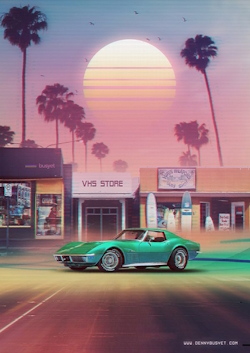
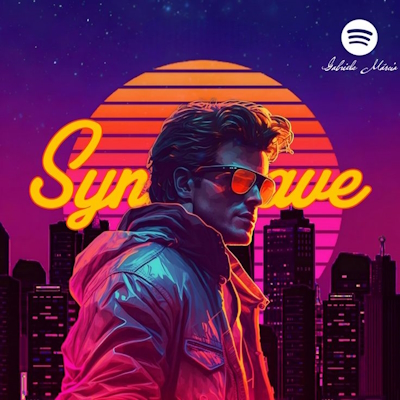
Despite the disquieting nature of these dreams—or perhaps because of it—I find myself endlessly fascinated by what has come to be known as the Vaporwave aesthetic. Vaporwave is primarily a visual genre, marked by artistic images of 1980s culture. That is, computer graphics, shopping malls, the Miami skyline (alaMiami Vice), fast food restaurants, music videos, video stores, and old-style video games.
And neon. Lots and lots of neon.
Empty Mall / Liminal Space Vibe Typical of Vaporwave
The overriding effect is that of a hyper-real fantasy that feels like a time-portal back to the 1980s. I love these images because they somehow evoke the memory of that long ago time, at least for me. More accurately, they evoke the feeling I wanted to have at the timebutcould never quite capture. The feeling of an endless, prosperous, fun, high-tech future.
I think that this is the real power of nostalgia. A wise man once defined nostalgia as a fondness for a Time that never existed. I don’t think that’s quite right. Nostalgia is a fondness not for a lost time but for a lost hope—the hope one felt and in a familiar place and a long-ago time. A hope that, though never realized, still lingers in the heart.
That sense of lost opportunity is, I think, reflected in the very name of the genre itself, vaporwave, which is very similar to vaporware, a term coined in the 1980s to mean great-looking software that was promised by advertisers and corporations but which never actually materialized. It simply evaporated.
The same thing happened to our collective dreams back in the 1980s. My friends and I all hoped that we could look forward to a glorious future, one better than that of our parents’ and teachers’ generation. A future that would be made bright by the many technological revolutions (the digital revolution, especially) that were impacting every aspect of our culture: movies, TV, music, art, games, fashion, and even books. The haunting images of vaporwave reflect that lost dream—rather than the sterile reality—of the 1980s and ’90s.
Many vaporwave images seem to have a psychedelic “collapsed time” feel to them, as did many of the music videos and computer-generated short films of that era. The hippie generation had the psychedelic flower as their symbol. We had the computer-generated sun—the so-called “broken sun”—which seems to have been pulled directly from of a film poster or a television commercial from 1982.
As attracted as I am to vaporwave, I am equally drawn to its parallel music genre, synthwave. Like vaporwave, synthwave is characterized by the early computer-era vibe, as symbolized in synthesized music. Not actual synthesized music from the 1980s, of course, but rather music that sounds a lot like it, yet is somehow drained of all melodrama and false tension that characterized synth-music back then. Synthwave has a kind of purity to it. A simple beauty that surpasses the actual music of that time.
In other words, synthwave is to actual 1980s music what Andy Warhol was to actual advertisements of the 1950s. His silk screen images of Campbell’s soup cans looked almost exactly like actual soup cans, but larger, stylized, more vivid. They made the world really see Campbell’s soup cans—the sublime nature of everything, even a mass-produced soup can—for the first time. Warhol’s genius lay in his ability to show us the beauty and promise of something that was once central and even commonplace in our lives, even as it mocked (lovingly) that very same thing.
That’s what vaporwave does, too. Through the alchemy of art, it somehow humanizes the relentless, corporate-controlled media barrage of the 1980s. For me, and millions of others like me, it is literally the stuff that dreams are made of.
Or were made of, that is. Back in the day.
Lo-Poly, Computer-Generated Background with Broken Sun
Blatent Consumerism of the 1980s, both celebrated and mocked
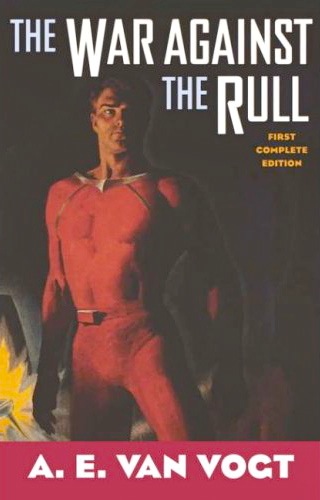
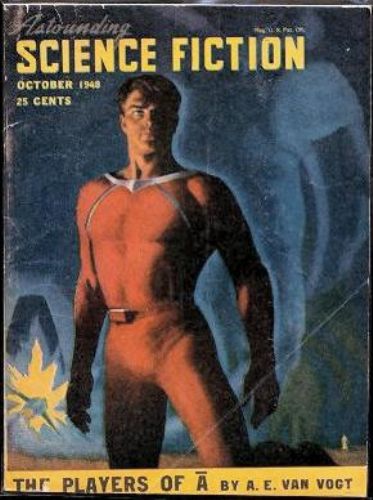
This entry in my on-going Classic Sci-Fi Book Covers series is both old and new. That is, it’s a modern touch-up of the cover from the October 1949 edition of Astounding Science Fiction painted by Hubert Rogers. That issue included a work by A.E. van Vogt, but not the one we are interested in here. This modern version is from a 1999 edition of van Vogt’s classic sci-fi novel, The War Against the Rull, which I distinctly remember devouring in two days when I was in eighth-grade.
I like this cover a lot. It’s not just a classic. It’s an archetype. Specifically, the archetype of the heroic (America) scientist, a buff intellectual and polymath whose ilk could be found in countless works of Isaac Asimov, Robert Heinlein, Roger Zelazny, and on an on. In The War Against the Rull, the man is Dr. Trevor Jamieson, a brilliant scientist who is also a fierce warrior and survival-expert. He’s stranded on an alien planet with a huge, six-legged, intelligent creature called an ezwal who wants to kill him. But when both Jamieson and the ezwal encounter a mutual enemy—a race of aggressive, centipede-like aliens called the Rull—they decide to work together to survive.
It’s a great story, like so many from the sci-fi’s Golden Age. I’ve written before about why sci-fi novels from that era are so much more enjoyable (to me, at least) than most of those written in the last ten years or so. I think it has to do with the gritty humanity of such stories. Yeah, Jamieson is essentially a comic-book character (think Doctor Quest and Race Bannon rolled into one), but van Vogt does a great job of making you believe he’s in real trouble. The ezwal, too—he’s a compelling character in his own right. You get involved in the desperate nature of their situation, and you keep reading to see how they will get out of it.
Anyway, check it out if you can…
Original Cover from AstoundingCover from the 1970 edition that I read as a kid (by artist John Schoenherr)Another version of the Scientist Hero Archetype (by artist James Bama)













 Ash Clifton, Writer