As part of the work for the Read a Classic Novel…Together channel, I’ve been reading a very old classic indeed, The Life and Opinions of Tristram Shandy, Gentleman (almost always abbreviated to just Tristram Shandy). Published by Laurence Sterne in 1767, it’s a very funny, sly book—kind of like Curb Your Enthusiasm, but in the 18th Century—and I found myself imagining George Washington reading it (and laughing his ass off) while holed up in some winter bunker during the dark days of the American Revolutionary War.
The story is told by Shandy himself, a very smart but self-absorbed and neurotic man (again, a lot like Larry David) who tells his life story in wry, sardonic, and occasionally schizophrenic prose. At one point in his rambling narrative, he mentions the “seven planets” in the heavens, which surprised me. Sure, I knew that even the ancient Romans knew about the inner planets, as well as Jupiter and Saturn. But the fact that the unfathomably distant Uranus was known in the 18th Century struck me as remarkable.
As it turns out, I was wrong. Uranus was not discovered until 1781, over a decade after Sterne wrote his novel (but still much earlier than I thought). Which means that there is no way that either Sterne, the writer, nor Shandy, the character, could have known about the actual seventh planet.
So, what, exactly, is Shandy alluding to in the “seven planets” bit? It seems that he was referring to the astrological planets in their classical (and very unscientific) sense, i.e., the Moon, Mercury, Venus, the Sun, Mars, Jupiter, and Saturn. This context makes sense, in retrospect, because Shandy is obsessed with astrology and its supposed effect on a person’s character. (Yes, he’s a bit of a kook.)
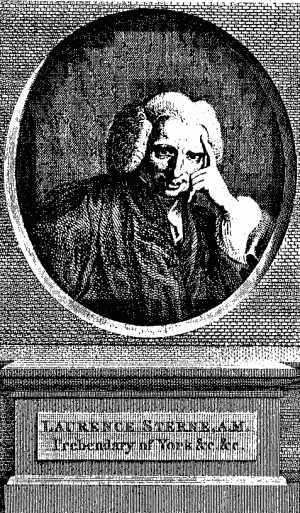
Lawrence Sterne
By the time I sorted all this out, however, it was too late; I was already deep down the Wikipedia rabbit-hole. I looked up the history of the outermost planet (not to be confused with the dwarf planets like Pluto and Ceres), Neptune. Neptune was discovered by French astronomer Urbain Le Verrier in 1846. Not only was it the first planet to be discovered entirely by telescope, it was also the first one whose existence was surmised before it was actually observed. That is, Verrier and fellow astronomer John Couch Adams had noticed irregularities in Uranus’s orbit, which, they suspected, might be caused by a seventh, hitherto unseen planet. They then deduced the probable location of this hypothetical planet and hunted it down.
And that’s not all! I also learned that Neptune was actually discovered before it was discovered. As historians found later, Neptune was seen at least three times before, by Galileo Galilei in 1613, Jérôme Lalande in 1795, and John Herschel in 1830. Each of these men recorded seeing something in that spot, but none of them realized it was a planet and not just a weird “fixed” star.
Apparently, this sort of thing happens with some frequency in the world of science, to the point that it actually has a name: precovery. In a precovery, someone finds all the information they might need to make a real (and potentially career-making) discovery, but they never put the pieces together. (Or, at least, they never publish a paper about it.)
I think there might be a profound lesson here about the difference between data and knowledge, observation and understanding.
It’s also a lesson about publishing what you’ve got, ASAP. Before some other doofus steals your thunder.
If you’re a liberal-arts nerd like me who thinks about culture all the time, you have probably pondered this question: why do people remake movies, but not books?
Yeah, I know. On the surface, this seems like a silly and even naive question. Movies, after all, are a popular medium. They belong primarily in the category of the performing arts, like theater and ballet and classical music. And, as we all understand, no one over ever gives the “final” performance of Hamlet or Don Giovanni or The Jupiter Symphony. Yes, there are certainly “classic” performances of all these works—some of them, made in the past century, have been recorded for the ages—but none is ever the last performance. Each generation must have its own Hamlet, Don Giovanni, etc.
I’m very happy to announce that my short story, “Cerulean”, has been published by Killer Nashville Magazine! Many thanks to Isabelle Kanning and the rest of the editorial staff for accepting it.
The most important novel in the dystopian science fiction sub-genre is George Orwell’s 1984. The second most important is Anthony Burgess’s A Clockwork Orange. I would go so far to argue that Burgess’s book has, in some ways, been even more influential and culturally significant than Orwell’s, especially for those generations that grew up in the 1970s and later.
It was in 1971 that Stanley Kubrick adapted the book into a landmark film, which was how I first discovered the novel. By the time I was a teenager, in the early 80s, Kubrick’s movie had taken on cult status—almost as much as 2001: A Space Odyssey. My friends and I all loved the movie. And I, being a particularly bookish kid, decided to check the novel out, too.
The secret to A Clockwork Orange’s success, topping that of almost all other dystopian novels, is that it has a great, exciting twist. Its protagonist, a fifteen-year-old delinquent named Alex, seems more like a villain than a hero. He is, after all, a thug, a thief, a gang-member, a rapist, a drug user, and a lover of all things violent (“ultraviolence,” as he and his gang friends call it). Yet, in comparison to the oppressive, authoritarian, end-stage-Capitalist society in which he lives, he is a kind of hero. Against that iron-grey backdrop, his better, human qualities come to the fore—his intelligence, his ferocious courage, and his absolute dedication to personal pleasure, the state-be-damned.
This twist is one of the greatest, central ironies in modern literature, and it’s the reason teenage boys (and probably a few girls, too) continue to find themselves drawn to the book, just as they have been for sixty years. Conversely, this is also the reason that social conservatives have hated the book for just as long. In fact, as I recently learned from openculture.com, A Clockwork Orange was the most banned book of the 2024-25 school year.
I have no doubt that Burgess would have been very, very proud.
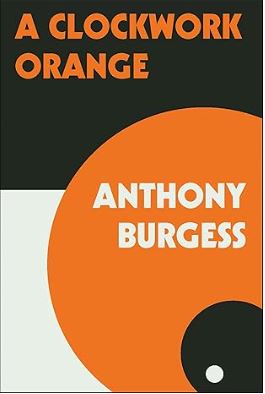
Kubrick’s film version was so powerful that it influenced the cover-design for most subsequent editions of the book. Many of these covers were thinly-veiled riffs on the movie poster or on Malcolm McDowell’s brilliant performance, wearing his singularly perverse, false-eyelash. I really like this cover from 1995 by Robert Longo because it bucked that trend and did something new.
Also, I think it really captures the madness of the book—the ferocity of Alex’s character as he rages against the machine. Yes, he’s an evil character, but that’s sort of the point of the whole book. Alex has a God-given right to be evil, if that’s his choice. Evil is an implied, but not a necessary, product of his free will, and he fights valiantly against being “programmed” by the cold authority figures of the story.
Just like most teenagers. Even the ones that aren’t psychopaths.
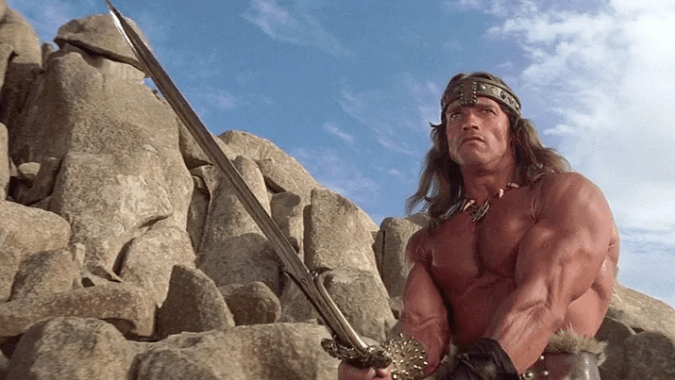
As I was working on a recent post about the great sci-fi and fantasy movies of 1982, I re-read the Wikipedia page on one of those films, Conan the Barbarian. It’s a great movie (despite the fact that it’s really just a raunchy, gory, over-the-top B-movie with an A-movie budget), and I loved it when it came out, as did millions of others. It was, in fact, a culturally significant film, in its own way, and the Wiki page reflects this. A lot of passionate, obviously smart people have contributed to the page over the years. (Wikipedia is, imho, the single greatest triumph of the internet, but that’s a subject for another post.)
As such, the page inevitably includes a rather insightful section called “Themes,” in which people have enumerated the topics that the film explores—or at least seems concerned with. These include “The Riddle of Steel,” “Death,” “Wagnerian Opera,” “Individualism,” and “Sex.”
I’m sorry, but “Sex” is not a theme of thismovie nor any other. Neither, for that matter, is “Death.” It’s a topic, surely, perhaps even a motif. (Note that I’m using the word “motif” in its strictest, compositional sense, as it is referenced in musicology.) But it’s not a theme.
Yeah, I know. I’m being a bit of an English-major-snob on this one. A word-Nazi. But bear with me, please. If you’re a person who really tries to appreciate literature, either on the page or on film, then the distinction between theme and motif is important. It’s even more important if you’re a fiction writer who struggles to create books that have some meaning and not mere entertainment that is purely disposable. Not that there is anything wrong with fiction that is mere entertainment—entertainment is great—but let’s not kid ourselves that it’s the pinnacle that people should aim for.
The film’s Wiki page comes much closer to the idea of a real theme when it discusses “The Riddle of Steel” (although it completely mischaracterizes and misinterprets the real matter at hand). As anyone who has seen the movie knows, The Riddle of Steel is a connundrum—not so much a riddle as a philosophical question—that Conan believes god will ask him when he dies. The question goes something like this: “Which is stronger? The sword, or the hand that wields it?” Or, put another way, “Technology? Or willpower?” “Brute force, or the power of conviction?”
It’s actually a pretty deep question, especially when one considers the fact that film’s original script writer, Oliver Stone (who later went on to direct a few films, too) is a veteran of the Vietnam War, which surely represented one of the greatest struggles of all time between technology, on the American side, versus sheer determination and courage on the North Vietnamese side. (Please don’t write to me and tell me that determination and courage were displayed on both sides of that tragic war. I realize this, and I am over-simplifying the conflict for the sake of argument.)
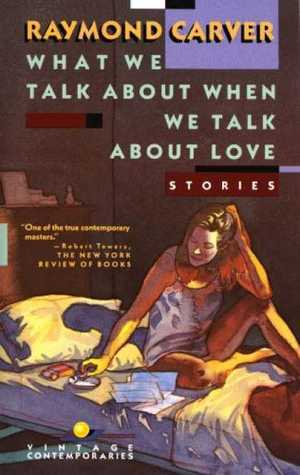
This posing of a philosophical and moral question, which the hero of the film (and, thus, the viewer) struggles to answer is, to my mind, the real definition of a theme. Perhaps the supreme example of this is Raymond Carver’s classic short story, “What We Talk About When We Talk About Love,” in which three couples—all in late middle-age, all jaded—discuss the definition of “love” over hard-drinks. It’s a great story, not just because it captures the individual voice and attitude of each character, but also because all of the characters seem to be genuinely struggling with something—a matter of real import that, each one senses, will reveal something about their own lives. As one might expect, each character has their own story to tell about the subject, beginning with this one from a woman named Terri.
Terri said the man she lived with before she lived with Mel loved her so much he tried to kill her. Then Terry said, “He beat me up one night. He dragged me around the living room by my ankles. He kept saying, “I love you, I love you, you bitch.” He went on dragging me around the living room. My head kept knocking on things.” Terri looked around the table. “What do you do with love like that.”
She was a bone-thin woman with a pretty face, dark eyes, and brown hair that hung down her back. She like necklaces made of turquoise, and long pendant earrings.
“My god, don’t be silly. That’s not love and you know it,” Mel said. “I don’t know what you’d call it, but I sure know you wouldn’t call it love.”
The story continues around the table, with each character telling their own story about the general subject of “love.” In Carver’s supremely able hands, each of these stories is shocking, yet rings true. Completely, brutally true. Some of them are also funny as hell, in a gallows-humor sort of way. One of the greatest things about the story, though, is the way it never gives us a definitive answer to the question it asks. To the contrary, the story raises even more questions—deeper meta-questions that the characters, themselves, are unaware of but which we, as readers, are. Is there a single definition for love? Is that question even meaningful? Does love even exist, really, in the cosmic sense? Does it matter?
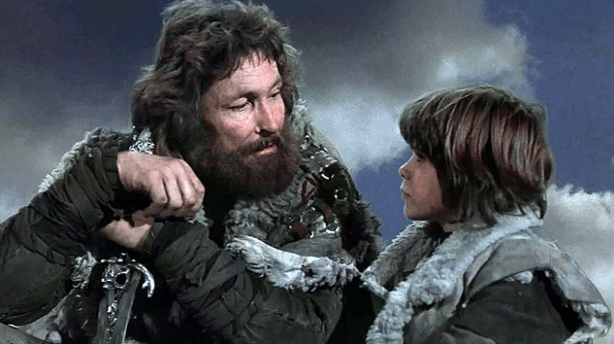
In the same way, Conan the Barbarian presents its hero with several possible answers to its central thematic question. The first is given by Conan’s father (played by the great character actor William Smith) in the opening scene, where he tells the young Conan that the one thing he can ever depend on. “Not men. Not women. Not beasts. This,” he says, gesturing to a sword he has just made. Of course, he is not talking about that particular sword, or even swords in general. He is, we sense, talking about all the intangible things for which the sword is a symbol—discipline, training, courage. The martial ideal.
Later in the film, the villainous Thulsa Doom presents Conan with another answer. In that famous (and surprisingly shocking, even now) scene when he beckons one of his followers to literally jump off a cliff, he suggests that control over the human mind—through dogma, religion, and all the other tools of tyrants—is far more powerful than strength of arms, either literal or metaphorical.
So, which of these answers does Conan accept. Neither! In fact, his tale seems to suggest a third answer, one which is never articulated—never explicitly told—to either Conan or the viewer, but is rather born out by the action of the narrative. The answer, simply, is love. It’s Conan’s love for his murdered parents that sustains him through the ordeal of slavery and drives his desire for revenge. He loves his friend, Subotai, after rescuing him from death, and he comes to love Valeria even though she is, initially, a rival. Later, it’s Valeria’s love of Conan (along with some help from Subotai) that saves his life after they rescue him from the Tree of Woe. And it’s Conan’s grief over the death of Valeria that causes him to go on his final (foolhardy) confrontation with Thulsa Doom, where he uses his father’s broken sword (note the symbolism, there; steel really isn’t that strong, after all) to behead the man.
I think it is important to note that even in a “silly” genre movie like Conan the Barbarian—a friggin sword-and-sandal movie, for Pete’s sake—good writing can add a level of thematic resonance to any work of fiction. That is, it can turn a potentially crappy movie into a good movie, and a good movie into a great movie. It’s this complexity that separates the vast majority of films (and books, for that matter) from the few we remember years later—that tiny minority that we deem “classics” after the fact.
Another thing to consider is how Conan the Barbarian, like Carver’s short story, doesn’t fully answer its own thematic question. At least, not completely. The ending is ambiguous. Yes, Conan kills the bad guy, and (we are told) ends up a king himself, but he “sits on his throne with a troubled brow.” In others, the verdict is still out on what the real answer to The Riddle of Steel is, after all.This kind of ambiguity is, of course, a hallmark of all good fiction. We, as viewers and readers, don’t get a definitive answer—mainly because the kinds of questions that good fiction asks are, ultimately, unanswerable in any objective sense. They are always about choices. Priorities. Does honor matter more, or friendship? Revenge, or love?
Having once been an art student (well, a creative-writing student; close enough), I know from experience that the quickest way to start an argument among a bunch of art majors is to ask them what the definition of “real” art is. Similarly, the best way to start an argument among a bunch of cinephiles is to ask them what “real” cinema is.
That is essentially what the great director Martin Scorsese did in 2019 when he suggested that Marvel superhero movies (in their zenith, at the time) were “not cinema”. He stated:
Honestly, the closest I can think of them, as well made as they are, with actors doing the best they can under the circumstances, is theme parks. It isn’t the cinema of human beings trying to convey emotional, psychological experiences to another human being.
Scorsese thus not only managed to make himself sound like a bit of a snob—not to mention a grumpy old man—but to also start an internet flame-war that continues to this day. Ultimately, the whole affair was a tempest-in-a-teapot. Of course, the Marvel films are “real” cinema. That is, they are fabulously well-crafted motion pictures that, at their best, have an emotional and even a physical impact on their viewers. And—again, at their best—they also make important philosophical and political points. However, they are a different kind of cinema than what Scorsese works in. In other words, what we’re really talking about her is the difference between literary cinema and popular (that is, genre-based) cinema.
This is the same distinction one must make between literary fiction and genre fiction. The purest and simplest definition of genre fiction is that, for the most part, the reader knows what they’re gonna get. A mystery is going to have a murderer and a sleuth. A horror story is going to have a monster and hero/heroine fighting it. A rom-com is going to have two people who should get together romantically but just can’t, for some reason, until the very end. And a superhero movie is going to have, well, a superhero with some kind of superpowers who is fighting some equally superlative evil.
The devil, of course, is in the details. We consume genre cinema for the same reason we consume genre literature—because we want to see how they pull it off. “They” in the case of cinema, being the director and the writer and the actors. How do they change-up the old formula, make it interesting and somehow new?
That is how genres evolve and adapt to new time periods and new zeitgeists. Daniel Craig’s interpretation of James Bond was different from Sean Connery’s or Roger Moore’s—it was more brutal, more bloodthirsty, and yet somehow more vulnerable, too. Just like us, the American film-viewing public.
In the same way, Marvel superhero movies are different from superhero movies of the 1970s (think Superman) or the 1980s. The characters are more believable, as well as being more complex and even vulnerable. I am, again, thinking of the very best Marvel movies: the first Ironman starring Robert Downey Jr. and Captain America: The Winter Soldier. This latter film, which came out in 2014 (yes, it’s been that long), is probably the best film of the entire series. And, yes, it is “real” cinema.
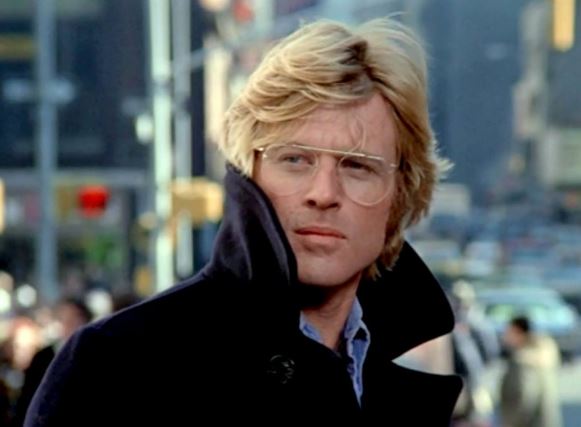
Robert Redford in “Three Days of the Condor”
In fact, as very few people have realized, The Winter Soldier is almost a remake of a 1975 film that most film snobs would agree is “real” cinema: Three Days of the Condor.
The only obvious similarity is that both films feature Robert Redford. In Condor, Redford plays a brilliant but very bookish CIA analyst named Turner who works in a New York City branch office. One day, he comes back from lunch to find everyone in the office dead, murdered by professional assassins. Turner goes on the run. Unsure of who he can trust, he kidnaps an unsuspecting, beautiful woman (Faye Dunnaway) and hides in her apartment. From there, he gradually figures out that the assassins who killed his work-mates were sent by a rogue faction inside the CIA itself. Apparently, Turner’s branch had stumbled upon a secret plot by the faction to invade the Middle East and capture all the oil fields (how very far-fetched, right?). Turner eventually confronts the leader of the faction, as well the head assassin, a Zen-Master-like Frenchman named Joubert (played with brilliant, icy effectiveness by Max von Sydow).
On the surface, Condor might seem like a very different film from The Winter Soldier. But the closer you look, the more The Winter Soldier seems almost like a remix of the earlier film. That is, it has all the same elements. The good-guy-betrayed-by-his-government figure is Steve Rogers (a.k.a. Captain America) who, like Turner in Condor, discovers a vast conspiracy within U.S. intelligence (S.H.I.E.L.D, in this case, rather than the CIA). Like Turner, Rogers finds himself on the run with a beautiful woman (Natasha Romanoff/Black Widow). He confronts the leader of the conspiracy (played by none other than Robert Redford himself). And of course he confronts the lead assassin, Barnes, who (like Joubert in Condor) turns out to be far more complicated than he appears.
Even some of the individual scenes in The Winter Soldier are eerily reminiscent of those in Condor. Take the now famous elevator sequence, which is not only the best in the film but one of the best in the entire MCU series. On his way out of the high-tech and vaguely fascistic H.Q. of S.H.I.E.L.D., Rogers steps into an elevator and rides down. As the elevator stops at successive floors, more and more men step on, each menacing but seemingly disinterested. The scene works so well because everyone—that sense of unease we all fell when forced into close proximity with strangers. We begin to wonder: what if some of these people were evil. They could hurt us—maybe even kill us—before we could react. And yet, despite this unease, we do nothing because we have no real evidence of evil intent. We’re playing a social role. And that’s just what Rogers—a good-natured man if ever there was one, willing to give anyone the benefit of the doubt—does.
Robert Redford in “The Winter Soldier”
I love the moment when Rogers notices sweat streaming down the face of one of the men next to him. He knows—as we, the viewers, know—that this is really, really bad. But there is nothing he can do about it…yet. It’s still in the future. Alfred Hitchcock couldn’t have done it any better. Nor, for that matter, could Sidney Pollack, who has an almost identical scene in Condor, in which the hapless Turner finds himself in an elevator with Joubert, the master assassin. Each man knows that the other man knows who he really is, but neither can take any action…yet.
Ever since I read Mark Crispin Miller’s landmark essay “Hollywood: The Ad” many years ago, I’ve been fascinated the way in which the tropes and elements of an early “classic” movie can end up rearranged and transformed in a later pop film. Miller gives the example of 2001: A Space Odyssey (1968) and Star Wars (1977). If you look closely, many of the components of the former get transmogrified in the latter. The apes of 2001 become the loyal Wookie Chewbacca. The cold, robotic voice of HAL the computer becomes that of C3PO the droid. The white, sterile interiors of the spaceship Discovery become the stark, sterile halls of the Death Star. And so on and so forth.
Martin Scorsese
That’s just what has happened here, with Condor and The Winter Solider. They’re practically the same movie, but shaken up by time and changing purposes. That is, The Winter Soldier is every inch a pop film, with the full intention of stimulating the audience with all the action and explosions and kung-fu fights that we’ve come to expect from a Hollywood blockbuster. But, on some level, the kernel of Condor is still there. The Winter Soldier is also a story about evil, rapacious men seizing control of government, and also the creeping power of America’s military-industrial complex. It’s also about the dehumanization the soldiers like Rogers and Barnes undergo as pawns in the hands of callous leaders and ruthless institutions.
In short, despite all its roller-coaster-ride thrills and spectacle, The Winter Solider is a “real” movie.
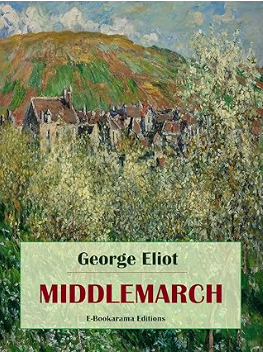
It’s time for another entry in my ongoing series Synchronicity for Bookworms. In this episode, I will describe the incredibly tenuous and yet undeniable connection I found between the great stage and film actor Jeremy Brett and George Eliot’s classic Victorian novel Middlemarch.
As you might recall, I recently did a blog post on Arthur Conan Doyle’s classic mystery novel, The Hound of the Baskervilles. In that post, I mentioned that my favorite actor to ever play the role of Sherlock Holmes was Jeremy Brett. While I was writing the post, I browsed various Internet pages pertaining to Brett. Brett was primarily a brilliant and prolific stage actor, appearing in everything from Shakespearean Tragedy (check out his performance as Macbeth on YouTube) to comic theater.
Rex Harrison
On one page, I found a photo of Brett standing in front of a billboard advertising a play in which he was appearing. As I looked closer at the image, I saw that Rex Harrison was also in the play. (As I later discovered, the production was a revival of Frederick Lonsdale’s “Aren’t We All?” that ran on Broadway in 1985.) This revelation made me smile because I am also a fan of Rex Harrison, ever since I read a biography of him a decade ago.
Naturally, I immediately went to the Wikipedia page for Rex Harrison and browsed through his biography. This included his great filmography. One of the more famous films he starred in was Blithe Spirit, a supernatural comedy based on a play by Noël Coward. I clicked on the link to the Wikipedia page for Blythe Spirit (the play) and discovered that Coward took the title from a poem by the great British romantic poet Percy Bysshe Shelley.
Naturally, I then clicked on the link to Shelly’s Wikipedia page and browse through his biography. Reaching the bottom of the page, I saw to my amazement that George Eliott had based the character of Will Ladislaw from her great novel Middlemarch on Shelley.
Percy Bysshe Shelley
And there you have it, a cosmic filament connecting two of my recent topics—Sherlock Holmes and George Eliot. When my eyes settled on this last reference to Middlemarch, a little spark of amazement ran down my spine. That’s the sensation one gets when stumbling upon the sublime, hiding in the common-place.
Note that this was not some Six Degrees of Seven Bacon thing. That is, I was not looking for any connection. In fact, Middlemarch wasn’t on my mind at all when I started Googling Jeremy Brett. And yet, there the connection was.
I don’t know if it means anything or not. But it made my day.
As some dedicated readers of this blog might know, my friend Margaret Luongo and I posted a pair of videos discussing George Eliot’s classic novel Middlemarch to our “Read A Classic Novel…Together!” channel on YouTube. Ever since then, I’ve been meaning to take the time to write a post about it, mainly because it had such a big impact on me. I mean, lots of books have achieved the classic moniker and yet don’t hold up to modern scrutiny. But Middlemarch does. In fact, it’s one of those titanic works of literature that you almost can’t get your head around. It has so many sides and so many aspects, such that it attains a kind of sublime quality. Like Shakespeare’s works, Middlemarch is a different experience for everyone who reads it.
When I say titanic, I mean it literally. Middlemarch is a big book–eight hundred pages in most editions–following the lives of six major and at least a dozen minor characters in the fictional, provincial town called Middlemarch. The story is set in the 1830s, but Eliot wrote the book in the 1870s, when the world had already been vastly changed by the industrial revolution in England. And so, the book has a little bit of a “lost world” feel to it. One can sense that Eliot (whose real name was Mary Ann Evans) is writing about the social and economic environment that is already a thing of the past. However, absolutely nothing about the book feels the least bit sentimental or nostalgic. Quite the contrary. Eliot was a great writer whose blazing intelligence seems to illuminate every page of this very long book. And everything she describes feels as true and relevant today as when she wrote it.
Well, it took us a while, but my great friend Margaret Luongo and I finally finished George Eliot’s Middlemarch! (Hey, give us a break–it’s almost 900 freakin pages long!)
Here is our discussion of the second half and heart-stopping conclusion of the book for our Read a Classic Novel…Together channel. And, guess what! We both agree that it’s a truly great book (and probably should have been LONGER!).