Friday Night Rock-Out: “Cuts You Up”

Not surprisingly, my first exposure to Peter Murphy was from a movie. It was his face and music that are used in the first frames of Tony Scott’s great and underrated horror masterpiece, The Hunger. At the time, Murphy was of course the lead singer for the archetypal goth band Bauhaus, and it is their archetypal song “Bella Legosi’s Dead” that is featured in the opening. Ever since I saw that movie and heard that music, that voice, I was hooked on Peter Murphy.

This was in the early 1980s and, needless to say, goth music wasn’t getting much air-play on the pop-rock radio stations that I and my high school friends all listened to. Still, there was something afoot. Some of my cooler, English-nerd friends started wearing T-shirts with the Bauhaus logo on them.

As I soon learned, goth was, almost literally, an underground movement. Goth clubs starting appearing in basement-bars and old, converted warehouses. The one in Gainesville was called The Vatican, and it’s still of a legend with people my age.

I am by no means an expert on goth music, but one thing I do know is that it is not depressing. Rather, goth’s appeal comes from a paradoxical combination of melancholy realism and romantic defiance. Both of these impulses are wonderfully evoked in Murphy’s most successful solo work, “Cuts You Up”. It’s still my favorite of Murphy’s songs.

Rock on…

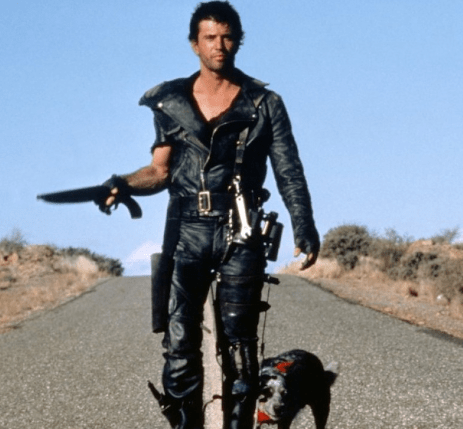
Ten Things I Love About B-Movie Action Flicks

In one of those strange, synchronicity moments that sometimes happen, I recently stumbled upon an article in Collider about how the classic John Carpenter film Escape from New York is getting a new 4K release from Shout Factory.  This was a heart-warming bit of information, for me, since the film has been one of my favorites since I saw it in the theaters in 1982. It’s nice to think that new generations of film lovers might be given a chance to appreciate its many charms.

The news was also timely, for me, because I had been contemplating writing a post about the things I love most about movies like Escape from New York. That is, B-Movie Action Flicks. As anyone who reads this blog or my old one will realize, I am somewhat obsessed with B-Movie Action Flicks, especially from their golden age back in the 1970s-80s. Part of my obsession is mere nostalgia, of course. I spent many a late Saturday watching such movies on HBO with my equally nerdy, reprobate friends, and they (the films and the friends) helped me get through the agonies of growing up. But the other part of my obsession has to do with the nature of B-Movie Action Flicks. Why are they so much fun? 

Continue reading “Ten Things I Love About B-Movie Action Flicks”

Friday Night Rock-Out: “How Soon is Now?”

I recently found myself in the so-called “green room” of a TV studio in Biloxi, Mississippi, waiting to be interviewed about a book-reading I was doing that week. The interview was to air live on a local current events show, and another guest waiting for his spot was a musician for a band called The Molly Ringwalds. He was friendly and very smart, and we began to chat (I did so to relieve my nervousness; he was just being nice). 

In the course of conversation, he explained that The Molly Ringwalds (as I should have guessed, but didn’t) is an 1980s tribute band that covers all kinds of hits from that by-gone era, which I also love. I asked him if they did any songs by The Smiths, and he said they did.

“Which one?” I asked.

“‘How Soon is Now?’ What else?”

What else, indeed. “How Soon is Now?” is not only The Smiths’ greatest song, it’s one of the greatest rock songs ever. It’s also one of the most complicated. From its famous guitar overture, warbling and full of dark menace, to its anguished lyrics by the brilliant Morrisey, “How Soon is Now?” is both a dance song and a dirge. It’s also a cry of rebellion against conformity, prejudice, and alienation.

Since it first hit the clubs in 1985, the song has been taken up as an anthem by the LGBTQ community, and rightly so. But I think it resonates equally well with any introvert, outcast, or general freak who just, well…needs to be loved.  

At least, it did for me. Still does.

Rock on…

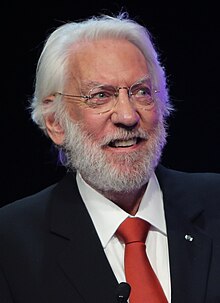
R.I.P. Donald Sutherland

I really enjoyed The Hunger Games movies when they came out. Not only were they great examples of dystopian science fiction, but they served as a refresher course in the nature of fascism. The main baddie in the films was, of course, President Snow, played with great menace and understatement by the great Donald Sutherland. 

I am very grateful to the producers of The Hunger Games for introducing Sutherland to a new generation of film lovers, especially at a time when his career was in a bit of a lull. Sutherland was one of my favorite actors when I was growing up, best known for career-making roles like Hawkeye Pierce in M.A.S.H., Oddball in Kelly’s Heroes, and the titular role in Klute. One of the great ironies of film history is that Sutherland should now be so closely associated with the role of President Snow—literally a right-wing fascist dictator—when his early, defining performances were usually as lovable, left-of-center antiheroes (Hawkeye Pierce especially). 

Sutherland was one of the few movie stars from the 70s and 80s to have curly, hippie-hair, and his entire persona seemed to be that of a counter-cultural smart guy. The Alpha-Hippie that all Beta-Hippies aspired to be. I say he was a smart-guy, and it’s true—never did an actor so effortlessly exude intelligence, even without dialog, as Sutherland did. But while he was so obviously a smart-guy, he was never a smart-ass. Even the irreverent Hawkeye Pierce—perhaps the most famous prankster in cinema history—reserved his mocking for when he needed it to retain his sanity, and focused it on those who most deserved it.

One of the best ways to understand Sutherland as an artist is to imagine his stylistic opposite, Nicholas Cage. Like Sutherland, Cage is a brilliant actor, and a very smart guy, but while Cage is famous for his artistic daring, often taking his performances to frenetic heights that would seem ridiculous for other, lesser actors, Sutherland was known for his almost impenetrable reserve. He always seemed to be holding something back, in a good way. He kept the viewer guessing about what was really going on behind those crystalline blue eyes. 

Perhaps my favorite Sutherland role when I was growing up was as a world-weary health inspector in Philip Kaufman’s 1978 sci-fi horror masterpiece The Invasion of the Body Snatchers. In this film, Sutherland almost drips existential cool, even when faced with an invasion of alien pod-people (read: communists, right-wing conformists, or your boogey-men of choice) who want to eliminate humanity.

Check it out.

Friday Night Rock-Out: “Under Pressure”

People love tag-teams. It’s in our nature. Have you noticed that almost every work of epic literature across the world has not one but two main heroes. The Gilgamesh epic has Gilgamesh and Enkidu. The Iliad has Achilles and Odysseus. The Authurian legends have Arthur and Lancelot. DC has Superman and Batman.

In all of these examples, the two heroes have much in common, but they are also different in some fundamental and defining way. They not only compliment each other, they contrast each other. 

More importantly, they make the story a lot more fun.

I think of this dynamic whenever I hear “Under Pressure” by Queen and David Bowie. Together, the band and the singer represented a group of pop titans of the 1980s. But there were huge functional and artistic differences between them. Bowie was probably the greatest musical artist of his generation, known for inventive and experimental works that never failed to surprise or thrill his fans. Queen was a great rock band, constructed around the epic voice of Freddie Mercury and the epic guitar skills of Brian May. The idea of bringing these two forces together might have been disastrous. That is, they might have canceled each other out.

But no. Instead, their talents together to create one of the best rock songs ever recorded. From the amazing bass riff (whose author is disputed) to the colossal bridge near the end, it’s still one of my favorites. 

Enjoy…!

BONUS: Here is a great live performance of the song by Bowie and Annie Lennox.

When Will Hollywood Rediscover the Great B-Movie Action Flick?

The great B-Movie director Roger Corman has died. As a kind of tribute, I’m reposting an essay I wrote some years ago on my old blog. Enjoy!

RW

Ever since I turned forty, I find myself going to see fewer and fewer movies.  It’s only natural, I suppose.  The less time you have left, the less time you want to spend in a darkened theater, lost in flights of fancy.  And so, what little I know of recent film releases comes to me second-hand, either through friends or online reviews or through the film trailers that I see when I do occasionally go to a movie.  Even from this limited perspective, I can glean a few obvious facts about movies these days:  1.) they are all rated PG-13 and 2.) they are all about the end-of-the-world and 3.) they all rely heavily on digital effects.

These three qualities go together, of course, for reasons that are based more in economics than anything else.  The digital effects are required to attract a modern audience raised on video games and violent TV.  And because these CGI effects tend to be horrifically expensive, the movies must be rated PG-13 in order to gather as large are a customer base as possible.  Finally, the reliance on end-of-the-world plots come naturally, mainly because the plot-lines that justify these breathtaking explosions, airships, monsters, and laser guns usually involve some kind Biblical-style, science-fiction-themed catastrophe.

Continue reading “When Will Hollywood Rediscover the Great B-Movie Action Flick?”

Friday Night Rock-Out: “Sweet Dreams (Are Made of This)”

When “Sweet Dreams (Are Made of This)” came out in 1983, I was a junior in high school. Being a bit of a music snob, not to mention a budding wannabe intellectual, I was pretty well versed in the New Wave music of the era, bands like the Talking Heads and Gary Numan and Devo, not to mention the more avant guard stylings of The Police. (Synchronicity came out that year, and if it’s not a New Wave song, I don’t know what is.) 

But, like everyone else, I was totally unprepared for “Sweet Dreams”. It wasn’t just the disconcerting, off-kilter, literally ass-backwards beat of the song. It was Annie Lennox’s soaring, operatic delivery of those out-there, nakedly perverse lyrics (“some of them want to abuse you; some of them want to be abused”). Most of all, it was the music video, which came spilling out of TVs everywhere and didn’t stop for about six months. 

Looking back on it now in our absurdly trans-phobic era, it’s hard to imagine how utterly trans the video was. Transexual. Transgressive. Trans-everything. The sight of the beautiful Annie Lennox decked out in a (tailored) man’s suit, with her orange hair and vaguely Hitlerian mannerism, was like an A-Bomb going off in the brain of middle America. It might have all been too much, except for one thing: It’s a hell of a good song.

Rock on.

Perfect Films: “The Dead Zone”

DeadZone1

Author’s Note: One of my favorite films, The Dead Zone, is free to stream on Amazon Prime right now. I thought I would take the opportunity to repost my tribute to the film, which I originally published on my old blog, Bakhtin’s Cigarettes.

When I was a student at the University of Florida in the late 1980s, I took writing classes under the great novelist Harry Crews. Harry was almost as famous for being a wild man as he was for being a writer, but by the time I knew him he had quit drinking and was leading a simple, almost monastic life of writing and teaching. Like many recovering alcoholics, he had lost many of his old friends, and he was also divorced, so he was alone a lot.

Continue reading “Perfect Films: “The Dead Zone””