
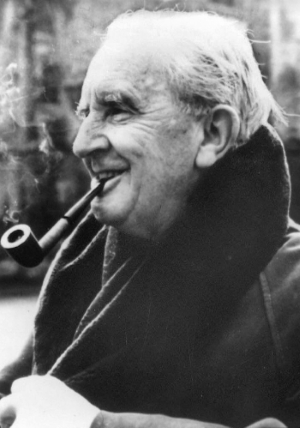
Ever since I stumbled upon it some years ago, In Deep Geek has been one of my favorite video podcasts. In each episode, the creator/narrator (known only as Robert) goes into extreme depth on some subject of profound interest to fans of The Lord of the Rings, The Witcher, and A Game of Thrones. I’ve never seen those two latter shows (yeah, I know; I live under a rock), but I am a big fan of LOTR, so I watch those episodes with great interest and enjoyment. I don’t know Robert’s background, but I would guess he has some training in English Literature. His explications—which are unfailingly graceful, insightful, and genuinely interesting—remind me of the “close readings” I used to do as an English Major.
One especially perceptive episode is one that I saw recently on the subject of Tolkien’s Eagles. These are, of course, the race of giant, sentient eagles that play a small but crucial role in the lore. In fact, they literally save the heroes from catastrophe, flying in to assist in the Battle of the Five Armies at the conclusion of The Hobbit, and rescuing Frodo and Sam from incineration on the slopes of Mt. Doom in The Return of the King. As Robert explains, the eagles provide a eucatastrophe—a word I had never heard before, and one which (as Robert helpfully goes on to explain) was coined by Tolkien himself.
You don’t need to be a linguist like Tolkien to get the gist of what the word eucatastrophe means. Basically, it’s the opposite of a catastrophe—a sudden, unexpected change of fortune that saves the hero(es) from near certain doom. I think the key adjective here is unexpected. Indeed, a true eucatastrophe must be not only unexpected but unforeseeable, coming (quite literally, in the case of the eagles) out of the blue. For example, the ending of Star Wars: A New Hope, when Luke Skywalker uses the Force to blow up the Death Star, is a great, thrilling ending, but it’s not a true eucatastrophe. After all, Luke did what he came there to do. Yes, the odds were incredibly stacked against him, but the ending is not unforeseeable. It’s just very, very unlikely (and, therefore, very exciting and dramatic).
Upon being introduced to the term, one might wonder—as I did—what the difference is between a eucatastrophe and the classic Deus ex machina ending, as used in the theater of ancient Greece. Literally the “God-from-the-Machine,” it took the form of an actor playing Zeus or Poseidon or some other God, who was “levitated” over the stage using a wooden cherry-picker called a mechane. The “God” would then deliver some boon that rescues the protagonists and resolves the drama. Basically, a happy ending, courtesy of the divinity.
All good writers know that a Deus ex machina-style ending is usually pretty lame, simply because it has nothing to do with the drama that has preceded it. It doesn’t force the characters to get themselves out of trouble in a way that has meaning for the reader (or viewer). It’s the sudden “happy ending” that completely subverts the conflicts and themes that the reader has invested themselves in and is anxiously waiting to see how they will be resolved, not by some magical deity swooping in and snapping His fingers, but by the characters themselves.
Clearly, this is not the kind of ending Tolkien had in mind, nor does it describe the rather fabulous and exciting conclusions of both The Return of the King and The Hobbit. Rather, in both cases, the sudden appearance of the eagles seems somehow perfect. Unexpected, yet totally satisfying. And fitting.
But how? How does Tolkien do it?
I think it has something to do with the fact that, in Tolkien, the appearance of the eagles only comes near the end of some great struggle. In The LOTR, for instance, when the eagles rescue Sam and Frodo, the main goal of the story has already been achieved. That is, they have already destroyed the ring and defeated Sauron. More importantly, they have overcome—not just Sauron—but themselves. Their own fear, exhaustion, and despair, as they held the true course to victory.
Tolkien knows that if Sam and Frodo were to die afterward, their deaths would serve no purpose, either dramatically or thematically. So, the eagles’ showing up at the critical moment seems not only fitting but logical; the eagles have witnessed the Hobbits’ ordeal, and, like us, they seek a better ending for those poor little fellows who have saved the world.
In other words, unlike a Deus ex machina ending, a true eucatastrophe comes as a result of what has come before. It is a kind of miracle, but an earned miracle.
Also, as Robert points out so beautifully in his video, the eagles also function as a stand-in for God in Tolkien’s legendarium, Eru Ilúvatar. Ultimately, a eucatastrophe represents a kind of divine intervention. A deliverance from evil.
As Robert states:
This is sometimes dismissed rather sneeringly as Deus ex machina…. The writer intervening in the plot to save characters or move things along in a way that otherwise wouldn’t happen in that created world. The eagles, some have said, are a failing in Tolkien’s writing. A convenient, easy way to save characters from whatever scrape they find themselves in. But to think that would be to completely misunderstand Tolkien’s notion of eucatastrophe and what the eagles represent. The eagles’ appearances aren’t failures of imagination on Tolkien’s part. They are deliberate and intentional, and they are supposed to feel like God intervening. They are God in the works.
The important thing to note is that intervention comes after the fact. The battle, in a sense, must already be won, if only symbolically. In the Battle of the Five Armies, for instance, the true victory—the coming together of dwarves, elves, and men in common purpose—has already been achieved, even before the battle starts. The intervention of he eagles to finally win the day is, more or less, just icing on the metaphysical cake.
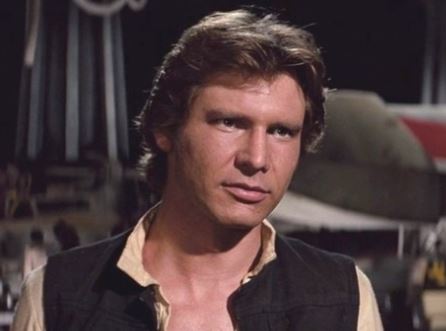
Come to think of it, there is a kind of eucatastrophe in Star Wars: A New Hope. It comes, not at the end of the battle for the Death Star, but just before it, when Luke is about to be blown to smithereens by Darth Vader. “I have you now,” Vader intones from inside his deluxe, specially fitted TIE Fighter as he prepares to pull the trigger. At that very last instant, though, Vader’s ship is hit by a laser blast and disabled. Luke is free to finish his mission.
But where did the blast come from? All of Luke’s friends are already dead.
The blast was fired, of course, by Hans Solo, who has come to the rescue in the Millenium Falcon. The moment feels momentous because we, the viewers, know that Solo should not be there. He has, in the previous scene, vehemently declared himself to be a selfish man—a cynic—concerned only with his own survival. He would never be a sucker for any crazy, doomed cause like the Galactic Rebellion.
Yet, there he is—a symbol of people’s ability to change, to discover their own basic, human decency and courage. And, just as the eagles are a stand-in for Eru Ilúvatar, Solo is a stand-in for God, The Force, or whatever you want to call it. He represents the potential for good in all people and living things.

 Ash Clifton, Writer