
Well, the day has arrived. My debut novel, Twice the Trouble, is a Kindle Daily Deal for $1.99 today on Amazon. The offer will stand until 11:59 P.M. tonight, Pacific Standard Time, at which point it will turn into a pumpkin or…something. (Actually, it will just end.)
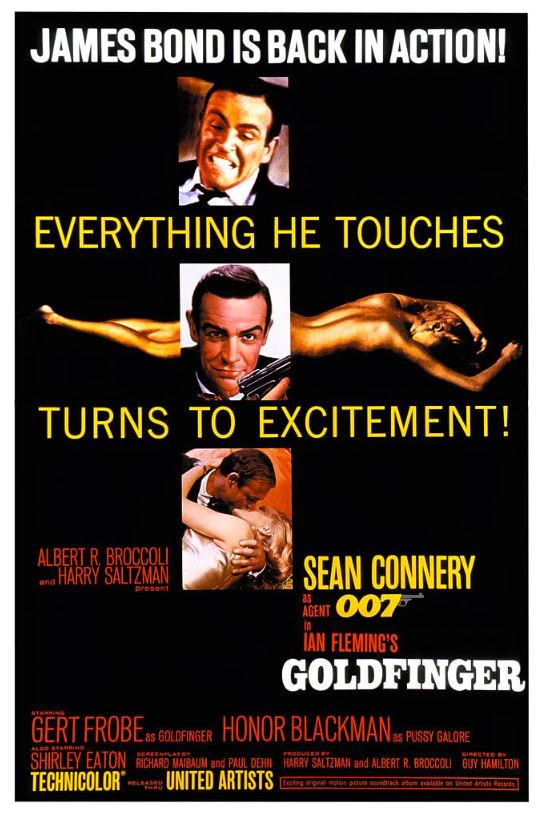
So, to finish my list of Great Movie Countdowns, I’m selecting what many people think is the greatest James Bond movie of all, 1964’s Goldfinger, directed by series veteran Guy Hamilton.
One of the most magical things about James Bond, the character, is that he knows how to do just about everything. He can fight and shoot, of course. But he can also fly a plane, drive a tank, sail a boat, race a motorcycle, surf, and even (as he shows in Goldfinger) play a mean-and-dirty round of golf.
One thing Bond does not know how to do, unfortunately, is disarm an atomic bomb. Which is a problem, because that’s exactly the threat he faces in the climax of Goldfinger. Bond finds himself locked inside the huge, cavernous vault of Fort Knox, surrounded by stacks of gold bars and handcuffed to said atomic bomb, with just a few minutes ticking down on the device’s timer. (This might be the first use of a digital timer in any major motion picture; let me know in the comments if you can think of an earlier one.)

As if this weren’t bad enough, Bond isn’t alone inside the vault. Goldfinger’s chief henchman, Odd Job, is in there too. If Goldfinger is the best Bond movie ever, then Odd Job is the scariest Bond henchman ever. Played by Japanese-American wrestler Harold Sakata, he has such a great, imposing physical presence—a hulking man who seems barely able to hold his own strength in check. When he crushes a golf ball with his bare hands, we, as viewers, really believe he could do it! But what really makes Odd Job scary is his evil little smile. He always seems bemused, enjoying himself, even when he throws a guy off a balcony or throws his steel-brimmed bowler hat into someone’s neck.
In the movie’s climactic countdown (yes, another countdown to nuclear self-destruction), Odd Job seems determined—even happy—to make sure the bomb goes off, despite the obvious fact that it will mean his own death, too. Odd Job, it seems, isn’t afraid of anything except failing in his mission, which makes him that much scarier.

My classics professor in college once said that James Bond is the modern version of Heracles, who, like Bond, loves to fight, drink, and sleep around. Sure enough, the final battle between Bond and Odd Job feels a lot like a Greek myth, with the hero battling a monster—one with some really scary weapons—to the death. And, as in a Greek myth, the contest ends with an example of poetic irony. Odd Job is undone by his own superpower—in this case, his favorite weapon, that lethal, steel-brimmed hat. Bond manages to get hold of it and throws it at him. It misses, alas, and lodges into some steel bars. Instead of just finishing Bond off, though, Odd Job goes to retrieve his beloved hat, at which point Bond slides across the floor and touches a loose power cable to the bars. Current conducts through the bars and through the steel hat, electrocuting the villain. Thus, the monster is defeated by his own magic.
But what about the bomb? Looking inside the device, Bond seems genuinely clueless, for once, bewildered by all the wires and blinky lights. Pathetically, he even tries to stop the machine’s spinning cylinder (which holds, we presume, the cobalt-iodine mixture that makes the bomb “particularly dirty,” in Goldfinger’s words). All to no avail.

Then, with mere seconds left, a man’s gentle hand sweeps in, stops Bond’s frantic groping, and turns the bomb off with the flick of a switch. With the crisis averted, Bond and the man—who looks like a wizened college professor, wearing a brown suit and hat, his face serious yet calm—face each other. A strange look passes between them. A mixture of relief, puzzlement, and awe, the look seems to suggest the entire absurd, insane reality of the Cold War, if not modern existence itself. “How did we get here?” the look seems to say.
How, indeed.

